Da Nang is central Vietnam's modern coastal counterweight to historic Hoi An — a laid-back, mid-sized city (population around 1.2 million) with a 30 km beach, Vietnam's third-largest international airport, and quick access to two of central Vietnam's headline attractions: the Marble Mountains and Ba Na Hills. It's also the natural pivot point between Hue (north) and Hoi An (south), which makes it strategically convenient even for travellers who don't want a beach base.
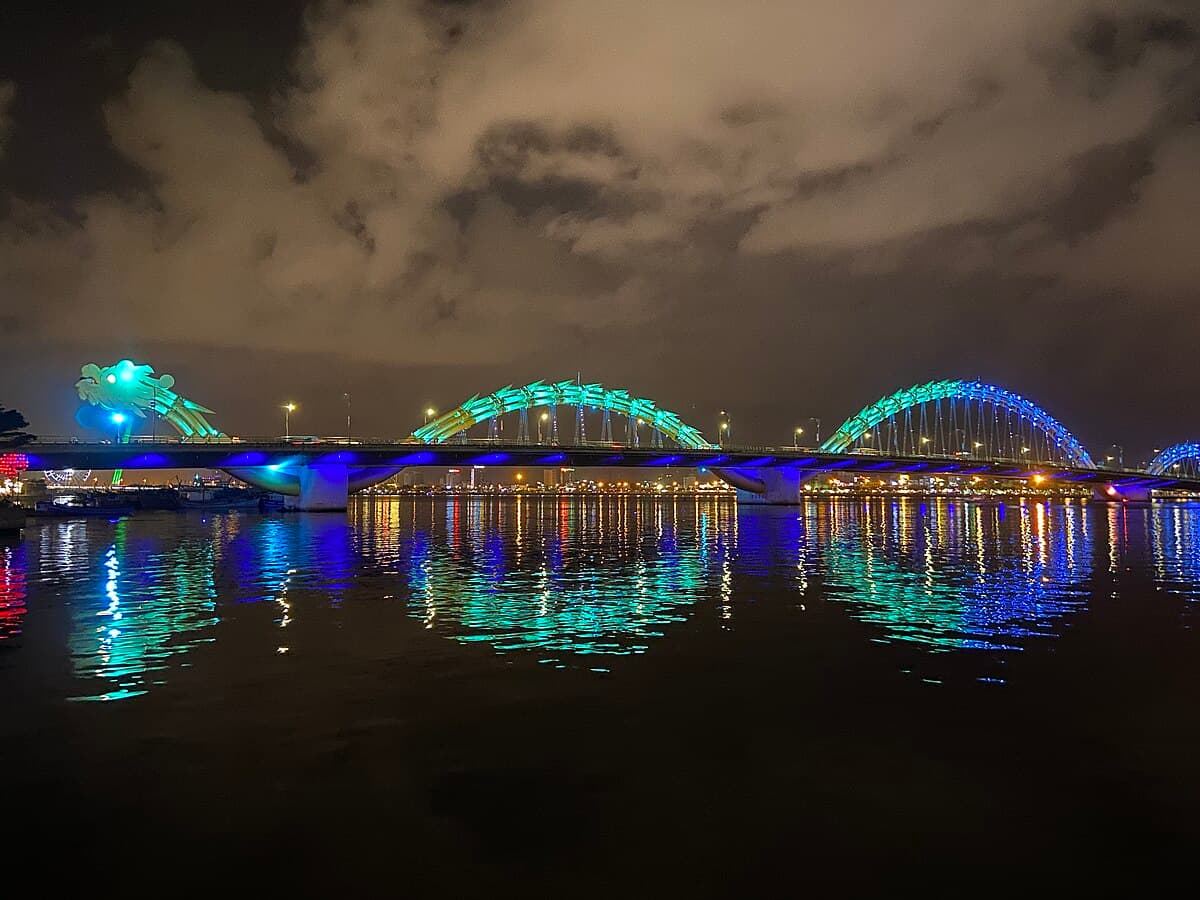
In 2026, Da Nang reads as the central coast's most-modern city — high-rise hotels along the beachfront, the Dragon Bridge that breathes fire on weekend evenings, contemporary restaurant scene, and active municipal cleanup programmes that have kept My Khe beach's water quality consistently in VEA Class A through 2025 per provincial DONRE monitoring.
Why Da Nang
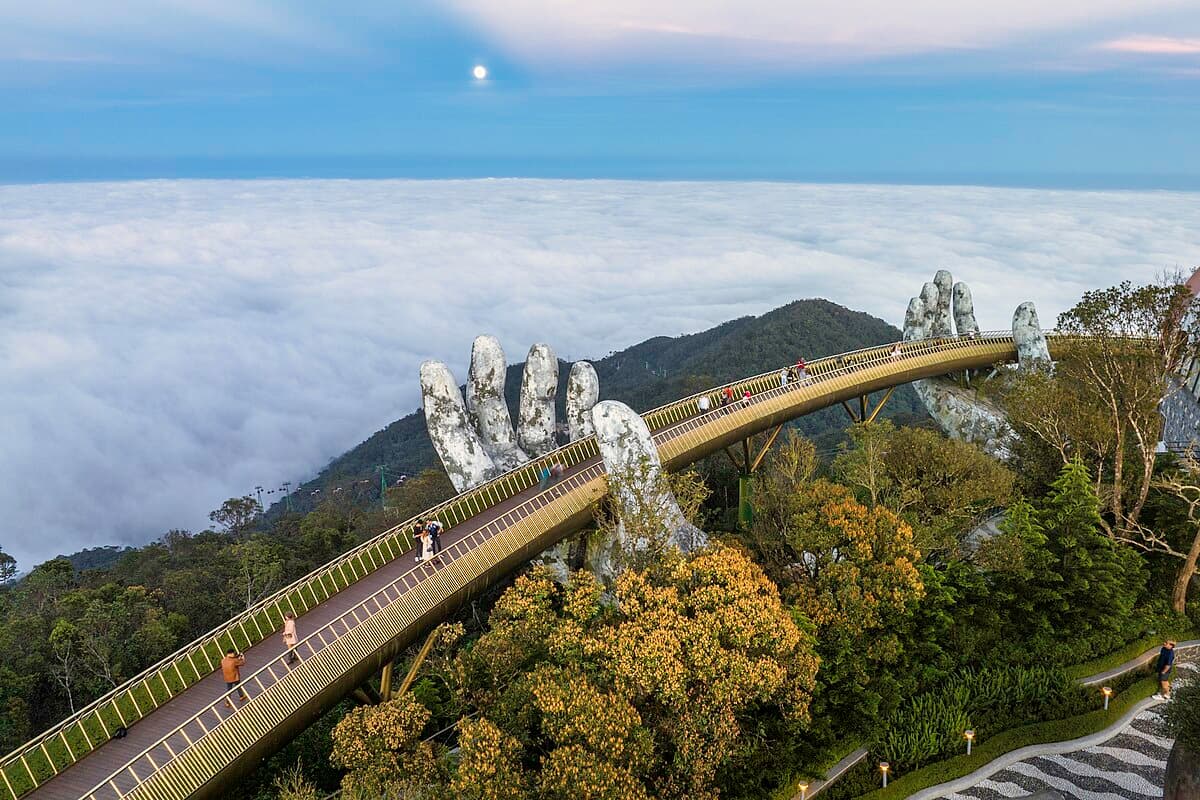
Three reasons to stop here: My Khe beach (one of Vietnam's longest, cleanest beach strips), strategic position between Hoi An and Hue, and the Ba Na Hills + Golden Bridge day excursion that's become an unavoidable Vietnam Instagram moment. The food scene is good but not Hoi An or Hanoi; the historical sites are limited compared with Hue. Most travellers spend 2 days here as part of a wider central-Vietnam itinerary.
What to do in 48 hours
Day 1 — The city and the beach
Morning: walk the Dragon Bridge by daylight, then the Han River waterfront north toward the Cham Museum. The Da Nang Museum of Cham Sculpture is one of Vietnam's most underrated museums — the world's largest collection of Cham-civilisation sandstone artifacts, dating from the 4th to 14th centuries.
Afternoon: My Khe Beach — swim, relax, eat lunch at a beachfront restaurant. The northern stretch closest to the city has the most amenities.
Evening: dinner at a contemporary Da Nang restaurant (Madame Lan, Bé Mặn, or one of the Western-style restaurants near the bridges). On Friday and Saturday evenings at 9 p.m., the Dragon Bridge breathes fire and shoots water — gimmicky but a city institution.
Day 2 — Ba Na Hills or Marble Mountains
Ba Na Hills is the bigger day excursion (5–6 hours total): 30-minute drive to the cable-car base, 15-minute ride up (one of the world's longest), then half a day at the Golden Bridge, the French Village theme park, and the various pagodas. Entry plus cable car runs around 950,000 VND ($38). Get there for the 8 a.m. opening to beat the crowds.
Marble Mountains is a half-day alternative — five limestone hills with caves, Buddhist pagodas, and viewing platforms 11 km south of the city. Entry is 40,000 VND ($1.60); the optional elevator to the top is another 15,000 VND. Combine with a stop at Non Nuoc stone-carving village at the base.
Day 3 — Day trip to Hoi An or Hue
Hoi An is the easy add — 40 minutes south, perfect for an evening lantern-walking visit. Hue is a longer day (2 hours each way) but the imperial Citadel is worth it. The Hai Van Pass coastal drive between Da Nang and Hue is one of Vietnam's most scenic routes.
Day trips and excursions
| Day trip | Duration | Best for | Notes |
|---|---|---|---|
| Marble Mountains | Half day | Caves, pagodas, easy access | 11 km south, $1.60 entry |
| Ba Na Hills / Golden Bridge | Full day | Cable car, theme-park atmosphere | $38 ticket, crowds peak 10 a.m.–3 p.m. |
| Hoi An | Half/full day | Old Town, food, tailors | 35 min south, $12–16 Grab |
| Hue (over Hai Van Pass) | Full day | UNESCO Imperial City | 2 hr each way; private car recommended |
| My Son Sanctuary | Full day | Cham temples (UNESCO) | 70 km southwest, 4th–13th century |
| Son Tra Peninsula | Half day | Sea views, Linh Ung Pagoda | 30 min north, the giant Buddha statue |
When to visit Da Nang
| Months | Conditions | Verdict |
|---|---|---|
| February – August | Hot 28–34°C, dry, beach season | Best |
| September – mid-October | Warm 26–30°C, occasional storms | Last good window |
| Mid-Oct – mid-Nov | Typhoon risk, heavy rain | Cheapest, riskiest |
| December – January | Cooler 20–24°C, drizzly | Quiet, atmospheric |
For temperatures, rain and what each month is like, see our Da Nang and Hoi An weather by month guide.
Where to stay
- My Khe Beach — beachfront 4-star and 5-star resorts; Marriott, InterContinental, Furama. Mid-range $80–160, luxury $200–450.
- Da Nang city centre — closer to restaurants, museums, Dragon Bridge; mid-range $40–80.
- Son Tra Peninsula north of the city — quieter, premium-resort setting (InterContinental Sun Peninsula); $300+/night.
- An Thuong tourist district — backpacker-friendly between the beach and Marble Mountains.
Per our cost index, central Da Nang mid-range rooms have climbed 5–12% annually since 2023.
How to get to Da Nang
By air. Da Nang International Airport (DAD) has direct flights from Hanoi, HCMC, and several international hubs (Seoul, Singapore, Bangkok, Tokyo, KL). Flights from Hanoi or HCMC are 1h 20m, around $40–80 booked 3–4 weeks ahead via Vietnam Airlines, or VietJet.
By train. Reunification Express service from Hue (2.5h, $7–12), Hanoi (13–14h overnight, $25–45 soft-sleeper), or HCMC (16h, similar pricing). Driving these corridors has compressed dramatically since 2023 — Hue-Da Nang remains a 2h tunnel drive but Hanoi-Da Nang is now 10-12h on continuous expressway (see the Vietnam Travel Time Atlas 2026 for the August 2025 Van Ninh-Cam Lo connection).
Within Da Nang. Grab covers the city. Beach hotels are 10–15 minutes Grab from the centre. For the Marble Mountains and Ba Na Hills, hire a private car-and-driver for the day ($50–80).
Limitations
Da Nang reads as a "next stop" rather than a deep destination — most travellers spend 1–2 days here within a longer central-Vietnam itinerary. Workaround: if you have only 2 days in central Vietnam, base in Hoi An (more atmosphere) and day-trip into Da Nang for the Marble Mountains; if you have a beach week, base in Da Nang and day-trip to Hoi An.
The Golden Bridge / Ba Na Hills experience is genuinely crowded and the kitschy French-village theme park feels off-brand for the country. Workaround: if you go, arrive at the 8 a.m. opening to beat the tour buses; combine with the Linh Ung Pagoda on Son Tra Peninsula for a contrasting (free, quieter) afternoon.