Hue was the imperial capital of the Nguyen dynasty from 1802 to 1945 — Vietnam's last royal capital — and its walled Citadel, royal tombs along the Perfume River, and pagodas make it the country's most historically rich city. The Complex of Hue Monuments was inscribed as a UNESCO World Heritage Site in 1993; the 520-hectare Citadel alone is one of the largest royal compounds in Southeast Asia.
The trade-off: Hue is quieter, more atmospheric, and meaningfully cheaper than its central-coast peers (Da Nang, Hoi An). The atmosphere reads imperial-melancholy rather than touristy. One to two days is the right depth for most travellers; war-history visitors add a third for the DMZ.
Why Hue
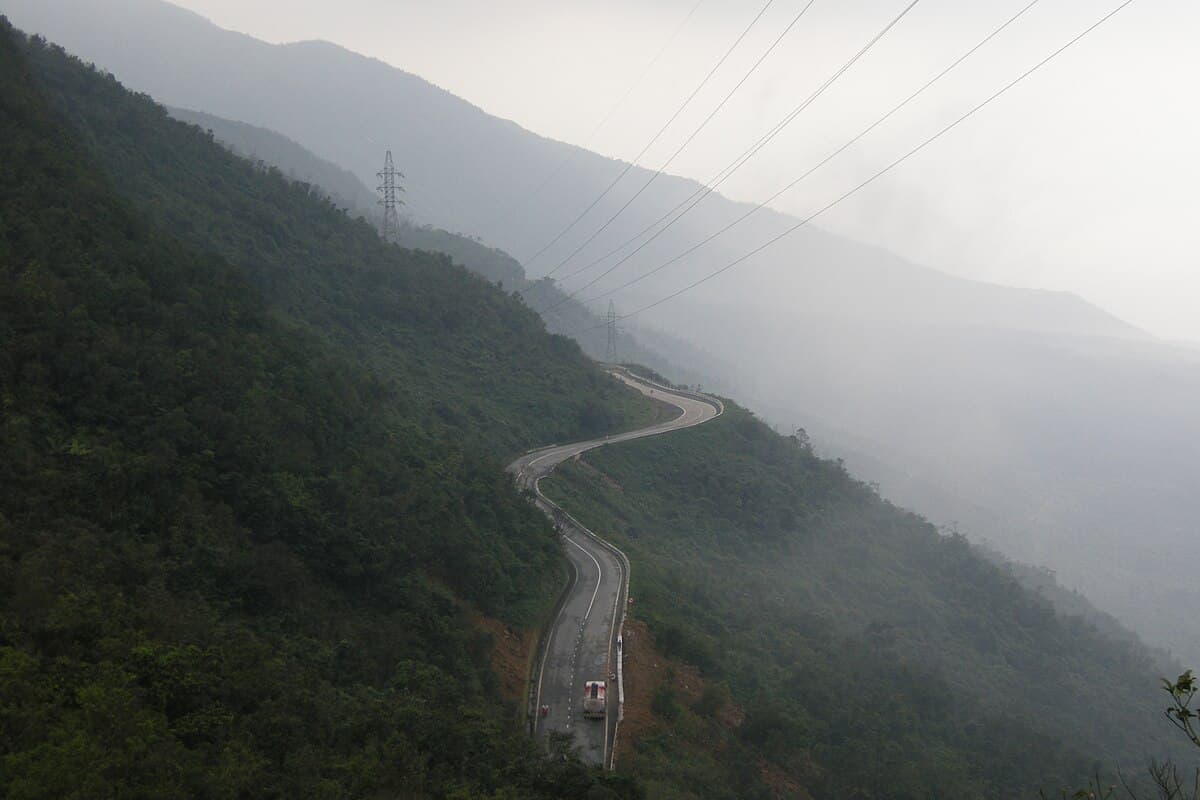
Three reasons to stop here: the Imperial Citadel (Vietnam's most significant single historical site), the food (Hue's imperial cuisine has more uniquely-local dishes than any other Vietnamese city), and the Hai Van Pass drive between Hue and Hoi An (one of Vietnam's most scenic short routes). The city's atmosphere — quieter, more reflective, fewer Old Town crowds — is itself a draw for travellers who found Hoi An too dense.
What to do in 48 hours
Day 1 — The Citadel and central Hue
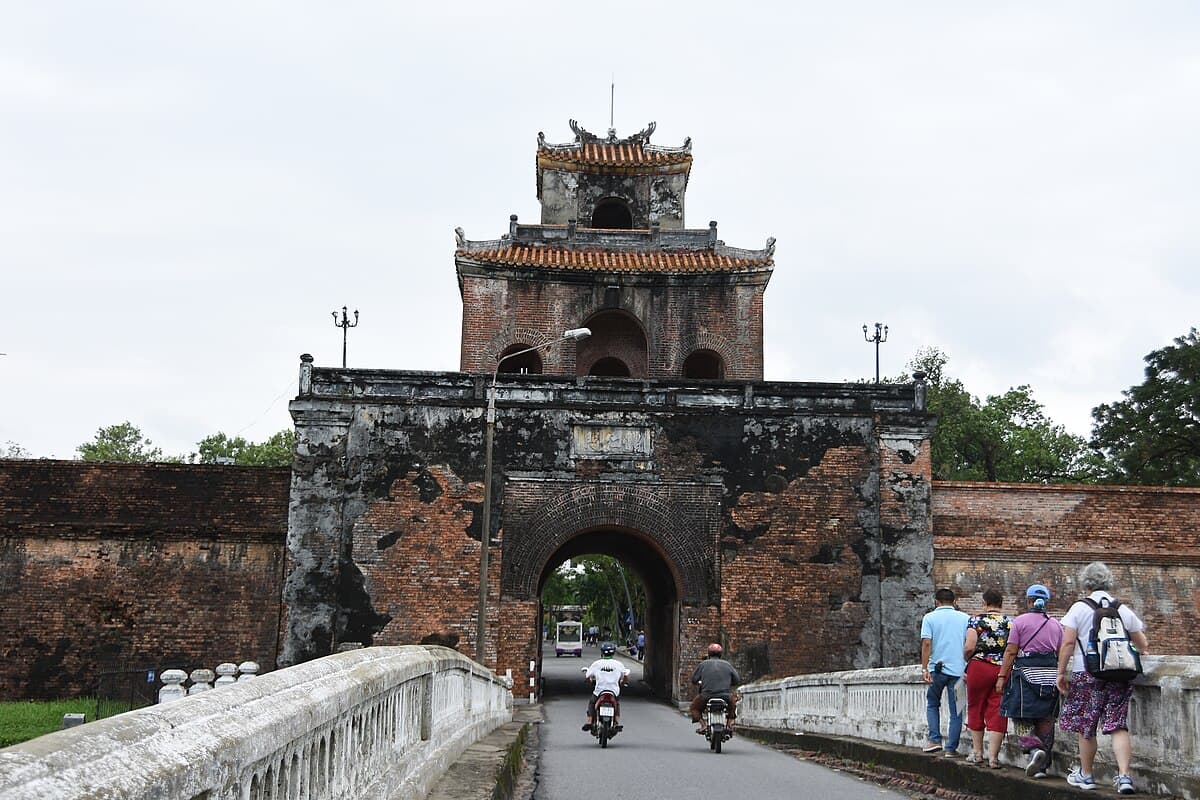
Spend the morning at the Imperial Citadel (Đại Nội). The walled compound covers 520 hectares with the Forbidden Purple City at its centre. Plan 3 hours minimum; start at the Ngọ Môn gate, walk the Thai Hoa Palace, the Mandarin's Halls, and the Forbidden Purple City. The site was heavily damaged during the 1968 Tet Offensive and restoration continues; a third of the original 160 buildings have been rebuilt.
Lunch: bún bò Huế at Hanh Restaurant. Older guides also send readers to Bún Bò Bà Mỹ at 71 Nguyễn Công Trứ, but as of October 2026 Google Maps lists that address as Bún bò Huế O Oanh, so treat the old recommendation as unconfirmed.
Afternoon: walk the Perfume River waterfront, visit Thien Mu Pagoda (seven-storey octagonal tower, the iconic Hue postcard), and an art museum or the antique gates of the Imperial City.
Day 2 — Royal tombs
Three principal Nguyen-dynasty royal tombs along the Perfume River, each a half-day visit:
- Tu Duc Tomb — the longest-reigning Nguyen emperor's complex, pavilions and lakes set in pine forest
- Minh Mang Tomb — the most symmetrical, classical Chinese-influenced
- Khai Dinh Tomb — the most recent and most ornate, hilltop, French colonial influence
The 530,000 VND ($21) Hue 4-monument combo ticket gets you into all three plus the Imperial City — exceptional value. Hire a private driver for the day ($30–50) or use the tourist boat from central Hue.
Day 3 — DMZ or Hai Van Pass departure
The DMZ day trip covers Vinh Moc tunnels (an underground village from the war), Khe Sanh combat base, and the Ben Hai River bridge. Long, history-heavy, 10-hour day. Alternative: depart for Hoi An via the Hai Van Pass with photo stops at Lang Co lagoon, Hai Van summit, and the Marble Mountains.
When to visit Hue
| Months | Conditions | Verdict |
|---|---|---|
| February – April | Dry, mild 22–28°C | Best window |
| May – August | Hot 30–35°C, dry | Beach window if including Lang Co |
| September – October | Building rain | Acceptable, cheaper |
| November – January | Rainy, occasional floods | Avoid if possible; Citadel muddy |
For temperatures, rain and what each month is like, see our Hue weather by month guide.
How to get to Hue
By train. Hanoi to Hue is the 13–14 hour overnight on the Reunification Express, soft-sleeper $25–45. From the south, HCMC to Hue is 18+ hours; flight is faster. Hue to Da Nang is the 2.5-hour Hai Van Pass scenic stretch, $7–12 — one of the world's best train rides. Driving Hanoi-Hue is now 9-10h on the continuously-expanded expressway corridor that completed to Van Ninh in August 2025 (see the Vietnam Travel Time Atlas 2026).
By air. Phu Bai International Airport (HUI) serves Hue, with daily flights from Hanoi (1h 20m, $40–80) and HCMC. Many international travellers fly into Da Nang and overland up to Hue.
By car. Private driver over the Hai Van Pass from Hoi An or Da Nang is the classic central-Vietnam route — 4–5 hours from Hoi An with stops, $60–80 for a private car with driver.
Where to stay
- Phu Cat area (between river and Citadel) — most central, walking distance to the Citadel and food districts. Mid-range $30–55, boutique $70–130.
- South of the river (modern Hue) — newer hotels, restaurants, easier access to royal tombs. Similar pricing.
- Hue Riverside Boutique Resort or Pilgrimage Village — premium-tier options 15 minutes from centre with garden settings; $130–250.
Per our cost index, Hue is the cheapest of the major UNESCO cities — mid-range accommodation 30–40 % below comparable central Hoi An.
What to eat
Hue is one of seven Vietnamese UNESCO World Heritage sites — see the Vietnam UNESCO Sites Atlas 2026 for the full ensemble. Hue's imperial cuisine produced more uniquely-local dishes than any other Vietnamese city:
- Bún bò Huế — the city's national-recognition dish, spicy lemongrass beef soup
- Nem lụi — grilled lemongrass pork skewers wrapped in rice paper with peanut dipping sauce
- Bánh khoai — Hue's crispier, smaller take on southern bánh xèo
- Cơm hến — clam rice with peanuts, herbs, pork crackling; the locals' staple
- Bánh bèo — small steamed rice cakes with dried shrimp, an imperial-cuisine relic
- Salt coffee (cà phê muối) — invented in Hue in 2010, viral in 2023; cuts condensed-milk sweetness with sea salt
For the broader regional cuisine map see our Vietnam food guide.
Limitations
Hue's pace and quiet are features for some travellers and downsides for others — visitors expecting a bustling tourist scene often find it less energetic than Hoi An or Da Nang. Workaround: if a more lively atmosphere matters, plan only 1 day in Hue and base in Hoi An; if quiet and history are the appeal, stay 2 nights for proper Citadel + tomb depth.
The Citadel's restoration is ongoing — the Forbidden Purple City was the most heavily-bombed area of the city in 1968 and only a fraction of the original 160 buildings have been rebuilt. Workaround: the restored Thái Hòa Palace, the Mandarin's Halls, and the gates near Ngọ Môn give the strongest sense of the original; supplement with the Hoi An vs Hue compare for the historical-tourism context.