
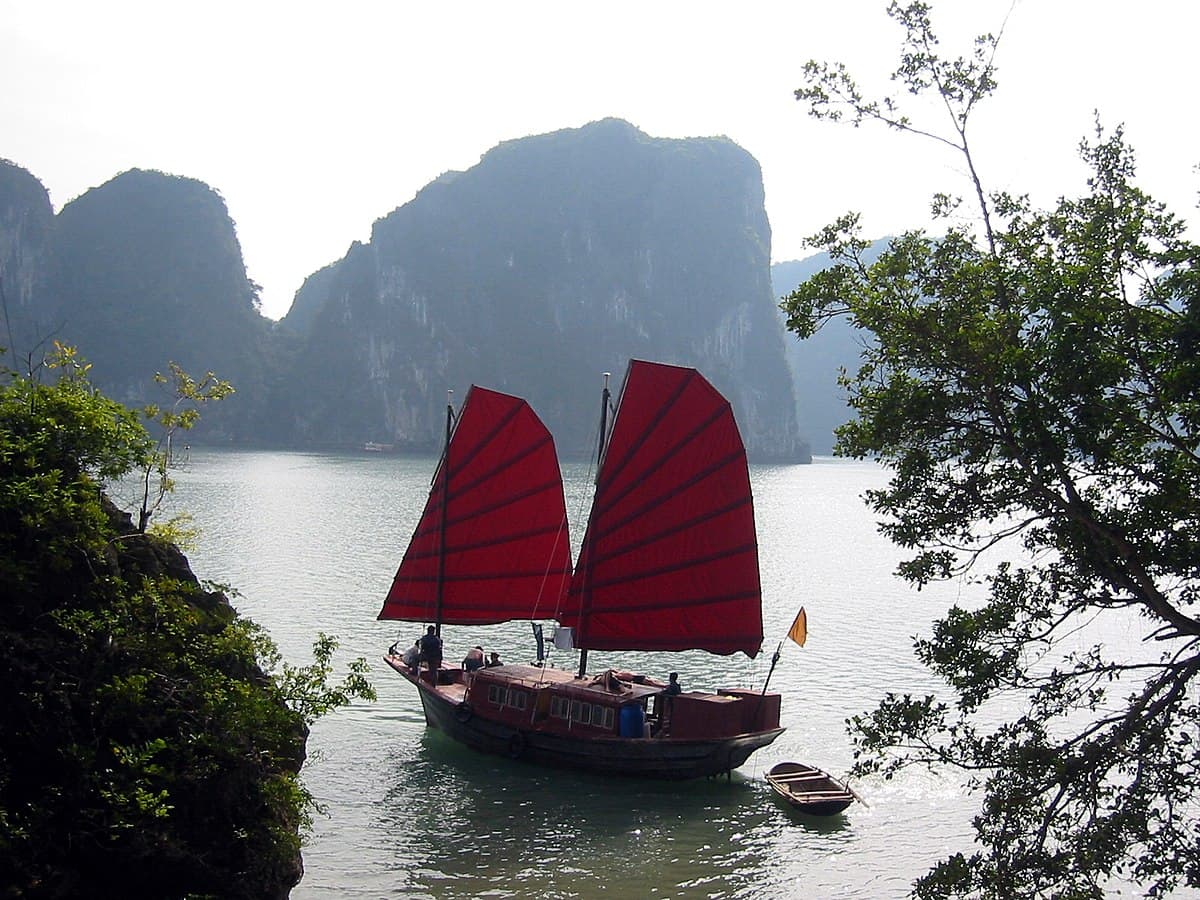
Ha Long Bay is a UNESCO seascape of around 1,600 limestone islands scattered across roughly 1,500 km² of the Gulf of Tonkin, 2h 15m–2h 30m east of Hanoi by private car (or 2h 30m–3h on the shared cruise shuttle) on the Hanoi-Hai Phong expressway, down from 3h 30m+ pre-2015 (see the Vietnam Travel Time Atlas 2026). It earned UNESCO World Heritage status in 1994 (re-inscribed and expanded in 2000) and remains one of Southeast Asia's most-photographed landscapes. It's also one of Vietnam's most-trafficked destinations — visitor pressure has climbed steadily through the 2010s and 2020s per our Ha Long Bay overtourism research.
What that means in 2026: the bay is genuinely beautiful, the cruise experience is genuinely good, and you absolutely want to skip the day trip and overnight instead. The choice between Ha Long proper, Lan Ha (adjacent, quieter), and Bai Tu Long (further north, wilder) shapes the experience more than any other variable.
Pick your bay
| Bay | Vibe | Access | Best for |
|---|---|---|---|
| Ha Long Bay | Classic, iconic, busiest | Cruises from Bai Cháy / Tuần Châu, Hanoi-organised | First-time, mainstream cruise |
| Lan Ha Bay | Quieter, same scenery, kayaking | Cruises from Cat Ba Island | Most travellers — our top pick |
| Bai Tu Long Bay | Wilder, fewer boats, more remote | Premium operators only | Higher budget, second trip |
Lan Ha is our pick for most travellers — same karst landscape as Ha Long, kayak access through hidden lagoons, and significantly fewer competing cruises. The cost is roughly the same as a mid-range Ha Long cruise. Operators include Cat Ba Ventures, Asia Outdoors, and several premium-tier brands.
For the full comparison see our Ha Long vs Cat Ba vs Lan Ha compare.
Overnight or day trip?
Overnight, every time. The bay rewards being there at sunset, sunrise, and the quiet 9 p.m. mooring period when day-trip boats have left. Day-trip itineraries from Hanoi spend 6–7 hours on transport for 3–4 hours on the water and skip the best light.
| Format | Total time | Cost | Verdict |
|---|---|---|---|
| Day trip from Hanoi | 11–12 hours | $40–80 | Acceptable if no overnight option exists |
| 1-night cruise | 24 hours | $119–500+ | The default; book mid-range for best value |
| 2-night cruise | 48 hours | $330–1,000+ | Meaningfully better than 1-night |
Per the Vietnam Travel Cost Index 2026, cruise pricing tiers shake out as:
- Budget cruise (1 night): $119–180 per person
- Mid-range 4-star (1 night): $140–280 per person
- Luxury (1 night): $300–500+ per person
- Mid-range 2-night: $330–500 per person
The single highest-leverage upgrade is from budget to mid-range on a 1-night cruise. The $50–100 marginal cost transforms the experience — fewer passengers, better food, smaller boats, more attentive crew. Most travellers we know who've done both prefer the upgrade.
What a typical cruise itinerary covers
A standard 1-night cruise:
- 8 a.m. pickup from Hanoi by air-conditioned shuttle
- 11:30 a.m. arrive marina, check in, lunch on board
- 1–4 p.m. cruise toward the islands; one cave or floating-village stop
- 4–5 p.m. kayaking or swim stop
- 5:30 p.m. sunset cocktails on deck
- 7 p.m. dinner
- 9 p.m.–morning quiet mooring among the islands
- 7:30 a.m. tai chi on deck (optional, usually fun)
- 9 a.m. brunch + cooking demonstration
- 11 a.m. return to marina
- Arrive Hanoi 3:30 p.m.
Two-night cruises add a full day of further-out cruising, more kayaking time, and access to less-trafficked anchorages.
When to cruise Ha Long Bay
| Months | Conditions | Verdict |
|---|---|---|
| April – June | Warm 23–28°C, dry, occasional storms | Excellent, gets busy |
| July – September | Hot 28–32°C, humid, afternoon storms; typhoon season | Lush green, cheaper; keep your date flexible |
| October – November | Warm 19–29°C, clear skies, rain falling fast; storms possible into October | Sweet spot |
| December – March | Cold 10–18°C, often grey, misty | Atmospheric but chilly; cheapest |
The Ha Long Bay entrance fee economics research tracks visitor-fee pricing — the Quảng Ninh Department of Tourism sets bay-entry fees per route, ranging from 260,000–600,000 VND ($10–24) per person depending on the cruise area. The fee is typically included in cruise pricing.
For temperatures, rain and what each month is like, see our Ha Long Bay weather by month guide.
How to get to Ha Long Bay
By cruise transfer. Most cruises include door-to-door pickup from your Hanoi hotel by air-conditioned shared shuttle (2h 30m–3h each way on the Hanoi-Hai Phong expressway, including multi-hotel pickups). This is the default and what most travellers choose.
Independent transit. Limousine van from Hanoi to Ha Long City is $15–25, takes 2h 15m–2h 30m. Private car runs the same route at the same speed. Useful if you're booking a cruise without included transfer or extending your stay in the area.
To Cat Ba Island (for Lan Ha cruises). Limousine + speedboat combination from Hanoi, ~4 hours total. Operators like Daiichi Travel sell the package directly.
Where to stay if not cruising
Some travellers visit Ha Long without cruising — for shorter-trip flexibility or as a base for day trips on the water:
- Ha Long City (Bai Cháy area) — convenient to marinas but lacks atmosphere; mid-range $35–60.
- Tuần Châu Island — resort-feel, gated, fewer street-food options; mid-range $50–90.
- Cat Ba Island — far better atmosphere, beach access, hiking, and base for Lan Ha cruises; mid-range $35–65. Our pick if you want to base in the area.
Limitations
Cruise quality varies wildly across operators on the same route, and reviews don't always distinguish between excellent and mediocre boats at the same price tier. Workaround: check recent (last 3 months) TripAdvisor and Reddit r/VietnamTravel reviews for the specific cruise name; the Ha Long vs Cat Ba vs Lan Ha compare maps named operators by route.
Environmental pressure on the bay is real and worsening, per UNESCO state-of-conservation reports and our Ha Long Bay residents' perception research. Workaround: prefer Lan Ha or Bai Tu Long cruises over the main Ha Long route — both have lower boat density and the operators tend to be more environmentally compliant; the marginal cost is minimal.
