Hoi An is a 15th-century trading port on the central Vietnamese coast, frozen in time as a UNESCO-listed Old Town and lit at night by thousands of silk lanterns. The town sits at the meeting point of the Thu Bồn River and the South China Sea, was the most important port in Southeast Asia between the 16th and 18th centuries, and survived the Vietnam War largely intact because both sides chose not to bomb it.
What that means for travellers in 2026: a small (population around 152,000), walkable, photogenic town with a 3-block UNESCO Old Town core, four beaches within 10 km, the country's most distinctive regional cuisine, and the best cooking classes in Vietnam. The cost is real: it's also the most-touristed central destination after Da Nang.
Why Hoi An
Three reasons to stop here: the Old Town atmosphere (especially at lantern-hour), the regional cuisine that exists nowhere else in Vietnam (cao lầu, mì quảng, white-rose dumplings, bánh mì Phượng), and the cooking-class infrastructure that has shaped the local economy meaningfully since the 2000s per our Hoi An food tourism transformation research.
The fourth, less talked about reason: it's a logical base for An Bang and Cua Đại beaches (4–5 km out), the Marble Mountains (30 km north toward Da Nang), and My Son Sanctuary (50 km southwest — Cham temples, 4th-13th century).
Hoi An in 48 hours
Evening 1 — Old Town lanterns
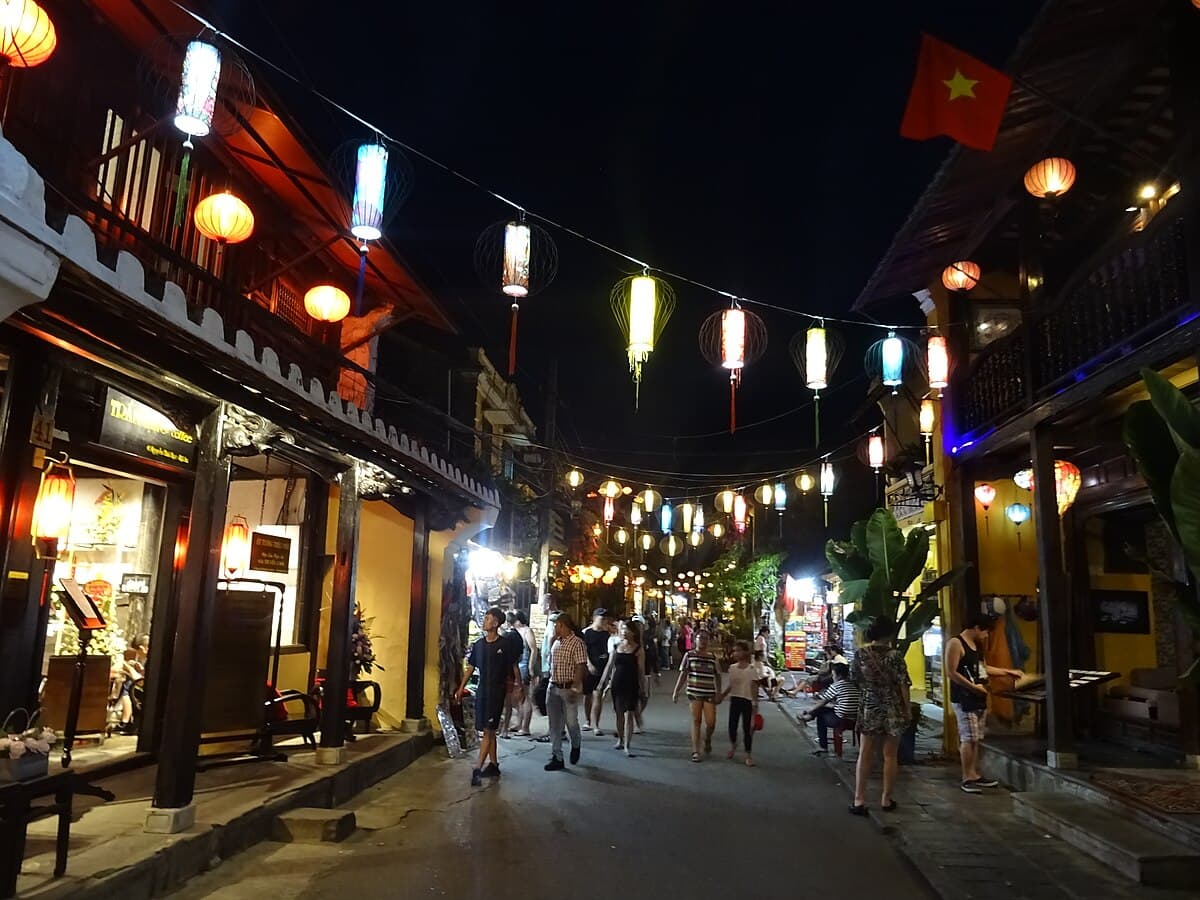
Walk the Old Town as lanterns come on around 5:30–6:00 pm. Cross the Japanese Covered Bridge (1593, one of the country's oldest surviving structures), stop at the Tan Ky Heritage House (200-year-old merchant residence open to the public), float a paper lantern on the Thu Bồn river. Dinner at a riverside restaurant or — better — at a small alley specialist. Try bánh mì Phượng for the famous Bourdain-anointed bánh mì at the eastern edge of the Old Town.
Day 2 — Beach or cooking class
Morning: rent a bike at your guesthouse, ride 4 km east through rice fields and family farms to An Bang Beach. Beachfront restaurants and clubs are cheap; the water (in dry season) is clean. Alternative: a half-day cooking class with a family host ($25–40) including a market visit and hands-on prep of 3–5 regional dishes.
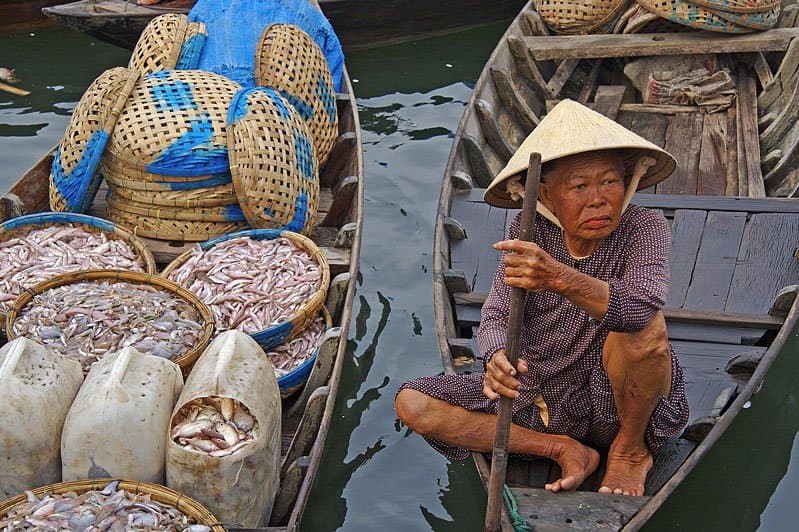
Afternoon: Cam Thanh basket-boat ride through coconut-palm waterways (15-minute drive from Old Town, $15–25 per person), or extended beach afternoon at An Bang.
Evening: a different riverside restaurant; queue at the local night market for grilled-skewer street food.
Day 3 — Day trip
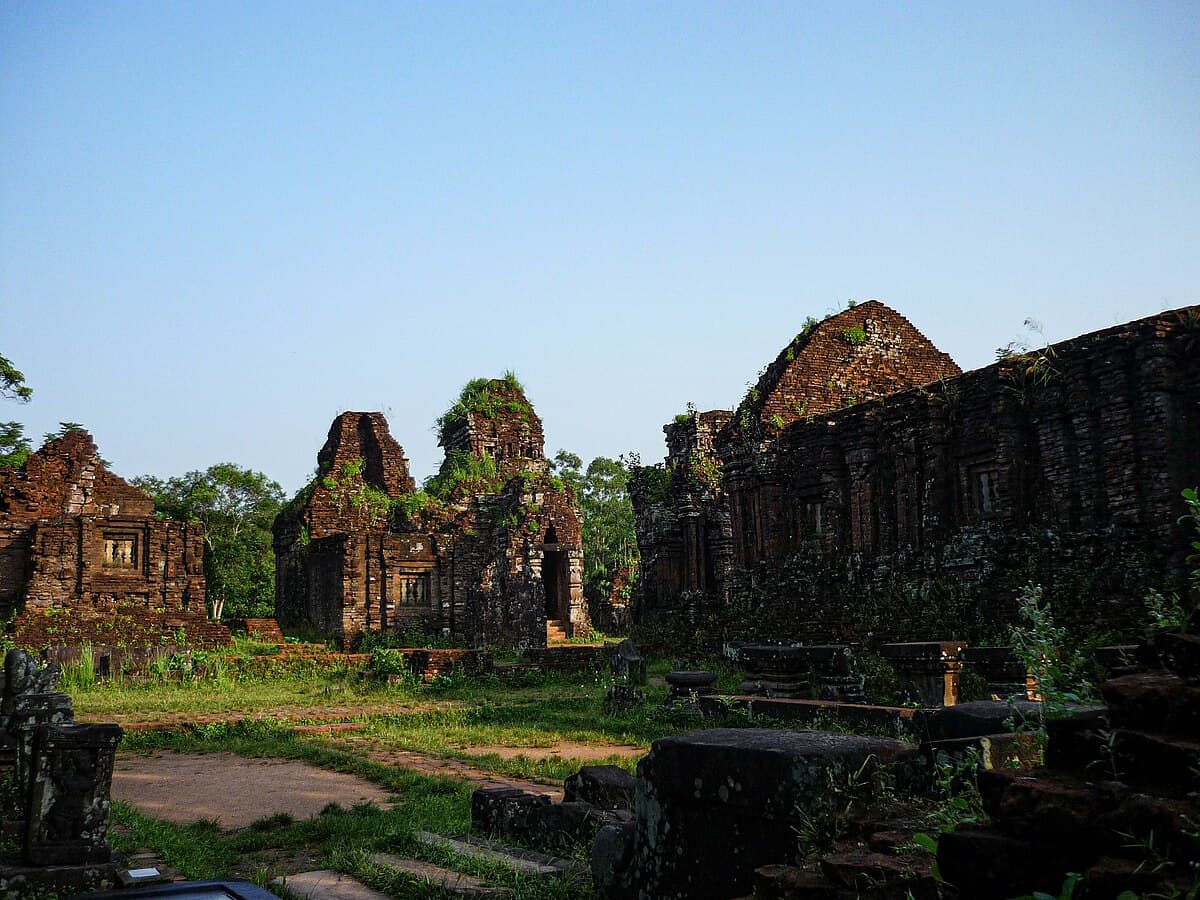
My Son Sanctuary at sunrise — Cham temples, 4th–13th century, UNESCO World Heritage, photographically stunning early in the day before tour buses arrive. Alternative: Marble Mountains + Linh Ung Pagoda day trip toward Da Nang, or Cham Islands boat day for snorkelling (the Cham Islands day trip page has the full operator breakdown).
Day trips and excursions
| Day trip | Duration | Best for | Notes |
|---|---|---|---|
| My Son Sanctuary | Half day, 4–5 hours | Cham history, sunrise photography | UNESCO, 50 km southwest |
| Marble Mountains | Half day | Caves, pagodas, easy access | 30 km north, en route to Da Nang |
| Cham Islands | Full day | Snorkelling, fresh seafood | Boat from Cua Dai, weather-dependent |
| Hue (over Hai Van Pass) | Full day | UNESCO Imperial City | Combine with Lang Co lunch |
| Bach Ma National Park | Full day | Hiking, waterfalls | Lesser-known, requires permit |
When to visit Hoi An
February to August is the dry, hot, beach-friendly window. Mid-July through September has the most consistent dry weather but also the highest temperatures (peak around 34°C). Late October through December is the rainy peak — Cua Đại beach floods regularly, and Hoi An itself can flood in the lowest streets near the river during severe storms.
The lantern atmosphere peaks on the full-moon night of every lunar month, when motorised traffic is banned in the Old Town and only lanterns (no electric lights) are permitted on some streets. Mid-Autumn Festival (15th day of the 8th lunar month, mid-September to early October) is the biggest lantern night of the year.
For temperatures, rain and what each month is like, see our Da Nang and Hoi An weather by month guide.
Where to stay
- In the Old Town — most atmospheric, but small, no parking, mid-range rooms can be loud at night. Expect $35–65 mid-range, $90–180 boutique.
- Cẩm Châu (between Old Town and beach) — bike-distance to both, quieter, popular with families. Mid-range $30–50.
- An Bang Beach — best for beach-focused trips; small guesthouses and beach hotels. Cheaper than the Old Town for similar comfort. Mid-range $40–70.
- Cẩm Thanh — among the coconut groves, very quiet, requires a bike or scooter to get into town.
Per our cost index, central Hoi An mid-range accommodation has climbed 5–12% per year compounded since 2023.
How to get to and around Hoi An
Arrival. No airport — fly to Da Nang International Airport (DAD), then Grab to Hoi An (40 minutes, $10–16). Hue–Hoi An by train (over the Hai Van Pass) is $7–12 and 2.5 hours; from there Grab the final stretch. For driving times along the central corridor (Hue-Hoi An is 2h 30m-3h, Da Nang-Phong Nha now 5-6h post-Van Ninh-Cam Lo) see the Vietnam Travel Time Atlas 2026.
Within Hoi An. Walking covers the Old Town. Bike rental ($1–2/day) is the standard way to reach An Bang Beach and Cam Thanh. Grab car for trips further out (Marble Mountains, My Son).
What to eat
Hoi An has more regionally-distinctive dishes per kilometre than anywhere in Vietnam:
- Cao lầu — thick chewy noodles with sliced pork and greens; authentic versions use water from the Ba Le well in Hoi An's Old Quarter.
- Mì quảng — yellow turmeric noodles with shrimp, pork, peanuts, rice cracker. Quảng Nam province specialty.
- White-rose dumplings (bánh bao bánh vạc) — translucent shrimp dumplings shaped like roses; uniquely Hoi An.
- Bánh mì Phượng — Anthony Bourdain's famous Hoi An stop; still genuinely excellent. It has a food-safety history you should know: in September 2023, 313 people fell ill with Salmonella after eating there, and Quang Nam province fined the shop 96 million VND and suspended it for three months, as PLO reported. It reopened in early January 2024 with stricter checks on ingredients, per the Saigon Times.
- Cooking classes — Hoi An's strongest food experience for visitors. Family-host ~$25–40, restaurant-run $50–80.
For the regional cuisine map see our Vietnam food guide; for the broader food-tourism context the Hoi An food tourism transformation research is the source.
Limitations
Visitor pressure on the Old Town has climbed steadily since the early 2010s and is now a defining feature of the experience — every guide that calls Hoi An "undiscovered" is selling something. Workaround: walk the Old Town at sunrise (6:00–7:30 a.m.) or after the day-tour buses leave (after 8:30 p.m.) for the atmosphere without the crowds; base outside the Old Town in An Bang or Cẩm Thanh.
Cua Đại beach has documented coastal-erosion issues that have shortened the usable beach significantly since 2010 — sandbag walls and hard-engineering interventions are visible. Workaround: for swim and beach time, head to An Bang Beach instead (still wide and intact), which is 2 km north of Cua Đại and a comparable bike ride from the Old Town.