
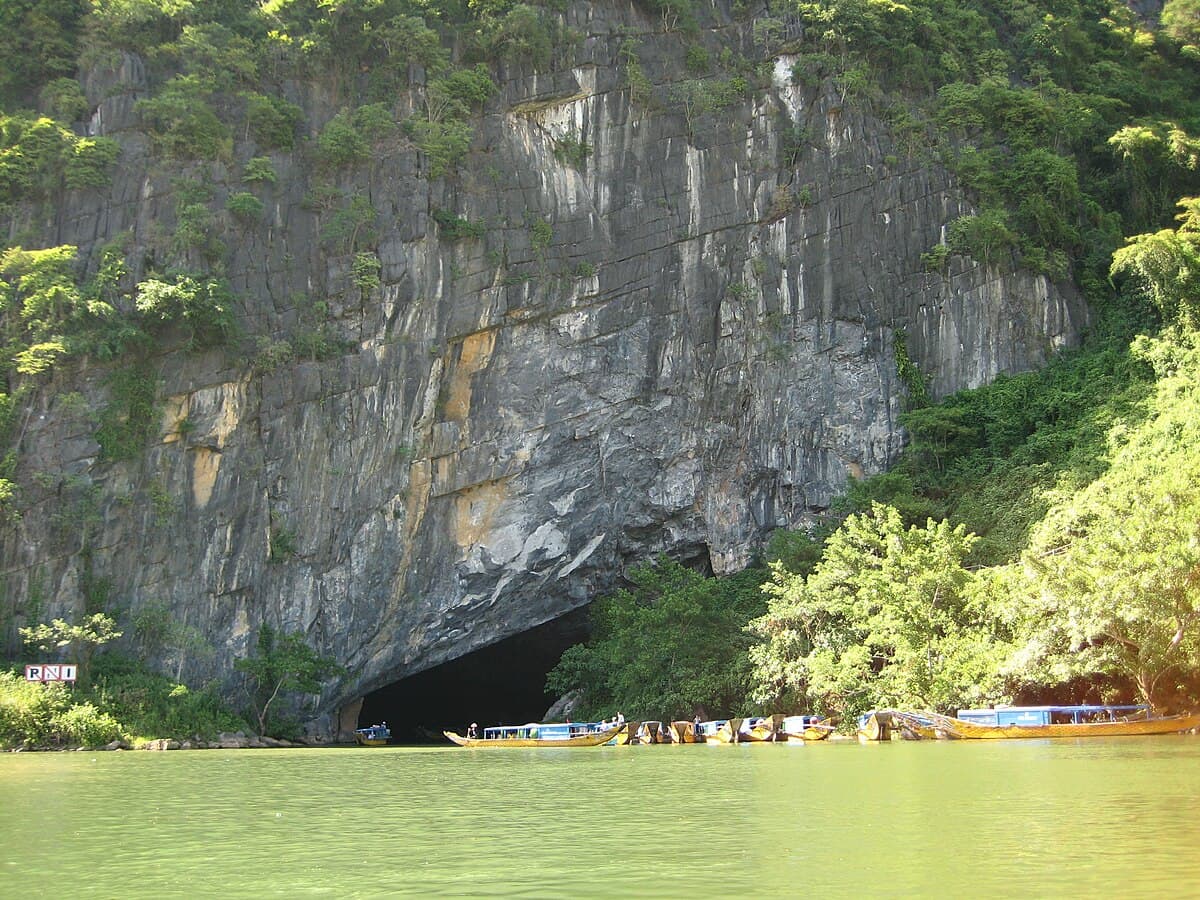
Phong Nha-Ke Bang National Park holds one of the most spectacular karst landscapes on Earth and the world's largest cave, Son Doong, discovered in 2009. Covering 1,233 km² of central Vietnam, the park is UNESCO-listed (see the Vietnam UNESCO Sites Atlas 2026 for the full ensemble), lightly visited compared to Halong or Hoi An, and genuinely thrilling if you have any interest in caves or jungles.
Why visit Phong Nha
The caves are not your average tourist caves. Son Doong is big enough to house a Boeing 747 and has its own jungle and weather system. Hang En, the third largest, hosts a river and a beach. Paradise Cave (Thien Duong) is 31km long with 80m-high chambers walkable on boardwalks. Even the tourist caves — Phong Nha, Dark, Paradise — would be headline attractions anywhere else.
The surrounding village of Son Trach has grown up since 2010 into one of the most likeable small travel hubs in Vietnam: a single road of farmstays, craft-beer bars, and tour operators surrounded by rice paddies and limestone pinnacles.
Best time to visit
Phong Nha has an unusual climate because caves flood.
- February to May: ideal. Dry, cool (18-28°C), all caves open.
- June to August: hot (30-35°C) but caves are perfect for swimming.
- September to November: typhoon and flood season. Many caves close. Expect trip cancellations.
- December to January: cool (15-22°C) and often wet; some caves still closed.
How to get there
- Overnight train SE19 from Hanoi: departs 19:30, arrives Dong Hoi 06:00. Soft sleeper 700,000 VND. Best option.
- Fly to Dong Hoi (VDH): 1h30 from Hanoi or HCMC, then 45-minute shuttle (180,000 VND) or taxi (500,000 VND) to Son Trach.
- From Hue: 4 hours by bus (200,000 VND) or private car ($80). The drive from Da Nang is now 5-6h since the Van Ninh-Cam Lo expressway opened in August 2025 (see the Vietnam Travel Time Atlas 2026 for the new central corridor).
- Open-tour bus from Hue or Ninh Binh: direct to Son Trach, 200,000-250,000 VND.
Where to stay
- Son Trach village: walking distance to restaurants and tour offices. Easy Tiger Hostel and Central Backpackers for dorms ($10-14). Victory Road Villas, Sunny Villa, and Heritage Boutique for mid-range ($40-70).
- Phong Nha Farmstay: 10 minutes out, a traveller institution in the rice fields. Bungalows $45-90.
- Chay Lap Farmstay: riverside, 15km away, peaceful resort feel. $60-120.
Top things to do
- Paradise Cave (Thien Duong) — the accessible showpiece. 1km boardwalk through cathedral-sized chambers. 250,000 VND entry. Half-day.
- Phong Nha Cave — river cave entered by wooden boat. 150,000 VND entry plus 550,000 VND per boat (up to 12 people). 2 hours.
- Dark Cave (Hang Toi) — zipline across the river, swim in, mud bath inside. Adventure combo 450,000 VND. The most fun cave experience.
- Hang En 2-day expedition — camp inside the world's third-largest cave. Oxalis, $330-400.
- Tu Lan day trip — wild swimming through jungle caves. $75 with Oxalis Adventure.
- Bong Lai Valley cycle — flat loop past The Pub With Cold Beer (a farm restaurant where you pick a chicken). Rent a bike for 50,000 VND.
- Botanic Garden trek — shaded jungle walk to waterfalls. 40,000 VND.
Son Doong — is it for you?
Oxalis runs a 4-day, 3-night expedition into Son Doong with a $3,000 price tag and a 1,000-permit-per-year cap (January-August only). It sells out 8-12 months ahead. Not easy — 25km of trekking, two rope descents, cave camping — but transformative if you can swing it.
How many days
- 2 days: Paradise + Phong Nha + Dark Cave
- 3 days: add Bong Lai Valley or a jungle trek
- 4+ days: add Hang En expedition
Typical costs
- Dorm bed: $10-14
- Mid-range room: $40-70
- Cave entry fees: 150,000-250,000 VND each
- Meals: 60,000-150,000 VND
- Motorbike rental: 150,000 VND/day
- Full-day adventure tour: 1,200,000-2,000,000 VND
Phong Nha is the most underrated stop in Vietnam. Skip it only if caves bore you — otherwise build in three days between Hue and Hanoi.
Limitations
Phong Nha-Ke Bang National Park is genuinely remote — getting there is a 9-hour overnight train or a 4-hour drive from Hue (now 5-6h from Da Nang on the August 2025 Van Ninh-Cam Lo expressway), which deters travellers on tight itineraries. Workaround: plan 3 nights minimum to justify the journey; the cave system is the most extensive in the world and deserves the time. Combining with Hue (3 nights central + 2 nights Phong Nha) is the cleanest itinerary.
Cave tour pricing varies meaningfully by operator and route — Paradise Cave and Phong Nha Cave are accessible day visits, but Hang Son Doong (the world's largest cave) requires a multi-day expedition with Oxalis Adventure at around $3,000 per person, booked 12+ months ahead. Workaround: for most travellers, the Paradise Cave + Dark Cave combination is the best-value introduction; save Son Doong for a return trip if it earns one.
