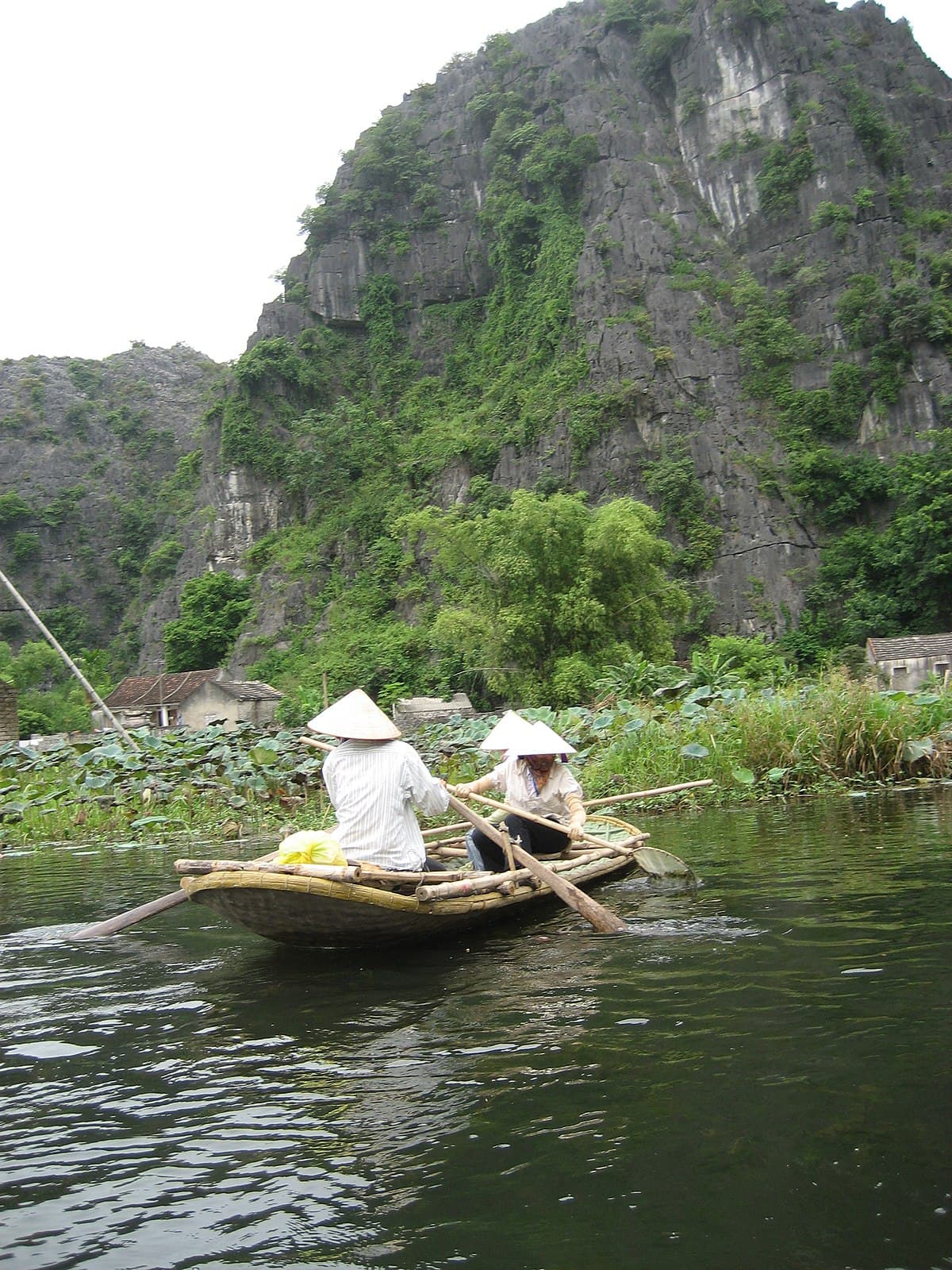
Ninh Binh sits 90 km south of Hanoi — now 1h 25m–1h 45m by car since the April 2023 Mai Son-QL45 expressway extension — and is famous for limestone karsts rising from emerald rice paddies, a landscape often called "Ha Long Bay on land" because it's geologically the same karst system, just inland and above sea level. The Trang An Landscape Complex earned UNESCO World Heritage status in 2014 for both its natural geology and cultural sites; it remains one of only a handful of UNESCO mixed-criteria sites in Southeast Asia — see the Vietnam UNESCO Sites Atlas 2026 for the full Vietnamese ensemble.
Most visitors arrive as a day trip from Hanoi (an easier proposition now that the post-April-2023 expressway has tightened the drive to 1h 25m–1h 45m). The right move is to stay one night — the difference between sunrise at Mua Cave (empty, golden light) and sunrise crammed onto a 7 a.m. tour bus is the difference between a memorable trip and a generic one.
Why Ninh Binh
The pitch: spectacular karst landscape, rice-paddy photography, three sites in striking-distance walking range (Trang An, Tam Coc, Mua Cave), the country's largest Buddhist complex (Bai Dinh), and a UNESCO designation that anchors the area against unmanaged development. All within 2 hours of Hanoi.
The area is most rewarding for travellers who enjoy active sightseeing — boat rides, walking, cycling, viewpoint hikes. It's less of a passive-relaxation destination than a beach city; the days are paced and there's always something to climb or row.
What to do in 24–48 hours
Day 1 — Trang An or Tam Coc + Mua Cave
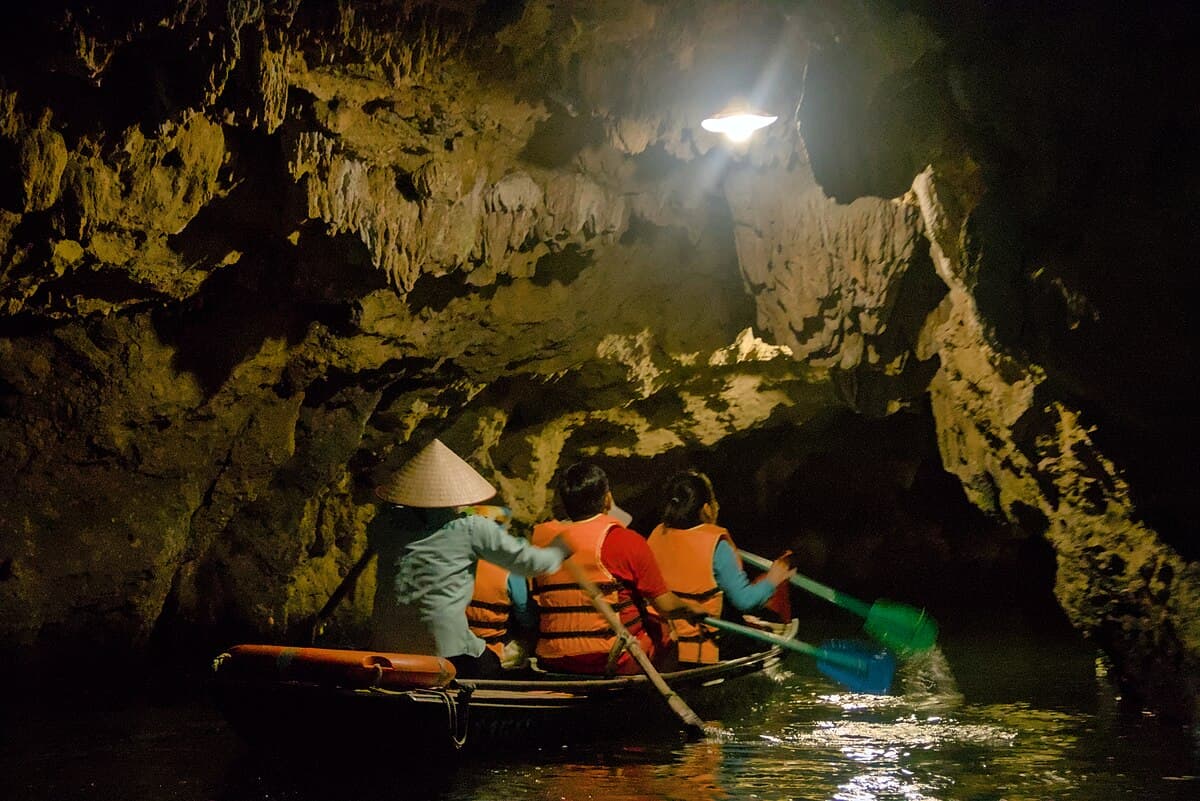
Morning: Trang An boat tour (the better of the two boat options) — 2.5–3 hours, three cave-temple stops, hand-rowed through nine karst lagoons. Entry fee is around 250,000 VND ($10) including the boat ride.
Lunch: at a Tam Coc homestay, typically goat meat (the area's specialty) and rice-paddy vegetables.
Afternoon: Mua Cave — 500 stone steps to a panoramic viewpoint over Tam Coc valley. The afternoon photo conditions (4–5 p.m.) are good but the morning visit at sunrise (5:30–6:30 a.m.) is the iconic one. Entry is 100,000 VND ($4).
Evening: dinner at a Tam Coc or Trang An homestay, then early to bed for the sunrise tomorrow.
Day 2 — Sunrise + Hoa Lu + Bai Dinh
Sunrise (5:30–6:30 a.m.): Mua Cave again if you missed it, or a quiet rice-paddy walk from your homestay. The light at 6:30 a.m. with mist rising off the rice fields is the area's photographic prize.
Mid-morning: Hoa Lu, the 10th-century royal capital of the Dinh and early Le dynasties — now two small temples in a field of karsts. Brief stop (1 hour).
Late morning: Bai Dinh Pagoda, Southeast Asia's largest Buddhist complex. Open from 7 a.m.; allow 2 hours.
Afternoon: return to Hanoi or continue south by train.
Sites at a glance
| Site | Duration | Cost | Best time |
|---|---|---|---|
| Trang An boat tour | 2.5–3 hours | 250,000 VND ($10) | Morning, less wind |
| Tam Coc boat tour | 1.5–2 hours | 195,000 VND ($8) | May–June for rice harvest |
| Mua Cave viewpoint | 1.5 hours (climb + photos) | 100,000 VND ($4) | Sunrise or sunset |
| Hoa Lu ancient capital | 1 hour | Free | Any time |
| Bai Dinh Pagoda | 2 hours | 60,000 VND ($2.40) shuttle inside, free entry | Early morning |
| Cuc Phuong National Park | Full day | 60,000 VND ($2.40) | Apr–May for butterfly season |
Where to stay
- Tam Coc village — best for boat-tour proximity, homestay-heavy, valley views, the most-recommended base for an overnight. Mid-range $25–50, boutique $60–120.
- Trang An area — close to the UNESCO boat route, quieter than Tam Coc. Similar pricing.
- Ninh Binh city — convenient to the train station, but the city itself is bland; stay here only if logistics demand it.
- Tam Coc Garden Resort or Emeralda Resort — premium-tier options if you want a hotel rather than a homestay; $150+/night.
Per the Vietnam Travel Cost Index 2026, Ninh Binh accommodation is among the cheapest UNESCO-adjacent areas in Vietnam.
How to get to Ninh Binh
By train. Hanoi station to Ninh Binh station, 90 minutes, around 100,000 VND ($4). The cheapest option and very reliable. From Ninh Binh station, taxis or homestay pickups cover the final 10 km to Tam Coc or Trang An.
By limousine van. Hanoi Old Quarter to Ninh Binh, 1h 25m–1h 45m door-to-door post-April-2023 expressway extension, $10–12. Operators include FUTA, Sapa Express, and several smaller services. Easiest for independent travellers. See our Vietnam Travel Time Atlas 2026 for the corridor-by-corridor build-out.
By organised day tour. $35–55 per person including transport, lunch, entry fees, and English-speaking guide. Good for one-day visits, less flexible than independent.
What to eat
Ninh Binh's local specialties:
- Goat meat (thit dê) — the area's signature, prepared seven ways (grilled, hot pot, salad, etc.). Most homestays serve at least three preparations.
- Burnt rice (cơm cháy) — crispy rice tile served with a savoury topping; a Ninh Binh take on national-level Vietnamese street food.
- Mountain snails (ốc núi) — a Ninh Binh delicacy if you can stomach the appearance.
Limitations
Ninh Binh's biggest tourism challenge is morning-tour-bus density at Trang An and Mua Cave between 9 a.m. and 3 p.m. — exactly the window most Hanoi day-trippers visit. Workaround: stay one night locally; the 5:30–7:30 a.m. and 4:30–6:30 p.m. windows are dramatically quieter and the photography is meaningfully better.
The area's tourism build-out has reshaped some of the karst-valley villages around Tam Coc — newer homestays, restaurants, and parking lots have replaced rice fields in places. Workaround: book a homestay 1–2 km outside the Tam Coc cluster (Khe Đầm, Đại Hữu, or the Trang An side) for a quieter, more agricultural setting.