
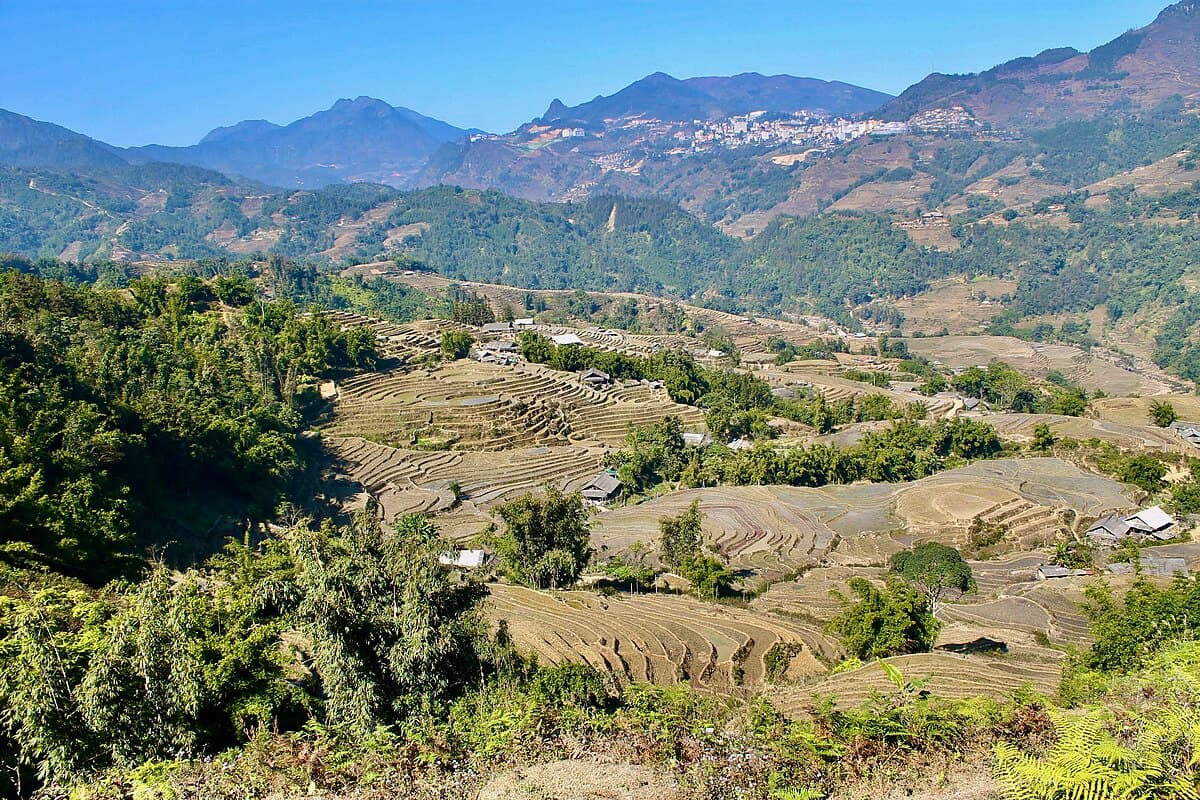
Sapa is Vietnam's northwest highland region — a stretch of dramatic terraced rice valleys, H'mong and Red Dao ethnic-minority villages, and Fansipan, at 3,143 m the highest peak in Indochina. The area sits 320 km northwest of Hanoi at 1,500 m elevation in Lào Cai province; the climate is consistently 10°C cooler than Hanoi and the landscape is the most photographed in northern Vietnam.
The complication: Sapa town itself has been a construction site since 2016 when the Fansipan cable car opened and triggered a wave of unmanaged hotel construction. The town centre is loud, dusty, and visually unremarkable. The fix is simple — base out of a valley village 15–40 minutes away, where the homestays are family-run, the views are intact, and the experience matches the photographs you saw before booking.
Why Sapa
The pitch: the most dramatic rice-terrace landscape in Vietnam and one of the most accessible ethnic-minority cultural experiences in Southeast Asia. The two H'mong and Red Dao communities have lived in these valleys for generations; their villages remain working farms rather than tourist attractions, and a 2-day trek typically includes a homestay dinner cooked by your hostess and shared with her family.
What to do in Sapa
Day 1 — Arrive and settle
Most overnight buses arrive Sapa town around 5–6 a.m. A homestay pickup is usually included (or $10–15 by motorbike taxi). Spend the morning settling in, walking the valley near your homestay, and acclimatising. Afternoon: an easy 2–3 hour walk to a neighbouring village (Lao Chai → Ta Van is the classic 4 km flat route).
Day 2 — Full-day trek
Most homestays organise a day's trek with a local guide. The typical loop covers 12–18 km through Ta Van, Giang Ta Chai, and the bamboo-forest section above the valley. Stop for lunch with a Red Dao family; arrive back at the homestay mid-afternoon.
Day 3 — Fansipan or longer trek
The Fansipan cable car (around $32 round-trip) reaches within 600 m of the summit; total time from base station is 3–4 hours including walking to the peak's pagodas. Alternative: an extended 2-day homestay trek to a less-visited village like Hau Thao or Ban Ho.
Treks and routes
| Route | Distance | Difficulty | Notes |
|---|---|---|---|
| Cat Cat Village (Sapa town) | 3 km | Easy, paved | Touristy but accessible; closest to town |
| Lao Chai → Ta Van | 4 km | Easy, valley floor | Classic first walk; flat |
| Ta Van → Giang Ta Chai → Su Pan | 12 km | Moderate | Half-day; popular guided route |
| Ta Phin (Red Dao villages) | 8 km loop | Moderate | Quieter than Ta Van loop |
| Y Linh Ho → Lao Chai → Ta Van | 14 km | Moderate, valley + climb | Day trek; ends at homestay |
| Bach Moc Luong Tu | 2 days | Hard, technical | Vietnam's 3rd-highest peak, requires guide |
| Fansipan summit (on foot) | 2–3 days | Hard | Permits required, guided only |
Where to stay
- Sapa town — skip unless you have mobility limits that rule out village-based homestays. The town has all the chain hotels but none of the atmosphere.
- Ta Van village — the most popular homestay base, 15 minutes from town, valley views, good mix of guesthouses ($15–35/night) and small boutique stays ($50–90).
- Y Linh Ho or Lao Chai — closer to Sapa town than Ta Van, slightly quieter, similar pricing.
- Topas Ecolodge — premium-tier eco-lodge ~40 minutes from town, around $200+/night. Bungalows on a ridge with sweeping valley views.
- Sapa Sisters — a women-led trekking + homestay collective, well-regarded for ethical operator practice.
Per the Vietnam Travel Cost Index 2026, Sapa mid-range nightly rates run $75–130; the area is one of the cheaper UNESCO-adjacent destinations.
When to visit
| Months | Conditions | Verdict |
|---|---|---|
| September – November | Golden harvest, dry, cool 14–22°C | Peak season, golden terraces |
| April – May | Water-mirror planting season, mild | Excellent alternative to autumn |
| June – August | Hot 22–30°C, heavy afternoon rain | Lush green, dramatic, occasional landslides |
| December – February | Cold 5–15°C, foggy, occasional snow | Atmospheric but cold; book heated rooms |
| March | Transition, often misty | Shoulder; cheaper |
For temperatures, rain and what each month is like, see our Sapa weather by month guide.
How to get to Sapa
By limousine van (recommended). 5–6 hours from Hanoi via the Nội Bài–Lào Cai expressway (down from 8-10h pre-2014; see the Vietnam Travel Time Atlas 2026). Most operators are door-to-door from Hanoi Old Quarter hotels to Sapa town. Operators include Sapa Express, Inter-Bus Lines, and Green Bus. Cost: $20–35. For operator-level safety and comfort, see the Vietnam Sleeper Bus Operator Atlas 2026.
By train. Hanoi to Lào Cai station, soft-sleeper berth $30–45, takes 8 hours overnight. Then a 1-hour minivan from Lào Cai to Sapa. More romantic but slower and more expensive than the bus since the freeway opened.
Within Sapa. Motorbike rentals ($5–10/day), Grab is not consistently available outside Sapa town. Most homestays arrange transport, treks, and Fansipan cable-car bookings on your behalf.
Limitations
Sapa's rice-terrace photos rotate the same handful of valleys; the deeper experience of the area requires a guided trek and homestay rather than a day trip from town. Workaround: plan two nights minimum in a valley village (Ta Van, Y Linh Ho); skip the Sapa town hotels.
The cable-car-and-resort tourism wave has reshaped the area in ways that are visible from the trekking trails — new construction, road widening, increased motorbike traffic in villages. Workaround: prefer further-out valleys (Ta Phin, Hau Thao, Ban Ho) for a quieter experience that still has the landscape; or consider the Ha Giang loop as a wilder alternative; see our Sapa vs Ha Giang compare for the full side-by-side.

