
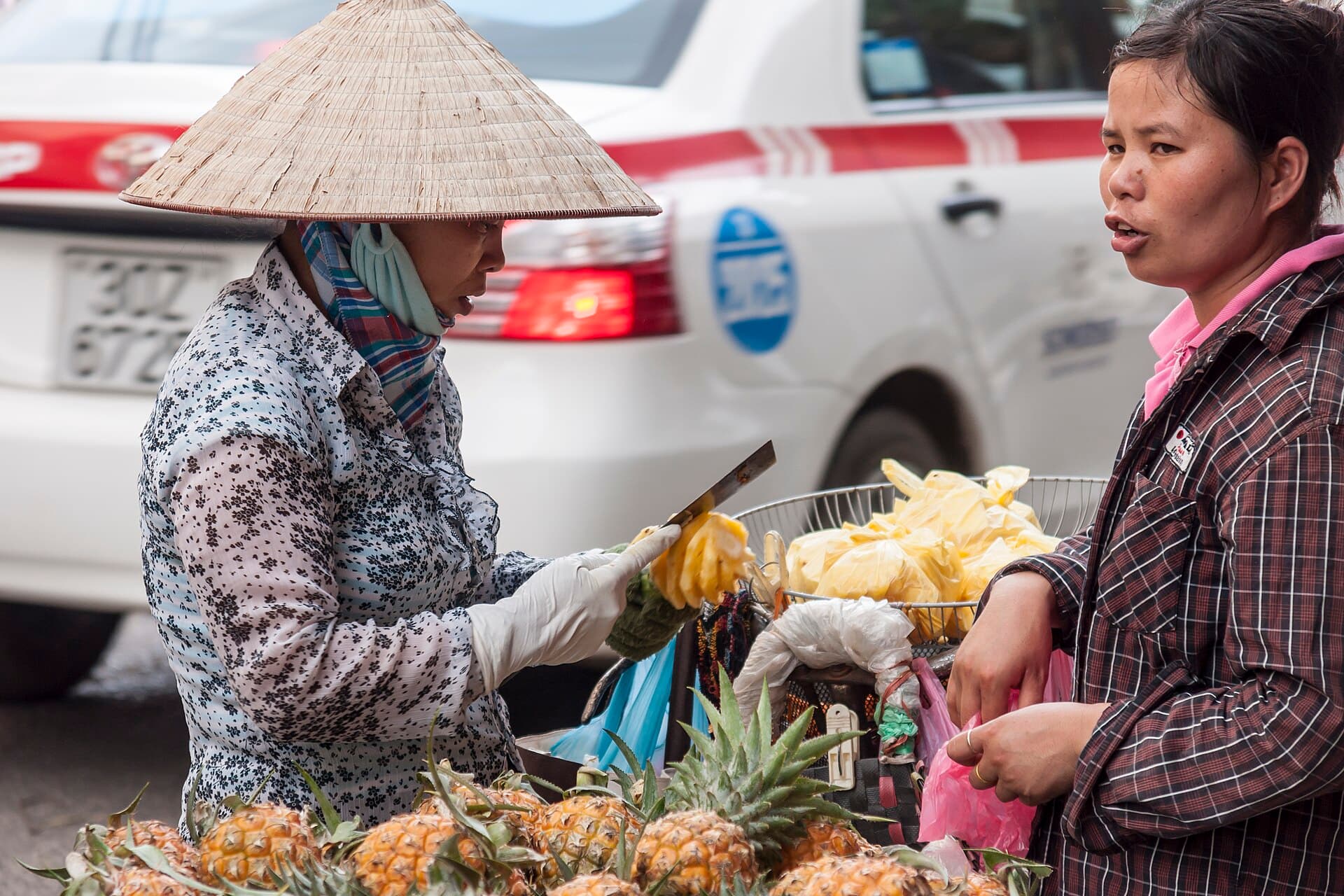
Vietnam in 2026 still runs on cash, but the picture is changing fast in the big cities. The country has long been a cash-first economy — for most of the day, in most places, the only thing a vendor wants is Vietnamese dong. At the same time, card terminals and QR codes have spread through Hanoi, Da Nang, Hoi An, and Ho Chi Minh City quickly enough that a card-only traveler can now get further than they could five years ago. The trick is knowing which layer of the economy you are standing in. This guide maps where card or cash actually works, where each one fails, and how much dong to keep in your pocket.
The headline: cash-first, but cards are catching up
Treat Vietnam as a two-layer economy. The daily layer — food, coffee, local transport, markets, small purchases — is overwhelmingly cash, and that has barely budged outside the formal sector. The formal layer — hotels, malls, chains, supermarkets, booked tours, flights — increasingly takes cards and contactless, and the gap between the two has narrowed sharply in the four big cities.
What has genuinely shifted since the late 2010s is QR payment. Scan-to-pay codes now sit on nearly every counter in urban Vietnam, from pho shops to parking attendants. The catch for visitors is that those codes route through local apps most tourists cannot use (more on that below), so the visible ubiquity of QR does not translate into something you can tap into. For a traveler, the honest summary is: cash is still the default, a card is a strong second instrument in cities, and the local QR rails are mostly off-limits.
Where cash is required
These are the parts of the trip where you should assume cash and be pleasantly surprised if a card works:
- Street food and ca phe coc. The sidewalk plastic-stool economy is cash, full stop. A bowl of pho, a banh mi, a glass of bia hoi, the iced coffee — all dong, all small notes.
- Wet markets and street stalls. Fruit, produce, souvenirs, clothing stalls, the Hoi An night market — cash, and often a little haggling.
- Small shops and traditional cafes. Family-run stores, hardware shops, neighborhood cafes away from the tourist core.
- Rural areas and smaller towns. Acceptance thins out fast once you leave Hanoi, Da Nang, Hoi An, and Ho Chi Minh City. In the Mekong towns, the highlands, and most of the countryside, cash is effectively the only option.
- Taxis and xe om. Metered taxis frequently want cash; xe om (motorbike taxis) and informal rides almost always do. App rides like Grab let you store a card, but many drivers nudge you toward cash anyway.
- Homestays and budget guesthouses. Community-based homestays and smaller guesthouses commonly settle in cash, even when they list online.
- Temple and heritage-site entry. Most ticket windows at pagodas, temples, and heritage sites take cash only. Bring small notes for the Hoi An Old Town pass, Hue's monuments, and similar.
Where cards work
Cards have a real and growing footprint in the formal sector, especially in the four major cities:
- Mid-range and upscale hotels. Anything 3-star and up reliably takes cards; many budget places now do too in the cities.
- Malls, chain restaurants, and supermarkets. Co.opmart, Big C, WinMart, Lotte, and the mall food courts take cards. Convenience chains like Circle K and the bigger coffee chains generally do as well.
- Organised tour operators and airlines. Booked tours, cruise operators, and domestic carriers like Vietnam Airlines and VietJet take cards online and at counters.
- Boutiques in tourist districts. Many Hoi An tailors and shops, and the more established boutiques in District 1 and the Old Quarter, accept cards.
Visa and Mastercard are the safe assumptions — they are the widely accepted networks. American Express acceptance is spotty; carry a Visa or Mastercard as your primary and treat Amex as a backup at best. On the surcharge question: some merchants add a card surcharge of around 3% to cover their processing fee. It is not universal — large chains and supermarkets usually absorb it — but smaller hotels, boutiques, and restaurants sometimes pass it on. Ask before tapping if the bill is large, and note this is separate from any foreign-transaction fee your own bank charges.
Mobile payments: what tourists can and cannot use
This is the most misunderstood part of paying in Vietnam, so it is worth being precise.
The local apps are mostly closed to you. MoMo, ZaloPay, and VietQR are the dominant mobile-payment rails, and the QR codes you see everywhere belong to them. But they typically require a Vietnamese bank account to register and fund. Short-stay tourists almost never have one, so despite QR being visually everywhere, most visitors cannot actually pay with it. Do not plan your trip around scanning codes.
Phone wallets are a different and growing story. Apple Pay and Google Pay run on the contactless Visa and Mastercard network, not on the local apps. Wherever a terminal already accepts contactless Visa or Mastercard — increasingly common in city hotels, malls, chains, and supermarkets — a phone wallet loaded with your foreign card will usually work. Acceptance is growing in the cities, though it still falls off in rural areas and the cash-only daily layer. If you rely on a phone wallet, a working data connection helps; see our Vietnam connectivity atlas for where coverage is reliable.
The DCC trap: always pay in dong
When you pay by card, the terminal may ask whether you want to be charged in Vietnamese dong or in your home currency (US dollars, euros, pounds). This is dynamic currency conversion (DCC), and you should always choose dong.
Paying in your home currency feels reassuring because you see a familiar number, but the exchange rate is set by the merchant's payment processor and is usually several percent worse than the rate your own bank would give you. The same trap appears on some ATM screens. The rule is simple: if the machine offers your home currency, decline it and pay in VND. If a receipt comes back in dollars, ask the staff to re-run it in dong. Choosing dong puts the conversion in your bank's hands, which is almost always cheaper.
How much cash to carry, and keeping it safe
A workable default for most travelers is 500,000 to 1,500,000 VND (roughly $20–60) of usable cash per day, sized to the cash-only layer rather than your whole budget. Backpackers living on street food and buses sit near the bottom; mid-range travelers who still eat, move, and shop locally sit higher. Pull dong from ATMs in larger amounts to amortise withdrawal fees — our Vietnam ATM fees guide covers the per-pull math — and break big notes early at hotels or supermarkets, because small vendors rarely have change for a 500,000 VND bill.
On safety: Vietnam is comparatively low for violent crime against tourists, and carrying cash is normal here. The realistic risk is opportunistic — phone and bag snatching from passing motorbikes, most cited in Ho Chi Minh City. Sensible habits cover it: keep only the day's cash in an accessible pocket, leave the bulk plus your card in your room or a money belt, split your money across two places, and do not fan out a thick stack of notes at a market stall. Treat cash like any valuable, not like something uniquely risky to hold.
Putting it together
A clean payment plan for a 2026 trip looks like this. Withdraw dong from a bank ATM on arrival and keep a rolling daily float for the food-coffee-transport-market layer. Carry one Visa or Mastercard (with low or no foreign-transaction fee) for hotels, malls, chains, booked tours, and flights, and add it to a phone wallet for contactless where it is accepted. Keep a few clean US dollar bills as an emergency reserve, not a daily method. And whenever a card terminal asks, pay in dong. That combination handles both layers of the economy without leaving you stuck at a plastic stool with nothing but a card.
For the full breakdown of withdrawal fees and exchange options that feed this plan, see the Vietnam ATM fees guide and the Vietnam currency exchange guide. For the surprise charges that sit alongside payment choices, see Hidden Costs in Vietnam 2026.
Limitations
- Acceptance changes fast. Card and QR coverage in the cities is expanding quickly; a venue that was cash-only last year may take contactless now, and the reverse is rarer but possible. Treat the city-versus-rural split here as the durable signal, not any single venue's policy.
- Surcharges and DCC vary by merchant. The roughly 3% card surcharge is a pattern, not a rule, and whether a terminal pushes DCC depends on the specific processor. Always check the bill and the currency before you confirm.
- Mobile-payment access can shift. Rules around opening Vietnamese bank accounts and linking local wallets evolve; if a workable tourist-facing version of MoMo or VietQR appears, this guidance will need updating. As of mid-2026, assume the local apps remain off-limits to short-stay visitors.
- Cash needs are personal. The per-day cash range is a planning figure, not a budget. Your real number depends on how much of your spending lands in the cash-only layer versus the card-friendly formal sector.