
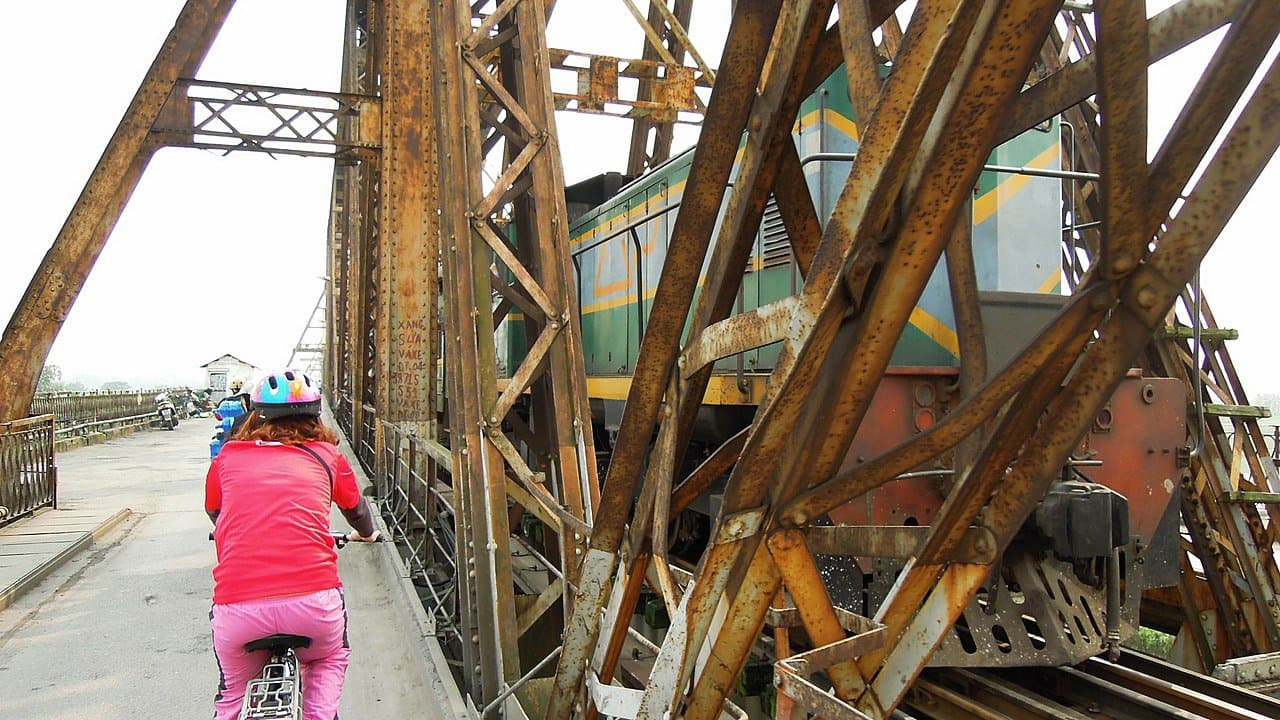
Hanoi is the city most solo female travelers I talk to find easier than expected — partly because the online travel forums have undersold how the Old Quarter actually feels at night (compact, busy, well-lit, friendly), and partly because the dominant safety risk (motorbike traffic) is the kind of thing you can manage with technique rather than something that requires constant vigilance. I'm not from Hanoi — I grew up in Hoi An and spent two years in HCMC for work — but I've spent enough time in Hanoi (and watched enough solo female travelers move through it) to write this from a Vietnamese-woman perspective rather than a tourist's.
This guide is for the solo female traveler planning her first Hanoi trip. The pattern that consistently works: stay in the Old Quarter, use Grab not street taxis, develop the slow-and-predictable street-crossing technique on Day 1, base your day-trip pattern around the Old Quarter rather than trying to see everything in the wider city. The Solo Traveller Safety Atlas covers the bigger Vietnam safety map; this guide is the Hanoi-specific synthesis.
Quick summary — what Hanoi actually is for solo female travelers
| Dimension | Hanoi reality |
|---|---|
| Safety | Numbeo 57.43 (medium-high); dominant risk is motorbike traffic, not crime or harassment |
| Where to base | Old Quarter (Hoan Kiem) for first-timers; Tay Ho (West Lake) for slow-travel and digital nomads |
| Cost | $40-60/day backpacker; $90-150 mid-range; cheaper than HCMC, similar to Hoi An |
| Best season | October-April (dry; cool 18-25°C); avoid July-Sep typhoon risk |
| Walkability | Excellent within Old Quarter; use Grab beyond it |
| Solo dining | Easy — street food and small restaurants designed for individual diners |
| Day-trip access | Ninh Binh (2 hrs), Ha Long (3-3.5 hrs), Sapa (overnight train), Bat Trang (1 hr) |
| English level | Lower than Hoi An; functional in tourist Old Quarter; limited elsewhere |
| Skip | Long Bien Bridge area at night; aggressive tailor-touts; non-Grab street taxis |
The fast version: book 3-4 nights at an Old Quarter hostel or hotel, plan one slow Day 1 to acclimate to the traffic, take a Hanoi street food tour on Night 1 to learn the food vocabulary, do day trips to Ninh Binh and (overnight) Ha Long, take the overnight train to Sapa, and budget at least one full rest day to recover from the sensory density.
Why Hanoi works — the structural answer
The Old Quarter is small. The historical 36-street district where almost every solo female traveler stays is maybe 1 km across; you can walk from any hostel to any restaurant to any cafe within 15 minutes. The streets are narrow, busy, and crowded with Vietnamese commercial activity rather than tourist infrastructure. At night the area becomes a giant outdoor restaurant — low-stool tables fill the sidewalks, motorbikes thread through pedestrian gaps, the smell of grilled meat and herbs reaches you on every block.
The density makes the area feel safe in a way the daylight street-photos don't suggest. You're never more than 50 metres from another person, another open shopfront, another lit cafe. Solo female travelers can walk back to their accommodation at 10-11pm through streets that are fuller of Vietnamese families and other travelers than empty. The night-market energy is the second-best solution to solo-female-safety-at-night that I know in Southeast Asia (after the Hoi An pedestrian zone).
The Vietnamese commercial culture in Hanoi is matter-of-fact. The tailor-touts and souvenir vendors will approach you, but the interaction is sales-pitch rather than personal. The harassment that solo female travelers report in some other Asian cities (catcalling, persistent following) is rare in Hanoi. The Vietnamese cultural norm around foreign women is curiosity-and-distance rather than entitlement-and-approach.
The motorbike traffic is the real risk, and it's manageable. Hanoi has around 5 million motorbikes for 8 million people; the central streets are saturated with traffic during peak hours. The technique for crossing streets — slow, predictable, never stop, never run, make eye contact — works because Vietnamese motorbike drivers expect to flow around pedestrians rather than expect pedestrians to dodge them. You learn the technique on Day 1 and use it constantly thereafter; after a week it becomes automatic.
Neighborhoods — where to stay, where to avoid
Old Quarter (Hoan Kiem District) is the default and the right answer for first-time solo female travelers in Hanoi. The 36-street historical district sits north of Hoan Kiem Lake and contains the densest concentration of cafes, restaurants, hostels, hotels, food streets, and night-market energy in northern Vietnam. Staying here means walking-distance access to almost everything you'd want to do; the only places that require taxis are the Ho Chi Minh Mausoleum complex (1.5 km west) and the day-trip pickup points. Solo female travelers in the Old Quarter can do most of their evening activity on foot. Specific hostel and hotel picks are in our best hostels for solo female travelers guide.
West Lake / Tay Ho District is the quieter expat-leaning base. Located 4-5 km north-west of the Old Quarter, it has a markedly different feel — wider streets, lakeside walks, expat-cafes and Western-style restaurants, a small digital nomad community. The hostel ecosystem is thinner; the property type is hotels and Airbnbs at $30-80/night. Worth picking if: you've been to Hanoi before, you're doing slow travel (1-2 weeks rather than 3-4 days), you're working remotely, you specifically want the calmer base. Not the right answer for first-time visitors because the cultural intensity of the Old Quarter is most of what makes Hanoi worth visiting.
Ba Dinh District is the mid-ground option. Hosts the major museums (Ho Chi Minh Mausoleum, Vietnam Military History Museum, Temple of Literature) and the embassy quarter. Hotel selection is solid in the mid-range ($40-80/night) but the hostel scene is limited. Worth picking if: you're a museum-and-history-focused solo female traveler, the embassy quarter feels reassuring for any visa or paperwork needs, you want a quieter base while still being central. Walking distance to the Old Quarter is 15-20 minutes; taxi is 5-10 minutes.
Areas to avoid as a solo female base: Long Bien District (across the river to the east — too far from the cultural sites, less safe at night), Cau Giay District (Western suburbs — too far for first-time visitors), the area around Hanoi Train Station after midnight (the station itself is fine for arrivals; the adjacent streets late at night are quieter and less well-lit). None of these are dangerous in the violent-crime sense; they're just less optimal as a solo-female base.
The first-week solo female routine
The Hanoi routine that works for most solo female travelers I've talked to follows a predictable rhythm:
Day 1 — Arrival and acclimation. Land at Noi Bai Airport, pre-arranged Grab or hotel transfer to the Old Quarter ($15-22, ~40 minutes). Check in, leave the bags, walk to the closest cafe for a Vietnamese coffee (the cafes around Hang Bac Street and Ma May Street are walkable). Practice the street-crossing technique on the smaller side streets. Eat dinner at a busy phở bò stall (Phở Gia Truyền at 49 Bát Đàn is the legendary one; the line moves fast). Early sleep — jet lag is real.
Day 2 — Hanoi Street Food Tour. Book the hostel-organized or third-party street food walking tour ($20-30 from most providers, 3-4 hours, 6-10 food stops). This solves the eat-where-locals-eat learning curve in a single evening. The tours typically run 4-6pm or 6-8pm; afterward you'll know how to navigate the food streets independently. Specific operators: Hanoi Cooking Centre (longer-form), A Chef's Tour Hanoi, Hanoi Food Tour (independent).
Day 3 — Old Quarter exploration. Walk the major streets (Hang Gai for silk, Hang Ma for paper goods, Lan Ong for traditional medicine), visit Hoan Kiem Lake and the Ngoc Son Temple ($1 entry), do the Temple of Literature in the afternoon ($1.50 entry, 1.5 hours), take a cyclo ride around the Old Quarter if it appeals (more touristy than authentic but harmless).
Day 4 — Day trip or museum day. Either book the Ninh Binh small-group day trip (the most-common day trip pattern; $25-40 from any hostel desk; departs 7-8am returns 7-8pm) or do a museum day (Vietnam Military History Museum, Vietnamese Women's Museum — the latter is particularly worth it as a solo female traveler — Ho Chi Minh Mausoleum complex).
Day 5+ — Ha Long Bay overnight cruise or train to Sapa. Both are the standard major-trip-extensions. Ha Long is 1-2 nights on a boat (the cruise market is large and varies widely in quality; book through hostels or reputable operators like Indochina Junk, Bhaya Cruises, or the smaller Au Co or Stellar lines). Sapa is the overnight train (Livitrans, Chapa Express, Sapaly Express at $35-60/berth; the 4-berth soft-sleeper is the solo-female standard) plus 2-3 days in Sapa. The Hanoi-Sapa-Hanoi loop typically takes 4 days.
Food — what to eat and where
Hanoi's food is northern Vietnamese — distinct from the central-Vietnamese food in Hoi An and the southern-Vietnamese food in HCMC. The defining dishes:
Phở — Hanoi is the birthplace of phở, and the Hanoi version (clearer broth, fewer herbs, beef-focused) is distinct from the southern HCMC version. Phở Gia Truyền (49 Bát Đàn) and Phở Thìn (13 Lò Đúc) are the legendary names; both are crowded, fast-moving, and worth the line. Phở-for-breakfast is the local norm.
Bún chả — grilled pork patties + rice vermicelli + dipping sauce + fresh herbs. The Obama-Bourdain photo dish. Bún chả Hương Liên (24 Lê Văn Hưu) is the Obama spot but is now over-touristy; Bún chả Đắc Kim (1 Hàng Mành) is more authentic.
Bánh cuốn — steamed rice rolls with pork and mushroom filling. Bánh cuốn Bà Hoành (66 Tô Hiến Thành) is the standout.
Chả cá lã vọng — turmeric-marinated grilled fish with dill and rice noodles. Chả Cá Lã Vọng (14 Chả Cá Street) is the original. The dish requires a sit-down restaurant rather than a street stall.
Egg coffee (cà phê trứng) — Hanoi's distinctive coffee with whipped egg yolk and condensed milk. Cafe Giảng (39 Nguyễn Hữu Huân) is the original; Cafe Phố Cổ (11 Hàng Gai) has a Hoan Kiem Lake view from the rooftop.
Bánh mì — Vietnamese baguette sandwich. Bánh Mì 25 (25 Hàng Cá) is the famous-tourist version (good); the dozens of street-side bánh mì carts are equally good and cost half as much.
Solo female friendly food approach: walk the Tạ Hiện food street area in the early evening (5-7pm) when it's busy but not drunk-tourist-loud, pick a busy stall with Vietnamese customers, sit at a low-stool table, order what you can see other diners eating. The night-market on Hàng Đào / Hàng Ngang Streets (Fri-Sun evenings) is the second evening-food zone. The cafe-and-coffee culture during the day works well for solo female travelers wanting break-and-write time.
Working from Hanoi — the digital nomad layer
Hanoi has emerged as one of Southeast Asia's better digital nomad cities, particularly for solo female travelers who want the cultural depth and the manageable cost. The cafe-and-cowork ecosystem:
Co-working spaces: Toong (multiple Hanoi locations; $4-7/day; clean, professional), HUB Coworking (Tay Ho location), CoGo Coworking. The day-pass model works for casual users; monthly memberships ($120-180) for longer stays.
Cafes for solo work: Cafe Đinh (rooftop, Hoan Kiem Lake view, full-day workable), Tranquil Books & Coffee (quieter, book-and-coffee vibe, north of the Old Quarter), La Place (Old Quarter, mid-range food and good wifi), The Workshop (newer location near West Lake), Cafe Phố Cổ (rooftop, slower wifi but the lake view compensates).
Wifi reality: 30-80 mbps is typical at the better cafes; bring a Viettel or Vinaphone SIM with 10-15GB of mobile data as backup ($5-8 for a 30-day plan). For video calls, the cafe-cowork-hostel cycle works well; the cafe-only setup works for writing and lower-bandwidth tasks.
Community: 'Hanoi Massive' (Facebook group, large expat-and-nomad community), 'Digital Nomads Hanoi,' the InterNations Hanoi events, and the more recent 'Solo Female Travelers in Hanoi' Whatsapp group are the standard social entry points. The community is real and active.
Day trips — the three patterns
The day-and-multi-day trip pattern from Hanoi is what extends most solo female trips from 3-4 days in Hanoi alone to 7-10 days in northern Vietnam. The three major options:
Ninh Binh (day trip, 2 hours each way) — UNESCO mixed-heritage site with the Trang An boat tour, the Tam Coc rice-paddy views, and the Hang Mua viewpoint pagoda. The most-popular day trip from Hanoi. Small-group tours $25-40 from any hostel desk. Solo female friendly because the small-group dynamic is mixed, the day is slow-paced, and the activities (boat ride + viewpoint hike + temple visit) are individually walk-able.
Ha Long Bay (overnight cruise, 3-3.5 hours each way) — UNESCO World Heritage limestone karst bay. The 1-night cruise is the standard ($90-180/person for mid-range); the 2-night cruise extends to Lan Ha Bay. Solo female travelers typically book through their hostel or directly with operators like Indochina Junk, Bhaya Cruises, Stellar of the Seas, or smaller boutique cruise lines. The single-supplement on private cabins is significant; many solo female travelers split cabins with other solo travelers met on Day 1. The Ha Long Bay solo female experience is consistently positive.
Sapa (overnight train, 8 hours each way) — the mountain-and-ethnic-minority destination in the northwest. The overnight train ($35-60/berth) is the standard route. 2-3 days in Sapa for trekking (women-led trekking groups like Sapa Sisters, Ethos) and the village-homestay experience. The full Sapa-specific guide is at Solo female travel in Sapa.
Bat Trang ceramic village (half-day, 1 hour each way) — the pottery village outside Hanoi. The lighter half-day option that solves an afternoon when you want a low-key day. $15-25 small-group tour or independent by bus ($1-2).
What to skip in Hanoi
A few things solo female travelers consistently report regretting:
The Hỏa Lò Prison museum is fine but heavily one-sided in its political framing; you can skip it and miss little of the Hanoi experience.
Aggressive Old Quarter tailor-touts — the touts who approach you with very high-pressure pitches near the Hoan Kiem Lake bridges aren't representative of the better Hanoi tailors. If you want tailoring, do it in Hoi An (better quality, better prices, established shops); Hanoi tailoring is a much weaker proposition.
The night-market on Hàng Đào during peak weekends — fun for 30 minutes; the crowd density and the same-five-products-everywhere structure makes it less interesting than the food-street alternative on Tạ Hiện.
Cyclo rides as a serious transport mode — fine as a 20-minute tourist experience; expensive, slow, and exposed to motorbike traffic in a way that isn't comfortable for longer rides.
Trying to do the Ho Chi Minh Mausoleum and the Vietnamese Women's Museum on the same day — both are emotionally heavy and benefit from separate visits.
Limitations
- Pricing and operator details are May-June 2026 USD at ~26,361 VND/USD and reflect direct-website rates as of that window. Hostel + accommodation rates fluctuate 10-20% seasonally; book early for Tet (Feb 17 2026 in 2026) and December peak.
- Solo-female safety experiences vary individually. The patterns we describe are aggregated from named primary sources (UK FCDO + US State Department + Australian Smartraveller advisories, Numbeo crime indexes, Hanoi/HCMC tourism police hotlines, Facebook group reports). Your specific encounters depend on your situation, dress, behavior, and time of day.
- Vietnam motorbike statistics are aggregated nationally — Hanoi vs HCMC vs rural Ha Giang have materially different risk profiles. The 1968 Vienna Convention IDP rule means US, Canadian, Australian, NZ, Japanese passport holders are technically unlicensed on rented motorbikes.
- Vendor + accommodation recommendations may close or relocate; cross-check on Google Maps + TripAdvisor before booking.
- The Tuyên Quang directive of April 13 2026 continues to roll out unevenly across Northern Vietnam — operator-level licensing status changes month-to-month.
The bigger picture
Hanoi works for solo female travelers because the structural answers (Old Quarter density, hostel ecosystem, day-trip pattern) compound to create a city that feels manageable even on the first day. The motorbike traffic anxiety drops fast once the street-crossing technique becomes automatic. The food scene is solo-friendly in a way that few global cities match. The harassment-and-crime risk profile is materially lower than the online travel forums suggest. The Old Quarter at night is one of the most reliably-good solo-female-evening environments in Southeast Asia.
For the broader trip planning, see:
- Best 2-week Vietnam backpacking itinerary for solo female travelers — the route that uses Hanoi as the northern anchor
- Is Vietnam safe for solo female travelers — the country-level safety context
- Best hostels for solo female travelers in Vietnam — the property-level picks
- Vietnam packing list for solo female travelers — what to pack
- Solo Traveller Safety Atlas — the city-by-city deep dive
The Hanoi I want solo female travelers to leave with is the Old-Quarter-night-market-Hanoi plus the Vietnamese-Women's-Museum-Hanoi plus the Ninh-Binh-and-Sapa-Hanoi. The three together are the actual northern Vietnamese experience; any one alone misses too much.