
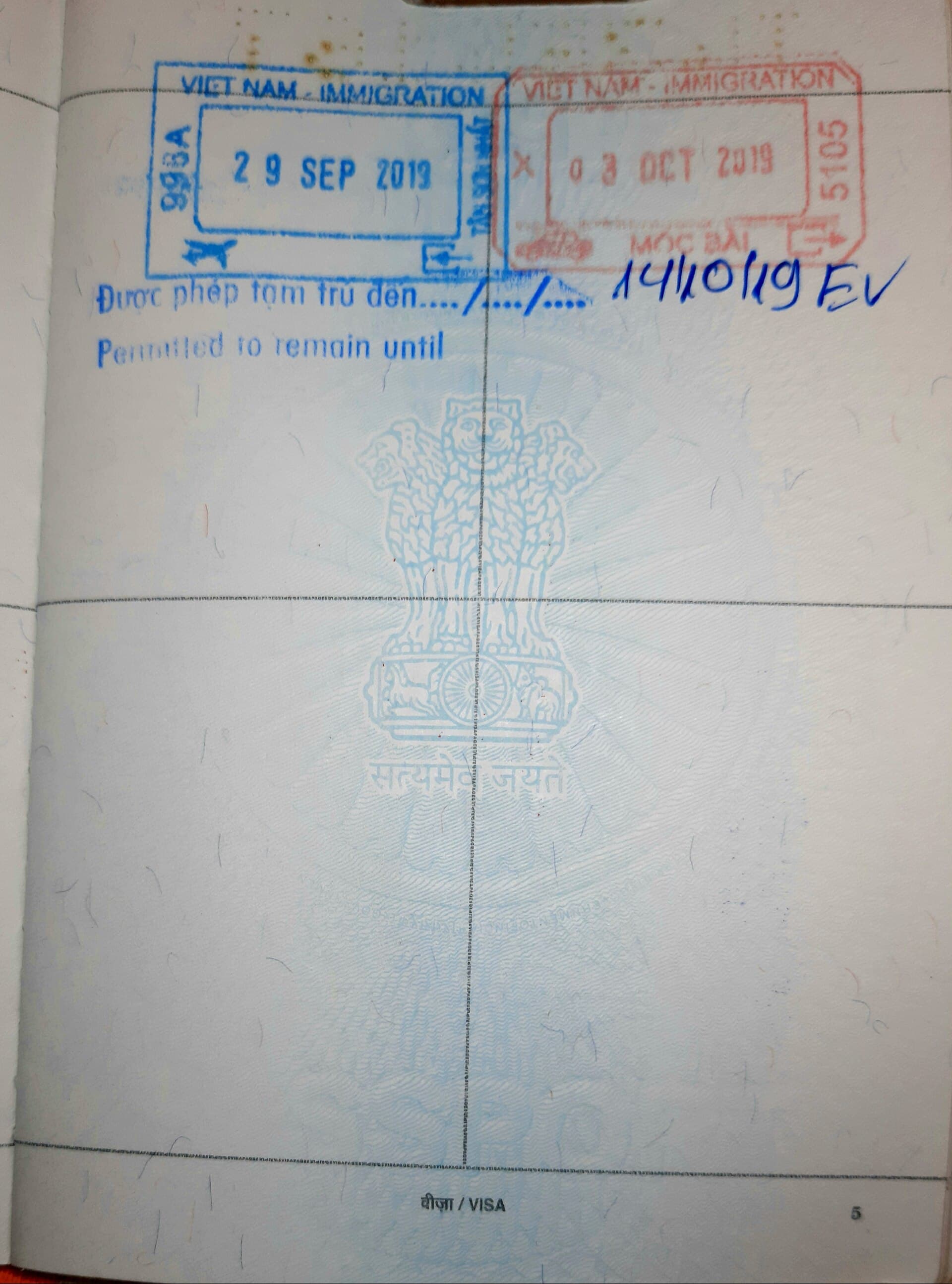
In August 2023, Vietnam made one of the most consequential tourism-policy moves in Southeast Asia in a decade: it tripled the visa-free stay length from 15 to 45 days for citizens of 13 mostly-European countries, and eliminated the 30-day gap rule that had previously prevented immediate re-entry. Two years later, the policy was extended to 12 more European countries.
The arrivals data shows the impact clearly. European arrivals to Vietnam grew 38.8% year-on-year in 2025 — nearly double the 20.4% national growth rate. Some markets grew much faster: Russia +196.9%, Italy +55.8%. This article unpacks the policy, the evidence, and the practical planning implications.
What changed and when
Resolution 128/NQ-CP — August 14, 2023
The Vietnamese Government issued Resolution 128/NQ-CP on August 14, 2023, effective the next day. Its two big provisions:
- Stay duration tripled from 15 to 45 days for citizens of 13 countries.
- 30-day gap rule eliminated — visa-exempt visitors can now exit and immediately re-enter, instead of waiting 30 days.
The original 13 countries:
| Region | Country |
|---|---|
| Western Europe | Germany, France, Italy, Spain, the UK |
| Eastern Europe / FSU | Russia, Belarus |
| East Asia | Japan, South Korea |
| Nordics | Denmark, Sweden, Norway, Finland |
The August 2025 expansion
Resolution 128 was set to expire on March 15, 2025. A successor measure preserved the original 13-country list, and a separate temporary measure effective August 15, 2025 – August 14, 2028 added 12 more European countries on a tourism-purpose 45-day waiver:
| Region | Country |
|---|---|
| Benelux | Belgium, Luxembourg, Netherlands |
| Central Europe | Czech Republic, Hungary, Poland, Slovakia, Slovenia, Switzerland |
| Southeast Europe | Bulgaria, Croatia, Romania |
Combined, roughly 25 countries now have 45-day visa-free access to Vietnam — a major expansion of the visa-light footprint compared with the pre-2023 regime.
What about the rest of the world?
For citizens of countries not on either list, the 90-day e-visa (also opened in August 2023) covers the gap. We've written a separate research summary on the e-visa expansion — it's now open to every country and territory, with stays of up to 90 days and single or multiple entry options. ASEAN nationals get 14–30 day visa-free arrangements under separate bilateral agreements; Chinese passport holders get 15 days.
What the arrivals data shows
Vietnam's General Statistics Office published source-market growth rates for 2025 (against 2024) in early 2026. The European numbers stand out:
| Source market | 2025 growth |
|---|---|
| Russia | +196.9% |
| Italy | +55.8% |
| France | +29.4% |
| Germany | +24.5% |
| Sweden | +33.0% |
| Norway | +23.0% |
| Denmark | +22.1% |
| UK | +20.8% |
| Spain | +20.1% |
| Europe overall | +38.8% |
| Vietnam national average | +20.4% |
Every named market grew faster than the national average; most grew much faster. Russia is the outlier — a 196.9% surge that reflects the combined impact of the visa policy and a Russian outbound-travel rebound after several depressed years.
The visa policy isn't the only driver — flight-capacity restoration, weak emerging-market currencies against the euro, and post-pandemic pent-up demand all played roles. But the visa policy is the most plausible single differentiator: nothing else changed in lockstep across so many European source markets in the same window.
What this means for your trip
1. Plan a longer trip than you thought you could
If you're from one of the 25 visa-exempt countries, you have 45 days. Use them. Many travellers still arrive with a 7–10 day Vietnam itinerary because that's what their pre-2023 mental model suggested was practical. Vietnam is a long, narrow country — Hanoi to Ho Chi Minh City is 1,700 km. A two-week trip lets you experience two regions; three weeks lets you experience three; four weeks lets you go deep in one region while still seeing highlights of others.
Practical itinerary upgrades the longer stay enables:
- Add Ha Giang (5 days) to a north Vietnam trip.
- Add Phong Nha (3–4 days) between Hue and Hoi An.
- Add a real Mekong Delta multi-day immersion (4–5 days) to a southern itinerary.
- Combine a coast-to-coast itinerary with Da Lat or Buon Ma Thuot in the Central Highlands (3–4 days).
2. Treat re-entry as a feature, not a workaround
The 30-day gap rule's elimination means you can leave Vietnam (e.g., for a Cambodia loop through Siem Reap and Phnom Penh, or a Laos circuit through Luang Prabang) and re-enter for another 45 days immediately. That makes Vietnam a viable two-month base for digital nomads and slow travellers.
For first-timers, a more practical use of the rule: Vietnam → Cambodia → Vietnam circuit. Eight days in northern Vietnam, four days in Siem Reap and Angkor, then re-enter to do the south. The visa-free re-entry removes the friction that previously made this kind of multi-country itinerary administratively painful.
3. The 2025 expansion countries should book accommodation early
The 12 newly-eligible European countries (Belgium, Czech Republic, Netherlands, Poland, Switzerland, etc.) didn't have substantial historical Vietnam-tourism flows. Their arrival growth in 2026 will be the test of whether the policy works.
If you're from one of these countries, two practical implications:
- Vietnamese tourism infrastructure isn't tuned to your market yet. Hotel staff are far more likely to speak English, French, German, Russian, or Korean than Czech, Polish, or Hungarian. This isn't a problem — English is the working language of Vietnamese tourism — but it does mean fewer destination-marketing materials in your language.
- Book popular accommodation 3–6 weeks ahead during peak season (November–April). The 25-country pool combined with Vietnam's 21.2 million arrivals record is genuinely tightening Tier-1 capacity.
4. Don't assume the rules are permanent
The August 2025 expansion is a temporary measure (3-year window through August 2028). It might be made permanent; it might be allowed to lapse; it might be expanded further. The same uncertainty applied to Resolution 128 before it was renewed in 2025. Always check the official Vietnam embassy site for your country before booking.
5. The visa win matters more than the data alone suggests
Visa friction is the single biggest behavioural barrier to international tourism. Multiple studies of comparable Southeast Asian visa changes (Thailand 2018, Indonesia 2016) have shown 15–30% arrival lifts within two years. Vietnam's 38.8% European-market lift is on the high end of that range — but the policy is also more generous than its peers (45 days versus typical 30, no gap rule).
If you're using Vietnam policy as a reference for what's coming next in the region: the model works, and other ASEAN governments are watching.
Limitations & caveats
- The 38.8% European growth figure isn't formally attributed to the visa policy. GSO publishes growth rates by market without causal analysis. Our attribution is inferred from the simultaneous policy change, the lack of comparable concurrent drivers in those specific markets, and consistent patterns in peer-country natural experiments. It's directionally credible, not formally proven.
- Resolution texts are in Vietnamese. English-language summaries (including ours) are sourced from Vietnamese government press releases, embassy notices, and Vietnam Briefing's analysis. Discrepancies between English summaries and the underlying resolution texts are possible.
- The August 2025 expansion is temporary. Unless extended, it expires August 14, 2028. Pre-2026 booking advice should assume current rules; later trips should be re-checked.
- "Tourism-purpose only" matters for the 12 new countries. The original 13 countries' 45-day exemption applies regardless of trip purpose; the 12 new ones are tourism-only. Business travellers from Czech Republic, Switzerland, etc. should still apply for an e-visa.
- The visa-free policy doesn't cover passport-validity rules. Your passport must remain valid for at least 6 months from the date of entry; some travellers have been refused entry over this and we still hear from them periodically.
Sources & further reading
- Primary source: Vietnam Briefing — Vietnam's Tourism Industry: Growth Trajectory, Policies, And Opportunities — overview of visa reforms.
- Vietnam Tourism — 13 countries with visa exemption can stay 45 days — original 13-country announcement.
- Vietnam Tourism — Viet Nam waives visas for citizens from 12 countries — August 2025 expansion announcement.
- Vietnam Embassy in the United States — New Policy on Electronic Visa and Visa Exemption — official explanation of the August 2023 reforms.
Related on this site:
- Vietnam visa guide — practical, up-to-date application advice
- 2025 international arrivals record — the headline number these visa changes helped produce
- Chinese arrivals surged 41% — the parallel source-market story