
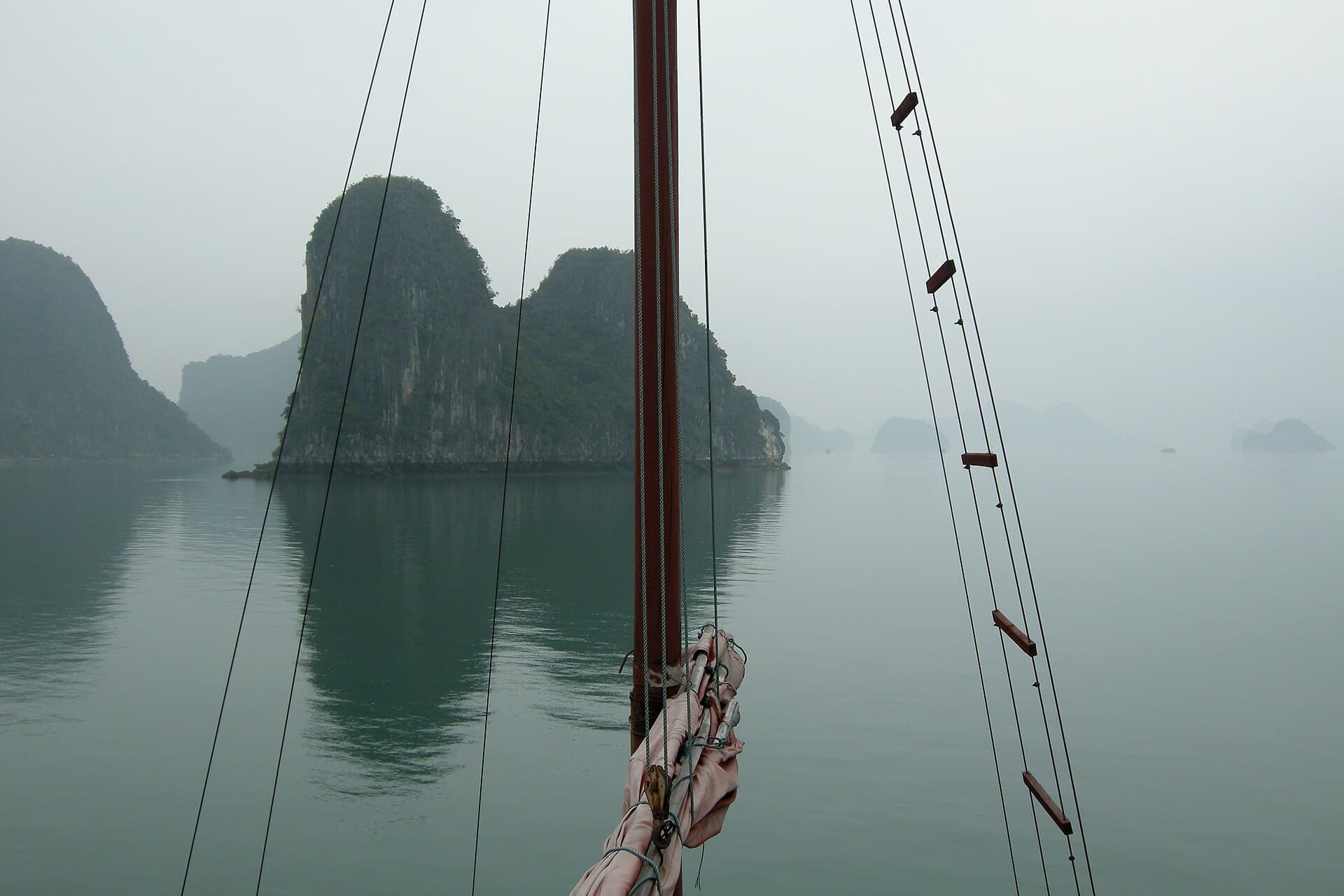
Phong Nha and Ha Long Bay are Vietnam's two headline karst landscapes, and travellers with limited time often treat them as rivals. They are opposites in almost every practical way. Phong Nha is central, land-based, and built around the world's biggest caves and jungle. Ha Long is northern, boat-based, and built around an emerald seascape of limestone islands you sleep among on a cruise. Both are extraordinary. The right pick comes down to the kind of day you want - walking into caves or sailing between islands - plus your budget, your tolerance for crowds, and where the rest of your route runs.
The 90-second answer
- Pick Phong Nha if you want caves, jungle and river valleys, lower daily costs, far fewer crowds, and you are already routing through central Vietnam (Hue, Da Nang, Hoi An).
- Pick Ha Long if you want the iconic island cruise, you are based in or near Hanoi, and you are happy to pay for an overnight boat as the centrepiece of the experience.
- Do both if you have 10-plus days - they sit at opposite ends of the country and complement rather than compete.
Side-by-side basics
| Phong Nha | Ha Long Bay | |
|---|---|---|
| Region | Central Vietnam (Quang Binh) | Northern Vietnam (Quang Ninh) |
| Nearest gateway | Dong Hoi / Phong Nha village | Hanoi (~2 hrs by expressway) |
| The experience | Caving, trekking, jungle, river caves | Overnight cruise among limestone islands |
| Landscape | Karst mountains and cave systems on land | Emerald bay, more than 1,100 islands |
| Format | Land-based, day tours from a village base | Boat-based, 1-2 night cruise |
| Headline sight | Son Doong, the world's biggest cave | The classic junk-boat island seascape |
| Typical daily cost | Low - cheap guesthouses and show-caves | Moderate to high - the cost is the cruise |
| Signature cost | Show-caves under $15; wild caves $80-3,000 | Overnight cruise ~$105-450+ per person |
| Crowds | Quieter | Much busier (4-5 million visitors/yr region) |
| Time needed | 2-3 nights in the village | 1-2 nights (the cruise) |
| Best season | Feb-Aug (river caves flood Sep-Dec) | Oct-Apr peak; May-Sep cheaper, wetter |
| Best for | Adventure, caving, budget, quiet | Iconic scenery, cruising, first-timers |
Phong Nha: the world's biggest caves, on land
Phong Nha is the cave country of central Vietnam. The UNESCO-listed Phong Nha-Ke Bang National Park protects one of the oldest and most extensive limestone-karst systems in Asia, with well over 200 km of surveyed caves and underground rivers. You base yourself in Phong Nha village and head out each day - this is a land-based trip, not a boat one.
The Phong Nha offer:
- Show-caves - Paradise Cave (a vast, floodlit boardwalk cavern) and Phong Nha Cave (reached by a scenic river boat) are the easy headline pair, walkable by all ages for under $15 in entry fees.
- Adventure-lite - the Dark Cave adds a zipline, mud bath and a swim for around $20.
- Wild caves - Tu Lan (a one-day canyoning trip, roughly $80-95), the Hang En 2-day camp (around $330-400), and the roughly $3,000 Son Doong expedition, the largest cave on Earth, operated exclusively by Oxalis Adventure on a small annual permit cap that sells out a year or more ahead.
- Jungle and rivers - farmstays among the karst, the botanic garden, and a quiet, unhurried pace in the village at night.
What Phong Nha isn't: it is not a beach or a cruise, it is not close to a major city, and its signature river caves are seasonal - they flood and close in the autumn wet months. It rewards travellers who actively want to get into caves rather than photograph scenery from a deck.
For the full cave-by-cave breakdown by cost and difficulty, see the Phong Nha caves guide.
Ha Long Bay: the emerald island seascape, by boat
Ha Long is the postcard. A UNESCO World Heritage seascape of more than 1,100 limestone islands and islets rising out of an emerald sea, it is the single most-photographed landscape in Vietnam. You do not tour it on foot - you board an overnight boat and let the bay come to you.
The Ha Long offer:
- The overnight cruise - the core of the experience. A typical 1-night itinerary delivers sunset on the karsts, a cave or island stop, a kayaking session, and morning Tai Chi on deck.
- A wide quality range - budget 3-star boats run roughly $105-160 per person, mid-range 4-star $145-250, and luxury 5-star $250-450 and up, per person for one night.
- Quieter alternative routes - Lan Ha Bay and Bai Tu Long share the same karst scenery with fewer boats, and Lan Ha typically saves $20-50 per person at equal quality.
- Day cruises - a no-overnight option ($23-120) exists, but it feels rushed and misses the magic-hour scenery that makes the bay.
What Ha Long isn't: it is not cheap once you commit to a decent boat, it is not quiet, and a bargain-basement cruise is a genuine false economy - the gap between a $105 boat and a $180 boat is large. Note too that the fleet went through a mandatory safety overhaul in 2025-2026; book operators who display current inspection credentials.
The full pricing picture, tier by tier, is in the Ha Long Bay cruise cost guide. If you are weighing the bay against its quieter neighbours, the Ha Long vs Cat Ba vs Lan Ha compare is the companion piece.
Cost - Phong Nha is cheaper to be in, Ha Long is cheaper to reach
The money works differently in each place.
Phong Nha is cheap day-to-day. Guesthouses are inexpensive, the show-caves cost little, and you can string together a rich few days on a modest budget. The cost only spikes if you opt into a wild-cave expedition - Hang En or Son Doong - which are premium, capped experiences by design.
Ha Long front-loads the cost into the boat. There is no cheap way to do it well: the cruise is the experience, and skimping produces a crowded, forgettable one. Budget realistically for a mid-range cabin plus the extras (drinks, tips, upgrades) that routinely add 15-30% to the headline price.
| Aspect | Phong Nha | Ha Long Bay |
|---|---|---|
| Cheapest satisfying day | Under $30 (guesthouse + show-caves) | Not really possible - the boat is the cost |
| Mid-range | Village stay + a Tu Lan day (~$80-95) | 1-night mid-range cruise ($145-250/pp) |
| Premium | Hang En ($330-400) or Son Doong (~$3,000) | Luxury cruise ($250-450+/pp per night) |
Crowds - Ha Long is far busier
This is one of the starkest contrasts. Ha Long is a mass-tourism icon: the wider Quang Ninh region regularly clears 4-5 million visitors a year, and a 2025 Hoa Binh University study frames the bay as an emerging overtourism case, with congestion at piers, caves and floating-village stops in peak season. Choosing a quieter route (Lan Ha or Bai Tu Long) or a shoulder month helps, but the headline sights are busy.
Phong Nha is the opposite. Even the easy show-caves rarely feel packed, and the wild caves are permit-capped, so you often trek with only your small group. For travellers who find Ha Long's boat traffic dispiriting, Phong Nha is the antidote.
Getting there and time needed
Ha Long is easy and quick from Hanoi - about 2 to 2.5 hours on the Hai Phong Expressway, with a cruise-company shuttle included on almost every booking. It fits neatly as a 1-night add-on to a Hanoi stay. Details are in the Hanoi to Ha Long Bay transport guide.
Phong Nha takes more effort. From Hanoi it is the overnight train to Dong Hoi (about 10 hours) plus a 45 km transfer, a direct sleeper bus (9-11 hours), or a short flight to Dong Hoi - the options are laid out in Hanoi to Phong Nha. From central Vietnam it is roughly 6-7 hours from Da Nang. Give the caves 2-3 nights in the village to make the journey worthwhile.
Best season
- Phong Nha: roughly February to August, with March to May the sweet spot. The river caves flood and close from about September into December, so autumn is the weak window.
- Ha Long: October to April is peak, with the clearest, calmest weather. May to September is cheaper but wetter, and tropical storms can force cruise cancellations, especially September to November.
The practical upshot: in spring (March-May) both are excellent and you can build a trip around either. In the late-autumn wet months, lean Ha Long over Phong Nha, and choose a reputable operator who reschedules cleanly around weather.
Who each one suits
Choose Phong Nha if you are: an adventure traveller, a caver or trekker, a budget traveller who wants full days for little money, someone who actively dislikes crowds, or already heading through Hue, Da Nang and Hoi An.
Choose Ha Long if you are: a first-time visitor who wants the iconic Vietnam image, a couple after a romantic overnight cruise, a traveller based in or near Hanoi with limited time, or happy to spend on the boat as the trip's centrepiece.
Doing both
If you have 10-plus days, the two stitch together well because they are so different and so far apart. A clean pattern: start in Hanoi with a 1-night Ha Long cruise, then move south down the coast and give Phong Nha 2-3 nights (via Dong Hoi), either between Hanoi and Hue or as a detour from Da Nang. You get both the north's flagship seascape and central Vietnam's cave country in one trip.
Limitations
Prices, cruise tiers and cave-tour costs here are 2026 bands, not fixed quotes - they move with season, group size and operator, so treat every figure as a range. Workaround: confirm current cruise pricing in the Ha Long Bay cruise cost guide and current cave tiers in the Phong Nha caves guide before you book.
Seasonal access is the bigger variable. Phong Nha's river caves flood and close roughly September to December, and Ha Long cruises are suspended by the maritime authority when a tropical storm approaches. Workaround: check operator advisories in the week before you travel rather than assuming a published schedule holds. The Ha Long overtourism research adds context on peak-season congestion and quieter alternatives.
Related on this site
- Phong Nha caves guide 2026 - which caves to visit and what they cost
- Ha Long Bay cruise cost 2026 - every operator tier, budget to luxury
- Phong Nha destination guide - the village base, caves and logistics
- Ha Long Bay destination guide - cruises, day trips and tips
- Ha Long vs Cat Ba vs Lan Ha - choosing between the three northern bays
- Hanoi to Ha Long Bay - the 2-hour expressway shuttle