
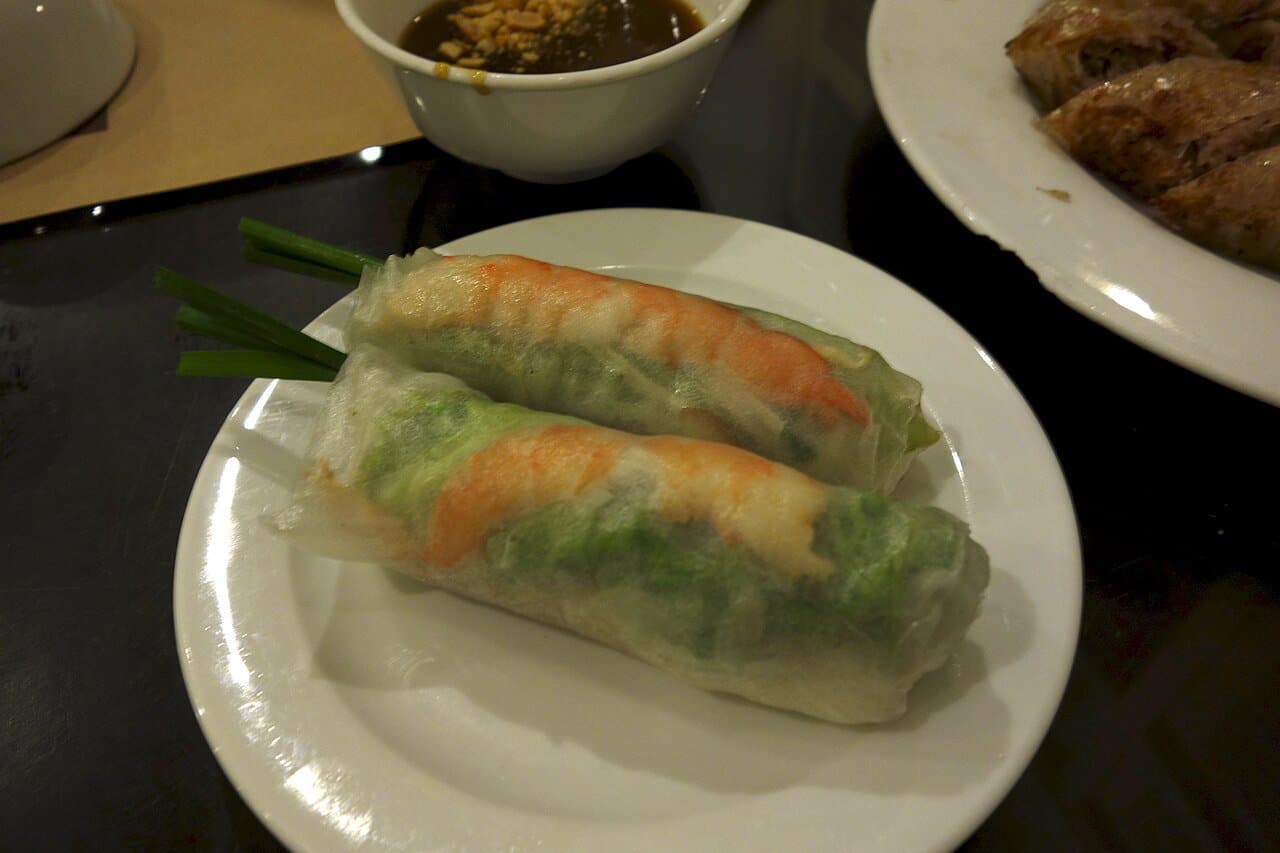
The short answer: Saigon does not have one best street for food — it has districts, and the smart move is to choose your district by what you want to eat that night. District 1 is the easy first base. District 3 is where the local lanes hide the banh xeo and com tam. District 4 is the seafood-and-snail evening scene. District 5, Cho Lon, is the Chinese-Vietnamese quarter. This guide maps where to go in Ho Chi Minh City, names the institutions worth the trip, and lays out a night crawl that follows the city's own rhythm.
This is the where-to-eat companion to our reference pages. For what each dish actually is, see the Vietnamese food guide and the national street food atlas; for what a fair price looks like, the street food prices guide. Here we stay inside Saigon and talk geography.
How to read this guide
Saigon's street food rewards a district mindset. Each area has a flavour, a few named institutions, and a time of day when it comes alive. Below, each district covers what to eat there, two to four spots or streets to anchor on, and rough hours — treat every time as approximate, because stalls cycle and owners keep their own schedules. Bring cash, follow the queues, and let the night build.
District 1 — Ben Thanh, the central banh mi counters, and Bui Vien
District 1 is the tourist heart, and it earns a place on any food map for three reasons: the market, the famous banh mi, and the backpacker strip.
Ben Thanh Market is the obvious anchor. The covered food court inside runs through the day, and after the market shutters, the surrounding streets — the Phan Boi Chau and Phan Chu Trinh sides — turn into an evening street-stall zone where you can graze across regional dishes at low tables. It is touristy and not the cheapest food in the city, but it is a genuine, convenient introduction to the format.
For banh mi, District 1 holds the two most-cited names. Banh Mi Huynh Hoa, near Le Thi Rieng, is the press-consensus pick — a heavily loaded cold-cut sandwich with a near-permanent queue, priced above a neighbourhood cart for the brand and the fillings. Banh Mi Hong Hoa on Nguyen Trai is a long-running counter in the same orbit. Both are worth one visit; for daily eating, the unmarked cart near your hotel will be excellent and cheaper.
Bui Vien, the pedestrianised backpacker street, is more a nightlife strip than a serious food destination — bar-hosts, beer, and grilled-skewer carts. Eat lightly here and treat it as atmosphere rather than a culinary stop. Bui Vien gets loud and crowded after dark, and the bag-snatching and tout caveats in our solo female HCMC guide apply most sharply on this strip.
Rough hours: market food court daytime into early evening; the surrounding night stalls fill after dark; Bui Vien runs late.
District 3 — banh xeo, com tam, and the local-lane belt
District 3 sits just inland of the tourist core and is where Saigon starts eating like itself. It is residential, lane-heavy, and home to two southern institutions.
Banh xeo — the sizzling turmeric crepe you tear, wrap in herbs and lettuce, and dip — has its classic Saigon address at Banh Xeo 46A on Dinh Cong Trang (technically Tan Dinh ward, on the District 1/District 3 seam). It has been the reference banh xeo spot for decades and carries a Michelin Bib Gourmand nod. The crepes are large, crisp-edged, and meant to be shared.
For com tam — the broken-rice plate with grilled pork chop, often a fried egg and shredded pork skin — District 3 and the adjacent Phu Nhuan ward hold the city's best-known specialist, Com Tam Ba Ghien on Dang Van Ngu, a high-volume institution that serves enormous numbers of plates a day. Com tam is a morning-and-lunch dish above all; arrive around a meal peak.
Beyond the famous names, District 3's reward is the lane culture: pho counters, hu tieu carts, and che stalls tucked into residential alleys where the only English is the smile. Wander, watch for the busiest stall, and sit down.
Rough hours: com tam and banh mi morning and midday; banh xeo from late morning into the evening; lane carts vary.
District 4 — the seafood and snail (oc) street
District 4 is a small, dense district just across the canal from District 1, and it owns Saigon's evening seafood-and-snail scene. This is the one district where the food is the night out.
The heart of it is Vinh Khanh Street, which fills with curbside quan oc — snail-and-shellfish joints — as the evening goes on. Oc means snails, but the menu is a whole category of small seafood plates: sea snails and clams, scallops, mantis shrimp, and razor clams, cooked to order with tamarind, garlic butter, chilli-salt, or coconut. The format is social: you order a spread of small dishes for the table, work through them slowly, and drink cold beer. It is the opposite of a quick bite.
There is no single must-visit address on Vinh Khanh — the street itself is the institution, and the busy tables are the signal. Pick a stall that is full of locals, point at what the next table is having, and settle in. Several spots run late into the night.
Rough hours: evening into late night; this is a after-dark district.
District 5 — Cho Lon, the Chinese-Vietnamese quarter
Cho Lon, spread across District 5 and into District 6, is Saigon's historic Chinatown and its own distinct food world — Teochew and Cantonese cooking woven into the southern Vietnamese palate. This is a daytime-into-evening district rather than a late-night one.
What to eat here:
- Hu tieu — the clear pork-and-shrimp noodle soup that is the southern answer to pho, with deep Teochew roots in this neighbourhood. Cho Lon is the dish's spiritual home in the city; look for the long-running noodle houses around the District 5 streets.
- Dim sum and Cantonese roast meats — found in the Chinese restaurants and bakeries through the quarter.
- Che — the sweet bean-and-jelly dessert soups, served warm or iced, from the dessert stalls that cluster near the markets.
The geographic anchor is Binh Tay Market, the grand colonial-era wholesale market in District 6, surrounded by food vendors. Cho Lon is also a standard half-day loop on a city tour — see best day trips from Ho Chi Minh City for how it fits a wider itinerary.
Rough hours: daytime markets and noodle houses; some streets carry into the evening.
An evening food crawl that follows the city
Saigon's food scene peaks at night, so the most rewarding way to eat is a crawl that builds with the dark. The logic is simple — start light and central, move toward the social seafood scene as the evening fills, and save the Chinese-Vietnamese district for its own daytime trip.
A workable one-evening route:
- Early evening, District 1. Start at a District 1 banh mi counter or grab a bowl from the Ben Thanh evening stalls as the market winds down. Keep it light — this is the warm-up.
- Mid-evening, drift toward District 3 or stay central. A plate of banh xeo at 46A or a com tam stop if you have not eaten one yet. Share rather than fill up.
- Late evening, cross to District 4. Cross the canal to Vinh Khanh Street for the oc finale — a spread of snails and shellfish, beer, and a couple of hours on plastic stools. This is the heart of the night and where the crawl is meant to slow down and stay.
Keep Cho Lon for a separate daytime outing — hu tieu and che reward an unhurried lunch-and-afternoon, not a late-night dash. Crossing the city at night is easy with a Grab; the districts are close, and the canal between District 1 and District 4 is a short hop.
The plastic-stool culture, and how to eat it well
The defining architecture of Saigon street food is the low plastic stool and the curbside table. Stalls spill onto the sidewalk, you sit knee-high to the pavement, and the kitchen is a cart a metre away. A few practical notes that make the scene work:
- Bring cash in small notes. The curbside stalls and snail tables are cash-first and often short on change for large bills. App and QR payment is growing in sit-down places but not the carts.
- Follow the queue. A line of locals at a meal peak is the single most reliable quality and safety signal. Busy stalls turn food over fast.
- Order the way the next table does at an oc joint or a market stall — point, share, and order a few small plates rather than one big dish.
- Eat at the peak, not after it. Com tam and banh mi are best at their meal-time rush; the seafood streets are best mid-to-late evening.
On safety: many stalls sit on motorbike-heavy streets, so cross deliberately and keep a steady line rather than darting between bikes. Bag-snatching from passing motorbikes is the city's defining petty risk — wear a cross-body bag worn to the front and keep your phone away from the curb edge while you eat. The hygiene and get-sick-clinic detail lives in the street food atlas; the district-by-district personal-safety detail, especially for solo travellers, is in the solo female HCMC guide.
Limitations
Specific stalls and streets here reflect 2026 observations and recent visits, but Saigon's food scene cycles fast — owners retire, carts move down the block, and a famous queue can shift to a newer place a street over. Treat the named spots as anchors, not guarantees, and ask your hotel or a local where they ate last night for the most current read. Hours are deliberately hedged because curbside stalls keep their own schedules and sell out when they sell out.
This guide is district-level and where-to-go by design; it does not re-define dishes or reproduce price tables. For dish definitions see the Vietnamese food guide and street food atlas; for what each dish should cost, the street food prices guide.