
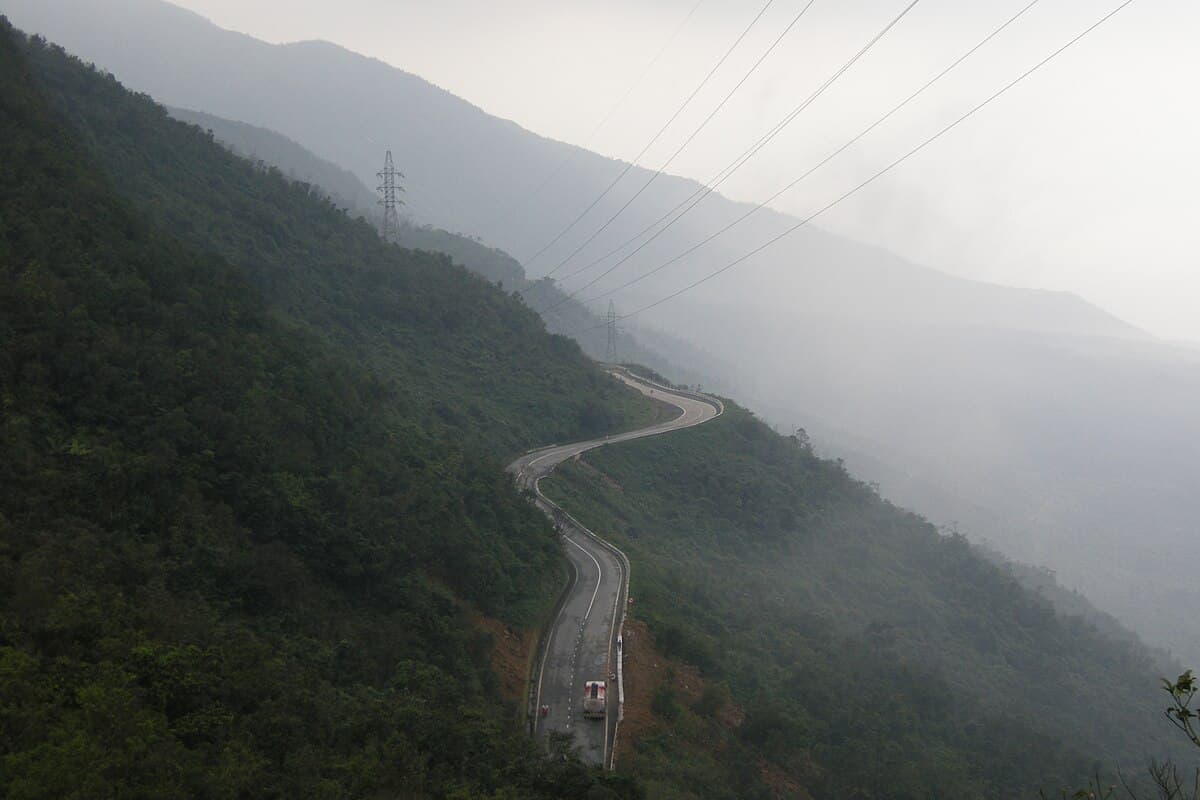
The Ha Giang Loop is the northernmost motorbike adventure in Vietnam — a 4-day mountain road circuit through limestone karst landscapes, ethnic-minority villages, and one of the country's most photographed mountain passes. For couples, the trip works best in the easy-rider format where local Vietnamese guides handle the driving while couples ride pillion and absorb the scenery without the stress of mountain-road motorbiking. The result is an adventure-flavored couples trip that lands differently from the cultural-immersion Hoi An-and-Hanoi pattern most couples do.
This guide is the 4-day Ha Giang Loop for couples in 2026 — the easy-rider option, the route through the four standout mountain towns, the homestay-based accommodation pattern, when to go, what to pack, and the specific decisions that determine whether the trip is the adventure highlight or a stressful endurance run. The Vietnam Land Transport Atlas covers the broader transport reference; this guide is the couples-Ha-Giang-specific synthesis.
Quick summary — the 4-day couples Ha Giang Loop
| Day | Route | Distance | Key stops |
|---|---|---|---|
| Day 1 | Hanoi → Ha Giang town (overnight bus) | 300 km, 5-7 hr | Sleep on bus; arrival morning |
| Day 2 | Ha Giang → Quan Ba → Yen Minh | 130 km | Tham Ma Pass, Sky Path lookout |
| Day 3 | Yen Minh → Dong Van → Meo Vac | 100 km | Lung Cu Flag Tower, Dong Van market, Ma Pi Leng Pass viewpoint |
| Day 4 | Meo Vac → back to Ha Giang | 150 km | Nho Que River boat ride, return ride |
| Day 4 evening | Ha Giang → Hanoi (overnight bus) | 300 km | Sleep on bus; arrive morning Hanoi |
Total cost for couples: $250-550/person including easy-rider package + Hanoi transfers.
The fast version: book an easy-rider 3-4 day tour through Jasmine Tours, QT Motorbikes, or Vu Linh Motorbikes ($300-450/person); take the overnight bus from Hanoi to Ha Giang; ride pillion through the loop with daily 100-150 km segments and key viewpoint stops; sleep in homestays in the mountain villages; return to Hanoi via overnight bus.
Why the easy-rider option is the couples standard
The Ha Giang mountain roads have curves, occasional rough surfaces, weather variability, and at least one technically demanding stretch (the Ma Pi Leng Pass). For couples without significant mountain-motorbike experience, the easy-rider option produces the same scenic and adventure experience without the driving stress that self-drive introduces.
The easy-rider format: each rider sits pillion on a Vietnamese guide's motorbike. The guide drives; you photograph, look around, talk to your partner during stops, and enjoy the scenery. The format works for couples in their 20s-50s; couples in their 60s and 70s with mobility limitations may find the long pillion days tiring (the 100-150 km daily distances mean 5-7 hours on the bike).
The self-drive alternative: rent a motorbike in Ha Giang town ($10-20/day), drive the loop yourself with maps and waypoints. This requires significant motorbike experience including mountain-road driving, and is recommended only for couples with previous mountain-riding experience. Self-drive accident rates on the Ha Giang Loop are materially higher than the easy-rider option.
The hybrid option: one partner drives (with experience), the other rides pillion. Works for couples where one partner has mountain-motorbike experience and the other doesn't; the experienced rider handles the bike, the partner enjoys the pillion-passenger experience.
The route
Hanoi to Ha Giang town (Day 1, overnight bus). Reputable operators include Hanh Cafe, Bus Ha Giang, and the QT Motorbikes integrated package. Cost $15-25 for sleeper berth. Departure 19:00-21:00 from Hanoi; arrival 04:00-06:00 in Ha Giang town. Most easy-rider tours include this transfer in the package and arrange pickup at Ha Giang town.
Ha Giang town to Quan Ba (Day 2 morning). The first 50 km of the loop heads north into the foothills. Stop at the Sky Path lookout at Tham Ma Pass — a 15-20 minute walk from the road to the lookout point with views of the karst limestone landscape and the rice terraces below. Continue to Quan Ba town, a small mountain town with the iconic "Twin Mountains" view (the two-breast mountain formation that's the symbol of the region).
Quan Ba to Yen Minh (Day 2 afternoon). 60 km of mountain road through smaller villages. Yen Minh town is the typical Day 2 overnight stop; mountain town with a few guesthouses and homestays at $15-30/night. Evening: traditional Vietnamese homestay dinner with the host family — rice wine, grilled meats, local vegetables, family-style table service.
Yen Minh to Dong Van (Day 3 morning). 50 km through the most-photographed Ha Giang scenery. Stops include the Pho Bang ethnic-minority village (Hmong community); the Lung Cu Flag Tower (the northernmost point of Vietnam, with views into China); the Hmong King's Palace at Sa Phin (small museum complex).
Dong Van (Day 3 midday). The town is the cultural standout of the loop — Dong Van Old Town with French colonial architecture; the Sunday Market with Hmong, Tay, and Dao traders gathering weekly (only on Sundays). Stay overnight at one of Dong Van's small hotels ($30-50) or a homestay ($20-35).
Dong Van to Meo Vac via Ma Pi Leng Pass (Day 3 afternoon). The 20 km segment that includes the Ma Pi Leng Pass viewpoint — the most-photographed Ha Giang location, where the road carved into the cliff above the Nho Que River produces the dramatic landscape. Stop for 20-30 minutes at the viewpoint; couples consistently report this as the trip's photographic standout.
Optional: Nho Que River boat ride from Meo Vac. 60-90 minute scenic ride through the karst gorge with the Ma Pi Leng Pass visible above; $5-10/person; functions as the perspective-change-from-water moment.
Meo Vac to Ha Giang town (Day 4). 150 km of return riding through the southern half of the loop. Smaller villages, less-developed roads, occasional homestay stops. Arrive Ha Giang town late afternoon; book the evening overnight bus to Hanoi.
Ha Giang to Hanoi (Day 4 overnight bus). Same operator as the outbound; departure 19:00-21:00, arrival Hanoi 04:00-06:00 Day 5.
When to go
April-May and October-November are the consistent recommendations. The weather windows and the visual conditions:
April-May: post-rainy-season clarity; flowers blooming in the mountain valleys; temperatures 18-26°C; daylight hours growing.
October-November: post-typhoon clear weather; the rice terraces turn gold (the standout visual season); temperatures 15-23°C; less tourist crowding than April-May.
March: occasional rain; cool 10-20°C; visibility variable; the shoulder season alternative for couples with flexible dates.
June-August: hot 25-32°C; afternoon thunderstorms; high humidity; some homestays without air conditioning; not the recommended window.
December-February: cold 5-15°C in the mountains; occasional fog; visually atmospheric but cold; not for couples uncomfortable with mountain cold.
Avoid: monsoon season (June-September) for road-safety issues; mid-winter (January-February) for cold.
The accommodation pattern
Homestays are the Ha Giang Loop standard. The pattern:
Quan Ba area homestays: small Hmong or Tay family-run guesthouses; $15-25/person/night including dinner and breakfast; basic shared bathroom; family-style meals around a central table.
Yen Minh town: 3-4 small guesthouses and homestays; $15-30/person/night. Slightly more developed than Quan Ba but still rustic.
Dong Van Old Town: the most-developed stop on the loop. Small hotels at $30-50/night with private bathrooms; homestays at $20-35/person/night with shared bathrooms; the town has several restaurants and cafes.
Meo Vac area: smaller selection of guesthouses; $15-30/person/night; family-style atmosphere.
For couples: the homestay experience is part of the trip — the family meals, the host's hospitality, the cultural texture. Most easy-rider tours include the homestay accommodations in the package; the operator selects the homestays based on relationships with specific families. For couples wanting more privacy: book the Dong Van Old Town hotel night ($30-50) for at least one stop; the homestays are good but the shared-bathroom-and-family-meal format isn't every couple's preference.
What to pack
Essential:
- Light rain jacket (mountain weather shifts quickly)
- Warm layer for evening (Dong Van can be 10-15°C at night)
- Closed-toe shoes (sandals don't work on the motorbike)
- Sun protection (high SPF, sun hat, sunglasses)
- Helmet (operator-provided but bring your own if you have one)
- Small daypack with water bottle, snacks, camera
- Cash (2-3 million VND / $80-120 for incidentals; ATMs are limited)
Nice to have:
- Motorcycle-friendly riding gloves
- Small first-aid kit
- Baby wipes for the rougher homestay bathrooms
- Thermos for morning Vietnamese coffee
- Sunscreen and lip balm
What to skip:
- Heavy luggage (motorbike carrying capacity is limited)
- Formal clothes
- Valuable jewelry
- Large camera gear that can't be safely carried on the bike
What couples consistently regret
A few patterns from couples who've done the Ha Giang Loop:
Doing the 3-day compressed version instead of 4 days. The 3-day version rushes the Ma Pi Leng Pass section and skips key viewpoints. The 4-day version is the comfortable pace.
Self-driving without enough motorbike experience. The Ma Pi Leng section specifically requires technical skills that most casual motorbike riders don't have. The easy-rider option is the universal recommendation for couples.
Going during monsoon season (June-September). The rain and road safety issues compound; the couples who do this report rougher trips than the equivalent April-May or October-November couples.
Skipping the Nho Que River boat ride because it seems like an add-on. The 60-90 minute boat ride through the karst gorge is one of the trip's standout experiences; budget the $5-10/person for it.
Trying to combine Ha Giang with central Vietnam (Hue, Hoi An) in 2 weeks. Too much; the trips have different characters and the transitions between them are tiring. Pick one or extend the trip to 18-21 days.
Bringing heavy luggage that doesn't fit well on the motorbike. Pack light; the easy-rider operators have luggage-storage arrangements for the larger bags during the loop.
Limitations
- Pricing is May-June 2026 USD at ~26,361 VND/USD. Couples-focused resort + cruise rates fluctuate 10-25% seasonally; Valentine's Day, Tet (Feb 17 2026), and December-January add 20-50% to honeymoon-tier properties.
- Romantic-experience claims are subjective — the "magic" of Hoi An lantern nights, Ha Long Bay sunsets, or a Six Senses Ninh Van Bay villa depends on weather, crowd density, and the couple's expectations. We describe the typical experience under good conditions; outliers happen.
- Ha Long Bay and Lan Ha Bay cruise quality varies between operators and even between sister vessels of the same operator. Confirm the specific boat name on booking and check recent (last 60 days) cruise reviews on TripAdvisor.
- Spa + private-experience bookings at top-tier properties (Capella, Anantara, Six Senses) sell out 4-8 weeks ahead during peak; book before arrival.
- Honeymoon perks (champagne, room upgrades, late checkout) depend on hotel disclosure — mention "honeymoon" on every booking and follow up at check-in.
The bigger picture
The Ha Giang Loop is one of Vietnam's most-distinctive couples experiences — adventure-flavored, scenically dramatic, culturally rich through the ethnic-minority villages and homestay format. For couples with adventure tolerance, the trip consistently rates as a highlight; for couples seeking the cleaner cultural-immersion pattern, the Hoi An-and-Halong route is the better fit. The decision is which couple you are.
For related context:
- Vietnam Land Transport Atlas — broader transport reference
- Vietnam honeymoon itinerary for couples — couples cultural-immersion alternative
- Vietnam train for couples — alternative scenic transport
- Vietnam UNESCO heritage itinerary for couples — couples UNESCO alternative
The Ha Giang Loop is the adventure-couples Vietnam trip. The cultural-couples version is the Hoi An-and-Halong route. Pick the trip that matches what you actually want.