
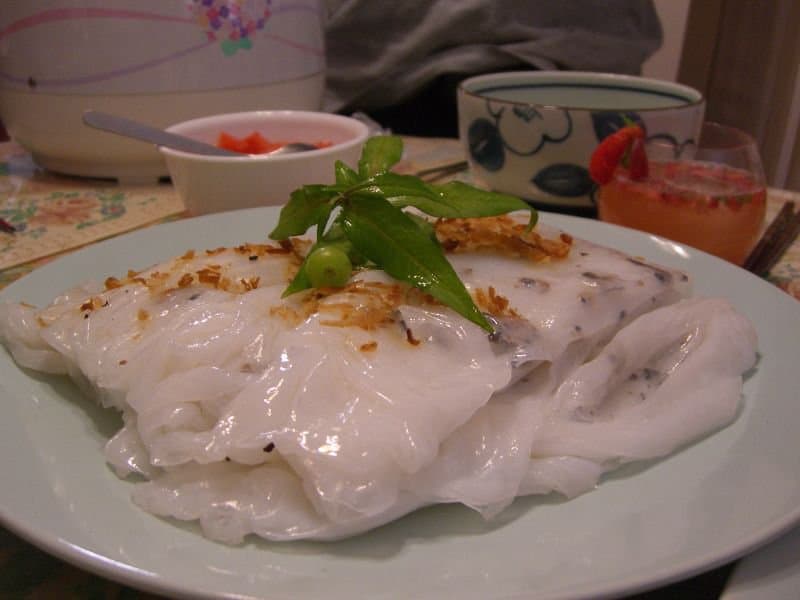
If you only learn one thing about eating in Hue, learn this: the city runs two food cultures side by side. One is royal cuisine — the small-portion, intricately presented court cooking that grew up around the Nguyen dynasty, which ruled Vietnam from Hue for 143 years. The other is a fierce, lemongrass-and-chilli everyday street food that is among the spiciest in the country. The contrast between the refined and the rough is the whole point of Hue, and it is what makes a single-city food trip here worth more than the paragraph Hue usually gets in a national round-up.
This guide is the Hue-only version. For the national context — regional clusters, the Michelin roster, UNESCO status and city-by-city vendor maps — see our Vietnam street food atlas. For 2026 prices, the street food prices guide has the per-dish numbers, and the broader Vietnamese food guide maps eating across the whole country. This page stays inside Hue and goes deeper on why it tastes the way it does.
Why Hue food is different
Hue was Vietnam's imperial capital from 1802 to 1945, and an administrative and cultural centre well before that. A royal court means royal kitchens, and the Hue court took cooking seriously: a formal imperial banquet could run to dozens of separate dishes, each made in a small, refined portion, arranged for colour and symmetry, and balanced according to ideas about hot and cold, dry and wet — closer to a philosophy than a menu. When the monarchy ended, those court cooks and their descendants carried the techniques out into the city's home kitchens and stalls.
That is why so much of Hue's everyday food is built around small plates and miniature portions: the banh family of little steamed cakes, the saucer-sized banh beo, the dainty dumplings. It is the court aesthetic, democratised. Alongside it runs a parallel tradition of robust, deeply seasoned everyday food, plus one of Vietnam's densest concentrations of vegetarian (chay) restaurants — a legacy of Hue's standing as a Buddhist centre. The result is a city where you can eat a refined royal-style banquet one night and a fiery $2 bowl of noodles the next morning, and both are authentically Hue.
Bun bo Hue: the city's defining bowl
Start here. Bun bo Hue is the dish the city is named into, and the bowl that everything else orbits. It is a beef-and-pork noodle soup, but it shares almost nothing with pho beyond the word "noodle." The broth is simmered with lemongrass, seasoned with mam ruoc (fermented shrimp paste) and finished with a slick of chilli-and-annatto oil that turns it oily-red. The noodles are thick and round, not the flat ribbons of pho. A standard bowl carries sliced beef shank, a chunk of pork knuckle, a slab of pork sausage (cha), and often cubes of congealed pig blood (huyet) — which you can wave off — with banana blossom, herbs and lime served alongside.
The folk knowledge of making bun bo Hue was added to Vietnam's national intangible cultural heritage list in 2025, a marker of how central the dish is to the city's identity. Eaten at the source it is spicier, more aromatic and more savoury-deep than the versions you meet elsewhere in Vietnam or abroad, because the shrimp paste is not toned down (see the note above). Treat your first bowl as a morning meal — locals eat it for breakfast — and expect heat built into the broth rather than added at the table.
The banh family: Hue's small-plate culture
If bun bo Hue is the loud half of Hue, the banh family is the quiet, refined half — and it is where the royal small-plate aesthetic shows up most clearly on the street. These are little savoury cakes of rice or tapioca starch, eaten in small portions and best ordered as a shared spread rather than one dish at a time:
- Banh beo — tiny steamed rice discs served in their own little saucers, each topped with dried shrimp floss and crispy fried shallots, eaten with a thin sweet-savoury fish sauce. A serving is a tray of many small cups.
- Banh nam — a thin layer of rice batter with seasoned shrimp and pork, steamed flat inside a folded banana leaf. You unwrap it and eat it off the leaf.
- Banh loc — translucent, chewy tapioca dumplings wrapped around a whole small shrimp and a little pork, served either bare (banh loc tran) or steamed in leaf (banh loc goi). The texture is the point.
- Banh khoai — Hue's cousin of the southern banh xeo, but smaller, thicker and crispier: a fried turmeric-yellow pancake with shrimp, pork and bean sprouts, eaten with herbs and a thick peanut-and-liver dipping sauce that is distinctly Hue.
- Banh ram it — a clever two-in-one: a soft steamed glutinous rice dumpling (it) sitting on a small crispy deep-fried rice cake (ram), so each bite is part chewy, part crunchy.
Order three or four together and you have eaten the way Hue actually eats — a slow, grazing spread of small plates, the most direct everyday descendant of the court banquet. Per-piece prices are in the prices guide if you want to sanity-check what you are charged.
Com hen, nem lui and the rest
Two more dishes belong on any honest Hue list.
Com hen is the city's humble icon: cooked rice, served cool, piled with tiny baby clams (hen) and their broth, peanuts, crispy pork crackling, herbs, banana blossom, a sesame rice cracker and a sharp hit of fermented shrimp sauce and chilli. It is funky, textural and almost defiantly un-touristy — the dish that tells you you have got past the set menus. It comes from the Con Hen sandbar islet in the Perfume River, where the clams were traditionally gathered, and the lanes around there serve the most atmospheric bowls.
Nem lui is the social dish: minced seasoned pork moulded onto lemongrass stalks or skewers and grilled, then pulled off and rolled at the table into rice paper with herbs, green banana and starfruit, and dunked in a thick savoury peanut-and-pork-liver sauce. It is a do-it-yourself, hands-on meal, usually shared, and pairs naturally with banh khoai at the same kind of restaurant.
And then there is che. Hue is widely considered Vietnam's dessert capital, and the reason is again the court: royal cooks turned sweet-course cookery into dozens of varieties of che — sweet soups and puddings of beans, jellies, lotus seed, taro and fruit, served warm or over ice. Look for delicate court-style ones such as che hat sen (lotus seed) and the famous oddity che bot loc boc heo quay, a chewy tapioca parcel hiding a nugget of roast pork in syrup. A che stall with a dozen labelled tubs is a normal Hue sight and the cheapest way to taste the city's range in one sitting.
Where to eat each
Hue's food geography is compact and walkable, which makes it forgiving. A few orientation rules rather than a vendor directory — the atlas has named-vendor tables if you want specific addresses:
- Bun bo Hue — the streets just south of the Perfume River and the area around Dong Ba Market are thick with specialists. Go at breakfast, follow the locals, and pick a stall that does only this one bowl. A morning queue is your best signal.
- The banh small plates — many banh-specialist houses cluster on the south bank near the Dong Ba and An Cuu market areas; some do nothing but the steamed-cake spread plus nem lui and banh khoai. These are the places to sit and graze.
- Com hen — head for the lanes near the Con Hen islet for the original-neighbourhood version; you will also find it at market stalls, but the islet bowls have the strongest sense of place.
- Dong Ba Market — Hue's central market (in operation since the late 1800s) is the single best one-stop introduction: bun bo, com hen, banh and che under one roof. Treat it as a tasting tour rather than a single meal.
- Riverside and the south bank — the restored-mansion and garden restaurants here are where the sit-down royal-cuisine meals and the more polished nem-lui-and-banh-khoai dinners live.
Hue is also a strong vegetarian city. Its Buddhist heritage supports an unusually large number of chay restaurants, and many of the banh and che dishes have meat-free versions by default — worth knowing if you are travelling chay.
The royal-cuisine experience, honestly
You can book a royal-style banquet in Hue, and several restaurants — typically in restored colonial mansions or garden settings on the south bank — build their whole offer around it. Expect a multi-course set menu of small, decorative dishes, sometimes with food carved into phoenix and dragon shapes, sometimes with costumed service or court music. At its best it is a genuinely lovely way to spend an evening and a real window onto the small-portion, presentation-first court aesthetic.
Be clear-eyed about what it is, though. Most royal-cuisine venues serve a tourist-oriented set menu rather than a literal recreation of imperial dining — the theatre is part of the product, and the food can be more about appearance than flavour. A smaller number do a quieter, food-first version worth seeking out if you care more about taste than spectacle. Read recent reviews for whether a place is praised for its food or only its presentation — and remember that the city's everyday small plates, the banh spread and the che stall, already give you the soul of the court tradition at a fraction of the price.
Limitations
This guide is deliberately Hue-only and dish-and-area level rather than a vendor directory. Named stalls and restaurants cycle fast in Vietnam — owners retire, places move, queues shift down the street — so for current specific addresses, cross-check the named-vendor tables in our street food atlas and ask your hotel or homestay host where they ate yesterday, which is the most current signal you will get.
Prices are not listed here on purpose; they live in the street food prices guide and drift over time. Royal-cuisine quality varies widely between venues and we have hedged rather than ranked individual restaurants, because the gap between the genuinely good and the purely theatrical is something recent reviews will tell you better than a guide written once. If you are pairing food with sightseeing, the royal tombs day trip and the DMZ tour from Hue both pair naturally with a morning bun bo and an evening banh spread.