
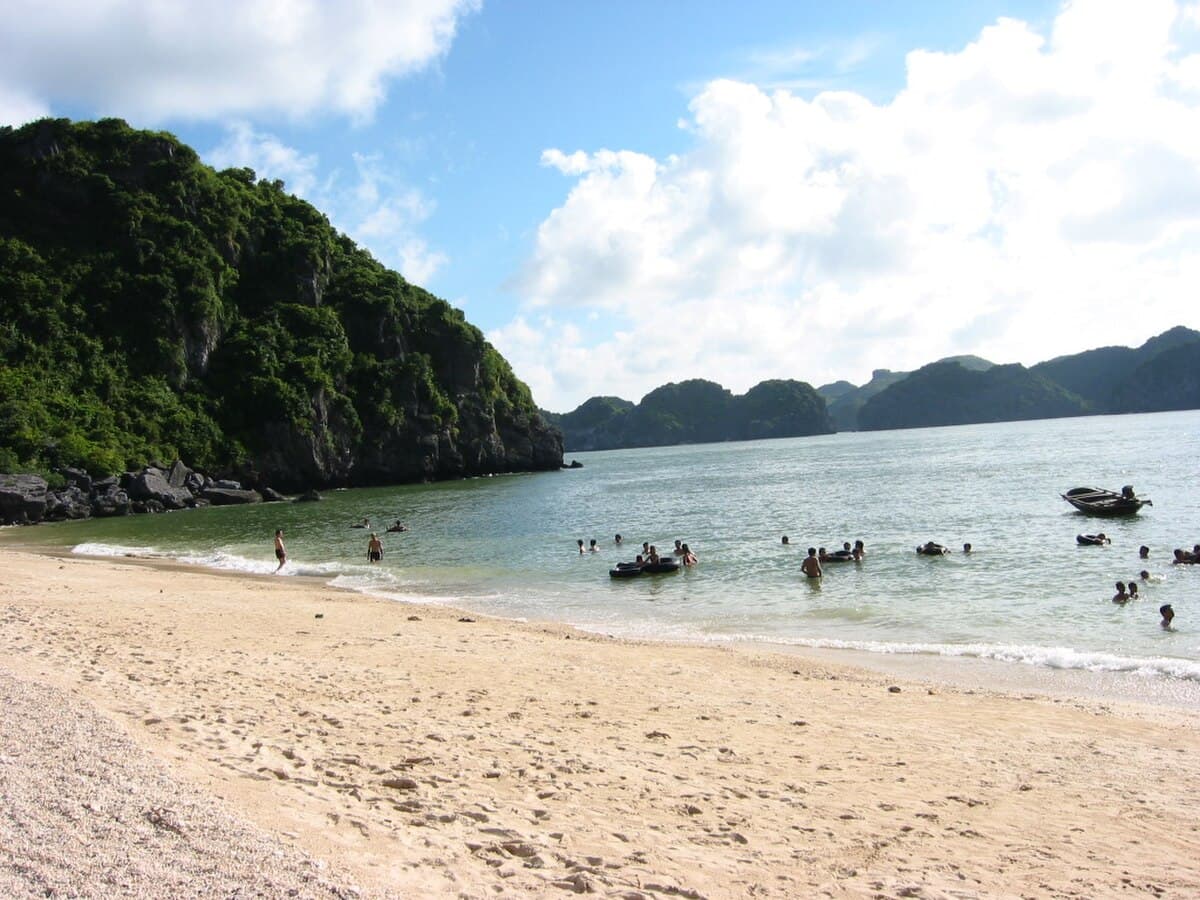
I grew up walking distance from Cua Dai Beach, where my parents took me to swim before I could read. The Cua Dai of the 1990s and 2000s was a different beach than the one foreign families visit in 2026 — it was wider, the sand was deeper, and the lifeguards were a fixture of every weekend afternoon. By the early 2010s, persistent coastal erosion had started eating into the beachfront. By 2020, a stretch of beachfront restaurants that had been there my entire childhood was either gone or rebuilt on stilts. By 2024, the Beach Atlas was documenting 10-20 metres of coastal loss per year along the worst-affected sections of Cua Dai.
That history matters when you're deciding which Vietnamese beach to take kids to. Cua Dai was the beach Vietnamese central-coast families defaulted to for a generation; the beach that families default to now has shifted. This guide is the family-specific layer on top of our Vietnam Beach Water Quality Atlas — the Atlas covers the underlying water-quality data; this guide answers the kid-specific questions the Atlas doesn't separately call out.
Quick summary — the family-beach rankings
| Beach | Water quality | Lifeguards | Family-resort density | Best ages | Verdict |
|---|---|---|---|---|---|
| Phu Quoc Long Beach | Good year-round | Yes (resort-based) | Highest in Vietnam | 0+ | First choice for families |
| Da Nang My Khe | Good Apr-Sep; rougher Oct-Dec | Yes (municipal Apr-Sep) | High | 5+ (waves can pick up) | Strong runner-up |
| Cat Ba Cat Co 1-2-3 | Good high season | Yes Cat Co 1 + 2 | Moderate | 3+ | Underrated; calm bay shape |
| Hoi An Cua Dai | Variable; erosion-affected | Resort-private only | Moderate | 5+; calm-season only | Historical default; downgraded |
| Nha Trang main beach | Decent; rip currents | Yes (municipal) | High | 7+ (rips); not for toddlers | Better for older kids |
| Mui Ne | Decent | Resort-private only | High but kitesurf-focused | 5+; calm season only | Best in calm months |
| Lang Co | Variable; jellyfish-prone | Resort-private only | Moderate (high-end) | 5+ | Pretty but logistically isolated |
| Halong Tuan Chau | OK for brief paddling | Yes (low season only) | Low | n/a for serious beach time | Cruise-day-trip beach only |
The single most useful action for a family planning a Vietnam beach trip: pick Phu Quoc if your kids are under 5 or if you're traveling in the June-September window. Central-coast beaches work better for older kids in the calm months.
Why this guide exists
The standard "is Vietnam safe?" content for families is one of two things: a resort-promoter pitch that flattens every beach into "tropical paradise", or a generic travel-blog round-up that doesn't distinguish between water-quality readings on a calm February morning and the same beach during a monsoon storm. Neither aggregates the four real family-decision dimensions: water quality, jellyfish season, rip-current risk, and lifeguard coverage.
The Beach Atlas does the underlying data work; this guide is the family-specific synthesis. Every claim traces back to the Atlas's source data, augmented by what I've watched on Vietnamese beaches as the daughter of a central-Vietnam family and as someone who's brought friends' kids to Cua Dai, Phu Quoc, and Da Nang at different ages.
The 8 beaches families actually visit
Phu Quoc — the family-resort default
Phu Quoc has emerged as the dominant family-beach destination in Vietnam over the past decade. The island's geography — calmer offshore waters protected from open South China Sea swell — combines with a deliberately family-resort-oriented development pattern. Vinpearl Resort & Spa, JW Marriott Emerald Bay, the Salinda Resort, and dozens of mid-range options at Long Beach and Bai Sao have built kids' clubs, multiple pools, and water-park infrastructure that the central-coast resorts haven't matched.
Water-quality reality: Long Beach and Bai Sao both test within safe ranges through the November-April dry season. Monsoon weeks (July-October) bring elevated bacterial counts after heavy rain, but the major resorts close swimming areas when their own testing flags issues. Lifeguards: most beach-front resorts post their own staff during daylight hours; municipal lifeguard coverage is patchier. Slope and surf: gentle, gentle, gentle — this is the calmest major beach in Vietnam by wave action, which is exactly what families with under-5s need.
The honest downside: Phu Quoc isn't culturally Vietnamese in the way Hoi An or Da Nang is. The resort strip can feel like Thailand-meets-Mexico more than Vietnam. If your trip is about Vietnamese-cultural experience plus beach, you might split time — central-coast cities for the culture, Phu Quoc for the beach days.
Da Nang's My Khe — the urban-family beach
My Khe is the city beach of Da Nang — 9 km of sand along the eastern edge of a major modern Vietnamese city, with high-rise hotels and beach-front cafes along most of its length. The InterContinental Danang Sun Peninsula and Hyatt Regency Danang Resort sit on or near it. Municipal lifeguards work the central stretches from April through September.
Water-quality reality: tested within safe ranges most of the year, with caveats around runoff after heavy rainfall. The Beach Atlas notes that the stretch nearest the Han River outflow has lower water-quality readings than the southern stretches — practical implication, pick a hotel south of the central stretch if water quality is your top concern.
The dynamic that makes My Khe work for families with older kids (5+): you're in a real Vietnamese city, so the beach day fits naturally into a broader trip with markets, museums, and food. The dynamic that makes it harder for under-5s: October through December the wave action picks up and the beach loses some of its toddler-friendly profile.
Hoi An's Cua Dai — the downgraded default
Cua Dai is 5 km east of Hoi An Old Town, reachable by bicycle, motorbike, or taxi. The beach is still pretty, the seafood at the surviving beachfront restaurants is still excellent, and on calm days in February-May the swimming is fine for families with kids 5 and older.
The erosion reality: documented 10-20 metres per year of coastal loss along the worst-affected sections through the 2010s and 2020s. Several beachfront restaurants and a few hotels have been rebuilt on stilts or repositioned inland. The safe-bathing zone is narrower than it was a decade ago, and the seafloor profile shifts year to year — what was a gentle slope five years ago can become a sudden drop now.
Practical guidance for Cua Dai with kids: visit in the calm months (Feb-May); ask your hotel about current beach conditions that morning (they track closely); don't assume the lifeguard coverage from a decade ago still exists (it's now resort-private rather than municipal). Families staying in Hoi An town with kids under 5 might do better treating Cua Dai as a sunset-and-dinner spot and doing serious swimming at Da Nang's My Khe.
Nha Trang's main beach — for older kids only
Nha Trang's 7-km city beach is one of Vietnam's most-developed beach strips. The water-quality data is decent; the resort density is high. The reason it sits lower on the family list: rip currents are documented, lifeguards do post safety-flag warnings on bigger-swell days, and the wave action that draws surfers (the same physics that drives the bar-strip nightlife scene) doesn't pair naturally with toddler swimming.
Better for: families with confident swimmers 7+. Less good for: under-5s, beginning swimmers, families who'd rather not negotiate a wave-day decision tree.
Mui Ne — wind season vs calm season
Mui Ne is famously windy April-October — kitesurfing season — and the same wind that makes it Asia's kitesurfing capital makes it less family-friendly for kids during those months. November through March, the wind drops and the beach becomes a different place: gentle slope, manageable surf, sand dunes for kids to play on, and a wide range of mid-range family resorts along the 10-km strip.
Practical guidance: if you're going to Mui Ne with kids, go in the November-March calm window. Avoid the central kitesurfing zones (clearly marked at most resorts); choose a resort at the quieter southern or northern end of the strip; treat the sand dunes at Bau Trang as a separate kid-friendly outing.
Cat Ba — the underrated bay choice
Cat Ba Island's three small beaches (Cat Co 1, Cat Co 2, Cat Co 3) sit in protected coves on the southern coast of Cat Ba, walking distance from the main town. The bay shapes mean genuinely calm water; the slopes are gentle; the size is small enough that you can see your kids from anywhere on the beach.
Lifeguards work Cat Co 1 and 2 during high season (May-September). Cat Co 3 is the quieter end. Water quality tests well in high season; the sand quality is acceptable but not Phu Quoc-level. The catch: getting to Cat Ba involves a bus or limousine van from Hanoi to Hai Phong + a fast ferry to Cat Ba, which is meaningfully more logistics than a direct flight to Phu Quoc.
Lang Co — the high-end secret
Lang Co is a long, narrow beach between Hue and Da Nang, dominated by a few high-end resorts: Banyan Tree Lang Co (luxury), Angsana Lang Co, and the Hue-owned Vedana Lagoon nearby. The beach is genuinely pretty — wide, white sand, mountains backing it — but the family-fit is variable.
Water quality: variable. The beach faces open sea with less protected geography than Phu Quoc or Cat Ba. Jellyfish are documented June-September, more pronounced than at the resort-island beaches. Lifeguards: resort-private only. Family-resort fit: the Banyan Tree has family-villa options but the broader programming is more honeymoon-oriented than kid-oriented.
Better for: families with older kids (7+) who value the high-end resort experience and aren't constrained by school-holiday timing.
Halong's Tuan Chau — not really a beach destination
The artificial beach at Tuan Chau Island (the mainland-side Halong cruise launching point) exists for arriving cruise passengers to dip a toe in the water before their boat departs. It's fine for brief paddling. It is not a destination beach for serious family beach time.
If you're spending kid-time on a Halong itinerary, the better approach is: book a family-friendly Halong cruise (Indochine Junk, Bhaya Cruises, and Paradise Cruises all run family-positive itineraries); plan the beach time at Cat Ba's Cat Co coves separately as a 1-2 day extension; don't expect a full beach day at Tuan Chau itself.
The 5 family-specific concerns
1. Jellyfish
The peak window is June through September across all Vietnamese beaches, with central-coast concentration. Box jellyfish (potentially serious sting) and smaller stinging varieties both appear. Resort staff at Cua Dai, Lang Co, and the more-affected Da Nang stretches track sightings closely; ask before you put kids in the water on any morning during the season.
First aid kit additions: vinegar packets (4-6, bring from home — pharmacies in major cities stock them but the rural resorts may not); pediatric ibuprofen; aloe vera or after-sun gel. If a kid gets stung: rinse with seawater (not freshwater), apply vinegar for 30 seconds, remove visible tentacles with a card (not fingers), apply ice. For severe reactions (breathing difficulty, swelling beyond the sting area), go to the nearest international hospital — Vinmec Phu Quoc, FV Hospital Da Nang, or Family Medical Practice in major cities.
2. Rip currents
Most pronounced at Nha Trang's main beach; manageable at Da Nang's My Khe most of the year; rare at Phu Quoc's Long Beach and Cat Ba's Cat Co coves. Teach kids the basic rule before they swim: if you feel pulled out, swim parallel to shore rather than fight the current. Always swim where the lifeguard flags indicate; never let kids swim alone regardless of beach.
3. Sun and heat
Vietnamese sun is genuinely intense April-September on all beaches. UV index regularly hits 10-12 in the midday hours. Rash guards for kids are non-negotiable — UPF 50+ fabric covering torso and arms is the easiest protection. Reef-safe sunscreen SPF 50+ for face, neck, legs (bring from home; Vietnamese pharmacy SPF tends to top out at 30-50 and reef-safe options are limited). Avoid midday swimming with under-5s — morning before 11am or afternoon after 3pm; the midday hours are for pool time under shade or naptime indoors.
4. Water quality after rain
This is the most-underappreciated kid-specific risk. Heavy rainfall — anywhere along the central or southern Vietnamese coast — elevates bacterial counts in the runoff zones for 24-48 hours. Practical guidance: if there's been heavy rain overnight or in the morning, pool day rather than beach day; resume beach swimming when the runoff has cleared (visible water clarity is a decent proxy). The Beach Atlas's per-beach water-quality data shows the dry-season baseline; the post-rain spikes aren't on a weekly publication schedule.
5. Resort-clinic access
A kid medical issue at a Vietnamese beach is rarely a big problem if you're at a major resort. Phu Quoc Vinmec, Da Nang Vinmec, and major resort chains' on-call doctors handle ear infections, stomach bugs, jellyfish stings, and minor accidents routinely. The constraint is geographic: Cua Dai is 30 km from the Da Nang Vinmec; Lang Co is 60 km; Mui Ne is 200 km from HCMC. Plan accordingly — for families with kids prone to ear infections or known medical conditions, beach-near-major-city (Phu Quoc, Da Nang) is the lower-risk choice.
Resort vs local-Vietnamese-side beach
Most foreign families default to the resort side. There's a parallel decision worth considering: the local-Vietnamese-side end of the same beach is often genuinely different in feel.
Vietnamese family beach culture involves picnic spreads, fully-clothed swimming (in shorts and t-shirts), and a much louder, more communal atmosphere than the resort side. Curious looks, possibly requests to take photos with your kids, and a real glimpse of how Vietnamese families spend their weekends.
For kids 5 and older, an hour or two on the local-side beach is often a trip highlight. For under-3s, the resort side is easier — naptime infrastructure, predictable food options, and the safety net of resort staff. Mix is fine: a morning on the resort side, a sunset on the local side, the same beach in two different cultural modes.
What to pack for a family beach trip in Vietnam
Add to your general Vietnam packing list:
- Rash guards for every kid — UPF 50+ — non-negotiable for Vietnamese sun intensity
- Reef-safe sunscreen SPF 50+ — bring from home
- Water shoes — Cua Dai and Lang Co have shells; Phu Quoc and Da Nang are fine without
- Jellyfish-sting first aid — 4-6 vinegar packets from home (pharmacy stock is reliable only in major cities)
- Pediatric medications — children's Imodium, paracetamol/ibuprofen, aloe gel
- Ear plugs for swimmer's-ear-prone kids — Cua Dai and central-coast beaches have higher bacterial counts in monsoon weeks
- Cover-ups for the cultural-bridge moments — easy walking from resort to local beach
- A waterproof phone pouch — for documenting the trip plus emergency contact if you're going to wade in with the kids
Limitations
- Pricing is May-June 2026 USD at ~26,361 VND/USD. Family-resort rates fluctuate 10-25% seasonally; Tet (Feb 17 2026), Christmas, and the Vietnamese summer holiday (June-August) all add 20-50% to peak destinations like Phu Quoc, Nha Trang, and Da Nang.
- Kids' fare policies vary slightly between operators (Halong cruises 50-75% of adult, trains 50% ages 4-9, flights ~75% ages 2-11) — verify specific operator before booking.
- Family-room availability is constrained at premium resorts during US/EU summer break and December — book 6-12 weeks ahead.
- Stroller / wheelchair accessibility in Vietnam varies widely. Hoi An Old Town's stone-paved alleys and Ha Giang's mountain stops are difficult for strollers; Phu Quoc resorts and HCMC's Thao Dien district are easier.
- Pediatric medical recommendations are general — consult your pediatrician for individual circumstances (vaccinations, prescriptions, motion-sickness tolerance for sleeper trains and cruise overnights).
Where to read more
- Vietnam Beach Water Quality Atlas 2026 — the full per-beach water-quality data this guide layers on
- Vietnam Safety Guide — broader safety overview
- Vietnam Packing List — general baseline
- Best Time to Visit Vietnam — climate by region
- Phu Quoc, Da Nang, Hoi An, Nha Trang, Mui Ne, Cat Ba, Ha Long Bay destination guides
The 2027 update will live at /guides/is-vietnam-safe-swimming-kids-family-beach-2027/. The geographic reality — Phu Quoc as the family-beach default, central coast for older kids in calm season, jellyfish window June-September — is unlikely to shift dramatically between annual updates.