
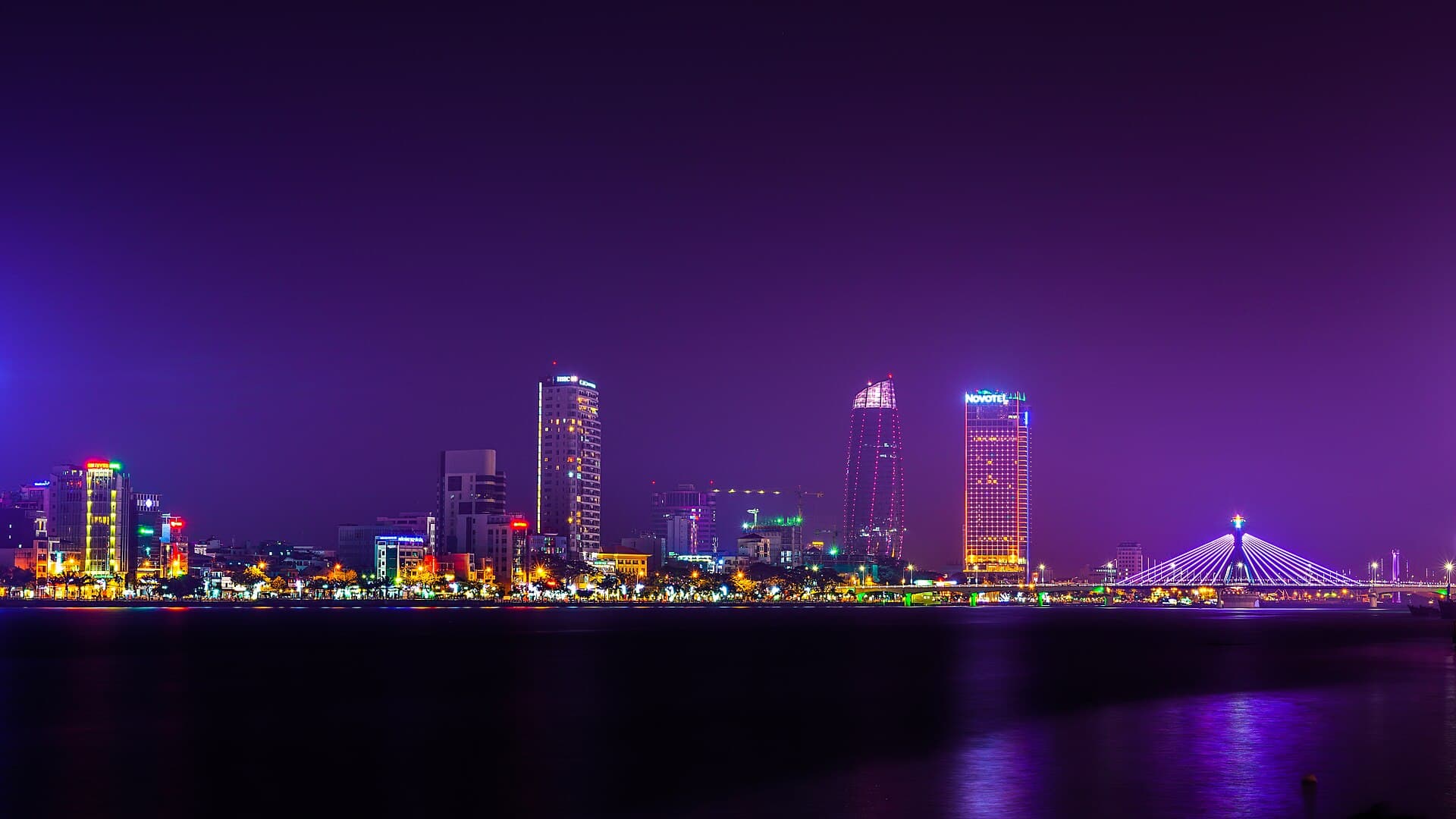
Vietnam quietly became one of the world's top-5 digital nomad destinations between 2022 and 2026 — without ever launching a formal nomad visa. This guide breaks down the actual monthly cost of living in the three biggest nomad hubs (Da Nang, Hoi An, HCMC), the visa work-around most nomads use, and the operational realities that travel blogs gloss over.
Pricing throughout is per person, May-June 2026 USD at 26,361 VND/USD. Every figure cites a named source — landlord listings on Mogi.vn and Batdongsan, coworking-space websites, Viettel/FPT internet plan pages, and the General Department of Taxation tax-residency rules.
Headline monthly cost by city
| Tier | Da Nang | Hoi An | HCMC |
|---|---|---|---|
| Bare-bones | $900-1,000 | $750-900 | $1,200-1,400 |
| Comfortable | $1,200-1,500 | $1,000-1,200 | $1,500-2,100 |
| Premium | $1,800-2,500 | $1,400-1,800 | $2,500-4,500 |
Hanoi sits between Da Nang and HCMC at $1,000-1,800 comfortable — we cover the Hanoi-vs-HCMC-vs-Hoi-An long-stay comparison in the dedicated long-stay guide.
City-by-city breakdown
Da Nang — the volume choice
| Line item | Monthly | Notes |
|---|---|---|
| 1BR furnished apartment | $300-700 | Beachfront Son Tra premium; My An / My Khe value tier |
| Utilities (electric, water, cable) | $40-80 | Higher Jun-Sep due to AC |
| Coworking hot desk | $80-150 | Da Nang Hub, DNC Coworking, Enouvo Space, Surf Maven |
| Coworking dedicated desk | +$40-100 | Optional upgrade |
| Internet (home fiber 200-500 Mbps) | $10-15 | Viettel or FPT |
| Mobile SIM (10-30GB) | $10-15 | Viettel tourist or local SIM |
| Groceries + cooking ingredients | $150-250 | Wet markets + Coopmart |
| Restaurant + cafe spend | $200-300 | Mix street food + cafes + restaurants |
| Grab + motorbike rental | $40-80 | $40-60/mo rental for own bike; $30-50 Grab |
| Gym + yoga | $25-60 | California Fitness Da Nang, Yoga Vietnam |
| Social / weekend trips | $100-200 | Beach hangs, Hoi An day trips, Ba Na Hills |
| Total comfortable nomad | $1,150-1,500 |
Why Da Nang wins for first-time nomads: walkable My An / An Thuong districts have everything (apartments, cafes, gyms, coworking, beach) within 1-2 km radius. The Tien Sa peninsula has the surfing scene. Hai Van Pass is 30 minutes north for weekend rides. Cost is 25-35% below Bangkok and 40-50% below Bali Canggu.
Hoi An — the slow nomad lane
| Line item | Monthly | Notes |
|---|---|---|
| 1BR furnished apartment | $250-500 | Old Town walkable rare; An Bang beach popular |
| Utilities | $35-70 | Lower AC use than Da Nang |
| Coworking | $75-140 | Hoi An Hub, Sunday Coworking, Hoi An Coworking House |
| Internet | $10-15 | Confirm fiber, not legacy ADSL |
| Mobile SIM | $10-15 | |
| Groceries + cooking | $130-220 | Cau Lau-area markets |
| Restaurant + cafe | $180-260 | Mix street food + Old Town cafes |
| Transport | $30-60 | Mostly bicycle/motorbike, fewer Grab options |
| Gym | $25-50 | Limited options; Cocobay Da Nang for nicer gyms |
| Social / weekend trips | $80-150 | Old Town lantern nights, beach hangs, My Son half-days |
| Total comfortable nomad | $925-1,200 |
Why Hoi An wins for slow nomads + couples: lowest cost in the trio, walkable Old Town, beach access via 10-minute bicycle, family-friendly vibe, much smaller (and quieter) community. Why it doesn't suit everyone: no skyscrapers, smaller social scene (~150-300 active nomads), limited specialty groceries, no major international schools.
HCMC — the big-city scene
| Line item | Monthly | Notes |
|---|---|---|
| 1BR furnished apartment | $500-1,200 | Thao Dien D2 expat district premium; D1 central; D7 Phu My Hung mid |
| Utilities | $50-100 | Higher AC use year-round |
| Coworking hot desk | $130-280 | Dreamplex, Toong, The Hive, CirCO, WeWork |
| Internet | $10-15 | |
| Mobile SIM | $10-15 | |
| Groceries + cooking | $200-350 | Bloom, Annam Gourmet for imported; Tomato for produce |
| Restaurant + cafe | $300-500 | Wide range street to fine dining |
| Grab + motorbike rental | $50-120 | District 1 traffic = high Grab spend |
| Gym + yoga | $40-100 | California, FitnessPlus, Yoga Plus |
| Social / weekend trips | $200-400 | Saigon nightlife, Mui Ne, Vung Tau weekends |
| Total comfortable nomad | $1,500-2,100 |
Why HCMC wins for ambitious nomads: largest professional network, biggest tech scene (Lazada Vietnam HQ, VNG, Tiki, Grab Vietnam), most international restaurants, fastest internet redundancy, most direct flights internationally (SGN handles ~50% of Vietnam's international traffic). The trade-off: 25-50% higher cost than Da Nang, hotter year-round, traffic stress.
Coworking space comparison
Da Nang (top 4)
| Space | Monthly | Day pass | Notable |
|---|---|---|---|
| Da Nang Hub | $80-150 | $5-8 | Largest, central An Thuong location |
| DNC Coworking | $100-160 | $7-10 | Quieter, smaller community |
| Enouvo Space | $85-130 | $5-7 | Multi-floor, decent meeting rooms |
| Surf Maven | $110-170 | $8-12 | Surfer-nomad community, near beach |
Hoi An (top 3)
| Space | Monthly | Day pass | Notable |
|---|---|---|---|
| Hoi An Hub | $90-140 | $6-9 | Largest, organized events |
| Sunday Coworking | $75-120 | $5-7 | Small + cheap |
| Hoi An Coworking House | $90-130 | $6-9 | Family-friendly, mid-sized |
HCMC (top 5)
| Space | Monthly | Day pass | Notable |
|---|---|---|---|
| Dreamplex | $150-280 | $10-15 | Multi-location, premium |
| Toong | $130-220 | $8-12 | Vietnamese-founded chain |
| The Hive | $150-250 | $10-14 | Premium, larger meeting rooms |
| CirCO | $110-200 | $7-12 | Mid-tier, several locations |
| WeWork | $200-350 | $15-25 | Premium, last 2 SGN locations |
Visa pathways for nomads (2026 reality)
| Path | Cost | Duration | Difficulty | Best for |
|---|---|---|---|---|
| 90-day e-visa | $25 | 90 days, single-entry, renewable | Easy (online, 3-5 day approval) | Volume nomads, beginners |
| 3-month business visa | $135-180 | 90 days, multiple-entry | Medium (DN/LD sponsor needed) | 3+ month stays |
| 6-month business visa | $200-250 | 180 days, multiple-entry | Medium (sponsor needed) | Semi-permanent base |
| Work permit + TRC | $300-600 | 1-2 year residence card | Hard (employer sponsor, degree, apostille) | Vietnam-employed |
| Investor visa | $1,000+ | Long-term | Very hard (DT class, investment) | Founders/investors |
The border-run reality: Most short-term nomads (3-12 months) cycle on 90-day e-visa with Cambodia or Thailand exits. Phnom Penh by bus from Saigon: $30 round-trip, 1 overnight. Bangkok or Siem Reap by flight: $80-200 round-trip, 1-2 nights. Most agencies and visa-services advertise "visa renewal" but actually arrange border runs.
See our Vietnam digital nomad visa gap research for the regulatory context — Thailand launched its Destination Thailand Visa (5-year) in 2024 and Indonesia rolled out its 5-year second-home visa in 2024; Vietnam has not yet matched.
Internet, mobile, electricity reliability
| Item | Da Nang | Hoi An | HCMC |
|---|---|---|---|
| Home fiber 200 Mbps | $10-12 | $10-13 | $10-12 |
| Home fiber 500 Mbps-1 Gbps | $15-25 | $15-25 | $15-25 |
| Coworking backbone | 200-500 Mbps | 200 Mbps | 500 Mbps-1 Gbps |
| Mobile 4G | 30-70 Mbps | 25-60 | 50-100 |
| Mobile 5G | Live central | Limited | Live wide |
| Power outages/month | 1-2 (typhoon Sep-Nov) | 1-2 (storms) | < 1 |
Vietnam ranks consistently in the top 15 globally for fixed-broadband speed-to-price ratio per Speedtest's quarterly Global Index. The 200-500 Mbps fiber tier at $10-15/month beats Bangkok, Bali, Penang, Kuala Lumpur at the same price point.
Healthcare and insurance
| Provider | Reach | Quality | Cost |
|---|---|---|---|
| Vinmec | HCMC + Da Nang + Hanoi | Premium private | $40-150/visit |
| Family Medical Practice | HCMC + Da Nang + Hanoi | Premium English-speaking | $50-150/visit |
| FV Hospital | HCMC only | Premium French-founded | $50-200/visit |
| Public hospital (e.g., Cho Ray HCMC) | Nationwide | Variable, language barrier | $5-15/visit |
Recommended international insurance: SafetyWing Nomad Insurance $45-60/mo (most popular among nomads), Genki $85-150/mo, World Nomads $80-180/mo. Consult policy fine print for motorbike-riding coverage (often excluded without IDP — see our Ha Giang Loop guide for the 1968 Vienna Convention IDP rules).
All-in budget by lifestyle tier
| Tier | Monthly | Where it lands |
|---|---|---|
| Bare-bones | $900-1,100 | Da Nang or Hoi An, small studio, mostly street food, basic coworking |
| Comfortable | $1,400-1,800 | Da Nang or Hoi An nice 1BR, dedicated coworking desk, mixed dining, weekend trips |
| Premium | $2,000-3,000 | HCMC Thao Dien or D2, premium coworking, fine dining 2-3x/week, fitness studio |
| Luxury/family | $3,500-5,500+ | HCMC D2/D7, large 2BR with pool/gym, international school for kids, driver, full-service apartment |
Limitations
- Pricing is May-June 2026 USD at ~26,361 VND/USD. Rental rates fluctuate 5-10% seasonally.
- Coworking pricing depends on dedicated-desk vs hot-desk, hours included, and meeting-room allowance — confirm direct.
- Internet speeds depend on specific address; older buildings may not have fiber.
- Visa rules can change — Vietnam's e-visa framework expanded materially in 2023; further nomad-visa proposals exist but no committed launch date as of June 2026.
- Tax residency analysis is general; consult a Vietnamese tax accountant for individual circumstances.
- Healthcare quality is good at named private providers but variable elsewhere; emergency air evacuation may be necessary for serious cases.
- The digital nomad community sizes are estimates based on coworking-space membership and Facebook group activity; not official statistics.
Annual update commitment
| Date | Changes |
|---|---|
| 2026-06-23 | Initial publication. Pricing current to May-June 2026; visa framework reflects Vietnam e-visa expansion through 2025-26; coworking quotes from direct websites. |
How to cite this
Nguyen, J. (2026). Vietnam Digital Nomad Cost of Living 2026: Da Nang vs Hoi An vs HCMC. Day Trips Vietnam. Retrieved from https://daytripsvietnam.com/guides/vietnam-digital-nomad-cost-of-living-2026/
Published under Creative Commons BY 4.0. Editorial enquiries: info@daytripsvietnam.com.
Related research and reference
- Vietnam Digital Nomad Visa Gap Research 2026 — regulatory backdrop on the missing nomad visa
- Vietnam Travel Cost Index 2026 — per-city tourist cost baseline
- Vietnam Long-Stay Cost of Living 2026 — Hanoi vs HCMC vs Hoi An for 1-3+ month stays
- Vietnam Cost vs Southeast Asia 2026 — regional cost comparison
- Cost of 2-Week Vietnam Trip 2026 — short-trip budget for visit-first nomads