
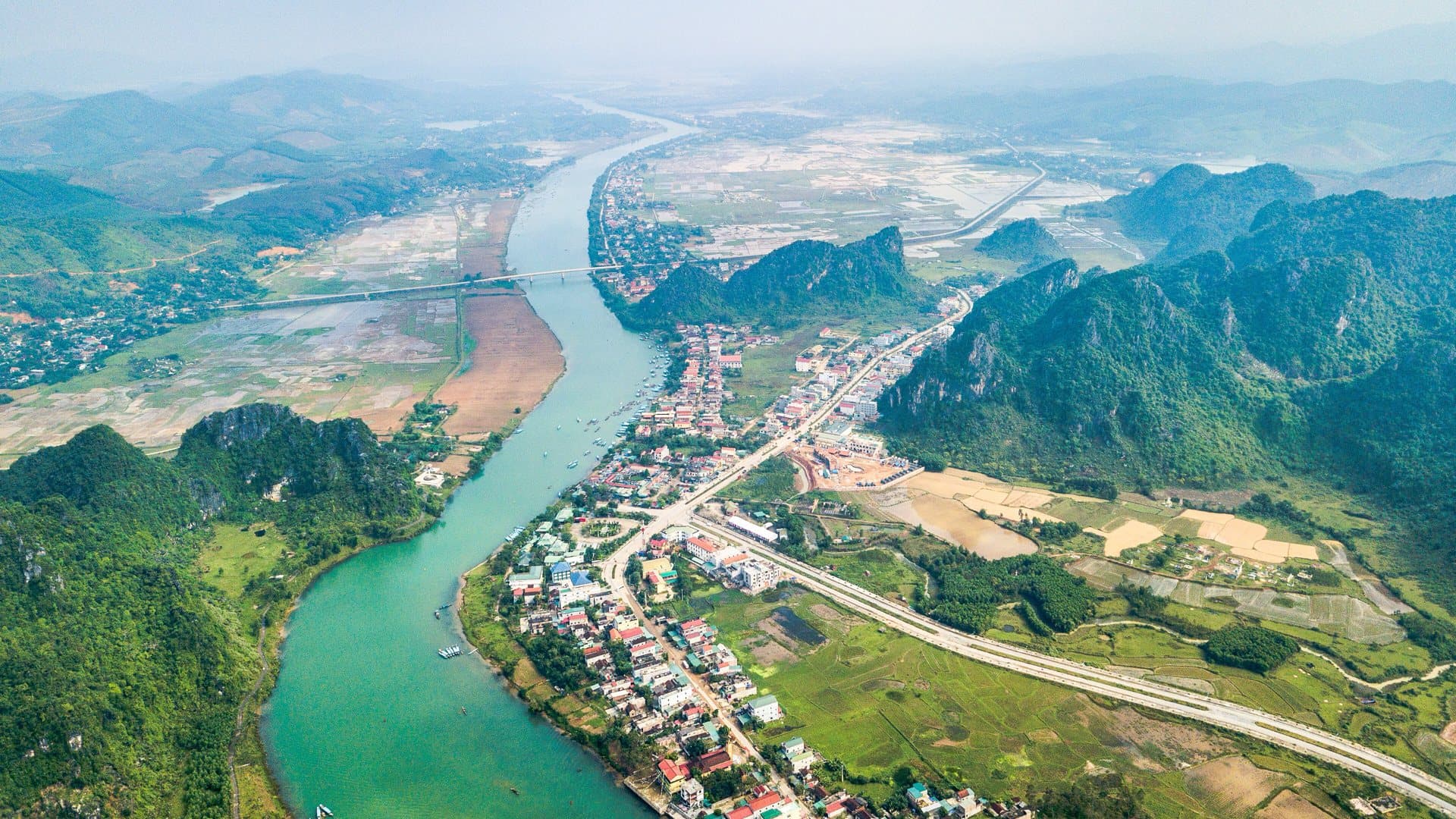
For most visits, the best place to stay in Phong Nha is the village itself, beside the Phong Nha Cave boat pier, with the hostels, restaurants and bus drop-offs. Choose the Son River bank for views and swimming, knowing it is the first place to flood in autumn; a farmstay among the rice fields or in the Bong Lai valley for quiet; and Dong Hoi, the provincial capital, only for flights and trains. Plan on two or three nights, because the caves are spread across the national park.
Phong Nha is the gateway to Phong Nha-Ke Bang National Park. Since the 2025 reforms, the village and its neighbouring communes form Phong Nha commune in Quang Tri province, which absorbed Quang Binh; many listings still use the old name, Son Trach.
How the choice breaks down
| Area | Best for | Feel | Getting around | Typical price |
|---|---|---|---|---|
| Phong Nha village | First visits, backpackers, short stays | Busy main street, restaurants, tour offices | On foot; boat pier in the village | Dorms and budget rooms |
| Son River bank | Views, swimming, kayaking | River and karst views | Walk or bicycle to the village | Mid-range guesthouses |
| Rice fields east of the village | Couples, families, quiet | Farmstays among paddies and karsts, 2-10 km out | Motorbike or transfers | Mid-range to upscale |
| Bong Lai valley | Slow stays, scenery | Farms, viewpoints, swimming holes, 8-15 km out | Motorbike | Farmstays |
| Dong Hoi | Early flights and trains | Provincial city | Taxi or bus to the caves | Varies |
Phong Nha village: the default
The village is the practical base. Hostels, guesthouses and small hotels line the main street east of the tourist boat pier, where boats leave for Phong Nha Cave, and it has most of the restaurants, bars, tour offices and motorbike rentals. The buses from Hue and Hanoi drop off here. As of 2026, the official price for the cave boat is 700,000 VND per boat for up to 12 people, or 750,000 VND for Phong Nha and Tien Son caves together, plus a cave ticket of 150,000 VND per person, according to the park's tourism centre.
It suits first visits, solo travellers and anyone without a motorbike. Paradise Cave, about 20 to 23 km away, and the Dark Cave, about 20 km away, are easy day trips by motorbike, taxi or tour; a taxi to Paradise Cave costs about 400,000 VND.
The Son River bank: views and swimming
Guesthouses on the east bank of the Son River look across the water to the limestone mountains, and some have swimming and kayaking access. In the dry season it is the prettiest place to stay within reach of the village. But the river is also the first thing to rise in the autumn rains: in October 2024, after Storm Trami, floodwater submerged thousands of homes in the area, as VnExpress reported. Even in summer, heavy rain upstream can turn the river muddy: in July 2026, swimming and kayaking were suspended for a time.
Farmstays in the rice fields and Bong Lai valley
East and south of the village, farmstays, boutique homestays and villas sit among rice fields and karst hills, roughly 2 to 10 km out. Further east, the Bong Lai valley, about 8 to 15 km from the village depending on where you measure, is a loop of farms, viewpoints and swimming holes, with a few long-running farmstays on its edge. Both are peaceful, green and far quieter than the village.
The trade-off is transport. You need a motorbike, at about 120,000 to 150,000 VND a day as of 2026, or your hosts' transfers to reach restaurants and the caves, and evenings are quiet. Many farmstays serve dinner. Our day trips from Phong Nha guide includes the Bong Lai farm circuit.
Dong Hoi: only for logistics
Dong Hoi, the provincial capital, has the airport and a station on the main railway line, but it is about 40 to 45 km from Phong Nha. Stay there only before an early flight or train. The local bus to Phong Nha, route B4, runs about 14 to 16 times a day between about 5:30 and 17:30, for about 35,000 VND for the full trip, although another source quotes 60,000 VND. A taxi or private car costs about 600,000 to 900,000 VND.
Prices and seasons
We found no reliable 2026 survey of room prices. Recent guides put dorm beds at roughly $5-8, budget private rooms at about $10-15, mid-range guesthouses and homestays at about $15-60, and farmstays and resorts at about $40-150 a night. Rooms fill on Vietnamese holidays and summer weekends.
The best months are March to August, when all the caves are open. From September to November, heavy rain and floods close caves and river trips, and floodwater can stay high for up to a week; our Phong Nha weather guide explains the seasons.
Decision table: pick by traveller type
| You are | Stay |
|---|---|
| A first-time visitor, or without a motorbike | Phong Nha village |
| A backpacker | Phong Nha village |
| A couple or family wanting quiet | A farmstay in the rice fields |
| A slow traveller who rides | Bong Lai valley |
| Here in the flood season | The village, on higher ground |
| Catching an early flight or train | Dong Hoi |
Getting there and around
From Dong Hoi. Flights from Hanoi take about 1 hour 25 minutes, then about 45 minutes by road. From Hue, afternoon buses leave around 16:30 to 17:15 and drop off at hostels in the village, taking about 3.5 to 5 hours, from about 202,000 VND; the train to Dong Hoi takes about three hours, from about 152,000 VND. From Hanoi, overnight sleeper buses usually arrive between about 3:00 and 5:00. Our Hue to Phong Nha and Hanoi to Phong Nha guides compare the options.
Around Phong Nha. Rent a motorbike, borrow a hotel bicycle, some of which are free, or ask your hotel for a motorbike taxi or driver. There are ATMs in the village. For which caves to visit, see our Phong Nha caves guide.
Limitations
Room price bands come from guides of varying reliability rather than a 2026 survey, and bus fares from Dong Hoi differ between sources. Distances to Bong Lai vary with the route. The cave prices are the park tourism centre's official 2026 figures, and flood impacts vary from year to year.
Workaround: book a place that can arrange transport, confirm its exact location and flood history if you travel in autumn, and check cave prices and opening at the pier.