
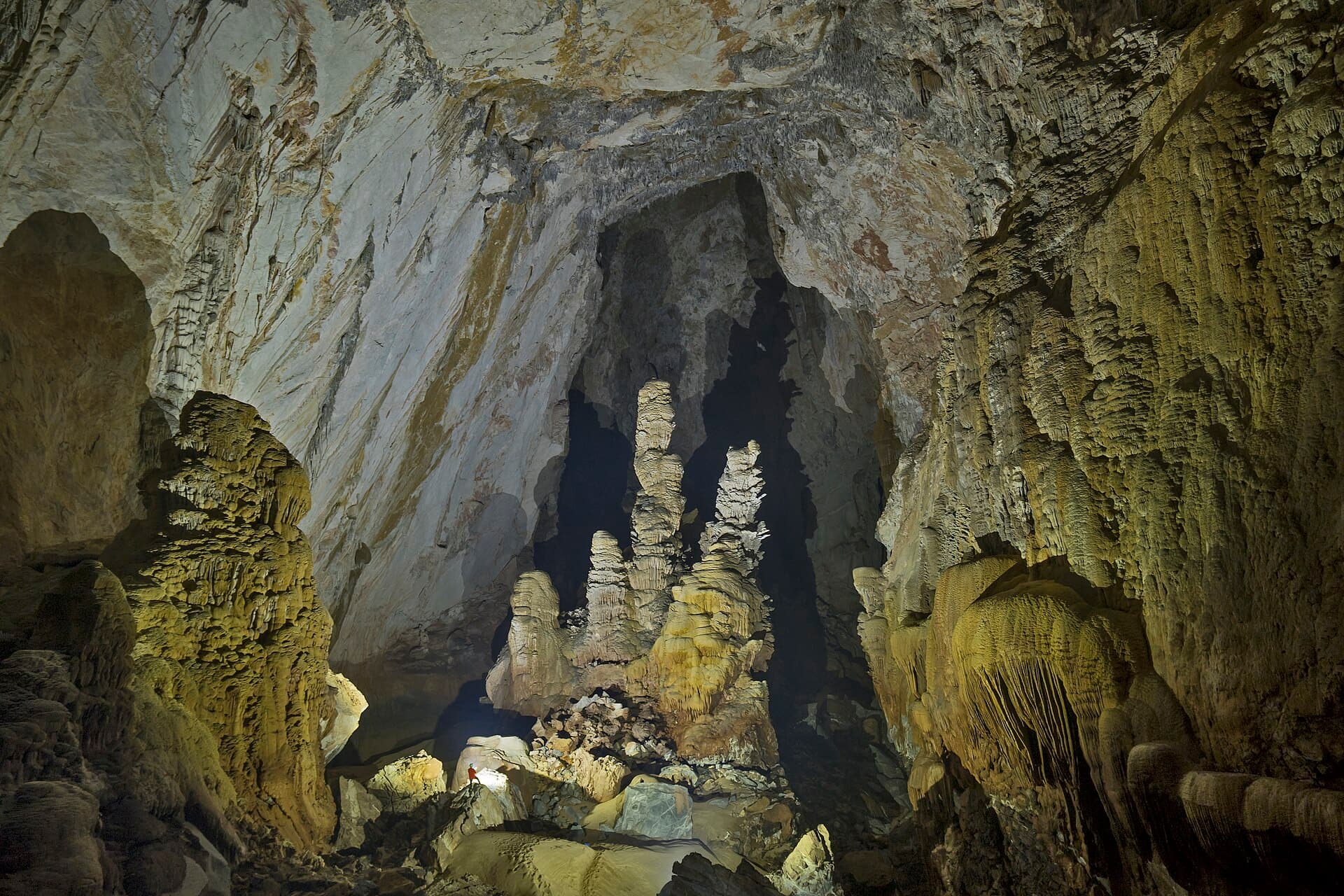
Hue to Phong Nha is roughly 210 km north, about four hours by road, and you have four sensible ways to cover it: a cheap open-tour sleeper bus, the Reunification Express train to Dong Hoi with a short transfer into the park, a direct private car, or the option that sets this leg apart — a private car routed through the old DMZ war sites. The last one is the reason many travellers spend more here than they do on any other transfer in Vietnam, and it is usually money well spent.
This guide covers only how to get between the two places. For what to do once you arrive — which caves to book and what they cost — hand off to the Phong Nha caves guide and the Phong Nha destination guide.
The short answer
If budget is the priority, take the sleeper bus. If you want to enjoy the journey and are already a fan of Vietnam's trains, ride the Reunification Express to Dong Hoi and transfer. If you value your time and door-to-door comfort, book a direct private car. And if you have any interest in the war history of central Vietnam, spend the extra and route your private car through the DMZ — it converts a dead transfer day into one of the more memorable days of the trip. All prices below are bands, not fixed quotes; they move with season, operator and group size.
How far is Hue from Phong Nha
The two sit about 210 to 220 km apart on the map, with Hue to the south and Phong Nha-Ke Bang National Park to the north in Quang Binh province. There is no direct rail or air link to the park itself. The regional hub is Dong Hoi, which sits on the main north-south railway and has its own airport; the park village of Phong Nha (Son Trach) is a further 45 to 50 km inland from Dong Hoi. That geography shapes every option here: the bus and private car go the whole way, while the train can only take you as far as Dong Hoi.
By open-tour or sleeper bus
The sleeper bus is the cheapest and most common way travellers make this hop. Fares run roughly 180,000 to 300,000 VND (about $8 to $12), and the trip takes around 4 to 5 hours once you allow for hostel pickups and the occasional rest stop. Several operators run it daily, including Queen Cafe, HK Buslines, Hung Thanh and HM Happycar, most on lie-flat sleeper coaches with charging ports and air conditioning.
Book through a platform like 12Go, Vexere or Baolau rather than only through your hostel. The platforms charge a small fee but give you an English-language confirmation and, more importantly, a named pickup — on this route some accommodation resells tickets and the hand-off can get vague. Confirm that your bus terminates in Phong Nha village and not on the highway or at Dong Hoi. For the wider picture on this class of coach, see our Vietnam sleeper buses guide.
By train to Dong Hoi, then transfer
Vietnam's trains are a pleasure, but on this leg they only get you part of the way. The Reunification Express covers Hue to Dong Hoi — about 166 km — in roughly 3.5 hours, with several SE services a day (SE2, SE4, SE6 and SE8 among them) offering soft seats, and hard and soft sleeper berths, all air-conditioned. It is a scenic, relaxed ride along a stretch of coast and paddy.
The catch is the last 45 to 50 km. From Dong Hoi you transfer west into Phong Nha village by taxi, shared shuttle or local bus, which adds roughly an hour and a bit of faff. That makes the train a good pick if you already enjoy rail travel or want a daytime journey with a view, and a poor one if you just want to arrive. For fares, classes and how to reserve a berth, see how to book Vietnam trains and our Vietnam Railways overview. You can also check current times on the official Vietnam Railways site or the independent seat61 Vietnam guide.
By private car, direct
A direct private car is the comfort choice: door to door in about 4 to 4.5 hours, no pickups, no transfer, and you leave when you want. Expect roughly $99 for a sedan carrying one to three people, around $108 for an SUV, and about $130 for a minivan seating up to a dozen — priced per vehicle, so for two or more people the gap to a bus fare narrows quickly. It is the sensible option for families, small groups, or anyone arriving on a tight onward schedule. Our private driver hire guide explains how car hire works across the country and what a fair rate looks like.
By private car via the DMZ — the route that earns its keep
This is the option that distinguishes the Hue to Phong Nha leg from any other transfer in Vietnam. Instead of driving straight through, you route north through the former Demilitarized Zone — the buffer that divided North and South Vietnam along the 17th parallel from 1954 to 1975 — and treat the drive as a full day of sightseeing that happens to end at your destination.
A typical itinerary stops at the Vinh Moc tunnels, a coastal complex where an entire village dug itself underground to survive sustained bombing; it was built from 1966 and, remarkably, children were born in the tunnels during the years families sheltered there. You cross the Hien Luong Bridge over the Ben Hai River — the exact line that split the country — and most tours continue inland to the Khe Sanh combat base, with the Dakrong Bridge and other markers along the way. Reckon on a 6 to 8 hour day; the extra time is the stops, not the road.
Cost sits above a direct transfer: you are paying for a longer day, site entrance fees (the Vinh Moc tunnels and Khe Sanh each carry a modest ticket), and often an optional English-speaking guide, which is worth it here because the sites mean little without context. You can also do the DMZ as a round-trip day tour from Hue for roughly $30 to $55 per person on a shared group departure, but if Phong Nha is your next stop, the one-way transfer version is simply more efficient — same sites, no backtracking.
Which option should you pick
Work down from what you care about most: cost, comfort, or the war history.
| Option | Typical duration | Cost band | Best for |
|---|---|---|---|
| Open-tour / sleeper bus | 4 to 5 hours | 180,000 to 300,000 VND ($8 to $12) | Budget travellers, backpackers |
| Train to Dong Hoi + transfer | 3.5 hours + ~1 hour transfer | Train fare plus a 45 to 50 km transfer | Rail fans, daytime scenery |
| Private car, direct | 4 to 4.5 hours | $99 to $130 per vehicle | Families, small groups, tight schedules |
| Private car via the DMZ | 6 to 8 hours | Direct-car rate plus stops, fees, optional guide | Anyone interested in the war history |
The single most common good decision on this leg: if two or more of you are travelling and the war history holds any interest, book the DMZ private transfer. If you are counting every dong, take the bus and read up on the DMZ another day. The train is the pick only if the ride itself is the point. For how these choices fit the wider network, see getting around Vietnam and, for mode-matched timings nationwide, the Vietnam travel time atlas.
Limitations
Every figure here is a band, not a locked quote. Bus fares, car rates and DMZ tour prices all move with season, fuel, group size and operator, and the road north of Hue mixes highway with slower stretches, so travel times vary with traffic and weather. Workaround: treat the numbers as a planning baseline, get a firm written quote at the time of booking, and confirm exactly what a private-car or DMZ price includes — tolls, entrance fees, guide, drop-off point — before you commit.
The DMZ routing has its own caveat: it is a long day, and the sites are sombre and thinly interpreted without a guide. Rushing all of them plus the drive can leave you arriving in Phong Nha after dark and too tired for the caves the next morning. Workaround: if the history matters to you, pick two or three sites rather than all of them, budget for the guide, and plan a full rest evening in Phong Nha village before you start on the caves.