
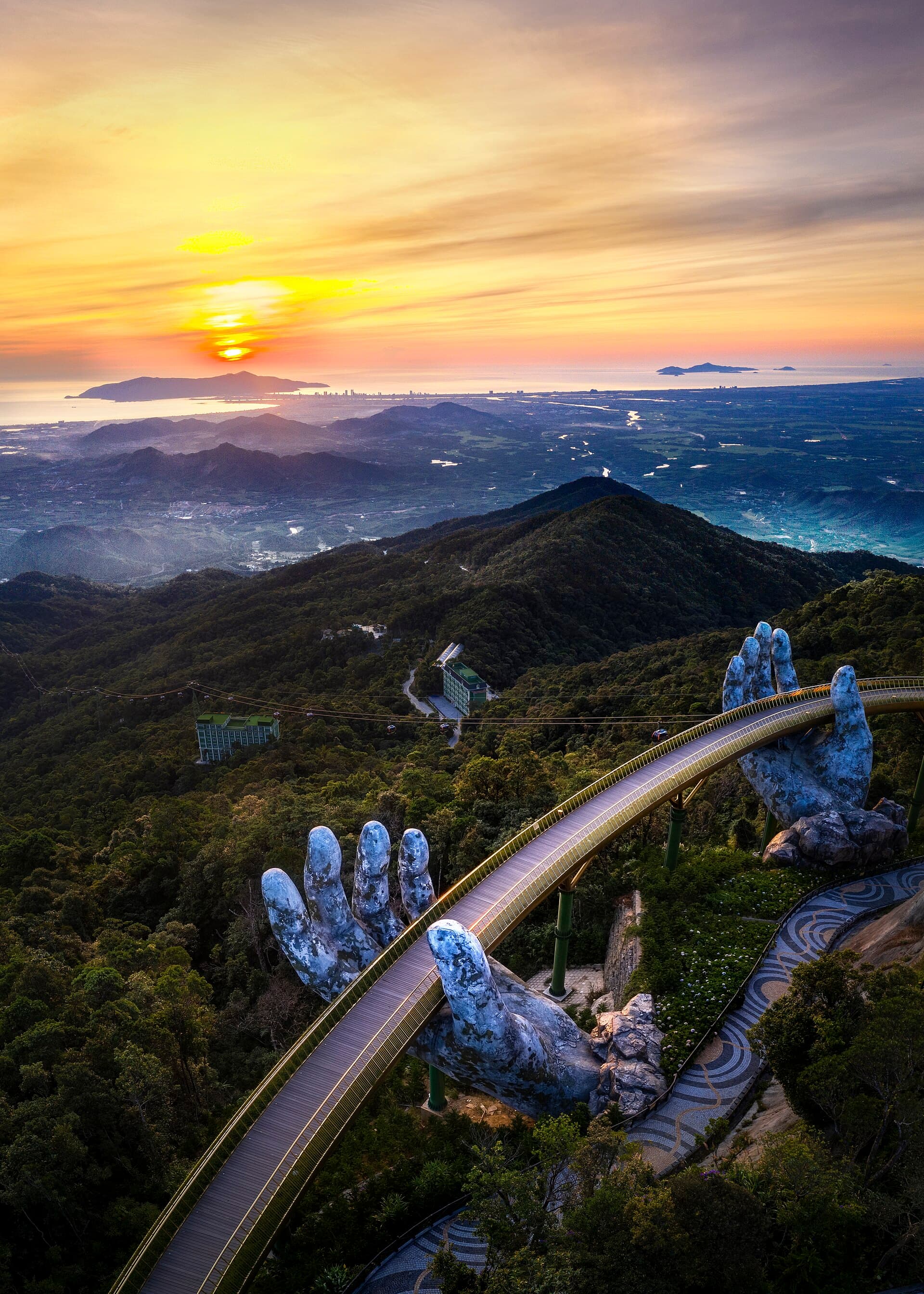
Two weeks is the point where Vietnam opens up. At 10 days you cover the country's headline stops fast; at 14 you can add Sapa (the country's most photographed landscape), Hue (Vietnam's imperial capital from 1802-1945), and a Mekong Delta half-day without compressing the rest. Three domestic flights handle the long legs; one overnight bus to Sapa; one Hai Van Pass drive between Hue and Hoi An; one half-day Mekong tour close to the end.
The two add-ons people most often request and the most common compressions:
- Phu Quoc beach finale — only worth adding if you swap out the Mekong; otherwise you compress everything else too tightly. See the FAQ.
- Phong Nha caves — possible at 14 days but requires dropping the Mekong; explained in the FAQ.
What this itinerary does NOT include (deliberate omissions):
- Ha Giang loop — needs its own 4-5 day trip; cannot be compressed into a 14-day route. See our Sapa vs Ha Giang compare.
- Da Lat coffee region — beautiful but adds 2 nights with limited transit options; better as part of a longer south-coast trip.
- Multi-night Mekong stays — the Mekong rewards 2 nights minimum (Can Tho-based for the Cai Rang floating market at dawn); the half-day version on this itinerary is the compromise that fits 14 days.
At a glance
| Day | Where | Highlights | Transfer |
|---|---|---|---|
| 1 | Hanoi | Arrive, Old Quarter walk, bún chả dinner | Airport → hotel (45 min) |
| 2 | Hanoi | Mausoleum, Temple of Literature, train street | — |
| 3 | Hanoi → Sapa | Last Hanoi morning + 10 p.m. overnight bus | 5-6 h overnight |
| 4 | Sapa | Arrive 5 a.m., settle in valley homestay, easy afternoon walk | — |
| 5 | Sapa | Full-day trek Lao Chai → Ta Van or Y Linh Ho loop | — |
| 6 | Sapa → Hanoi | Last Sapa morning + day bus back (depart 8:30 a.m., arrive Hanoi 3 p.m.) | 6 h day bus |
| 7 | Hanoi → Ninh Binh | Limousine van transfer, afternoon Hoa Lu + Trang An | 2 h |
| 8 | Ninh Binh → Hanoi | Mua Cave sunrise, Bai Dinh, back Hanoi by 6 p.m. | 2 h |
| 9 | Hanoi → Ha Long Bay | Cruise pickup 8 a.m., overnight on boat | 2.5-3 h |
| 10 | Ha Long → Hanoi → Hue | Sunrise, disembark 11 a.m., back Hanoi 4 p.m., evening flight | 1h 20m flight |
| 11 | Hue → Hoi An (Hai Van Pass) | Citadel + Tu Duc tomb morning, private car drive afternoon | 4-5 h with photo stops |
| 12 | Hoi An | Old Town, tailor, cooking class | — |
| 13 | Hoi An → HCMC | Morning Hoi An, flight to HCMC, War Remnants Museum | 1h 20m flight |
| 14 | HCMC + Mekong half-day | Mekong morning, last meal, evening international flight | Mostly airport-bound |
Day-by-day
Day 1 — Arrive Hanoi
Arrive Noi Bai International (HAN). Grab to the Old Quarter (35-45 min, $12-18). Check in.
Evening only. Old Quarter walk, dinner at a local bún chả stall (50,000-90,000 VND / $2-4), drink at Bia Hơi Junction (Tạ Hiện crossroads). Early night.
Day 2 — Hanoi full day
7 a.m. Ho Chi Minh Mausoleum complex (open 7:30-10:30 a.m., closed 2-4 months annually for body maintenance — verify before booking). Walk: mausoleum → Presidential Palace exterior → stilt house → One Pillar Pagoda → south to Temple of Literature.
Lunch. Phở at Phở Gia Truyền or bún bò Nam Bộ at Hàng Điếu.
Afternoon. Vietnam Museum of Ethnology (40-min Grab west) — Vietnam's strongest museum. Or French Quarter walk + Hàng Gai silk shopping.
5 p.m. Train Street (if access is open). Coffee on the tracks before the 7 p.m. Hanoi-Lao Cai express.
Evening. Dinner at Tây Hồ (West Lake) — wooden-pier seafood. Grab back.
See 3-day Hanoi itinerary for deeper detail.
Day 3 — Last Hanoi morning, then overnight bus to Sapa
Morning + early afternoon. Anything you skipped from days 1-2: maybe a coffee crawl through the Old Quarter, a longer wander around the French Quarter, last-meal banh mi at Banh Mi 25 (Hàng Cá street).
5-6 p.m. Check out of your hotel, take dinner at a Hanoi spot (Bun Cha Huong Lien or any local stall). Most hotels will hold your day-pack until your bus pickup.
9-10 p.m. Limousine bus pickup from your hotel (most operators do door-to-door from Hanoi Old Quarter). 5-6 hours overnight via the Nội Bài-Lào Cai expressway. Operators: Sapa Express, Inter-Bus Lines, Green Bus. Cost $20-35. VIP-cabin tier ($30-40) is genuinely worth the upgrade for a single-cabin sleeper bed.
Day 4 — Sapa: arrive + settle
5-6 a.m. Arrive Sapa town. Most valley homestays arrange a pickup ($10-15 by motorbike taxi); if not, take a Grab to your village base.
Where to stay. Don't book a hotel in Sapa town — the town has been a construction site since the 2016 cable-car opening and the modern hotels are joyless. Stay in a valley village 15-40 min away:
- Ta Van — the most-popular homestay base, valley views, 15 min from town
- Y Linh Ho or Lao Chai — closer to Sapa town than Ta Van, slightly quieter
- Topas Ecolodge — premium-tier ridge-lodge, ~40 min from town, $200+/night
See our Sapa travel guide for the full neighbourhood case.
Morning. Sleep until 9-10 a.m. (the bus arrived at 5 a.m.; you'll need it). Breakfast at your homestay.
Afternoon (1-5 p.m.). Easy 2-3 hour walk to a neighbouring village. Lao Chai → Ta Van is the classic 4 km flat valley-floor route — manageable on day-1 fatigue.
Evening. Dinner cooked by your homestay hostess + family. Early night — full trek tomorrow.
Day 5 — Sapa full-day trek
Most homestays arrange a day's trek with a local H'mong or Red Dao guide ($15-25 day rate). Typical loops:
| Route | Distance | Difficulty | Notes |
|---|---|---|---|
| Lao Chai → Ta Van → Giang Ta Chai → Su Pan | 12 km | Moderate | Half-day; popular guided |
| Y Linh Ho → Lao Chai → Ta Van | 14 km | Moderate (climb + valley) | Day trek; ends at homestay |
| Ta Phin (Red Dao villages) | 8 km loop | Moderate | Quieter than Ta Van loop |
A full-day trek typically covers 12-18 km through Ta Van, Giang Ta Chai, and the bamboo-forest section above the valley. Lunch is at a Red Dao or H'mong family house; back at your homestay mid-afternoon.
Evening. Second dinner with your homestay family. If energy permits, walk to a viewpoint for sunset over the terraces.
Day 6 — Sapa morning, day bus back to Hanoi
Morning. A short final walk near your homestay (60-90 min, no guide needed). Last breakfast.
8-9 a.m. Day bus departure from Sapa town (Sapa Express + others run a 9 a.m. day bus). 6 hours to Hanoi via the expressway, arriving central Hanoi 3-4 p.m.
Evening. Quick hotel check-in (Hanoi). Light dinner, early night — 8 a.m. pickup tomorrow.
Alternative: if you're not bus-tolerant, take the day train Lào Cai → Hanoi (8 hours, $30-45 soft-sleeper). Requires getting from Sapa to Lào Cai (1 hour, 50,000 VND) — and Lào Cai train arrives Hanoi around 5-6 a.m. the next day. The bus is faster + more direct.
Day 7 — Hanoi → Ninh Binh transfer + half-day
8 a.m. Limousine van pickup from Hanoi hotel. 1h 25m-1h 45m to Ninh Binh on the post-April-2023 Cau Gie-Mai Son-QL45 expressway corridor. Hotel check-in at a Tam Coc or Trang An homestay.
Afternoon (1-5 p.m.).
- Hoa Lu (10th-century royal capital, 1 hour, free entry)
- Trang An boat tour (2.5 hours, 250,000 VND / $10, hand-rowed through 9 karst lagoons + 3 cave-temples) — see our Trang An boat tour guide
Evening. Dinner at a Tam Coc homestay (typically goat hot pot — the local specialty), early night.
Day 8 — Ninh Binh sunrise + Bai Dinh, return Hanoi
5:30 a.m. Wake. Mua Cave climb — 500 stone steps to the panoramic viewpoint over Tam Coc valley. The morning visit (5:45-6:30 a.m.) is the iconic Ninh Binh photo — empty, mist rising off the rice paddies. Worth the early wake. 100,000 VND / $4 entry.
8:30 a.m. Breakfast back at homestay.
10 a.m. Bai Dinh Pagoda — Southeast Asia's largest Buddhist complex (500 stone arhat statues lining a 3 km covered walkway). Built 2003-2010; the proportions divide visitors (some find it spectacular, others over-built). 2 hours.
1 p.m. Lunch in Ninh Binh.
3 p.m. Limousine van back to Hanoi. Arrive central Hanoi 5-6 p.m. Hotel check-in. Early night — 8 a.m. cruise pickup tomorrow.
Day 9 — Ha Long Bay cruise board
8 a.m. Cruise pickup from Hanoi hotel. 2h 30m-3h on the shared cruise coach via the Hanoi-Hai Phong + Ha Long-Hai Phong expressway corridor (private car runs the same route in 2h 15m-2h 30m; see the Vietnam Travel Time Atlas 2026).
Noon. Board the cruise — welcome drink, cabin check-in, lunch on board.
Afternoon. Limestone cave visit (Thiên Cung or Sửng Sốt); kayak or bamboo-boat paddle; optional Tỉ Tốp Island climb.
5:30-6:30 p.m. Sunset cocktail hour on the sundeck. Dinner on board.
Cruise selection. Mid-range 4-star $120-180/person. Verify the cruising zone — Lan Hạ Bay (south, accessed via Cat Ba) and Bai Tu Long Bay (north) are quieter than central Ha Long. See our Ha Long Bay guide for the zone-by-zone breakdown.
Day 10 — Ha Long sunrise → Hanoi → Hue
5:45 a.m. Sunrise on the sundeck.
Morning. Breakfast, second-day excursion (Vung Vieng floating fishing village or kayak).
11 a.m. Disembark Tuần Châu pier. Coach back to Hanoi, arriving central 2-3 p.m.
Afternoon. Grab to Noi Bai airport, fly Hanoi → Hue (1h 20m, $40-70 booked ahead). Arrive Hue 6-7 p.m. Grab to your hotel (target Phú Cát area between river and citadel, $30-55 mid-range).
Evening. Quick dinner — bún bò Huế at any local stall (Hanh Restaurant is the safe pick; Bún Bò Bà Mỹ is the local favorite). Early night.
Day 11 — Hue Citadel + Hai Van Pass to Hoi An
7 a.m. Breakfast + check out.
8 a.m. Imperial Citadel (Đại Nội) — Vietnam's last royal capital under the Nguyễn dynasty (1802-1945). The walled compound covers 520 hectares; plan 2-3 hours. Start at Ngọ Môn gate, walk Thái Hòa Palace, the Mandarin's Halls, the Forbidden Purple City (heavily damaged in the 1968 Tet Offensive; restoration ongoing).
11 a.m. Tu Duc tomb (15-min drive south) — the longest-reigning Nguyễn emperor's complex; pine forest, pavilions, lakes. The 530,000 VND ($21) 4-monument combo ticket covers the Citadel + 3 royal tombs (Tu Duc, Minh Mang, Khai Dinh); only one fits in a half-day, Tu Duc is the right pick.
12:30 p.m. Quick lunch. Pre-arranged private car with driver pickup at 1:30 p.m. for the Hai Van Pass transfer to Hoi An ($60-80 one-way with stops).
1:30-6:30 p.m. Drive over the Hai Van Pass with photo stops:
- Lang Co Beach (white-sand crescent backed by lagoons; 30-min walk + photos)
- Lap An Lagoon (mirror-calm bay with oyster-farm bamboo structures)
- Hai Van Pass summit (496 m above sea, French-colonial bunker, the iconic photo point)
- Marble Mountains (20-min climb, caves, pagodas) — optional, adds 1 hour
- Linh Ung Pagoda / Lady Buddha on Son Tra Peninsula — 67-m standing Buddha, panoramic Da Nang view
See our Hai Van Pass day trip guide for the full stop-by-stop.
7 p.m. Drop-off at your Hoi An hotel. Light dinner along the Thu Bồn river, early night.
Day 12 — Hoi An
Morning. Hoi An Old Town walking — start before 8 a.m. for the empty lanes before tour-bus arrivals. Since 10 August 2026 the museum-houses, assembly halls and other heritage sites charge 20,000 VND per person per site, the same for all visitors, per the Da Nang city government, replacing the old 120,000 VND five-site ticket; check at the booths how the fee is collected.
Mid-morning. Tailor visits. Yaly Couture and Bebe Tailor are the consistent mid-tier picks for custom suits/shirts. Place orders today for a fitting tomorrow afternoon (24-48 hour turnaround standard).
Lunch. Cao lầu at Cao Lầu Bà Bé — the local noodle dish, only authentic in Hoi An (made with water from the Bá Lễ well).
Afternoon. Pick one:
- Cooking class ($35-55, 4-5 hours) — start at market, end at the table with 3-4 dishes you cook yourself. Red Bridge Cooking School or Morning Glory are the small-group operators.
- Bike tour through Cẩm Thanh coconut village (basket-boat ride through the water palms; $15-25, 3 hours)
- An Bang beach (10-min bike from Old Town, free, clean) + sunset cocktails at the beach bars
Evening. Old Town lantern photography at dusk (the Thu Bồn river reflections are the postcard image). Dinner at Morning Glory (a tourist standard but consistently good).
Day 13 — Hoi An → HCMC
Morning. Last Hoi An — pick up tailored items, last cao lầu, last river walk. Grab to Da Nang airport (40 min, $12-16).
Noon-1 p.m. Fly Da Nang → HCMC (1h 20m, $40-80).
Afternoon. Arrive Tân Sơn Nhất (SGN), Grab to your hotel (District 1, $40-90/night mid-range).
3-6 p.m. District 1 walking — Notre Dame Cathedral, Saigon Central Post Office (1891 Gustave Eiffel design), Reunification Palace.
5 p.m. War Remnants Museum — covers the American War from the Vietnamese perspective. 2 hours minimum. 40,000 VND. The Agent Orange and war-photography exhibits are particularly heavy.
Evening. Dinner in District 3 (bún bò Huế at Đông Ba or any bánh xèo stall). Rooftop drink at Chill Skybar (32nd floor) for the skyline.
Day 14 — Mekong half-day + flight home
7 a.m. Group tour pickup from your hotel. Drive to My Tho (2 hours).
10 a.m.-12:30 p.m. Sampan boat through coconut canals, coconut-candy workshop, honey-farm tasting, fruit-garden lunch with traditional music performance. The version of the Mekong everyone does in a half-day; the routes are commission-driven (vendor-stall stops) but the canal scenery is real. See our Mekong Delta day trip for the full operator notes.
1 p.m. Drive back to HCMC. Arrive central 3-4 p.m.
4-7 p.m. Last things in Saigon: bánh mì at Bánh Mì Huỳnh Hoa (the city's most-loved); a coconut coffee at Cộng Cà Phê; last shopping at Ben Thanh market or Saigon Square if you want one more souvenir round.
Evening. Grab to airport for international flight.
The Cu Chi alternative. If the War Remnants Museum on day 13 made you want to see the Cu Chi Tunnels (the underground network the museum covers from a different angle), swap the Mekong for Cu Chi half-day (Ben Duoc site, less theatrical than Ben Dinh). Both end with the same 3-4 p.m. return; either works for an evening flight.
Costs at a glance (14 days, mid-range, per person)
| Item | Cost |
|---|---|
| Hotels — Hanoi (3 nights), Sapa homestay (2), Ninh Binh (1), Hue (1), Hoi An (2), HCMC (1) | $40-90 × 10 = $400-900 |
| Hanoi mid-trip night (after Ha Long return) | 1 × $60 = $60 |
| Ha Long Bay cruise (4-star, 1 night) | $120-180 |
| Sapa overnight bus (one-way) + day bus return | $20-35 + $20-35 = $40-70 |
| Three domestic flights (Hanoi-Hue, Da Nang-HCMC, plus pre-Hanoi options) | $40-80 × 2 = $80-160 |
| Hai Van Pass private car (Hue → Hoi An) | $60-80 |
| Sapa guide (day-trek) | $15-25 |
| Ninh Binh independent (homestay-arranged transport) | $30-50 |
| Mekong half-day group tour | $25-45 |
| Hoi An cooking class | $35-55 |
| Hue 4-monument combo ticket | $21 |
| Meals + drinks (14 days) | $350-550 |
| Local Grab + airport transfers | $100-160 |
| Misc (museums, water puppets, tailor extras) | $80-150 |
| Total | $1,420-2,506 |
Backpacker version (hostels, budget cruise, train + bus throughout, self-guided everything): $800-1,300. Comfort version (5-star Ha Long cruise, Topas Ecolodge Sapa, boutique Hoi An, private drivers throughout): $4,500-7,000. Source figures cross-referenced with Vietnam Travel Cost Index 2026.
Booking order + lead times
| Item | Book how far ahead |
|---|---|
| International flights | 8-12 weeks |
| Ha Long Bay cruise (4-star, dry-season weekend) | 4-6 weeks |
| Domestic flights (Hanoi-Hue, Da Nang-HCMC) | 3-4 weeks |
| Sapa overnight bus | 1 week (less in low season) |
| Sapa homestay | 1-2 weeks (Ta Van fills fast in Sep-Nov) |
| Hue hotel + Hoi An hotel | 1-2 weeks |
| Private car Hue → Hoi An (Hai Van Pass) | 4-7 days |
| Tailor (Hoi An, custom suit) | Walk-in day 12, pick up day 13 |
| Group tours (Ninh Binh, Mekong, Cu Chi) | Day before |
| Sapa local guide | Through your homestay, day before |
| Hue 4-monument combo ticket | Buy at the Citadel ticket office, day-of |
Common mistakes at 14 days
- Trying to add Phú Quốc or Côn Đảo as a 2-day finale. 2 days at a beach destination is a wasted flight; you've got 14 days, don't compress everything else for it.
- Skipping Sapa because of the bus. The overnight limousine bus is genuinely fine; the train option exists for motion-sensitive travellers. Sapa is the most-photographed landscape in Vietnam for a reason.
- Booking Hue and Hoi An hotels in the touristy centres. Hue Phú Cát is right; Hoi An's river-south side (5-min walk to Old Town) or An Bang beach (10-min bike) is right. Old Town interior pedestrian zone is awkward for luggage check-in.
- Trying to fit Phong Nha + Mekong. Pick one. Phong Nha is for cave-lovers; Mekong is for first-timers.
- Taking the train Hanoi-HCMC end-to-end. 30+ hours of train. Reserve the train for the Hue-Da Nang 2.5-hour scenic stretch only.
Limitations
14 days is genuinely tight if you want to absorb Sapa, Hue, AND Hoi An — Sapa's 1-night-bus-1-night-trek-1-night-bus cadence eats more days than the calendar suggests, and Hue's citadel needs 3-4 hours minimum to do justice. Workaround: if you can extend to 16 days, give Sapa 3 nights (eliminates the rushed day-6 bus return) and Hue 2 nights (full Citadel + 2 royal tombs + DMZ option). At 14 days, the compression on Hue is the binding one — acknowledge upfront that the Citadel-and-one-tomb half-day in Hue isn't the deep version.
The 14-day route involves 3 domestic flights and a 5-hour bus ride — operational delays on any one of those can cascade into the next-day plan. Particularly Hanoi → Hue on day 10 (after the Ha Long cruise return): a delayed cruise disembark or a flight delay can compress your Hue evening. Workaround: book Vietnam Airlines (not VietJet) for the time-critical day-10 transfer — meaningfully lower delay rates per route, $15-25 price premium worth it for the schedule discipline. See our Vietnam domestic flights guide for the operator reliability comparison. Joy did this trip in 2023 from the south; the central-Vietnam pacing felt right at 14 days, with one day she'd happily have added to Hue.