
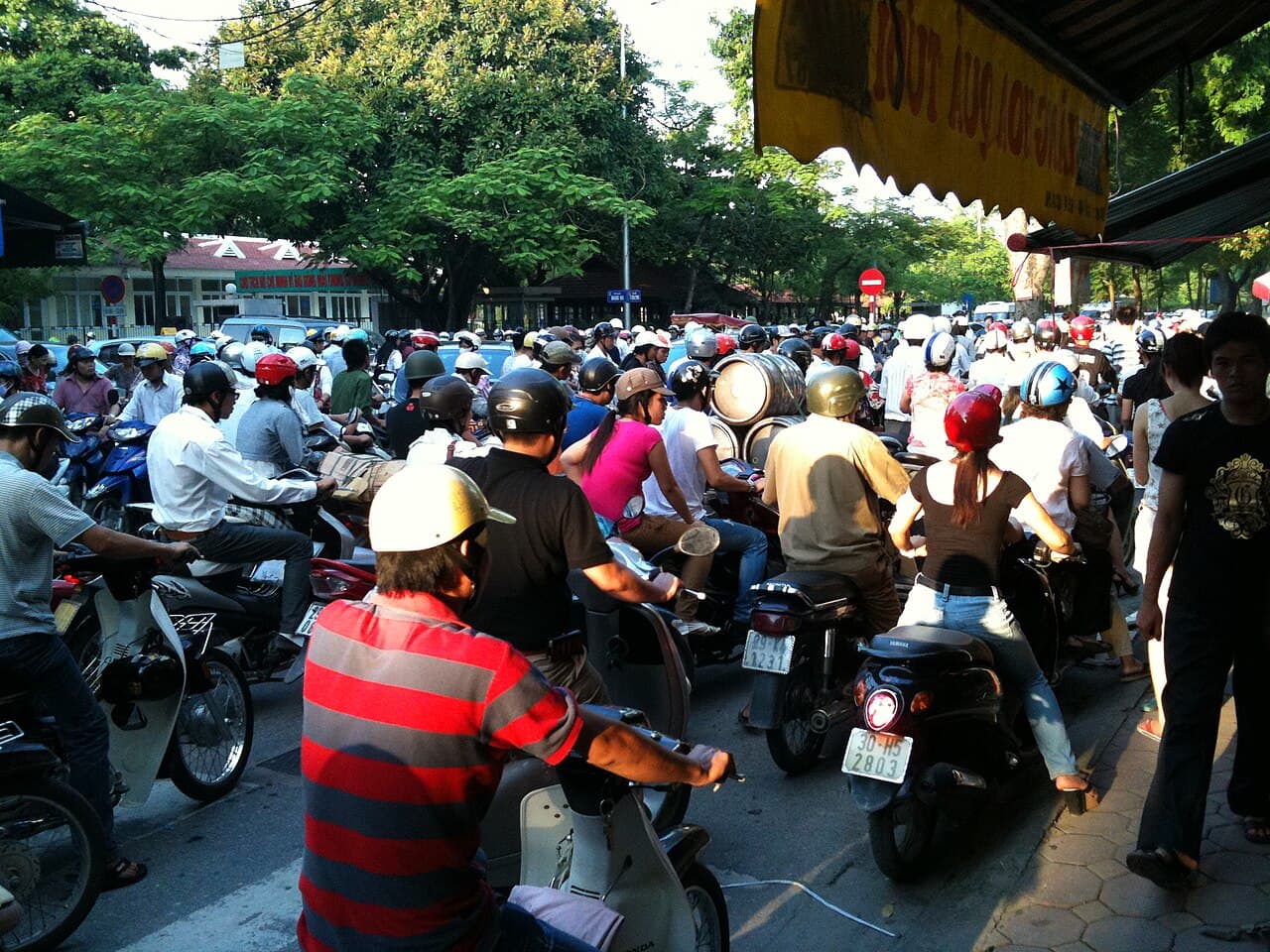
Vietnam's transport network in 2026 has more options and meaningfully better infrastructure than it did even five years ago. The decision tree is straightforward once you know the four modes and which routes each one wins. Below is the practical guide — what each option costs, where it beats the alternatives, and how to actually book.
For the full operator-by-operator transport breakdown — every named carrier, terminal, and route — see the Vietnam transport hub. This guide is the high-level decision framework.
The four modes you'll use
| Mode | Best for | Typical journey | Cost range |
|---|---|---|---|
| Domestic flight | Long legs over 6 hours by train (Hanoi ↔ Da Nang, Hanoi ↔ HCMC, anything to/from Phu Quoc) | 1h–1h30 | $40–80 (booked ahead), $80–150 (last-minute) |
| Reunification Express (train) | Coastal scenic legs, especially Hue–Da Nang and overnight Hanoi to central Vietnam | 2.5h–35h | $20–110 depending on berth and route |
| Sleeper bus / limousine van | Routes the train doesn't reach (Hanoi–Sapa, Hue–Hoi An), or budget overnights | 5h–14h | $15–40 |
| Grab / Be (ride-hail) | Everything inside cities, short inter-city hops up to ~50 km | 5min–1h | $0.30–$16 |
The major operators worth knowing: Vietnam Airlines, and VietJet Air for flights; Vietnam Railways (dsvn.vn) for trains; FUTA Bus Lines, The Sinh Tourist, and Hoang Long for buses; Grab and the home-grown Be Group for ride-hail.
Best option, route by route
This is the table most travellers actually need. Times are typical, prices are mid-2026 observations on the operators above.
| Route | Best option | Time | Price |
|---|---|---|---|
| Hanoi → Sapa | Limousine van or sleeper bus | 5h–6h | $20–35 |
| Hanoi → Ninh Binh | Limousine van | 1h 45 | $8–12 |
| Hanoi → Ha Long Bay | Shuttle + boat transfer (cruise-organised) | 3h–3h 30 | $25 standalone, often included with cruise |
| Hanoi → Hue or Da Nang | Soft-sleeper train (overnight) or flight | 13h–14h train · 1h 20 flight | $25–45 train · $40–80 flight |
| Hanoi → HCMC | Flight (train is 30+ hours end-to-end) | 2h 10 | $50–110 |
| Hue → Da Nang | Train (the Hai Van Pass leg) | 2h 30 | $7–12 |
| Da Nang → Hoi An | Grab car | 40 min | $10–16 |
| Da Nang → HCMC | Flight | 1h 30 | $40–80 |
| HCMC → Mekong Delta | Shuttle bus to Can Tho, day-tour bus to closer towns | 2h–3h 30 | $10–20 |
| HCMC → Phu Quoc | Flight (ferry is multi-leg) | 1h 5 | $35–80 |
Across these routes, the single most leveraged planning move is booking domestic flights 3–4 weeks ahead. Same-week fares on the Hanoi–Da Nang or Hanoi–HCMC corridor run $80–150; the same flight booked a month out runs $40–80. That's a $40–80 difference per leg, twice per typical 14-day trip — meaningful money for a planning gesture that takes 10 minutes.
Domestic flights
Three carriers compete on the major routes:
- Vietnam Airlines — flag carrier, included checked bag, fewer last-minute schedule changes. Slightly pricier.
- VietJet — low-cost, frequent fare sales, but checked bag is an add-on and on-time performance is the worst of the three. Acceptable if you book ahead and travel light.
Book through the airline's own site whenever possible. Third-party aggregators (Traveloka, Trip.com) sometimes add 5–10% in fees and complicate refund handling when schedules change. The major operators all accept international credit cards.
"Booked Hanoi–HCMC three weeks out on VietJet for under $50. Two months earlier I checked the same route same-week and it was $130. The pre-booking discount is the real one." — Reddit traveller r/VietnamTravel, UK, April 2026.
For Phu Quoc and Con Dao the airport is the practical only entry — overland and ferry routes exist but cost more time than they're worth for most travellers.
The Reunification Express (train)
Vietnam Railways operates the 1,726 km north–south Reunification Express line, plus a separate branch to Lao Cai (for Sapa). Five tiers of seating, from hard-seat (avoid) up through soft-sleeper 4-berth cabins (the sweet spot).
The wins:
- Hue → Da Nang via the Hai Van Pass — 2.5 hours, $7–12, one of the best train rides in Southeast Asia. The line hugs the central coast at the pass, the carriages have open windows in standard class, and the scenery sells itself.
- Hanoi → Hue or Da Nang overnight — 13–14 hours in a soft-sleeper 4-berth at $25–45 per Vietnam Railways' published fares. You sleep through eight hours of the trip and save a hotel night.
- Hanoi → Lao Cai for Sapa — 8-hour overnight, $30–45 soft-sleeper, a long-standing alternative to the bus.
When the train doesn't win:
- End-to-end Hanoi → HCMC — 30+ hours. Romantic on paper, exhausting in practice. The same journey by air is two hours.
- Anything south of Phan Thiet — bus is faster and cheaper on shorter southern routes.
Booking is via dsvn.vn (the official Vietnam Railways site, English supported, takes international cards) or through Baolau / 12Go Asia for a small fee. Book 1–2 weeks ahead for soft-sleeper berths in peak season (May–September north-to-south, Lunar New Year).
Sleeper buses and limousine vans
Sleeper buses fill the gaps the train doesn't reach. The two main configurations:
- Standard sleeper bus — single-deck or double-deck with fully-reclining berths in three rows. Cheapest option ($15–25 for most overnight routes), but the comfort floor is lower; tall travellers struggle with the berth length.
- Limousine vans — 9-seat or 11-seat vans with leather reclining seats. $25–40 for the same route as a standard sleeper. Now the default on Hanoi–Sapa, Hanoi–Ninh Binh, Hue–Hoi An, and several other busy tourist corridors.
The big operators are FUTA Bus Lines (largest network, FUTA-branded green buses), The Sinh Tourist (oldest international-traveller operator, English-friendly), and Hoang Long. Smaller regional operators run specific corridors well — ask your hotel desk for the current best operator on your specific route since the picture changes every year.
Booking platforms: Vexere (Vietnamese, comprehensive), Baolau, 12Go Asia. Or just buy at the operator's bus station office on the day; cash works.
For the full comparison of bus vs train on overlapping routes, see our sleeper bus vs train compare.
Grab, Be, and city-level transit
Ride-hail dominates inside cities. Grab is the regional incumbent; Be is the Vietnamese home-grown alternative and often cheaper.
| Service | Use case | Typical price (1–3 km city ride) |
|---|---|---|
| GrabBike / BeBike | Short hops, traffic-beating, solo | 20,000–50,000 VND ($0.80–$2.00) |
| GrabCar / BeCar | Cross-town, luggage, group | 50,000–120,000 VND ($2.00–$4.80) |
| Grab Car (airport) | Hanoi/HCMC airport to centre | 250,000–400,000 VND ($10–$16) |
| Public bus | Slow but cheap city bus | 7,000–10,000 VND ($0.30–$0.40) |
Both apps accept international credit cards or cash. They also offer scheduled rides and pre-priced airport pickups — useful for early-morning flights.
Avoid unofficial taxis at airports (drivers approaching you in the arrivals hall). Use the official taxi queue or, better, book a GrabCar from the app before you walk outside.
For metered taxis when ride-hail isn't available, Mai Linh and Vinasun are the trusted brands. Confirm the meter is on before you start moving.
Motorbike rentals
For experienced motorbike riders, Vietnam is one of the best-loved touring countries in Southeast Asia. The Ha Giang loop in the far north (3–4 days, ~350 km), the Hai Van Pass between Hue and Hoi An, and the rural Mekong Delta back roads all reward time on two wheels.
For casual visitors, the calculus is harder. The WHO Vietnam Road Safety profile estimates around 30 road-traffic fatalities per 100,000 population per year — well above the regional average. Most renters who get into trouble do so in their first day, on city roads, in heavy traffic.
If you do rent:
- Hire from a reputable operator, not the cheapest. Tigit Motorbikes (Hanoi/HCMC) and Style Motorbikes are the most-recommended internationally; both rent automatics and semi-automatics.
- Wear the helmet. Vietnam is strict in cities; police checkpoints are common.
- Carry your International Driving Permit + home licence. Insurance claims fail without both.
- Day-rent before you commit to a loop. Spend one day on a quiet rural road first; if it's not fun on day one, it won't be on day five.
Putting it together: a typical 14-day transport plan
A representative north-to-south itinerary's transport budget:
- Day 1: International arrival, Grab from airport to hotel — $10–16
- Day 4–5: Ha Long Bay cruise transfer (included with cruise booking)
- Day 6–7: Overnight train Hanoi → Hue, soft-sleeper — $35–45
- Day 8: Train Hue → Da Nang for the Hai Van Pass — $8–12
- Day 8: Grab Da Nang → Hoi An — $12–16
- Day 11: Flight Hoi An → HCMC, booked 3 weeks ahead — $45–70
- Day 14: Grab to airport — $10–16
Total transport spend: roughly $130–180 for the full inter-city movement. That's the mid-range estimate from the Vietnam Travel Cost Index 2026, and matches what most two-week mid-range travellers actually spend.
Limitations
Transport pricing in Vietnam shifts with operator competition, fuel costs, and seasonal demand. The fares quoted above are April 2026 observations from the operators' official sites — they're representative, not guarantees. Workaround: check the operator's own site for live fares before booking, and stay flexible on the choice between flight and train for the central corridor; some weeks one is dramatically cheaper than the other.
The motorbike-safety guidance reflects national-level WHO statistics, not the specific risk on any given route at any given time. Rural roads in Ha Giang and the Mekong Delta are meaningfully safer than urban Hanoi or HCMC traffic. Workaround: for riders who specifically want a motorbike experience, consider a guided motorbike tour (with a chase vehicle) instead of a self-drive rental — the safety profile is dramatically better and the cost premium is modest.