
The first time I left central Vietnam for university in Hanoi, I packed a 40-litre backpack with two changes of clothes, a sweater my mother insisted I take, and the address of my dormitory on a folded piece of paper. I was 18, had been a Vietnamese citizen all my life, and even I felt the weight of arriving in a city of nine million people knowing nobody. The first-time Western solo backpacker arrives in Vietnam with a heavier pack, a longer trip ahead, and a thicker layer of "is this going to be OK?" anxiety. I want to be helpful about that. The honest answer is: yes, it will be fine, and it will be one of the better-organised solo backpacker experiences in Southeast Asia. Vietnam is well-trodden ground for backpackers — the route is established, the hostels are good, the transport works.
This guide is the first-time-solo-backpacker layer on top of our Solo Traveller Safety Atlas and Travel Cost Index. It tells you what the 2-3 week trip actually looks like, what to budget, where to sleep, how to move between cities, and what to skip.
Quick summary — the first-time backpacker plan
| Trip length | Route | Cost (USD) | Best for |
|---|---|---|---|
| 2 weeks | Hanoi → Hue → Hoi An → Nha Trang → HCMC | $500-700 | First-timers; the classic spine |
| 3 weeks | Add Sapa OR Ha Giang Loop OR Mui Ne | $700-1,000 | Solo backpackers wanting one mountain or beach week |
| 4 weeks | Add Sapa + Mui Ne + Mekong Delta | $1,000-1,400 | Maximalist first-timers |
| Budget | $35-45/day backpacker pattern | — | Hostel dorm + street food + train/bus |
| Mid-range | $80-100/day | — | Budget hotel + sit-down restaurants + occasional flight |
If you're reading this trying to decide whether Vietnam is doable for a first solo trip: yes, the underlying logistics are easier than India, Indonesia, or Cambodia. The harder logistics are visa days (45-day cap for most Western passports unless you do the 90-day e-visa) and motorbike traffic. Both are manageable.
The classic 2-week spine
Almost every first-time backpacker ends up doing some version of this. Hanoi (north) → Hue (central) → Hoi An (central) → Nha Trang (coast) → HCMC (south). Or the reverse. Five cities, 14 days, the Reunification Express train (or open-tour buses) connecting them.
Days 1-3 — Hanoi
Land at Noi Bai Airport. Take the Vietnam Airlines airport bus or Grab to the Old Quarter (~30-45 minutes; $7-12 Grab). Check into a Hanoi hostel — Nexy Hostel, Old Quarter Backpackers, or Hanoi Backpackers' Hostel are the established backpacker scene.
What to do in 2-3 days: the Old Quarter walking tour (free hostel-organised options exist daily); a Vietnamese cooking class at Hanoi Cooking Centre or Apron Up Cooking Class; the food walk in the Old Quarter — bun cha, banh mi, pho, egg coffee at Giang Cafe; a half-day at the Temple of Literature and Hoan Kiem Lake. If you have a fourth Hanoi day, do a guided Ha Long Bay overnight cruise (~$80-150 for a budget overnight cruise; book at your hostel).
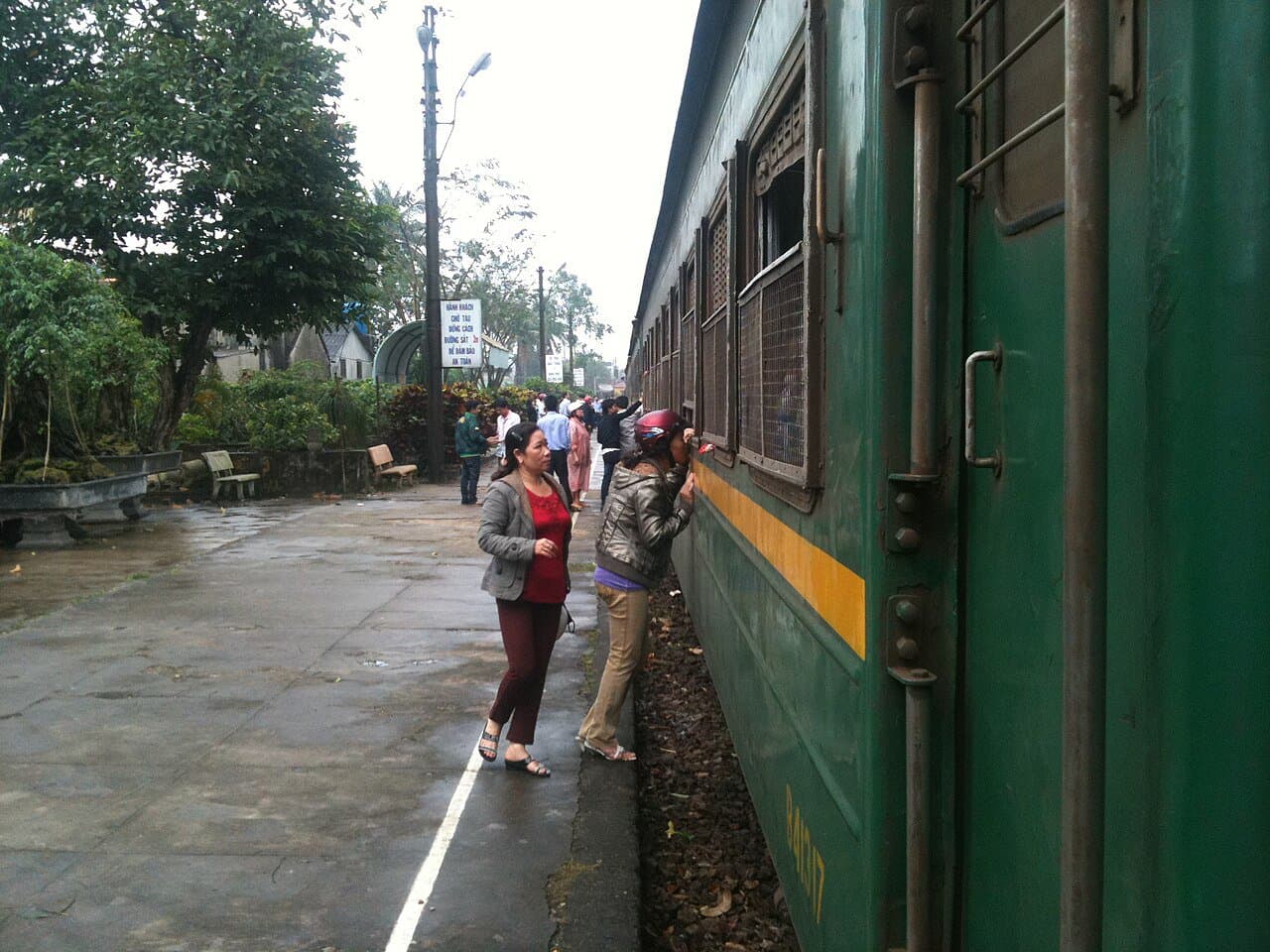
Get out of Hanoi to Hue or Hoi An: overnight train (Reunification Express SE3 or SE7 — depart Hanoi 19:00-22:00, arrive central Vietnam 08:00-11:00). Book a soft sleeper berth (4-berth cabin, ~$25-35) via Baolau.com or your hostel reception.
Days 4-5 — Hue
The old imperial capital. The Imperial City complex (UNESCO), the royal tombs (Minh Mang + Tu Duc + Khai Dinh), Perfume River boat trip, the Thien Mu Pagoda. Stay at Lemongrass Backpacker Hostel or Vietnam Backpacker Hostels Hue. Two nights is enough for most first-timers.
Hue specialty foods: bún bò Huế (the iconic spicy beef noodle soup), bánh khoái (Hue-style crispy pancake), nem lụi (grilled pork skewers). All cheaper and better at street stalls than tourist-zone restaurants.
Get from Hue to Hoi An: take the Reunification Express train through the Hai Van Pass (one of the most scenic train segments in Southeast Asia) — 2.5 hours, $5-10. Or open-tour bus + transfer (3-4 hours including the change in Da Nang).
Days 6-8 — Hoi An
The Ancient Town. Hoi An is where most backpackers slow down and reconsider their itinerary — the Ancient Town pedestrian zone, the tailor shops, the food, and the beach (Cua Dai for sunset; My Khe in Da Nang 30 km north for swimming) all reward a longer stay. Stay at Tribee Bana, Vietnam Backpacker Hostels Hoi An, or Sunflower Hotel + Hostel.
What to do: Ancient Town walking + lantern evening; a cooking class (Red Bridge Cooking School + Morning Glory are the established options); a tailor commission if you've packed light enough — see our solo female packing list for the tailor strategy; a half-day My Son Sanctuary trip (Hindu temple ruins, UNESCO — ~$15-25); a day at My Khe Beach in Da Nang.
Get from Hoi An to Nha Trang: overnight train (Reunification Express, ~10 hours, $20-30 sleeper) — depart Da Nang in the evening, arrive Nha Trang morning. Or skip Nha Trang entirely if it doesn't appeal (many backpackers do).
Days 9-10 — Nha Trang (optional)
The seaside resort city. Honest opinion: Nha Trang is the most-skippable stop on the spine for backpackers who aren't specifically interested in beach time or scuba diving. The bar-strip environment is less appealing than the rest of the spine; the rip currents and bar-strip dynamic are documented (see our solo female city-by-city guide). If you go: Vinpearl Land theme park, snorkeling day-trip to Hon Mun, mud bath at Thap Ba.
If you skip Nha Trang: train direct Hoi An/Da Nang to HCMC (16+ hours via SE class) or break the journey at Mui Ne instead.
Days 11-14 — HCMC + day trips
Saigon (HCMC). The opposite cultural feeling from Hanoi — more energetic, more international, more capitalistic. Stay at The Common Room Project, 5kuLodge, or Long Hostel — all in District 1's Pham Ngu Lao backpacker zone.
What to do in 3-4 days: the War Remnants Museum (heavy but important); Reunification Palace; Cu Chi Tunnels day-trip ($15-25); Ben Thanh Market; Mekong Delta day-trip ($20-40) OR overnight Mekong tour; a District 1 food crawl ending at Bui Vien street if you want the nightlife scene.
Flight home: from HCMC's Tan Son Nhat (SGN) airport. ~30-60 minutes from District 1 via Grab.
Extending to 3 weeks
The first week's extension is usually one of these:
+ Sapa (3-4 days)
Add to the beginning of the trip from Hanoi. Take the overnight train or daytime limo van to Lao Cai/Sapa, do a guided 1-2 day trek with a homestay night in a Ta Van or Lao Chai H'mong village, return to Hanoi for the spine. See our Solo Female Sapa guide for the full plan.
+ Ha Giang Loop (4-5 days)
For more adventurous backpackers. Take a guided 3-4 day motorbike tour of the Ha Giang Loop with an operator like Jasmine's Ha Giang Tours or QT Motorbikes (you sit on the back; experienced driver controls the bike). Cost: $150-200 all-inclusive including accommodation, meals, gas, guide. Add 5 days to your trip; book the tour from Hanoi.
+ Mui Ne (2-3 days)
Between Nha Trang and HCMC. Sleeper bus from Nha Trang (4-5 hours, $10) or train to Phan Thiet + transfer to Mui Ne. Stay at Mui Ne Hills Backpacker Village. What to do: sand dunes at Bau Trang, fishing village walk, kitesurfing lesson if you're keen.
Daily budgets that actually work
The numbers below are what backpackers really spend in 2026, broken out by spending pattern.
| Item | $35-45/day backpacker | $50-65/day comfort-backpacker | $80-100/day mid-range |
|---|---|---|---|
| Accommodation | $7-12 (hostel dorm) | $20-30 (hostel private or budget hotel) | $40-60 (3-star hotel) |
| Food | $10-15 (street + cafe) | $15-20 (mix street + restaurant) | $20-30 (mostly restaurants) |
| Transport | $5-10 (amortised across trip) | $8-12 (some shorter flights) | $12-18 (more flights) |
| Activities | $3-8 (budget tours) | $8-12 (mid-range tours) | $12-20 (some private tours) |
| Misc | $5-8 (SIM, water, coffee, snacks) | $5-10 (same + occasional drinks) | $8-15 |
Big-ticket budget additions to plan for separately:
- Ha Long Bay overnight cruise: $80-150 budget, $200-500 mid-range
- Ha Giang Loop guided tour: $150-200 all-in for 3-4 days
- My Son day-trip from Hoi An: $15-25
- Hoi An tailored clothes: $30-150 per piece depending on what you commission
- Domestic flight Hanoi-HCMC (if you take it): $40-100
Total realistic 2-week trip cost from arrival in Hanoi to flight out of HCMC: $500-900 for backpackers; $900-1,400 for comfort-backpackers; $1,400-2,000 for mid-range.
Transport choices: train, bus, van, or flight
Backpackers in Vietnam have four mode choices for moving between cities. The rough decision framework:
Take the train when: the route is on the Reunification Express line (Hanoi-Hue-Da Nang/Hoi An-Nha Trang-HCMC + Hanoi-Ninh Binh + Hanoi-Lao Cai for Sapa). The train is the safer, more comfortable, more scenic option on every route where it runs.
Take a sleeper bus or limo van when: the route isn't on the rail line (Hanoi-Sapa road option, HCMC-Da Lat, HCMC-Mui Ne, Hanoi-Halong via Ha Long Bay). Limo van is the better choice for routes under 5 hours; sleeper bus is the cheaper choice for longer routes.
Take a budget flight when: it's Hanoi-HCMC end-to-end and you want to save 30+ hours of overland transit. VietJet and Vietnam Airlines both run multiple daily flights at $40-100. See our Vietnam Airline Reliability Atlas for the operator breakdown.
Take an open-tour bus when: you specifically want the multi-stop ticket model (Sinh Tourist, Hanh Cafe, Queen Cafe). The 1-month open-validity hop-on-hop-off ticket is a uniquely Vietnamese product; less efficient than booking leg-by-leg but useful if you're a planning-averse backpacker who wants flexibility.
Full transport comparison + operator detail in our Land Transport Corridor Atlas.
Hostels worth booking
The Vietnam backpacker hostel scene rotates every 2-3 years — read recent reviews before booking. The list below is current as of early 2026 and biased toward genuinely social hostels with female-dorm options:
Hanoi (Old Quarter): Nexy Hostel (the social favourite), Old Quarter Backpackers, Hanoi Backpackers' Hostel.
Hue: Lemongrass Backpacker Hostel, Vietnam Backpacker Hostels Hue.
Hoi An: Tribee Bana, Vietnam Backpacker Hostels Hoi An, Sunflower Hotel + Hostel.
Nha Trang: Mojzo Inn, iHome Nha Trang.
HCMC (District 1 / Pham Ngu Lao): The Common Room Project, 5kuLodge, Long Hostel.
Sapa (if you go): Mountain View Backpacker, Sapa Backpackers, Pumpkin Bar Hostel.
Ha Giang (if you do the loop): Bong Hostel (the loop tour operator), QT Motorbikes Hostel.
Book your first 2-3 nights before you arrive; book the rest as you go (you'll meet people who'll change your route).
Safety reality for first-time solo backpackers
The short version: Vietnam is among the safer Southeast Asian destinations for solo backpackers by every government-advisory measure. The detailed version is in our Solo Traveller Safety Atlas.
The real risks for first-timers are:
-
Motorbike traffic. 17.7 road deaths per 100,000 (WHO 2023), >90% involving motorcycles. Don't rent unless you know what you're doing and have an IDP + motorbike-accident insurance.
-
HCMC bag-snatching. Documented pattern of grab-and-go theft from passing motorbikes in District 1. Don't walk with your phone in your hand near the curb; wear bags diagonal-across-body away from the street.
-
Methanol in unregulated alcohol. UK FCDO advisory specifically warns about deaths and serious illness from methanol-adulterated drinks. Stick to bars at reputable hotels or established Western/expat-favourite bars; avoid homemade rice wine ('rượu') at unknown venues.
-
The fake-Grab pattern. Someone wearing Grab gear approaches you at the curb claiming to be your ride. Always confirm the license plate + driver name match your app booking before getting in.
For solo female first-time backpackers specifically, see our Is Vietnam Safe for Solo Female Travelers guide for the full city-by-city safety breakdown.
What to skip on a first trip
A few things first-time backpackers overspend on or sweat unnecessarily:
- Pre-booking everything for the full 2-3 weeks. Book your first 2-3 nights + the major transport (overnight trains specifically). The rest will change.
- A guided Ha Long Bay group tour with 40 other tourists. Pick a smaller-boat or family-run cruise instead (Indochina Junk, Bhaya Cruises). The big-group tour experience is reliably mediocre.
- The Cu Chi Tunnels by giant tour bus. The half-day private or small-group tour is meaningfully better than the bus-tour version that includes a forced lunch stop at a tour-operator-owned restaurant.
- Trying to do Sapa in 2 days. The travel time eats it. Either commit 4-5 days or skip Sapa for this trip.
- The Nha Trang full backpacker stop if you're not specifically interested in scuba diving or bar-strip nightlife. Many backpackers spend 2 nights and wish they'd been somewhere else.
- Bottled-water anxiety beyond reasonable. Vietnamese tap water isn't drinkable but the bottled-water economy is everywhere and cheap.
Limitations
- Pricing is May-June 2026 USD at ~26,361 VND/USD. Hostel dorm rates, sleeper-bus tickets, and street-food prices fluctuate 5-15% seasonally; Tet (Feb 17 2026 in 2026) closes 50-70% of small restaurants for 3-7 days and inflates transport.
- Backpacker accommodation inventory turns over fast — hostels that were highly rated in 2024 may have changed hands or quality drifted by 2026. Always cross-check Hostelworld + Google reviews from the last 90 days.
- Sleeper-bus operator quality varies night-to-night — same operator can run a clean Futa coach one night and a worn Phuong Trang one the next. The "Tuesday-Wednesday off-peak booking" rule for fare savings is a pattern not a guarantee.
- The $40/day budget assumes street-food meals and dorm beds — substituting any mid-range hotel or restaurant breaks the math.
- Decree 168/2024 fines are evolving via enforcement guidance; the VND 2-8M figure is the gazette amount but enforcement intensity varies by city + officer.
Cross-references
- Vietnam Solo Traveller Safety Atlas 2026 — full sourced safety data
- Vietnam Travel Cost Index 2026 — full cost breakdown
- Vietnam Land Transport Corridor Atlas 2026 — train + bus + van detail
- Is Vietnam Safe for Solo Female Travelers 2026 — solo-female-specific
- Vietnam Packing List for Solo Female Travelers 2026 — what to bring
- Vietnam Visa Guide — 45-day exemption + 90-day e-visa
- Vietnam Budget Guide — broader daily-budget framing
- Hanoi, HCMC, Hoi An, Sapa destination guides
The 2027 update will live at /guides/backpacking-vietnam-first-time-solo-traveler-2027/. The spine, the visa-day calculations, and the transport choices will be largely unchanged year over year; the hostel-scene specifics rotate so check recent reviews closer to travel time.