
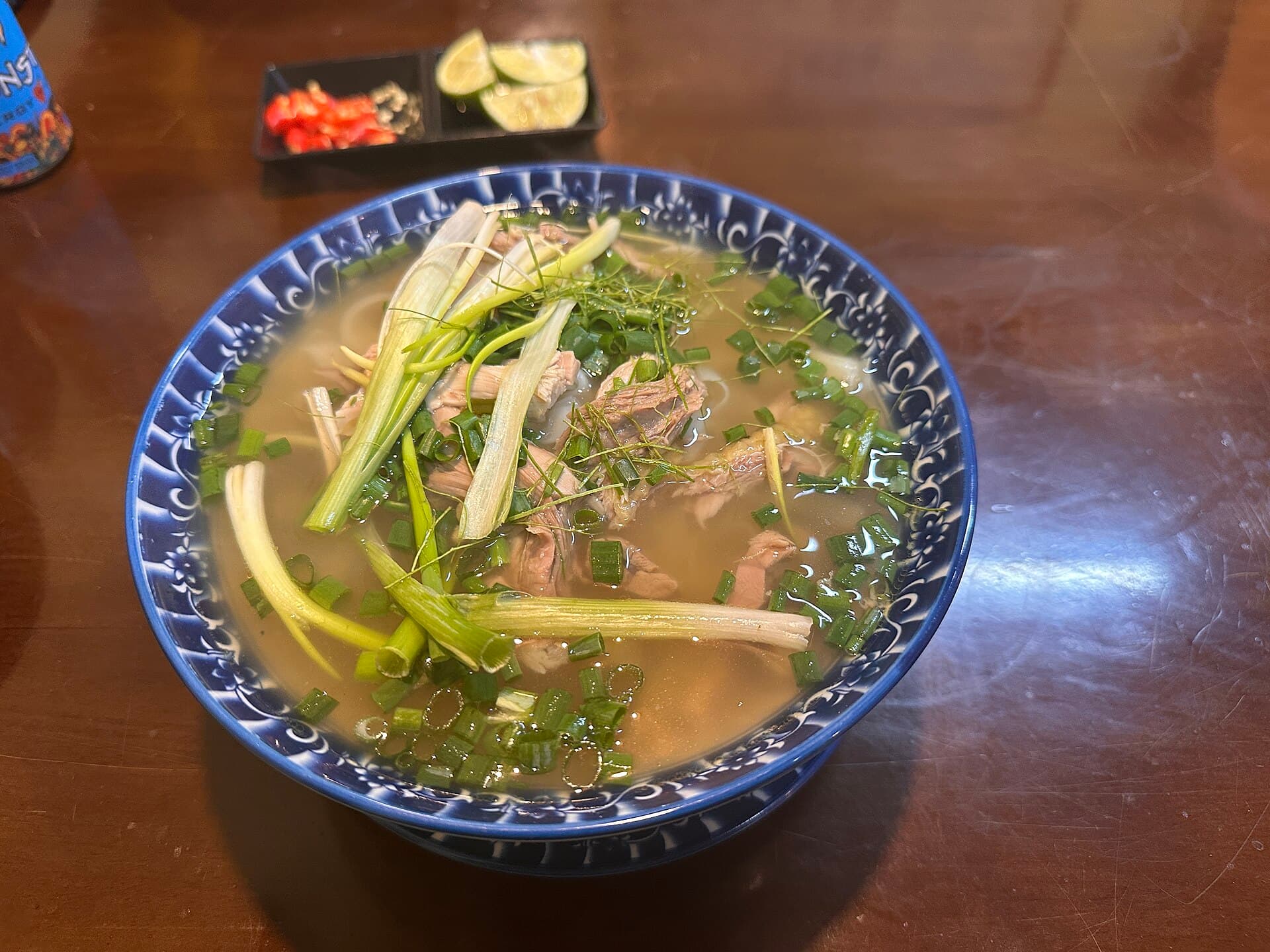
Vietnam's reputation as Southeast Asia's best-value major destination still holds in 2026, but the headline daily-budget numbers have moved meaningfully since the pandemic-recovery floor of 2022. Below is what a Vietnam trip actually costs now, broken down by traveller tier, with the per-line items most people underestimate.
The full sourced breakdown — every figure cited to Vietnam Railways, Booking.com / Agoda, the General Statistics Office of Vietnam, and named operator pricing — lives in our Vietnam Travel Cost Index 2026. This guide is the shorter, planning-focused companion.
Daily budgets at a glance
| Tier | Daily budget | 14-day trip total | Style |
|---|---|---|---|
| Backpacker | $30–50 | $700–1,400 | Dorm beds, street food, sleeper buses, paid activity every other day |
| Mid-range | $80–150 | $1,400–2,800 | 3-star hotels, sit-down restaurants, soft-sleeper trains, daily activity |
| Comfort | $200–350 | $3,000–5,500 | Boutique 4-star, private transfers, fine dining, 1 overnight cruise |
| Luxury | $400+ | $7,000+ | 5-star resort, private guide, helicopter or premium cruise tier |
Trip totals exclude international flights, travel insurance ($30–80 for two weeks), and the 90-day Vietnam e-visa at $25. Add roughly $50–100 per day to your full trip estimate to account for those.
The single most useful figure for most travellers is the midpoint of each tier. Trip-total estimates work better when you size them off the midpoint and then add buffer for incidentals, not when you try to hit the floor of the range.
What each tier actually buys you
Backpacker ($30–50/day)
A representative backpacker day in 2026:
- Dorm bed in a busy Old Quarter or District 1 hostel: $8–15
- Three street-food meals plus a Vietnamese coffee: $10–18
- Local transit (Grab bike + city bus + walking): $3–8
- One paid activity or attraction (every other day): $5–12 average
The ceiling on a backpacker day is set by long-distance transport: an overnight sleeper bus between Hanoi and Sapa or Hue and Hoi An runs $15–25; a soft-sleeper train berth from Hanoi to Hue costs $25–45 per Vietnam Railways official fares. Stack two of those into one calendar day and the daily total jumps.
What pushes a backpacker day over $50 is almost always alcohol — bia hơi (fresh draft beer at 8,000–15,000 VND, ~$0.30–0.60) keeps the budget intact, but a craft-beer evening at a modern bar in Hanoi or HCMC can run $20–30 alone.
Mid-range ($80–150/day)
Mid-range is where Vietnam stops feeling "cheap" and starts feeling "good value." A representative mid-range day:
- 3-star hotel room, breakfast included: $35–70
- Mix of one sit-down restaurant dinner plus two casual meals: $25–45
- Grab car for cross-town hops, occasional motorbike taxi: $8–15
- One daily activity (cooking class, half-day tour, museum cluster): $15–35
The lower end of this range works fine in Hue, Hanoi outside the Old Quarter, and the Mekong Delta. The upper end is normal in central Hoi An, central Da Nang, and Phu Quoc — three places where mid-range accommodation has been climbing 5–12% annually per the Statista Vietnam Travel & Tourism Outlook.
Comfort ($200–350/day)
This is where the experience changes meaningfully — boutique 4-star hotels with character, private transfers between cities, fine-dining restaurants, and premium experiences. A representative day:
- Boutique 4-star, often a heritage property: $90–180
- Restaurant meals across the day, including one $30+ dinner: $60–100
- Private transfers or domestic flight (averaged across a week): $30–50
- Premium experience or guided tour: $30–80
The single highest-leverage choice at this tier is the Ha Long Bay overnight cruise. The $200/night marginal cost difference between a budget cruise ($119–180) and a mid-range 4-star cruise ($140–280) compounds across the trip's vibe; most travellers we know who've done both prefer the upgrade. See our Ha Long vs Cat Ba vs Lan Ha compare for the operator-by-operator breakdown.
Luxury ($400+/day)
Luxury budgets are wide and operator-dependent. Single-point figures here would mislead. As a frame:
- 5-star resort or premium urban property: $200–500+
- Fine-dining and hotel-restaurant meals: $120–200
- Private guide and driver: $80–150
- Premium experiences (helicopter, private cruise, exclusive guided tours): $100–400
Phu Quoc's luxury tier has climbed roughly 10–20% per year off 2024 baselines per our cost-index observations — the island's resort-led economy and limited mid-range supply compound the rate growth. If you're sensitive to value at this tier, Hue's heritage hotels and central Hanoi's better boutiques deliver a comparable experience at noticeably lower nightly rates.
What's cheap (the things that anchor Vietnam's value reputation)
- Street food. A bowl of phở in a Hanoi neighborhood runs 25,000–35,000 VND (
$1.00–1.40); banh mi runs 20,000–35,000 VND ($0.80–1.40). The Hanoi street food research — an IJRISS regression study with n=306 — found food quality (β = 0.343) and price (β = 0.325) the dominant drivers of where Hanoi locals spend, which translates to a useful tip for visitors: the busy stall with a queue of locals is almost always the right call over the empty one with English signage. - Local transit. A Grab motorbike ride across 1–3 km of city runs 20,000–50,000 VND ($0.80–2.00). City buses in Hanoi and Ho Chi Minh City charge a flat 7,000–10,000 VND ($0.30–0.40).
- Coffee. Vietnamese drip coffee (cà phê sữa đá) at a neighborhood café runs 20,000–50,000 VND ($0.80–2.00). The country is the world's second-largest coffee producer per VICOFA (Vietnam Coffee and Cocoa Association), and the surplus shows up in pricing.
- Heritage-site entry fees. Hoi An's old town has charged 20,000 VND ($0.80) per heritage site since 10 August 2026, the same for all visitors, per the Da Nang city government; it replaced the 120,000 VND ($4.80) pass for five entries. Hue Imperial City entry is 200,000 VND ($8). The Hue 4-monument combo (Imperial City plus Minh Mang, Khai Dinh, and Tu Duc tombs) runs 530,000 VND ($21) — exceptional value for what you get.
- Massage and spa. Standard 60-minute massage in Hanoi, HCMC, or Hoi An runs $10–25; upscale 5-star hotel spas climb to $60–120.
What's not cheap (the things people underestimate)
- Imported alcohol. A glass of imported wine at a mid-range restaurant runs $8–15; the same bottle costs $30+ at retail. Craft beer at a modern Hanoi or HCMC bar is $2.80–4.80 per pint. Stick to local beer (Bia Hà Nội, Bia Saigon) and bia hơi to keep the alcohol budget contained.
- Ha Long Bay cruises. Budget cruises start around $119–180 per person for a one-night trip, but the experience differential at $200–280 (mid-range 4-star) is large. Two-night cruises typically run $330–500 mid-range, $500+ luxury.
- Ba Na Hills. The Da Nang cable-car-and-Golden-Bridge attraction is 950,000 VND ($38) for entry — the priciest single attraction in Vietnam.
- Private guides. A full-day private guide with car runs $50–80 in most regions, $100–150 in Hanoi and HCMC at the upscale end.
- Domestic flights booked last-minute. Same-week Hanoi-HCMC or Hanoi-Da Nang fares run $80–150; book 3–4 weeks ahead via Vietnam Airlines, or VietJet and you'll pay $40–80 for the same flight.
- Tailor-made clothing in Hoi An. A custom suit at a reputable Hoi An tailor runs $150–400; silk dresses $50–150. Excellent value for the craftsmanship, but it adds up fast across a trip.
Per-city differentials
Vietnam's daily-budget midpoint varies 1.5–2.5× across cities. Picking where to stay matters more than picking which tier within a city.
| City | Mid-range daily budget | Why |
|---|---|---|
| Phu Quoc | $130–220 | Resort-island economy, few cheap options |
| Hoi An (central) | $110–180 | UNESCO premium, lantern-hour pricing density |
| Da Nang (central) | $100–170 | Beach-coast premium, rapid 2024–2026 rate growth |
| Hanoi (Old Quarter) | $100–160 | Tourism premium, +5–12% annual rate growth |
| Ho Chi Minh City (District 1) | $95–155 | Largest international business hotel base, consistent pricing |
| Sapa | $75–130 | Tourism developed; Nov–Mar harvest peak |
| Nha Trang | $70–120 | Cheaper hotel base than peers; package-tour-friendly |
| Hue | $60–105 | Cheapest UNESCO city; clearest mid-range value |
| Mekong Delta towns | $55–90 | Smaller-town pricing; CBT homestay options |
A 14-day trip biased toward Hue, Sapa, the Mekong towns, and Hanoi outside the Old Quarter runs 25–35% cheaper than the same itinerary biased toward Phu Quoc, Hoi An central, and Old Quarter Hanoi — same length, same number of days, very different total.
2024 → 2026 inflation: what's changed
Vietnam's daily-budget midpoints across all four tiers are 12–40% higher than 2024 baselines. The macro context from the General Statistics Office explains it: 2025 saw accommodation and catering services revenue grow 14.6%, travel services revenue grow 20.2%, and international arrivals reach 21.2 million — the highest in Vietnam's tourism history.
Where prices rose the most:
- Phu Quoc luxury: 10–20% per year off 2024 baselines.
- Hoi An central boutique 4-stars: 5–12% per year, compounded.
- Hanoi Old Quarter mid-range: 5–12% per year. Properties that were $60/night in 2023 are commonly $80–110 in 2026.
- Ha Long cruise operators: 10–20% increases, partly driven by environmental-compliance retrofits on older vessels.
Where prices have stayed roughly flat in real terms:
- Backpacker dorm beds — heavy new hostel supply has absorbed demand.
- Sleeper bus fares — operator competition (FUTA, The Sinh Tourist, regional brands) has held prices.
- Domestic flights when booked 3–4 weeks ahead — Vietnam Airlines / VietJet competition keeps major-route fares in the $40–80 band.
- Hue, Mekong towns, smaller cities — these remain the clearest mid-range value plays.
The directional implication: stack your trip toward the cities and tiers where pricing has been stable. A disciplined backpacker pays roughly what backpackers paid in 2024. A comfort-tier traveller in central Hoi An and Phu Quoc pays meaningfully more.
Cash vs cards in 2026
Vietnam is more card-friendly than five years ago but still operates as a cash-heavy economy outside major hotels and chain restaurants. Pragmatic posture:
- Card-accepting: mid-range hotels and up, larger restaurants in tourist districts, organised tour operators, supermarkets (Co.opmart, Big C), 7-Eleven and Circle K, most boutique shops in Hoi An.
- Cash-only: street food, sleeper buses, most market stalls, motorbike rentals, anything outside the major cities, traditional cafes, smaller guesthouses.
- ATM strategy: withdraw 2–4 million VND per visit ($80–160) to amortise the per-transaction fee. Sacombank, Techcombank, and TPBank have the lowest fees among national networks; BIDV and Agribank are higher.
- VND/USD rate: stable in the 24,000–25,500 band through 2024–2026, but fluctuations of 2–4% are normal. Don't assume the rate from your last trip still applies.
How to actually use this guide
- Pick the region and the cities first; the per-city table above tells you what your tier costs there.
- Compute the midpoint of your tier × your trip length, plus 15% buffer.
- Add the unmoving extras: $25 e-visa (if not visa-exempt — see the visa guide), $30–80 travel insurance, $50–100/day amortised across your trip for the things you'll forget to budget (souvenirs, drinks, one upgrade night, the unplanned cooking class).
- For the day-by-day version with three sample 14-day itineraries — backpacker $750, mid-range $1,800, comfort $4,200 — see the Vietnam Travel Cost Index 2026.
Prices in AUD, GBP and EUR
Australian and British readers are among this site's largest audiences. The headline figures above, converted:
| Tier | USD / day | AUD / day | GBP / day | EUR / day |
|---|---|---|---|---|
| Backpacker | $30–50 | A$42–69 | £22–37 | €26–43 |
| Mid-range | $80–150 | A$110–210 | £59–110 | €69–130 |
| Comfort | $200–350 | A$280–485 | £150–260 | €170–300 |
| Luxury | $400+ | A$555+ | £295+ | €345+ |
The 14-day trip totals convert the same way: multiply the USD figure by 1.39 for AUD, 0.74 for GBP or 0.86 for EUR.
Rates as of 5 September 2026: 1 USD = 1.39 AUD = 0.74 GBP = 0.86 EUR = 26,025 VND (Exchange Rate API open endpoint). The underlying prices are the mid-2026 figures on this page; they were not re-collected for this conversion, and exchange rates move a few percent a quarter, so treat the converted columns as planning ranges rather than quotes.
Limitations
This guide is based on April 2026 observations and the editorial team's recent trips, but Vietnam's price points shift faster than any single article can keep up with — accommodation rates change quarterly, transport fares change with operator competition, and luxury Phu Quoc has been climbing meaningfully every year. Workaround: treat the ranges here as planning guidance and confirm specifics with the operators you'll actually book — Booking.com filtered to your travel dates is the better real-time signal than any published guide.
Costs vary by source-market mix and seasonality in ways that no single midpoint captures cleanly; Tet (mid-February), the April 30 holiday week, and December's Christmas / New Year travel peak all see 15–30% price increases on accommodation and tours. Workaround: if your dates fall on a Vietnamese holiday week, add 20% to every accommodation line item in your budget — the published cost index assumes non-peak booking and won't reflect those windows.