
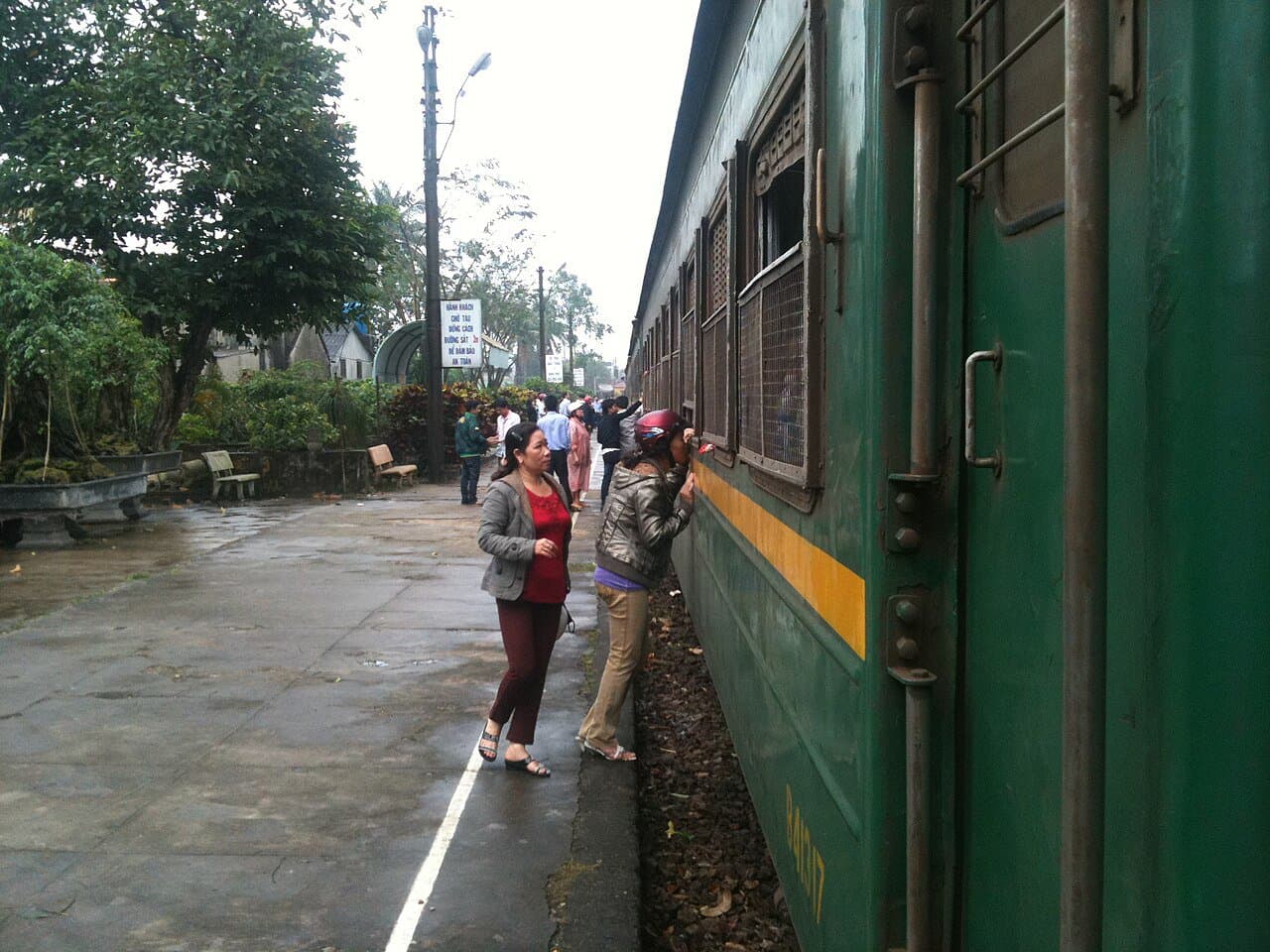
The rail-plus-bus approach to backpacking Vietnam is the standard middle-path that most backpackers settle into by trial and error. The all-train romantic ideal hits the wall when you discover the train doesn't actually serve some of the most-popular backpacker routes (Hoi An to Nha Trang, Mui Ne to Da Lat to HCMC); the all-bus cheap default hits the wall when you discover the long Hanoi-to-Hue overnight bus is materially less comfortable and safe than the equivalent train. The mix is what works.
This guide is the practical 2-week itinerary using both modes — which train segments are worth the premium, which sleeper buses are worth the cost saving, where the operator choice matters most, and how the booking math actually works. The Land Transport Atlas and Sleeper Bus Operator Atlas cover the deeper transport reference; this guide is the route-specific synthesis.
Quick summary — the 2-week rail-plus-bus route
| Leg | Mode | Cost | Time | Why this mode |
|---|---|---|---|---|
| Hanoi → Hue | Sleeper train (soft sleeper) | $35-50 | 12 hrs overnight | Train wins on comfort + safety |
| Hue → Da Nang | Day train | $15-25 | 4 hrs | Hai Van Pass scenic |
| Da Nang → Hoi An | Shared shuttle | $5-8 | 45 min | No train; bus the only option |
| Hoi An → Nha Trang | Sleeper bus | $22-30 | 11 hrs overnight | No direct train; sleeper bus standard |
| Nha Trang → Da Lat | Day bus | $12-18 | 4 hrs | No train; mountain road |
| Da Lat → HCMC | Sleeper bus | $18-28 | 7 hrs overnight | No train; sleeper bus standard |
| Total transport | Mixed | $107-159 | 38 hrs travel | – |
Total trip cost for the 2-week route (transport + accommodation + food + activities, excluding international flights): $560-820.
The fast version: book 3 train segments through 12Go for the overnight + day-train + Hai Van Pass; book 3 sleeper-bus segments through Phuong Trang Bus or Hanh Cafe direct; mix discriminately rather than committing to one mode for the whole trip. The hybrid produces the best total-comfort + total-cost outcome.
Day-by-day pattern
Days 1-3: Hanoi. Standard Old Quarter base; food tours, Vietnamese Women's Museum, Hoan Kiem Lake, optional Ninh Binh day trip. $40-50/day total. Book the Day 4 overnight train Hanoi → Hue in advance (1-2 weeks).
Day 4: Overnight train Hanoi → Hue. Departure 19:00-22:00 from Hanoi Station; arrival Hue 07:00-10:00 next morning. Soft sleeper 4-berth cabin $35-50. Pack snacks; the on-board food is functional but limited. Sleep: 8 hours possible if you board around 21:00. The train doubles as accommodation — saves a hostel night.
Days 5-6: Hue. Imperial City (UNESCO, $8), tombs of Tu Duc and Khai Dinh (combination $14), Thien Mu Pagoda. Eat the imperial-cuisine specialties (bun bo Hue, banh khoai, com hen). $30-40/day.
Day 7: Day train Hue → Da Nang + transfer to Hoi An. Departure Hue ~13:30; arrival Da Nang ~17:30. The Hai Van Pass scenic stretch is approximately 15:00-17:00 — eastern-side window seats. Cost: $15-25 for soft seat (overkill for the daytime ride, but worth it for the comfort). Shared shuttle Da Nang → Hoi An $5-8. Check into Hoi An hostel.
Days 8-10: Hoi An. Ancient Town, cooking class, An Bang Beach, optional My Son Sanctuary, optional tailoring. $40-55/day. Book the Day 11 overnight sleeper bus Hoi An → Nha Trang in advance.
Day 11: Overnight sleeper bus Hoi An → Nha Trang. Departure 18:00-19:30 from Hoi An; arrival Nha Trang 06:00-08:00 next morning. 11 hours overnight. Phuong Trang or Hanh Cafe; $22-30 standard berth, $30-45 limousine variant. The Hoi An-Nha Trang route is the longest sleeper-bus leg most backpackers do — the alternative is a 15-hour day bus.
Days 12-13: Nha Trang or Da Lat. Decision point. Nha Trang for the beach reset ($30-45/day with mid-range hostel + beach time + occasional Bay Islands tour); Da Lat for the highlands escape ($25-40/day with mountain trekking + coffee plantations + cooler weather). Most backpackers pick Da Lat for the variety; Nha Trang for the beach.
Day 14: Overnight sleeper bus to HCMC. Departure 21:00-22:00; arrival HCMC 04:00-07:00 next morning. 7-10 hours overnight. Phuong Trang the standard pick at $18-28 for the standard berth. Check into HCMC hostel early; rest in the morning. Half-day HCMC sightseeing (District 1, War Remnants Museum); evening flight home from Tan Son Nhat.
Where the train wins
The Reunification Express is the better choice over the sleeper bus for the long overnight routes specifically:
Hanoi → Hue (overnight, 12 hours): train is the standout. Soft sleeper $35-50 vs sleeper bus $25-35. The train cabin is enclosed, locking, has a flat berth, and has the on-board attendants. The equivalent overnight bus is angled berths, less safety oversight, and more sleep-deprivation. The $10-20 train premium is worth it.
Hue → Da Nang (day, 4 hours): train is the standout for the Hai Van Pass scenic stretch. The bus runs the same route through the Hai Van Tunnel (underground, no scenic view) at $5-10; the day train at $15-25 delivers the most-photographed Vietnam train view. The premium is worth it.
Hanoi → Sapa (overnight, 8 hours): train is the standout for safety. The Sapa-bound sleeper buses have a higher accident rate than the train; the overnight train is the routine choice for solo female travelers and most backpackers. Cost: $30-50/berth (Livitrans, Chapa Express, Sapaly Express tourist class).
Hanoi → Da Nang or HCMC (continuous, 16+ hours): train is the comfort choice but most backpackers break the journey at Hue rather than riding continuously.
Where the sleeper bus wins
The sleeper bus is the better choice for the routes the train doesn't serve well:
Hoi An ↔ Nha Trang (11 hours): no direct train; bus is the only practical option. Phuong Trang and Hanh Cafe at $22-30.
Nha Trang ↔ Da Lat (4 hours): no train (mountain road); bus is the only option. Phuong Trang at $12-18.
Da Lat ↔ HCMC (7 hours): no train; bus is the standard choice. Phuong Trang at $18-28.
HCMC ↔ Mui Ne (5 hours): no train; bus is the standard. The Sinh Tourist or Phuong Trang at $12-18.
Cat Ba Island ↔ Hanoi (5-6 hours including ferry): combined bus-ferry-bus operation. Hoang Long or Hanh Cafe at $20-30.
Phu Quoc ↔ HCMC: no train and no bus (Phu Quoc is an island); flight is required. Skip the bus question entirely.
The booking platforms
Trains are best booked through 12Go (12go.asia), Baolau (baolau.com), or directly through Vietnam Railways (dsvn.vn). 12Go is the international-traveler standard with English interface, $3-8 service fee, and reliable confirmation.
Sleeper buses can be booked through 12Go (same platform, same service fee, decent operator coverage), Baolau, or directly through the operator's office (Phuong Trang has offices in every major city). The hostel desks also book buses with a small markup ($1-3); convenient if you're booking 24-48 hours ahead.
Open-tour bus passes (Hanh Cafe, The Sinh Tourist, Phuong Trang) bundle multiple legs at a 10-20% discount. Worth it if you're committed to one operator and the full route; less worth it if you want flexibility to switch operators between legs.
Booking timing: 4-6 weeks ahead for the limited 2-berth deluxe train cabins; 1-2 weeks ahead for the standard 4-berth soft sleeper trains; 1-3 days ahead for sleeper buses; same-day for shorter routes.
Comfort upgrades that are worth the premium
A few specific upgrades that backpackers consistently report being worth the extra $3-15:
Soft sleeper 4-berth train vs hard sleeper 6-berth: $10-15 more, materially more comfortable, lockable cabin door, better odds of decent sleep.
Phuong Trang Limousine sleeper bus vs standard: $5-15 more, wider berths, better USB charging, slightly newer fleet.
The premium private train operators on Hanoi-Sapa (Livitrans, Chapa Express, Sapaly Express): $10-20 more than standard Vietnam Railways soft sleeper but the cabins are noticeably nicer.
Front-row sleeper bus berths: usually $3-5 more, sometimes extra leg-room for taller travelers, less mid-bus traffic noise.
Eye mask + earplugs + small blanket: $5-10 one-time cost, worth it for every sleeper segment.
What to skip
A few things consistently regrettable on the rail-plus-bus route:
Booking the no-brand-name $10-15 sleeper buses to save $3-5 vs reputable operators.
Hard seat or even soft seat on overnight train routes — the small saving vs hard sleeper isn't worth the no-sleep night.
Sleeper bus for the Hanoi-Hue overnight when the train option exists at similar price.
Continuous Hanoi-HCMC train ride without breaks — 32-36 hours is too long; the scenery doesn't compound; break the trip at 2-3 cities.
Hostel-desk markups on bus tickets that double the direct-booking price — common at the cheaper hostels.
Limitations
- Pricing is May-June 2026 USD at ~26,361 VND/USD. Hostel dorm rates, sleeper-bus tickets, and street-food prices fluctuate 5-15% seasonally; Tet (Feb 17 2026 in 2026) closes 50-70% of small restaurants for 3-7 days and inflates transport.
- Backpacker accommodation inventory turns over fast — hostels that were highly rated in 2024 may have changed hands or quality drifted by 2026. Always cross-check Hostelworld + Google reviews from the last 90 days.
- Sleeper-bus operator quality varies night-to-night — same operator can run a clean Futa coach one night and a worn Phuong Trang one the next. The "Tuesday-Wednesday off-peak booking" rule for fare savings is a pattern not a guarantee.
- The $40/day budget assumes street-food meals and dorm beds — substituting any mid-range hotel or restaurant breaks the math.
- Decree 168/2024 fines are evolving via enforcement guidance; the VND 2-8M figure is the gazette amount but enforcement intensity varies by city + officer.
The bigger picture
The rail-plus-bus 2-week route works because the hybrid approach uses each mode for its strength. Train for the long overnight and the scenic Hai Van Pass day; sleeper bus for the routes the rail doesn't serve. The cost is moderate ($110-180 transport total); the comfort is reasonable; the safety is acceptable with operator discipline.
For deeper transport context:
- Vietnam Land Transport Atlas — the 8-corridor multi-mode reference
- Vietnam Sleeper Bus Operator Atlas — operator-by-operator reviews
- Backpacking Vietnam on $40/day — the budget breakdown
- Reunification Express train guide — the train-specific reference
- First-time backpacker Vietnam guide — the first-trip overview
The hybrid is the right answer. Most backpackers arrive at it after one full-train and one full-bus trial; the patten in this guide is the synthesis that bypasses the trial-and-error.