
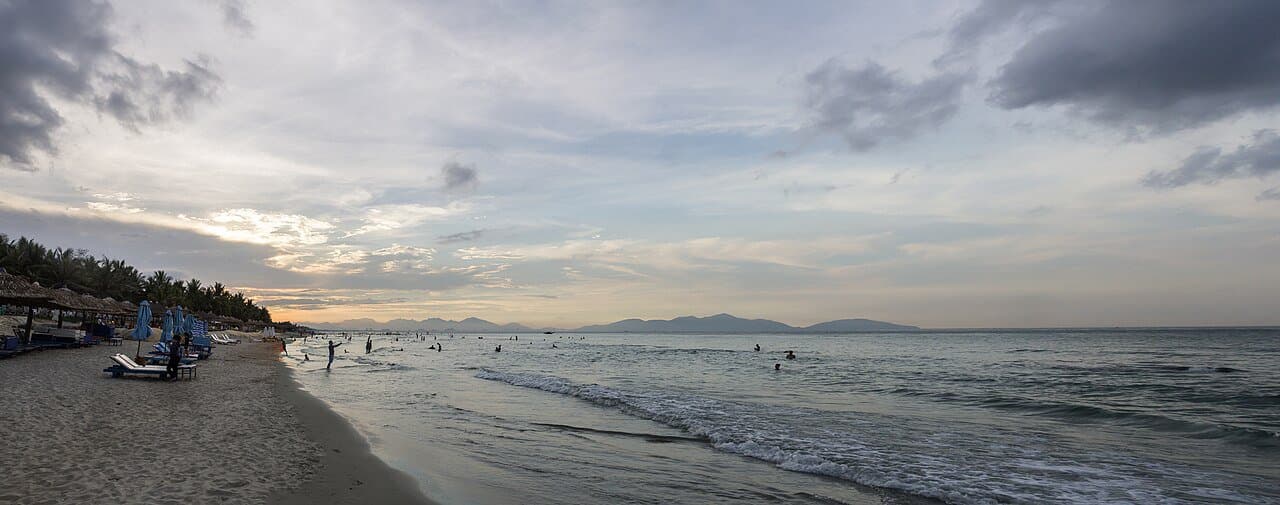
When my friend's family asked me to plan their two-week Vietnam trip last March — the London family I mentioned in our swimming-with-kids guide — I built the itinerary around a single principle: don't make Vietnamese beaches do work they're not currently good at. The geography of Vietnamese beach tourism has shifted in the past decade. Cua Dai used to be the central-Vietnam family default; persistent erosion has changed that. Phu Quoc, which a decade ago was the secondary "alternative" destination, has emerged as the family-beach default. The ranking below reflects where the underlying water-quality data, family-resort infrastructure, and Vietnamese-local consensus actually land in 2026.
This is the family-specific ranking layered onto the Vietnam Beach Water Quality Atlas. The Atlas covers the per-beach water-quality readings; this guide adds the family-decision dimensions — lifeguards, slope, kid-amenities, jellyfish risk, hospital proximity — and ranks the result.
Quick summary — the 2026 ranking
| Rank | Beach | Family score | Best for | Honest caveat |
|---|---|---|---|---|
| 1 | Phu Quoc Long Beach | 9.5 / 10 | All ages, especially under-7 | Less Vietnamese-cultural feel than central coast |
| 2 | Da Nang My Khe | 8.5 / 10 | Older kids (5+); real-city beach experience | Wave action picks up Oct-Dec |
| 3 | Cat Ba Cat Co 1-2-3 | 8 / 10 | Under-7s wanting a quieter alternative to Phu Quoc | Travel logistics from Hanoi are real |
| 4 | Phu Quoc Bai Sao | 8 / 10 | Families wanting a quieter Phu Quoc | Smaller resort density |
| 5 | Lang Co | 7 / 10 | High-end families with older kids | Jellyfish June-September |
| 6 | Hoi An Cua Dai | 6.5 / 10 | Older kids in calm months only | Documented erosion; narrower safe zone |
| 7 | Mui Ne (calm season only) | 6 / 10 | Kids 5+ in Nov-Mar window | Avoid Apr-Oct (kitesurf wind) |
| 8 | Nha Trang main beach | 5.5 / 10 | Confident swimmers 7+; rip currents | Rip-current risk; bar-strip environment |
Phu Quoc isn't just first; it's first by a meaningful margin, especially for under-5s. The decisions below the top tier are real — which one to pick depends on which Vietnamese cultural context you want around the beach time.
#1 — Phu Quoc Long Beach
The 20-km stretch of white sand running along Phu Quoc's western coast is the cleanest, calmest, family-friendliest major beach in Vietnam in 2026. The protected offshore geography — Phu Quoc sits in the Gulf of Thailand rather than the open South China Sea — produces gentle wave action year-round. The water tests within safe E. coli ranges through the dry season. The slope is gradual; even under-3s can wade out 15-20 metres without getting in over their heads.
Resort density: highest in Vietnam. Vinpearl Resort & Spa Phu Quoc was purpose-built for families with a kids' club, water park, multiple pools, and a beach segment with private lifeguards. JW Marriott Emerald Bay is the upscale option (luxury with strong family programming). Mid-range: Salinda Resort, the Famiana Resort, La Veranda Resort. Budget: dozens of guesthouses along the Long Beach strip with direct beach access.
Lifeguards: most beach-front resorts post their own staff during daylight hours. Municipal coverage is patchier but the resort-private setup means kids' swimming areas are watched consistently.
Activities for kids beyond the beach: Vinpearl Land Phu Quoc (theme park + water park + aquarium), the Hon Thom cable car (world's longest over-sea, with a kids-pleasant destination), the Phu Quoc Coconut Tree Prison museum (older kids only — heavy historical content), the Sao Beach day-trip (a quieter sister-beach to Long Beach).
The honest downside: Phu Quoc feels less Vietnamese than the central coast or Hanoi. The Long Beach resort strip is genuinely international — Russian + Korean + Chinese tourist density is high. If you want a culturally Vietnamese trip plus beach, you'll want to combine Phu Quoc with Hoi An or HCMC rather than treat Phu Quoc as the entire Vietnam experience.
#2 — Da Nang My Khe
The 9-km city beach of Da Nang. The InterContinental Danang Sun Peninsula sits on a private cove just north; the Hyatt Regency Danang Resort, Furama Resort, and Naman Retreat run the resort strip; municipal lifeguards work the central sections April through September.
Water quality reality: tested within safe ranges through most of the year. The Beach Atlas notes that the stretch nearest the Han River outflow has lower readings than the southern stretches — practical implication: pick a hotel south of the central stretch (or stay at the InterContinental on Son Tra Peninsula, which is on a separate cove entirely).
Wave action: gentle April-September; picks up October-December when seasonal swell arrives. The November-January window can produce wave action that's fine for confident kids 7+ but harder for toddlers.
Why families with older kids often prefer My Khe to Phu Quoc: you're in a real Vietnamese city with markets, museums, the Marble Mountains, an actual food scene, and the cultural depth that Phu Quoc's resort strip lacks. The beach is one element of a broader Vietnamese-city trip rather than the entire reason to be there.
Resort options for families: InterContinental Danang Sun Peninsula (luxury, private cove, strong kids' programming); Hyatt Regency Danang Resort (mid-luxury, family-suited); Naman Retreat (boutique, beach access, more adult-oriented but family-positive); Furama Resort (older but family-friendly, more affordable than the newer luxury options).
#3 — Cat Ba Cat Co 1, 2, and 3
The three small protected-bay beaches on Cat Ba Island's southern coast are an underrated family choice. Bay geometry produces calm water; the sizes are small enough that you can see your kids from any point on the beach; lifeguards work Cat Co 1 and 2 in high season (May-September).
Sand quality: acceptable but not Phu Quoc-level. Water quality: tests well in dry season; monsoon-runoff weeks produce elevated bacterial counts. Resort density: lighter than Phu Quoc or Da Nang — Hotel Perle d'Orient and Cat Ba Island Resort are the established mid-range options.
The logistics catch: getting to Cat Ba from Hanoi involves a bus or limo van to Hai Phong (~2 hours) plus a fast ferry to Cat Ba (~45 minutes). Total trip time is 4-5 hours each way. Some families combine Cat Ba with a Ha Long Bay overnight cruise (departing from Cat Ba's port) — this is a more efficient use of the travel time than a Cat Ba beach-only trip.
Best for: families with kids 3+ who want a calmer alternative to Phu Quoc plus access to Halong cruising.
#4 — Phu Quoc Bai Sao
A separate beach at the southern end of Phu Quoc Island, 25 km from the Long Beach resort strip. Bai Sao is famously photogenic — even whiter sand than Long Beach, even calmer water — and the resort density is lighter, which produces a quieter family-vacation feel.
Trade-off vs Long Beach: fewer kids' clubs + fewer on-call medical facilities + smaller restaurant scene = quieter trip, but slightly more planning for families. Best as a 3-night Long Beach + 3-night Bai Sao split rather than a Bai Sao-only stay.
#5 — Lang Co
The 13-km beach between Hue and Da Nang. Banyan Tree Lang Co (luxury), Angsana Lang Co, and a handful of Vietnamese-family-resort options. The beach is genuinely beautiful — wide, white sand, the Truong Son mountains backing it — but the family-fit is more variable than Phu Quoc or Da Nang.
Honest pros: high-end resort experience; relatively uncrowded; the lagoon ecology is a kid-friendly day-trip option.
Honest cons: jellyfish more pronounced June-September than at Phu Quoc; lifeguards resort-private only; the Banyan Tree programming leans honeymoon rather than family; the geographic position between Hue and Da Nang means it's logistically isolated (you don't pass through Lang Co — you go there specifically).
Best for: families with kids 7+ wanting the high-end resort experience and not constrained by Hue-or-Da-Nang base-city efficiency.
#6 — Hoi An Cua Dai
5 km from Hoi An Old Town, reachable by bicycle, motorbike, or taxi. The beach is still pretty — sunset views are excellent, the surviving beachfront restaurants serve some of the best seafood in central Vietnam — but the swim experience has changed.
The erosion reality documented in the Vietnam Beach Atlas: 10-20 metres per year of coastal loss along the worst-affected sections through the 2010s and 2020s. The safe-bathing zone has narrowed; the seafloor profile shifts year to year. Lifeguard coverage is now resort-private rather than municipal.
Practical guidance: visit in the calm months (Feb-May); use Cua Dai for a sunset-and-dinner experience plus a brief calm-water paddle rather than a full swimming day; do serious family swimming at Da Nang's My Khe 30 km north.
#7 — Mui Ne (calm season only)
Famously windy April-October — kitesurfing season — and the wind that draws kitesurfers makes the central strip harder for kids during those months. November-March is the calm window: gentle wave action, sand dunes for kids to play on, mid-range family resort options.
The wind reality: April-October average wind speeds make the central strip a working kitesurf zone. The northern (Mui Ne Beach proper) and southern (Hon Rom area) ends are quieter but still wind-affected.
Best for: families visiting Vietnam in the November-March window who want a beach destination accessible by bus from HCMC (4-5 hours). Outside the calm window, skip in favour of Phu Quoc.
#8 — Nha Trang main beach
Nha Trang's 7-km city beach is well-developed, full of resorts, and has municipal lifeguards. The reason it sits last on the family ranking: rip currents are documented; the wave action that draws surfers (and the bar-strip nightlife scene) doesn't pair naturally with toddler swimming.
Better for: families with confident swimmers 7+ who want a high-energy Vietnamese-city beach experience including the Vinpearl theme park (on Hon Tre Island, accessible by cable car).
The qualitative observation from our solo female safety guide: Nha Trang is the one Vietnamese city where solo female travelers most often report discomfort, due to the bar-strip environment. For families, this affects evening activities rather than daytime beach time — but worth knowing if you're planning the trip with teens.
Beach choice by family situation
A practical-decision matrix:
| Your situation | First-pick beach | Second-pick |
|---|---|---|
| Under-5s; first Vietnam trip | Phu Quoc Long Beach | (book longer there) |
| Kids 7+; want cultural depth around the beach | Da Nang My Khe | Phu Quoc as second leg |
| Family of mixed ages (4 + 10) | Phu Quoc + Da Nang split | Cat Ba alternative |
| June-September window | Phu Quoc | (avoid central coast) |
| Coming from Hanoi; limited time | Da Nang flight | Cat Ba ferry (older kids) |
| Coming from HCMC; limited time | Phu Quoc flight | Mui Ne bus (calm season) |
| Luxury budget | Phu Quoc JW Marriott Emerald Bay | InterContinental Danang Sun Peninsula |
| Mid-range budget | Phu Quoc Salinda or Famiana | Da Nang Furama |
| Two-week trip | Phu Quoc + central Vietnam split | Single-base depends on kid ages |
What about the Phu Quoc cable car and Vinpearl day-trips?
For families with kids 5+ who want a day off the resort, Phu Quoc has two standout day-activities:
Hon Thom Cable Car: the world's longest over-sea cable car (7.9 km) connecting An Thoi on Phu Quoc to Hon Thom Island. The cable car itself is the highlight for many kids; the destination island has a water park (Sun World Hon Thom), a small beach, and several food options. Plan a full day; expect crowds in high season.
Vinpearl Land Phu Quoc: theme park + water park + aquarium + dolphinarium on the resort campus. Vinpearl-attached resorts include a day-pass with the room rate. Family-suited but more high-energy than the pool-and-beach default.
Vinpearl Land Nha Trang (separate destination on Hon Tre Island): the original Vietnamese Disneyland-equivalent. Cable car from Nha Trang mainland. Family-positive but logistically a Nha Trang-base decision rather than a side-trip.
Family packing additions for Vietnamese beaches
In addition to the general Vietnam packing list:
- UPF 50+ rash guards for every kid — non-negotiable for Vietnamese sun intensity
- Reef-safe sunscreen SPF 50+ — bring from home
- Water shoes if visiting Cua Dai or Lang Co (shells in the shallows); Phu Quoc and Da Nang sand is fine without
- Jellyfish-sting first-aid — 4-6 vinegar packets from home
- Pediatric medications — Imodium, paracetamol/ibuprofen, aloe gel
- Beach toys — easy to buy on arrival at any Phu Quoc or Da Nang convenience store; don't pack
- Snorkel set for kids 6+ — useful at Phu Quoc; rentals available at most resorts but personal gear is more reliable
- A small waterproof phone pouch — for the cable-car-day and snorkeling-day photos
Limitations
- Pricing is May-June 2026 USD at ~26,361 VND/USD. Family-resort rates fluctuate 10-25% seasonally; Tet (Feb 17 2026), Christmas, and the Vietnamese summer holiday (June-August) all add 20-50% to peak destinations like Phu Quoc, Nha Trang, and Da Nang.
- Kids' fare policies vary slightly between operators (Halong cruises 50-75% of adult, trains 50% ages 4-9, flights ~75% ages 2-11) — verify specific operator before booking.
- Family-room availability is constrained at premium resorts during US/EU summer break and December — book 6-12 weeks ahead.
- Stroller / wheelchair accessibility in Vietnam varies widely. Hoi An Old Town's stone-paved alleys and Ha Giang's mountain stops are difficult for strollers; Phu Quoc resorts and HCMC's Thao Dien district are easier.
- Pediatric medical recommendations are general — consult your pediatrician for individual circumstances (vaccinations, prescriptions, motion-sickness tolerance for sleeper trains and cruise overnights).
Cross-references
- Vietnam Beach Water Quality Atlas 2026 — the per-beach water-quality data this ranking layers on
- Is Vietnam Safe for Swimming with Kids 2026? — the family-water-safety guide
- Vietnam Safety Guide — broader safety overview
- Vietnam Packing List — general baseline
- Best Time to Visit Vietnam — climate by region
- Phu Quoc, Da Nang, Hoi An, Nha Trang, Mui Ne, Cat Ba destination guides
The 2027 update will live at /guides/best-vietnam-beaches-families-kids-2027/. The likely shift to watch: Long Beach Phu Quoc development is still adding family-resort capacity; Cua Dai erosion is ongoing; the calm-month windows by region are stable enough that the planning logic above should hold year over year.