
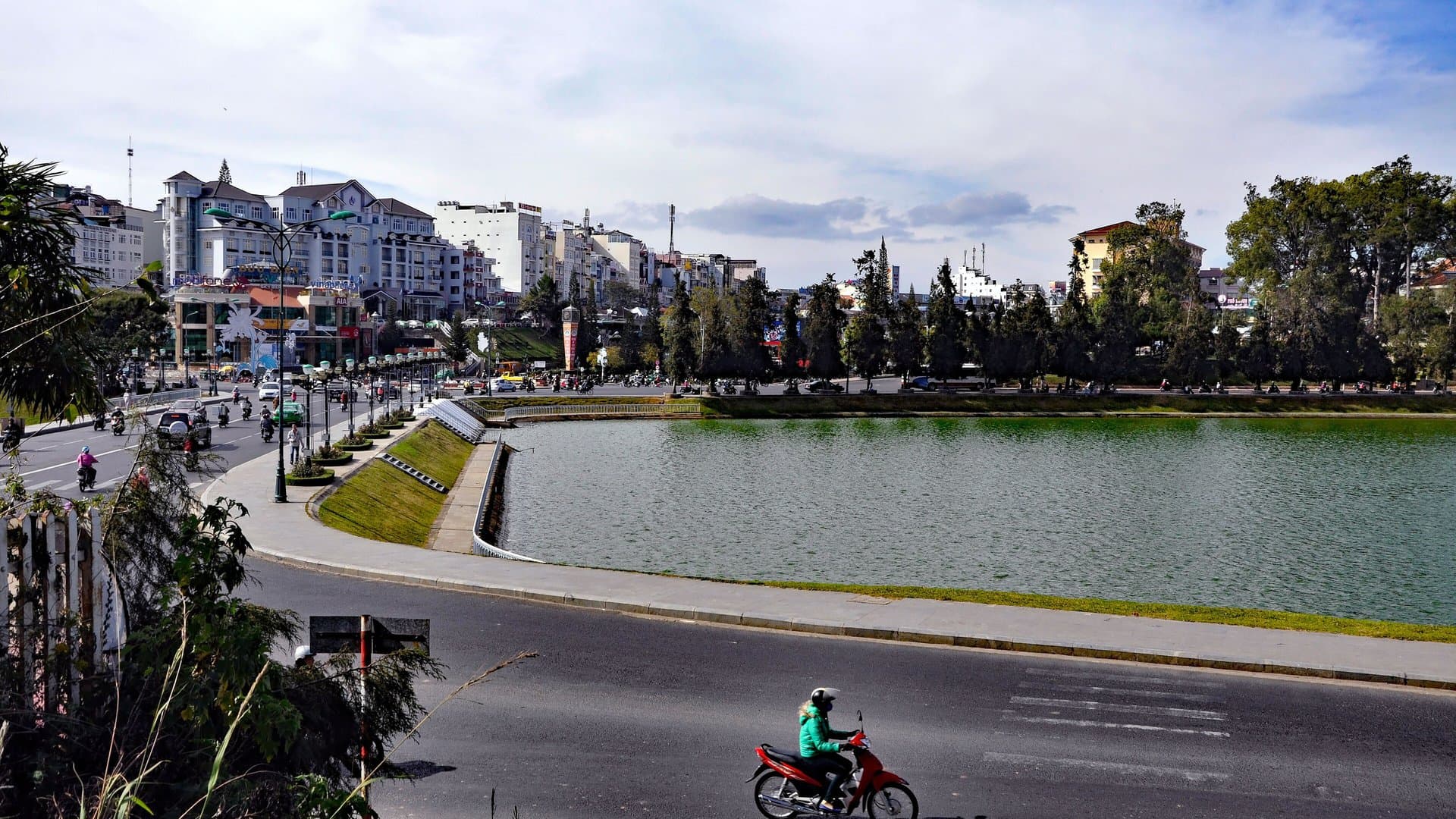
Da Lat has a spring climate all year and two seasons within it. The dry season, from December to March, is the time to go: as little as 10-20 mm of rain a month, clear sunny mornings, days of 21-25°C and cherry blossom in January and February. The rainy season, from May to October, brings 190-280 mm a month, mostly in afternoon downpours. April and November sit in between. Because the town sits at about 1,500 metres, nights are cool all year and can drop to 5-6°C in winter.
That altitude is the whole story of Da Lat. While Ho Chi Minh City sweats at 32-33°C, Da Lat rarely passes the mid-20s, which is why it has been the south's hill retreat since the French colonial era and why its markets are full of strawberries, artichokes and cool-climate vegetables.
Da Lat weather at a glance
The table gives long-run averages from Climates to Travel. Rain days are days with at least 1 mm, and sunshine is in hours per month.
| Month | High | Low | Rain | Rain days | Sunshine (h/month) |
|---|---|---|---|---|---|
| January | 22.3°C | 11.3°C | 14 mm | 2 | 255 |
| February | 24°C | 11.7°C | 10 mm | 2 | 235 |
| March | 25°C | 12.6°C | 50 mm | 5 | 255 |
| April | 25.2°C | 14.4°C | 170 mm | 11 | 200 |
| May | 24.5°C | 16°C | 190 mm | 16 | 190 |
| June | 23.4°C | 16.3°C | 215 mm | 20 | 145 |
| July | 22.8°C | 16°C | 230 mm | 22 | 155 |
| August | 22.5°C | 16.1°C | 250 mm | 23 | 135 |
| September | 22.8°C | 15.8°C | 280 mm | 24 | 135 |
| October | 22.5°C | 15.1°C | 240 mm | 19 | 140 |
| November | 21.7°C | 14.3°C | 85 mm | 8 | 170 |
| December | 21.4°C | 12.8°C | 20 mm | 3 | 215 |
The year totals about 1,750 mm of rain. Notice how little the temperature moves: the difference between the warmest and coolest months is only about 4°C by day. What changes through the year is rain and sunshine.
Dry season, December to March
This is Da Lat at its best. Rain falls on only two or three days a month from December to February, and sunshine reaches 215-255 hours a month. Mornings are crisp and clear, the pine hills are sharp against the sky, and the afternoon fog that often gathers on Langbiang and the tea hills is lighter. Days reach 21-25°C, and nights fall to about 11-13°C on average, sometimes to 5-6°C.
The season has its own calendar:
- December: the flower festival, which in 2026 opens on 19 December at Lam Vien Square and closes on 31 December; our flower festival guide covers the programme.
- January and February: cherry blossom, known locally as mai anh dao, around Xuan Huong Lake and across the hills, often overlapping with Tet.
- November to February: the coffee harvest on the farms around the city; our coffee farm tours guide explains how to visit.
The dry season also brings the safest water levels for canyoning in the Datanla canyon, Da Lat's signature activity. The catch is demand: Da Lat is Ho Chi Minh City's favourite weekend escape, and room rates climb sharply on Fridays and Saturdays and around the holidays. Our where to stay in Da Lat guide covers the neighbourhoods and prices.
The shoulder months, April and November
April is the warmest month by a fraction, at about 25°C, and the first rains arrive, with about 170 mm over 11 days, mostly in the afternoons. It is still a good month, green and quieter after Tet.
November is the opposite transition. Rain drops from about 240 mm in October to 85 mm over eight days, sunshine returns, and the coffee harvest begins. It is one of the best-value months of the year, before the December rush, and the second half is usually drier than the first.
Rainy season, May to October
About four-fifths of Da Lat's rain falls from May to October: about 190 mm in May, rising to a peak of about 280 mm over 24 days in September, then 240 mm in October. The typical pattern is a bright or misty morning and heavy rain in the afternoon, often with fog rolling onto the peaks. Temperatures barely change, at about 22-25°C by day and 15-16°C at night.
It is a fine season for a cafe-and-market kind of trip, and the waterfalls run at their fullest late in the season. Plan viewpoints, walks and day trips for the morning. Canyoning is the activity most affected by the rain, so if you go in the wet months, book only a licensed operator; our day trips from Da Lat guide explains how to tell them apart.
What the weather means for your trip
Choosing the month. December to March is best, with the festival in December and cherry blossom in January and February; April and November are good-value shoulder months; May to October suits a relaxed, morning-focused trip.
Packing. Bring a warm layer and a light jacket in any month, and a rain shell from April to November.
Getting there. Da Lat is about 6-7 hours by bus from Ho Chi Minh City, or under an hour by air; see our Ho Chi Minh City to Da Lat and Nha Trang to Da Lat guides. If you are choosing a mountain town, Da Lat vs Sapa sets their seasons side by side: they are at their best at opposite times of year.
Limitations
The table uses long-run averages from one source; other datasets for Da Lat differ, particularly on monthly rainfall, and single years vary. Conditions also vary within a short distance: the peaks around the city, such as Langbiang, are cooler, wetter and foggier than the town. Bloom times for cherry blossom and other flowers shift by a couple of weeks with each year's weather.
Workaround: use this page to choose the season, check the forecast in the days before you travel, plan outdoor activities for the mornings, and book rooms early for weekends, the December festival and Tet.