
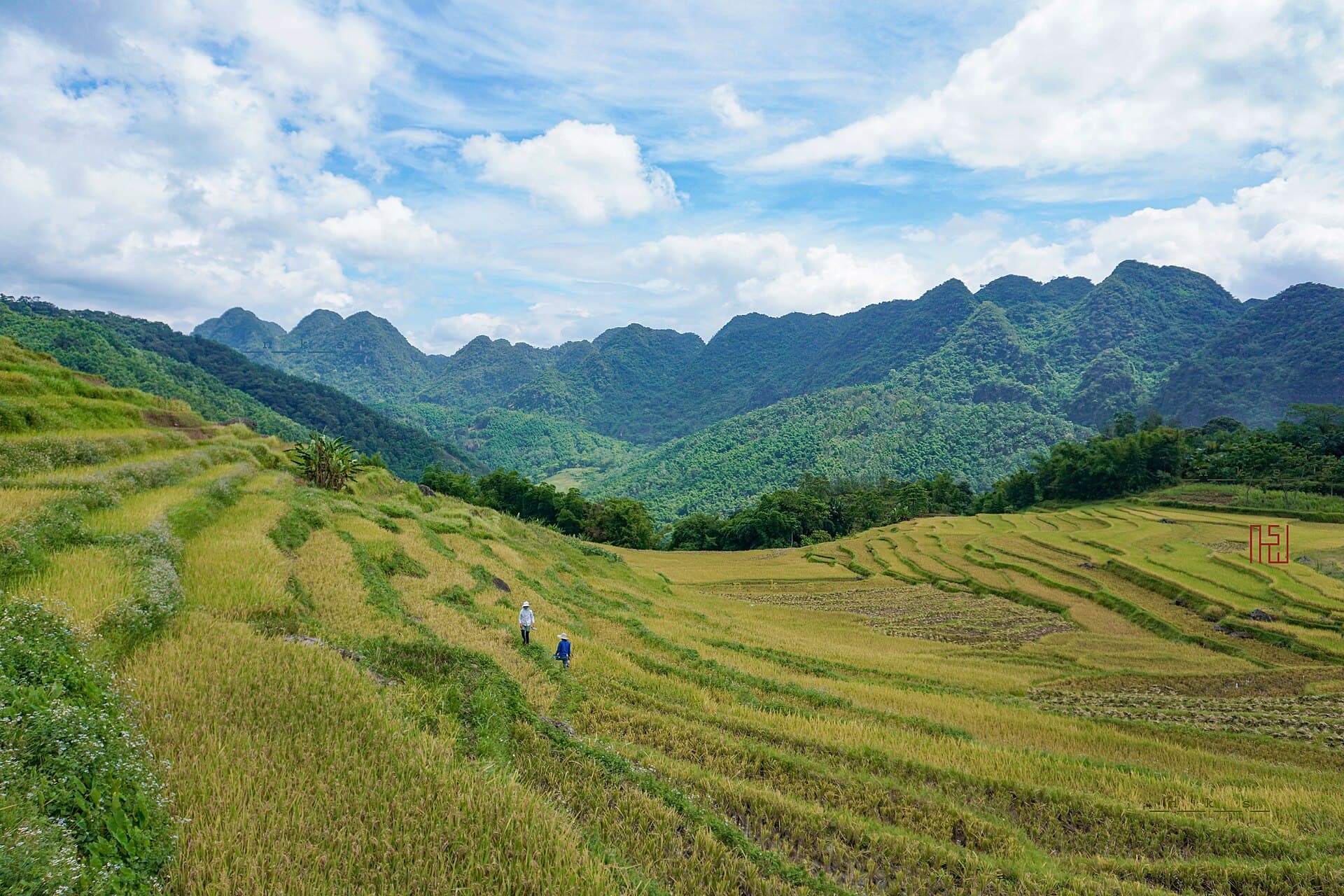
Da Lat and Sapa are Vietnam's two famous mountain towns, both near 1,500m, both marketed on the same promise of cool air and mist. That is where the similarity ends. Sapa is a northern hill station above a valley of terraced rice fields farmed by Hmong and Dao communities. Da Lat is a southern highland city of pine forest, lakes, waterfalls and coffee farms, built by the French as a hot-season escape from Saigon. They sit about 1,500km apart in different monsoon systems, and their best months barely overlap — the point most comparisons skip, and usually the one that decides it.
The 60-second answer
- Pick Sapa if you are travelling in late September or early October (harvest gold), or March to May, you want serious landscape, and you want to trek village to village and sleep in homestays.
- Pick Da Lat if you are travelling November to March, you are already in southern Vietnam, or you care more about food, coffee, waterfalls and adventure sport than about mountain scenery.
- Skip Sapa if your dates fall in December to February and a view matters to you. Fog wins more days than not.
Side by side
| Da Lat | Sapa | |
|---|---|---|
| Region | Southern Central Highlands (Lam Dong) | Far north, Hoang Lien Son range (Lao Cai) |
| Elevation | About 1,500m | About 1,500m town, valleys lower |
| Nearest hub | Ho Chi Minh City, 229km | Hanoi, about 320km by expressway |
| Getting there | Bus 6.5 to 7 hrs, or 55-min flight to Lien Khuong | Bus or limousine van 5.5 to 6 hrs, or overnight train |
| One-way transport cost | About 11 to 20 US dollars by bus | About 9 to 17 US dollars by bus |
| Best months | November to March | Late Sept to early Oct, and March to May |
| Worst months | June to October (wet) | June to August (wet), December to February (fog) |
| Signature landscape | Pine forest, lakes, waterfalls | Terraced rice valleys, high ridges |
| Headline activity | Canyoning at Datanla | Trekking the Muong Hoa valley |
| Ethnic-minority presence | K'Ho, Churu, Ma — low visibility | Hmong, Dao, Tay, Giay — central to the experience |
| Food and coffee | Strong: night market, arabica farms | Modest, improving |
| Crowd level | Busy on Vietnamese weekends, calm midweek | Heavy year-round in town |
| Suits | Couples, food travellers, adventure sports | Trekkers, photographers, culture-first travellers |
Climate: the thing that actually decides it
Sapa gets a true mountain winter and a heavy summer monsoon. Da Lat gets what Vietnamese marketing calls eternal spring — roughly 12C to 24C almost every day of the year — plus a long southwest-monsoon wet season.
| Months | Da Lat | Sapa |
|---|---|---|
| Dec to Feb | Excellent. Driest stretch; February averages around 27mm over about 6 rainy days. Cold at night | Cold and often fogged in. Occasional snow on Fansipan in January. Views unreliable |
| Mar to May | Very good. Warm days, rain building from May | Very good. Clear-ish air, terraces being flooded and planted, wildflowers |
| Jun to Aug | Wet. Afternoon downpours most days | Wettest and muddiest. Terraces are at their greenest, trails are slick, landslides possible |
| Sep to Oct | September is Da Lat's wettest month, roughly 297mm over about 22 rainy days. October improves | The peak. Mid-September to early October is the golden harvest in Muong Hoa |
| Nov | Excellent. Dry season starting, clear light | Good. Cool, clear spells, terraces cut and empty |
Two takeaways. The photograph everyone associates with Sapa — stepped terraces turning gold — has a window of roughly three weeks from mid-September that shifts with the planting. And if you are in Vietnam in January, Da Lat delivers reliably while Sapa is a gamble.
Getting there and what it costs
Sapa from Hanoi. The Noi Bai to Lao Cai expressway made the bus the default. As of mid-2026, sleeper buses run about 5.5 to 6 hours for roughly 230,000 to 350,000 VND, cabin sleepers around 450,000 to 540,000 VND, and limousine vans about 320,000 to 450,000 VND. Sapa Express, departing near Hoan Kiem Lake, is the operator most international travellers use, at around 16 to 18 US dollars one way. The overnight train to Lao Cai takes about 8 hours with cabins from roughly 22 to 65 US dollars plus a transfer up the hill — slower, but it saves a hotel night.
Da Lat from Ho Chi Minh City. Buses cover the 229km in about 6.5 to 7 hours, with cabin and single-room sleepers commonly quoted around 350,000 to 420,000 VND as of mid-2026 and basic seats lower. Flying takes about 55 minutes, but note the disruption: Lien Khuong Airport closed on 4 March 2026 for a runway rebuild — extending it to 3,250m by 45m at a reported cost near 1.045 trillion VND (about 40 million US dollars) — and was scheduled to reopen on 19 August 2026, with Vietjet reinstating five domestic routes. Treat the schedule as still rebuilding. From Nha Trang the bus takes about 3 to 3.5 hours for roughly 230,000 VND.
Scenery and what you do with your days
Sapa's landscape is the stronger one, and it is not close. From a ridge above Lao Chai or Ta Van you look down on hundreds of terraces stacked to the valley floor, with the Hoang Lien Son range behind. The standard trek runs Sapa town to Y Linh Ho, Lao Chai and Ta Van over a day, then deeper to Giang Ta Chai or Ta Phin on day two, with homestays around 250,000 to 500,000 VND per person per night as of mid-2026. A two-day guided trek including a Ta Van homestay, meals and transfers typically runs 69 to 75 US dollars per person. The Fansipan cable car to Vietnam's 3,143m summit costs 850,000 VND for an adult on weekdays and 900,000 VND on Saturdays and holidays, with a combo including the Muong Hoa funicular and buffet around 1,250,000 VND. A good ride, and a busy one — over 45,000 people have passed through in a single four-day Tet period.
Da Lat's scenery is gentler and more scattered: pine ridges, Tuyen Lam Lake, and waterfalls including Datanla in town, Elephant Falls about 25km west and the seven-tiered Pongour roughly 50km south. You cover them by rented scooter or Easy Rider rather than on foot. The headline activity is canyoning in the Datanla canyon, rappelling waterfalls and sliding rock chutes, at roughly 1,400,000 to 1,800,000 VND (about 55 to 70 US dollars) for a full day as of mid-2026. Book only a licensed operator — Highland Sport Travel, Viet Challenge and Phat Tire Ventures are the usually cited ones — because unlicensed operators have caused fatalities, including in 2016 and 2022. Canyoning offered well under 1,000,000 VND is a warning, not a bargain.
Culture, and how to engage with it
This is Sapa's strongest suit and Da Lat's weakest. Around Sapa, Black Hmong, Red Dao, Tay, Giay and Xa Pho communities farm the valley and are directly involved in tourism, for better and worse. Done well, that means booking with operators who employ local guides on proper terms: Sapa Sisters, Hmong-owned and founded in 2009, staffs every trek with Hmong women guides, and ETHOS has run community-led tourism there since 1999. Done badly, it means being followed downhill by women hoping for a sale, and buying embroidery from children who should be in school. The rules: hire locally, sleep in a village, ask before you photograph, buy from adults, and do not haggle hard over a few thousand dong.
Da Lat sits on K'Ho, Churu and Ma land, and Lat village at the foot of Langbiang is the usual point of contact, but minority culture is not the axis of the visit the way it is in Sapa. The most genuine encounter is agricultural: K'Ho Coffee, a cooperative on Langbiang founded in 2012 by K'Ho farmer Rolan Co Lieng and her husband Joshua, works with around fifty K'Ho families growing shade-grown arabica at about 1,650m, with farm visits by appointment at roughly 400,000 VND including lunch as of mid-2026. Our Da Lat coffee farm tours guide goes deeper.
Food, coffee and evenings
Da Lat wins comfortably. It is Vietnam's temperate-produce basket — artichoke, strawberries, avocado, salad crops — and the night market around Lam Vien Square delivers banh trang nuong, hot soy milk and grilled skewers in genuinely cool air. It also has a real specialty-coffee scene, unusual outside Hanoi and Saigon, built on arabica the French first planted here around 1912; see the Da Lat food guide. Sapa's food is functional: thang co, grilled meats, salmon hotpot from local trout farms, and a lot of tourist-facing menus.
Crowds, development and where to sleep
Sapa town has been comprehensively built over. Around 4.3 million visitors came in 2025, 2026 is projected above 5 million, and construction is constant around the square. The fix is to not stay there — book a homestay or lodge out in the valley and treat the town as a transit point, the approach in our Sapa without the crowds guide and where to stay in Sapa.
Da Lat is busy on Vietnamese weekends and noticeably calm midweek. Its development pressure shows up differently: the valleys around the city are carpeted in plastic greenhouses growing flowers and vegetables, a working landscape rather than a scenic one. Where to stay in Da Lat covers the neighbourhoods.
Accommodation as of mid-2026 lands in similar bands. Dorms in both run roughly 120,000 to 160,000 VND. In Sapa a double with private bathroom starts near 300,000 VND, and valley homestays sit at 250,000 to 500,000 VND per person including dinner. Da Lat hotel averages swing seasonally from around 29 US dollars in wet September to around 76 US dollars in peak February. For wider context, see the Vietnam travel cost index.
Limitations
- All prices are mid-2026 estimates at roughly 26,300 VND to the US dollar and move with season, fuel and demand. Transport and room rates commonly shift 10 to 20 percent, and Tet inflates everything for a fortnight.
- The Lien Khuong Airport reopening is a moving target. The 19 August 2026 date and the reinstated Vietjet routes were the published plan at the time of writing; we could not verify the schedule as fully restored.
- Harvest timing is not fixed. The Muong Hoa golden window shifts by a week or more year to year with planting and weather. Ask a local operator close to your dates.
- Climate figures are long-run averages, not forecasts. Sapa fog in particular is unpredictable rather than guaranteed.
- We do not map the wider provinces. Vietnam's July 2025 administrative merger reshaped boundaries around both towns and we have not traced every knock-on change to naming or permits.
- We do not sell tours or take commissions. Operators named here are examples, not partners, and we have not audited their current safety certification.
The bigger picture
One honest sentence: Sapa is the better destination and the worse experience, and Da Lat is the reverse. Sapa's valleys are among the most beautiful cultivated landscapes in Southeast Asia, wrapped in a town that has been building over itself for two decades. Da Lat has nothing that will stop you in your tracks and almost everything that makes a few days pleasant. Choose by your calendar, sleep outside the crowded centre either way, and you will do well. For a related northern comparison, see Sapa vs Ha Giang.