
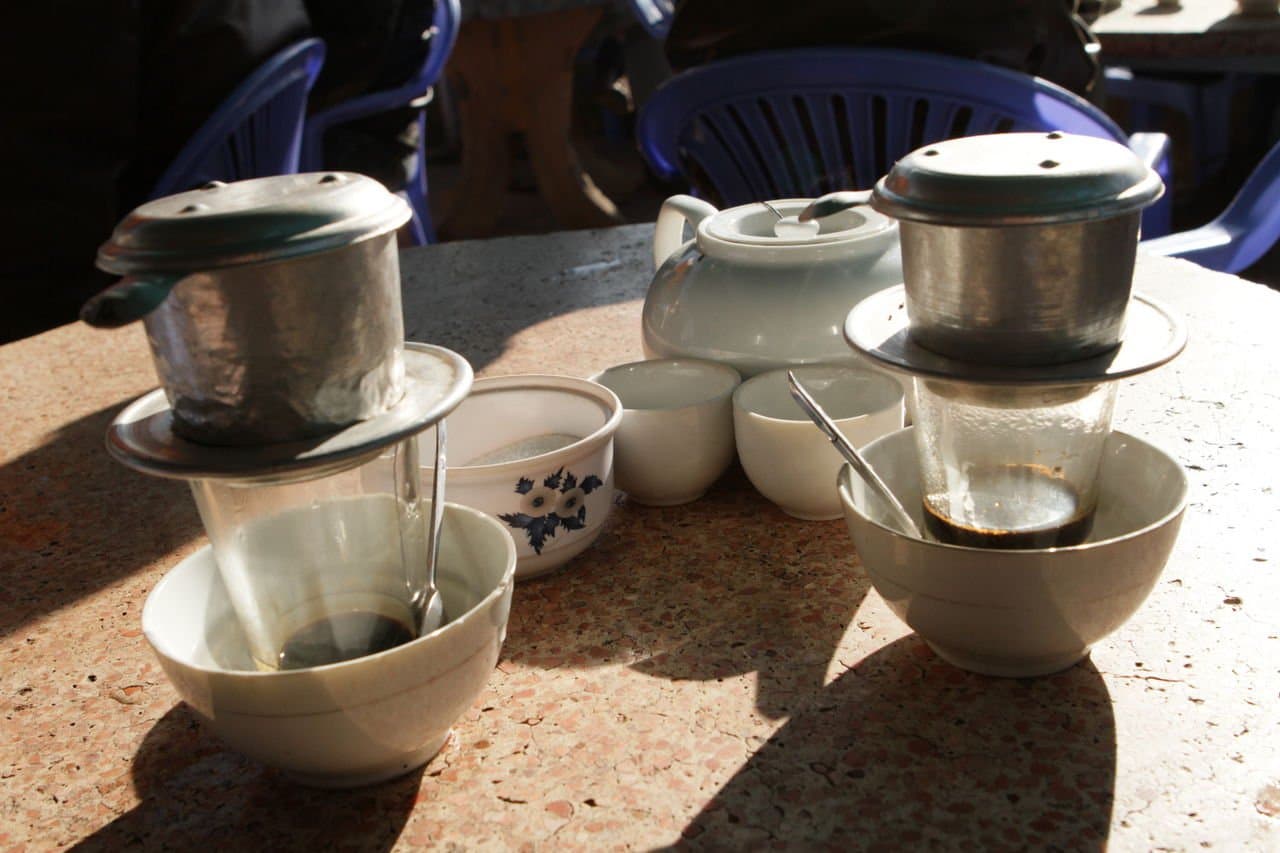
If Buôn Ma Thuột is Vietnam's coffee capital, Da Lat is its specialty-coffee laboratory. The Lam Dong province around Da Lat — at 1,400 to 1,600 metres above sea level on the Cau Dat plateau and Langbiang Mountain — is where Vietnam's arabica makes its specialty-grade case. About 23,000 hectares of arabica are grown across the province. The third-wave Vietnamese coffee scene — Cup of Excellence-grade lots, washed-process single-origin releases, named-roaster relationships — is concentrated here in a way it isn't anywhere else in the country.
This is a practical guide to visiting Da Lat for the specialty-coffee experience: the three visit-friendly operations, the logistics of getting between them, the costs, and how to slot the trip into a wider Vietnam itinerary.
For where Vietnamese coffee comes from (the full atlas with five growing provinces, named cooperatives, and 30+ specialty cafe origin claims), see our Vietnamese Coffee Origin Atlas 2026.
Quick summary — the three operations to visit
| Operation | Where | What it is | Time needed |
|---|---|---|---|
| K'Ho Coffee | Langbiang Mountain, Lac Duong (~25 km from Da Lat) | K'Ho ethnic-minority cooperative; 100% arabica; Cup of Excellence pedigree | Half day |
| La Viet Coffee | Da Lat city centre | Full mill + roastery + cafe; Bourbon, Catimor, Typica trials | 1–2 hours |
| The Married Beans | Da Lat city | Boutique roaster + cafe; single-origin Lam Dong arabica | 1 hour |
A comfortable one-day specialty-coffee tour: morning at K'Ho Coffee (half day), afternoon at La Viet, late-afternoon stop at The Married Beans. ~$50–100 per person depending on private car vs Grab vs group, plus tour fees ($30–60 across the three operations).
When to go
| Window | Activity | Pros | Cons |
|---|---|---|---|
| November – February | Active harvest | Picking visible; drying patios busy; full operational rhythm | Some weekends booked solid; weather variable (cool, occasional rain) |
| March – May | Post-harvest, new-crop tasting | Excellent weather; roasteries cupping the new crop | Picking finished; less "active farm" energy |
| June – August | Off-season | Quieter; lower hotel prices | Wet season; afternoon thunderstorms; muddy paths |
| September – October | Pre-harvest | Coffee plants in fruit; transitional | Wet season tail; weather variable |
Best window: late November through early February for active harvest. Second-best: March through May for fresh-crop cupping in mild weather. Avoid July–August unless you've committed to wet-season travel anyway.
For the broader picture of when Vietnamese coffee is in season, see our Coffee Origin Atlas harvest calendar.
How to get to Da Lat
Da Lat Lien Khuong Airport (DLI) is 30 km south of the city centre, served by Vietnam Airlines and VietJet:
| Route | Flight time | Daily frequency | Typical fare booked early |
|---|---|---|---|
| HCMC (SGN) → DLI | ~50 min | 6–10 flights | $35–70 |
| Hanoi (HAN) → DLI | ~1h45 | 2–4 flights | $60–110 |
| Da Nang (DAD) → DLI | ~1 hour | 1–2 flights | $60–100 |
Airport-to-city: Grab car ~250,000–350,000 VND ($10–14); the airport is 30 km out, so transfer takes ~45 min.
By road (alternatives):
- HCMC → Da Lat: ~310 km, 7 hours by sleeper bus, ~$15–25. Overnight sleeper buses leave HCMC's De Tham area around 9–11 pm and arrive Da Lat 5–7 am.
- Buôn Ma Thuột → Da Lat: ~190 km, 5 hours by car. Many travellers split with a Lak Lake overnight.
- Mui Ne → Da Lat: ~150 km, 4 hours. The QL28 / DT725 mountain route is scenic.
Most coffee-focused travellers fly in. The drive to Da Lat from anywhere is a long highway day; the flight from HCMC is 50 minutes.
The three operations — visit guide
K'Ho Coffee — the K'Ho cooperative on Langbiang
Where: Bonneur'C village, Lac Duong district, ~25 km from Da Lat city. Drive ~45 minutes via TL722 (the road to Langbiang Mountain).
What it is: K'Ho Coffee is a small specialty arabica cooperative working with K'Ho ethnic-minority families on the slopes of Langbiang Mountain. Founders Rolan Co Lieng (a 4th-generation K'Ho coffee grower) and Josh Guikema run a cooperative model where K'Ho families grow, mill, roast, and retail their own coffee — vertically integrated in a way most Vietnamese coffee operations aren't. The arabica is 100%, predominantly Catimor with smaller plantings of Bourbon and Typica. Cup-of-Excellence-credible.
What the visit covers:
- Tour of the farm and processing area
- Walk through the K'Ho village if scheduled (depends on cooperative consent that day)
- Cupping flight of their current-season arabica
- Cafe with light lunch options
Cost: $20–35 per person for the tour-and-tasting package depending on the season and group size.
Booking: direct via khocoffee.com — email response time 1–2 days. They prefer advance booking (3–7 days), especially during harvest (Nov–Feb).
What to expect:
- The mountain road is steep but paved; standard Grab cars handle it.
- Conversation with Rolan Co Lieng or Josh Guikema is part of the visit if their schedule allows; the cooperative is family-scale, not a tourism operation.
- The cooperative is genuinely low-volume — don't expect a polished tour-bus experience. Expect a working farm and an honest conversation about Vietnamese specialty coffee.
For the K'Ho community context: the operation is a credible Community-Based Tourism example. See our Hoi An CBT research for the broader CBT framework — K'Ho fits the model on its strongest dimensions (Culture-Society and direct economic distribution to the cooperative).
La Viet Coffee — full mill + roastery + cafe
Where: Da Lat city centre, 200 Nguyên Cong Tru Street.
What it is: Founded by Quang Tran around 2014, La Viet operates a full coffee value chain — own farms in Cau Dat, processing mill, roastery, and a flagship cafe. Their Bourbon, Catimor, and Typica releases have been featured by Perfect Daily Grind, Barista Magazine, and Vietnamese specialty-coffee press. La Viet is the most production-oriented of the three operations on this list — most visible, most polished as a visit experience.
What the visit covers:
- Mill tour: green-bean storage, sorting, packing
- Roastery tour: roast profiles, cupping protocols
- Cafe: pour-overs, espresso, the full single-origin La Viet menu
Cost:
- Mill + roastery tour with cupping: $15–25 per person (book ahead)
- Cafe: free admission, drinks $2–5
Booking: direct via laviet.coffee for the tour. The cafe accepts walk-ins.
What to expect:
- The most "coffee-tourism-ready" of the three operations. Tours are scheduled, English is fluent, the experience is professionally organised.
- The mill and roastery are working operations, not theatre — you'll see actual coffee processing.
- The cafe is a credible third-wave operation in its own right; even without the tour, an hour drinking single-origins at La Viet is worth doing.
The Married Beans — boutique roaster + cafe
Where: Da Lat city centre, multiple locations including the original cafe at 5 Pham Hong Thai Street.
What it is: A boutique Da Lat-based roaster sourcing single-origin Lam Dong arabica, with a cafe operation alongside. Smaller scale than La Viet, more personal in feel. Strong on washed-process arabica from the Cau Dat plateau.
What the visit covers:
- Cafe (always)
- Roastery tour by appointment (~1 hour, when available)
Cost:
- Cafe: free admission, drinks $2–5
- Roastery tour: $10–20 when offered
Booking: walk-in for the cafe; email or DM for the roastery tour.
What to expect:
- A neighborhood-roaster vibe — relaxed, conversational, less polished than La Viet.
- The cafe is one of the better single-origin pour-over experiences in Da Lat.
- Don't expect the production-scale visit La Viet offers; expect the conversation and the coffee.
A one-day specialty-coffee circuit
The most-recommended Da Lat specialty-coffee day:
| Time | Stop | Activity |
|---|---|---|
| 8:30 am | Hotel pickup | Hire Grab car or pre-booked private driver (~$50–80 full day) |
| 9:30 am – 12:30 pm | K'Ho Coffee | Farm tour + cupping + lunch at the cafe |
| 1:00 pm | Drive back to Da Lat | ~45 minutes |
| 2:00 pm – 4:00 pm | La Viet Coffee | Mill + roastery tour + cupping + extended cafe time |
| 4:30 pm – 5:30 pm | The Married Beans | Cafe visit; pour-over tasting |
| 6:00 pm | Dinner in Da Lat city |
This packs the day reasonably without rushing. Total cost: ~$120–180 per person including private car, all three tour fees, lunch at K'Ho, and drinks at La Viet and The Married Beans. Group of 2–4 splits the car cost; solo travellers pay more in transport.
For travellers with two days, the second day adds:
- A drive up to the Cau Dat plateau (~25 km southeast of Da Lat) — open arabica fields, panoramic photos. No specific cooperative visit usually, but the landscape is the experience.
- Cộng Cà Phê Da Lat (the chain — touristy but the Da Lat outlets carry local arabica).
- A second cafe-hopping afternoon: independent third-wave cafes in central Da Lat (the scene is dense).
Combining Da Lat with Buôn Ma Thuột
Many specialty-coffee travellers do both — Da Lat for arabica and third-wave, Buôn Ma Thuột for robusta and the commercial centre. The two cities are 190 km apart; the drive takes ~5 hours along QL27.
Recommended 5–6 day Central Highlands coffee circuit:
- Days 1–2: Da Lat (the circuit above + a second cafe-hopping day)
- Day 3: Drive Da Lat → Lak Lake (3 hours), overnight at a M'nông village stay
- Day 4: Drive Lak Lake → Buôn Ma Thuột (~1 hour); afternoon at Trung Nguyên Coffee World Museum
- Day 5: Aeroco Coffee plantation visit at Eakao Lake
- Day 6: Buôn Ma Thuột departure flight to HCMC or Hanoi
See our Buôn Ma Thuột Coffee Travel Guide for the second leg.
What to combine inside Da Lat
Coffee isn't the only reason to visit Da Lat. The city is a French-era hill station at 1,500m elevation — pine forests, French colonial villas around Xuan Huong Lake, an unusually cool climate by Vietnamese standards (year-round 16–25°C). Pairings worth considering:
- Datanla Waterfall and canyoning — adventure programming for one full day. See our day-trip listing for Da Lat canyoning.
- Truc Lam Zen Monastery — a half-day cable-car-and-pagoda combination.
- Cau Dat tea + coffee plateau — half-day drive with photography.
- The "Crazy House" (Hằng Nga Guesthouse) — Da Lat's signature Gaudí-esque building. Half hour.
- Da Lat night market — strawberries, artichoke tea, the city's characteristic mountain-produce specialties.
A coffee-focused trip can comfortably sit in 2–3 days; extend to 4–5 if you want the broader Da Lat experience.
Honest caveats
- K'Ho Coffee is a working cooperative, not a polished tourist destination. If you're expecting a Costa Rican coffee-tour experience with infrastructure for groups of 30, this isn't that. Expect 1–4 visitors at a time, a personal conversation, and a real working farm.
- The Cau Dat plateau itself is a landscape rather than a single visitable cooperative. Drive up for the photos and the elevation; don't expect a single farm-tour stop unless you've arranged with a specific operator.
- Most "Da Lat coffee tours" sold by tour operators are aggregator packages. Some are credible; many are surface-level. Booking direct with K'Ho, La Viet, and The Married Beans avoids the aggregator markup and ensures the operations actually receive the visit revenue.
- Single-origin Da Lat arabica is rotational. A 2025 December lot won't be in the grinder by April 2026. If you're tasting for a specific coffee you read about online, check current availability with the operation before booking.
- Da Lat weather is variable. Pack layers. Mid-January can drop to 10°C overnight; afternoons can rain; the elevation makes weather more consequential than the latitude suggests.
Limitations
- Pricing is May-June 2026 USD at ~26,361 VND/USD. Niche-destination tours, homestay rates, and small-operator excursions fluctuate 10-20% seasonally and may not be available outside specific months.
- Operator inventory turns over — small family-run homestays, coffee-farm visits, and craft-village experiences can close or change management with little notice. Verify on TripAdvisor or via direct WhatsApp/Zalo contact before travelling.
- Some experiences require Vietnamese-language ability or a local guide to access fully — particularly market visits, religious sites with restricted hours, and remote ethnic-minority villages.
- Transport to off-the-beaten-path destinations is often by local bus or motorbike taxi (xe ôm); private-car options exist but at 3-5x cost. The Vietnam Travel Time Atlas's car figures may not apply to back-road destinations.
- Cultural-immersion claims are qualitative — our reporting draws on Joy's lived experience as a Vietnamese editor; individual reactions to homestays, language barriers, and food differences will vary.
Related on this site
- Vietnamese Coffee Origin Atlas 2026 — the flagship origin reference; named cooperatives + cafe-trace table
- Vietnamese Coffee Drinks Decoded — every cà phê on the menu
- Buôn Ma Thuột Coffee Travel Guide — the robusta-side companion guide
- Da Lat destination guide — the city overview
- Central Highlands sustainable tourism research — regional sustainability framework
- Vietnam Travel Cost Index 2026 — for what costs in 2026