
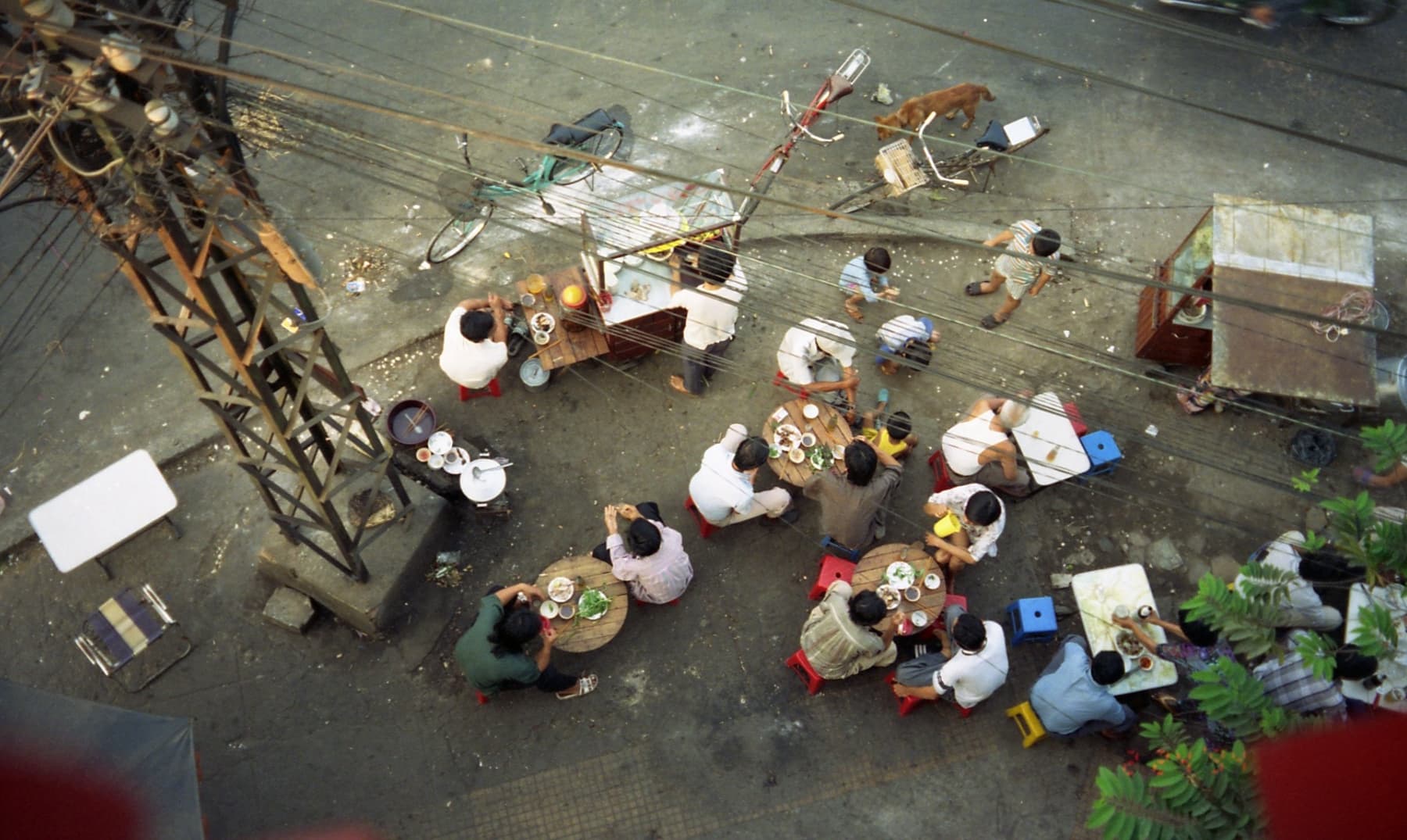
Three dishes and one ingredient define eating in Da Nang: mi quang, the low-broth turmeric noodle bowl that belongs to the surrounding Quang Nam countryside; banh xeo eaten with nem lui, the crispy pancake and lemongrass pork you wrap yourself; bun cha ca, the tangy fish-cake noodle soup; and the seafood hauled in daily off the beach. Eat mi quang at a neighbourhood noodle house or the stalls inside Con Market, banh xeo and nem lui in the alley clusters off Hoang Dieu street, bun cha ca at a morning counter, and seafood along the My Khe and Man Thai strip where you pay by weight. This is the Da Nang-only food map — what to order, why it tastes the way it does, and where to find it. For the neighbouring cities, our Hoi An food guide and Hue food guide cover their very different kitchens, and the national Vietnamese food guide maps the whole country.
What to eat in Da Nang — the signature dishes
If you have a day or two, build them around four things. Three are noodle-and-wrap dishes with a strong central-coast identity; the fourth is the sea itself, ordered live by weight.
| Dish | What it is | Why it is a Da Nang thing |
|---|---|---|
| Mi quang | Thick turmeric-yellow rice noodles under a splash of concentrated broth, with pork or shrimp, peanuts, herbs and a sesame rice cracker | The defining bowl of surrounding Quang Nam province; low-broth and mixed, not a soup |
| Banh xeo + nem lui | A small crispy stuffed pancake and grilled lemongrass-pork skewers, wrapped by hand in rice paper | The local wrap-your-own set, served together in a way that is a Da Nang habit |
| Bun cha ca | Fish-cake noodle soup in a tangy tomato-and-pineapple fish-bone broth | A Da Nang speciality built on the daily catch |
| Seafood | Crab, clams, prawns, snails and fish, chosen live and cooked to order | Ordered by weight on the beachfront strip; fresher and cheaper than inland cities |
Mi quang — the Quang Nam noodle that defines the city
Mi quang is the dish to start with, and the one that most confuses first-timers who expect a soup. It is not one. The noodles are thick, chewy and stained turmeric-yellow, and they sit under only a small ladle of intense, concentrated broth — just enough to coat, never enough to swim in. On top go your protein of choice (pork and shrimp is the classic pairing, but chicken, fish or a mix are common), a scatter of roasted peanuts, a pile of fresh herbs and banana blossom, a wedge of lime, and a large shard of toasted sesame rice cracker, called banh trang, that you snap and crumble over the bowl. The move is to mix everything hard with your chopsticks before the first bite, so the broth, peanuts and herbs coat every strand.
Both Da Nang and neighbouring Quang Nam claim mi quang, and the honest answer is that it belongs to the whole region rather than to any one address in the city. The Michelin Guide's mi quang feature is a good primer on the dish and its variants. Where to eat it: dedicated mi quang noodle houses scattered through the city do the most reliable version, and the food stalls inside Con Market are the cheap, local option.
Banh xeo and nem lui — the wrap-your-own set
In Da Nang, banh xeo rarely arrives alone. The local habit is to serve it alongside nem lui, and to eat the two together as a build-it-yourself meal. Da Nang's banh xeo is smaller and crisper than the large southern version: a turmeric-yellow rice-batter pancake fried until the edges shatter, folded around pork, shrimp and bean sprouts. Nem lui is seasoned minced pork pressed onto lemongrass stalks or skewers and grilled over charcoal until smoky. You get a stack of soft rice paper, a plate of lettuce and herbs, sliced cucumber, green banana and pickled papaya, and a thick, savoury dipping sauce that leans on peanuts and fermented flavour.
The method: lay down a sheet of rice paper, add a torn piece of banh xeo or a skewer of nem lui, pile on herbs and pickle, roll it into a tight parcel, and dip. It is deliberately slow and hands-on. The best-known cluster for it is the string of specialist spots in the alleys off Hoang Dieu street, where the smell of grilling pork does the advertising.
Bun cha ca — the fish-cake noodle soup
Where mi quang is rich and dry, bun cha ca is light and tangy, which makes it the city's great breakfast counterpoint. It is a Da Nang speciality: soft rice noodles in a broth simmered from fish bones and lifted with tomato and pineapple, so it reads sweet-sour and clean rather than heavy. The stars are the fish cakes (cha ca) — some steamed and springy, some fried golden — made from the mackerel, lizardfish and barracuda that the central coast lands in quantity. You finish it yourself at the table with pickled shallots, garlic-chilli paste and a spoon of fermented shrimp sauce. Da Nang's official city tourism portal treats it as a signature local bowl; morning specialist counters do it best.
Seafood — the My Khe and Man Thai strip, and ordering by weight
Da Nang is a beach city with a working fishing fleet, and seafood is its fourth food pillar. The main eating cluster runs along Vo Nguyen Giap and Hoang Sa streets behind My Khe beach and around the Man Thai fishing quarter on the Son Tra side, where casual open-fronted restaurants keep the catch alive in tanks and baskets out front. A few Da Nang seafood houses have earned Michelin Guide recognition, but the format is the same at the humble places and the famous ones.
Ordering works by weight. You point at what you want — crab, clams, snails, prawns, squid, or a whole fish — it is weighed in front of you, and you agree a price per kilo and a cooking style. The standard preparations are steamed with ginger and scallion, grilled over charcoal, or stir-fried with lemongrass and chilli. Confirm the price per kilo before anything is cooked. Prices swing hard by species: expect roughly 150,000 VND per kilo at the cheap end for clams and snails, rising to over 1,000,000 VND per kilo for premium shellfish, so a table of mixed dishes often lands somewhere around 200,000 to 400,000 VND per person. Those figures drift, so treat them as ballpark rather than a quote.
Banh mi, che and the smaller bites
Beyond the big four, two everyday habits are worth building in. Da Nang's banh mi is good and a little bolder than average — the local favourite is banh mi ga, stuffed with chicken floss alongside the usual pate, pickled papaya, cucumber, chilli and herbs in a crackly baguette. You find strong versions at long-running street stalls near the markets and around the city centre rather than at any single must-visit address.
Che is the afternoon-and-evening ritual: Vietnamese sweet soups and puddings of beans, jelly, lotus seed, fruit and taro, usually served over crushed ice with a pour of coconut cream. Da Nang has a soft spot for che sau rieng, the durian version, and for warm banana-and-coconut cakes. Che stalls cluster in and around both markets and along the riverfront, and a bowl is a cheap, low-risk way to taste through the range. For per-dish benchmarks across the country, our street food prices guide has the current numbers.
Markets — Han Market and Con Market
Two markets anchor the food scene, and they play different roles. Han Market (Cho Han) sits on the Bach Dang riverfront and is the tidier, more visitor-friendly of the two. Its ground floor is a good place to browse dried seafood, Da Nang's prized fish sauce (nuoc mam) and packaged snacks, with a handful of stalls doing banh beo and nem lui; the upper floor turns to fabric and clothing. It is the easier introduction and the better spot for edible souvenirs.
Con Market (Cho Con) is the bigger, louder, more local one, and the better graze. Its street-food zone — a dense warren of stalls beyond the produce halls — turns out mi quang, banh xeo, bun mam nem (noodles with fermented fish sauce), banh trang cuon thit heo (pork rolled in rice paper), banh beo and che at the lowest prices in the city. Order from a stall with steady local turnover rather than the one with the biggest English sign, and go hungry.
Where to eat, area by area
Da Nang's food spreads across a larger, flatter city than compact Hoi An, so it helps to think in zones rather than a single Old Town:
- City centre and the markets: Con Market for cheap local grazing, Han Market for dried goods, and the surrounding blocks for mi quang, banh mi and che.
- The Hoang Dieu alleys: the go-to cluster for banh xeo and nem lui.
- My Khe beachfront (Vo Nguyen Giap, Hoang Sa): the seafood strip, plus cafes and modern restaurants facing the sand.
- Man Thai and the Son Tra side: fishing-quarter seafood spots, more local-feeling than the main beach drag.
For where these fit into a wider trip, the Da Nang destination guide covers beaches, the Marble Mountains and day trips, and the regional street food atlas places Da Nang within the central-coast cuisine cluster.
How to plan a Da Nang food day
A simple template: bun cha ca or mi quang for breakfast near the centre or Con Market; a browse of Han Market mid-morning; a proper mi quang and a che stall for lunch; a slow banh xeo and nem lui session in the Hoang Dieu alleys late afternoon; and a seafood dinner on the My Khe or Man Thai strip, ordering by weight and confirming the price per kilo first. If you are pairing Da Nang with its neighbours — most people do — the Da Nang or Hoi An base guide helps you choose a base, and the Hoi An and Hue food guides cover the cooking a short hop away.
Limitations
This guide keeps to dishes, streets and clusters rather than a directory of named restaurants. Specific stalls and seafood houses in Da Nang open, move and change hands quickly, and the famous names raise prices and lengthen queues over time. Workaround: treat the streets and markets here as the reliable layer, and ask your hotel or homestay host where they ate this week — neighbourhood word-of-mouth is the most current signal you will get, and the street food atlas carries specific addresses that we refresh.
Prices, especially for seafood, are given as broad ranges because they vary by season, species and venue and drift year to year. Workaround: always confirm the price per kilo before seafood is cooked, and cross-check everyday-dish costs against the street food prices guide rather than relying on a single number quoted here.