
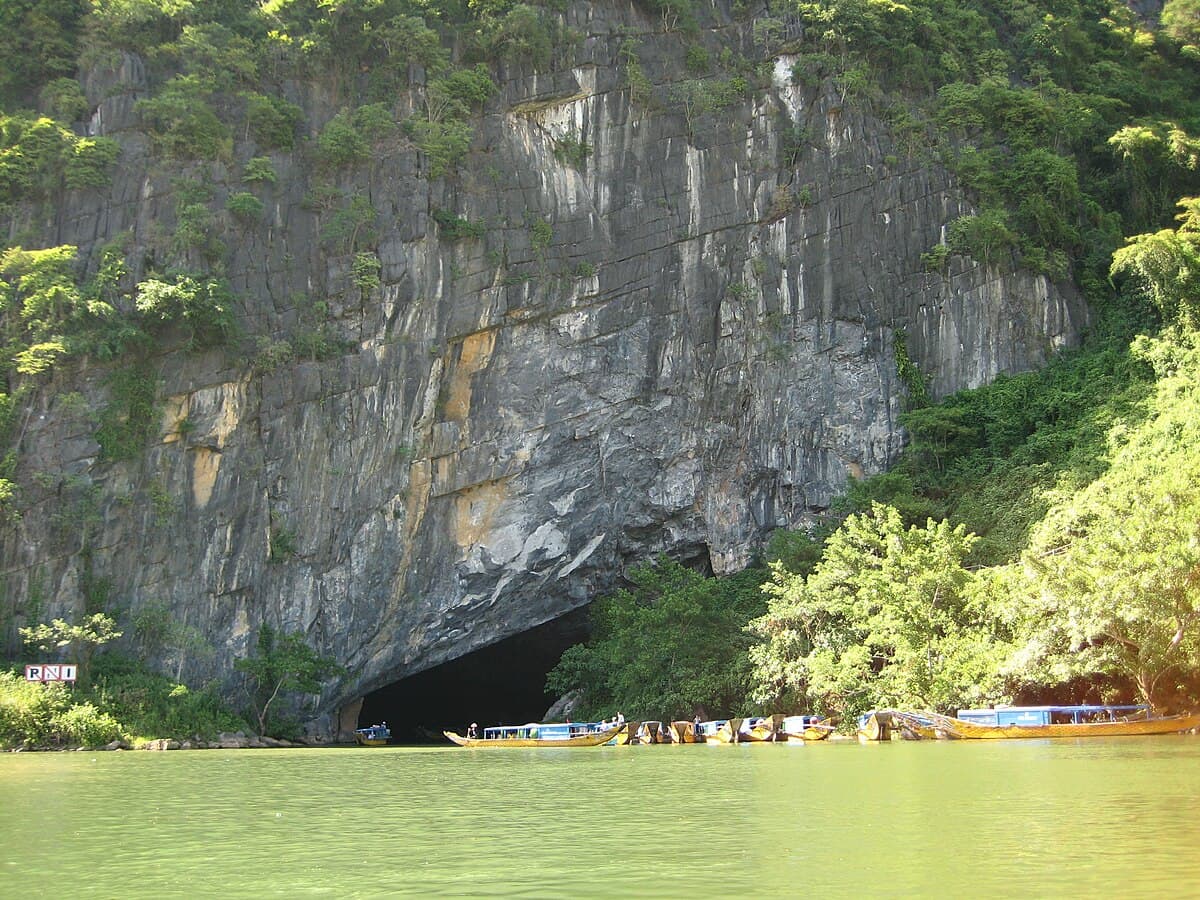
The short answer: the simplest and usually cheapest way from Da Nang to Phong Nha in 2026 is a direct sleeper or minibus — about 6-7 hours for roughly 200,000-400,000 VND ($8-17), dropping you right in Phong Nha town with no onward transfer. The fastest option is a private car door to door, around 6 hours over the roughly 310 km, and the most comfortable is the reunification-line train to Dong Hoi (about 5.5-8 hours) followed by a short 45 km transfer. This guide breaks down all three, with hedged distances, durations, and costs, then makes an honest pick. What to actually do once you arrive lives in our Phong Nha caves guide.
One framing note before the options. Phong Nha is not a city with its own airport or main-line station — it is the gateway town of Son Trach, on the edge of Phong Nha-Ke Bang National Park in Quang Binh province. So every route below is really about covering the roughly 300 km of central coast between Da Nang and the park, and each ends either in Phong Nha town itself or at Dong Hoi, the provincial capital 45 km away. Da Nang and Hoi An sit only about 30 km apart, so the two are near-interchangeable as starting points; where it matters, this guide flags the difference.
The three options at a glance
| Option | Door-to-door time | Typical cost | Best for |
|---|---|---|---|
| Direct sleeper / minibus | ~6-7 hrs | ~200,000-400,000 VND ($8-17) pp | Simplicity, budget, one vehicle |
| Train to Dong Hoi + transfer | ~6.5-9 hrs | ~$9-25 pp all in | Comfort, scenery, avoiding a night bus |
| Private car (Hai Van route) | ~6 hrs direct, up to 9 with stops | ~$70-160 per car | Families, groups, sightseeing en route |
All figures are hedged 2026 planning baselines drawn from operator listings, railway timetables, and traveller reports. Season, traffic, the specific service, and how hard you negotiate all move them — get a current quote or timetable before you commit.
Direct sleeper or minibus from Da Nang or Hoi An
For most independent travellers this is the default, and for good reason: it is one vehicle, it is cheap, and it ends where you want to be. Several operators run direct sleeper coaches and minibuses daily from Da Nang and Hoi An up to Phong Nha, most of them dropping in the centre of Son Trach near the guesthouse strip.
Reckon on about 6-7 hours and roughly 200,000-400,000 VND ($8-17) per person, depending on operator and seat class. Booking platforms sometimes list premium cabin sleepers a little higher. The overnight runs tend to leave in the early afternoon or evening, so you sleep through much of the drive and wake up near the park — a genuine saving of a hotel night, though not the most restful sleep. From Hoi An the corridor and timings are much the same; some services route through Da Nang first, so it makes little difference which of the two you start from.
Two practical notes. Book a day or two ahead in peak season (roughly February to August, when the caves are busiest), and confirm the exact drop-off point when you book — a few services stop on the highway rather than in town. For a wider sense of how sleeper fares behave across the country, see our Vietnam sleeper bus fares guide.
Reunification train to Dong Hoi, then transfer
If you would rather not spend the night on a bus, the train is the comfortable alternative — and the central-coast rail scenery north of Da Nang is some of the best in Vietnam. The catch is that no train reaches Phong Nha directly; the nearest station is Dong Hoi, about 45 km short of the park.
The reunification line runs as many as nine trains a day from Da Nang to Dong Hoi, taking about 5.5 to 8 hours depending on which service you catch. Fares in 2026 start from around 186,000 VND ($7-8) for a soft seat and rise to roughly 550,000 VND ($22) for a soft-sleeper berth in a four-berth cabin; hard-seat and hard-berth classes sit in between. All the air-conditioned classes are comfortable enough for a half-day run. Our Vietnam trains guide explains the seat and berth classes in more detail, and the neighbouring Da Nang to Hue route covers the first, most scenic stretch of this same line.
From Dong Hoi you cover the last 45 km to Phong Nha one of two ways:
- Local B4 bus — about 35,000-50,000 VND ($1.50-2), taking roughly 90 minutes. It runs roughly hourly but stops in the late afternoon (around 5:30 pm), so it only works for daytime arrivals.
- Taxi or private transfer — roughly 350,000-400,000 VND for the car, about 45 minutes, and the sensible fallback if your train gets in after the last bus.
Add it up and a budget traveller pays about $9-10 all in (soft seat plus the local bus), which is competitive with the direct coach; a sleeper berth plus a taxi is more like $25 but far more comfortable than a night bus. The trade-off is the transfer and the timetable juggling at Dong Hoi.
Private car door to door over the Hai Van
The premium option turns the journey into part of the trip. A private car with driver collects you from your Da Nang or Hoi An hotel and delivers you to your Phong Nha guesthouse, covering roughly 310 km. Driven directly it is about 6 hours; treated as a sightseeing day it can stretch to about 9 hours, taking in the Hai Van Pass (the 21 km mountain road between Da Nang and Lang Co), Lang Co beach, Lap An lagoon, and the war-history stops around the old DMZ north of Hue.
Costs are charged per vehicle, not per person, so this option makes most sense for families and groups. Expect roughly $70-160 for a four-seat car in 2026, with SUVs, larger vans, and heavily-stopped sightseeing itineraries running higher. For how these rates fit the wider picture of chartering a car in Vietnam, see our car and private driver hire guide. Note that most drivers now take the Hai Van Tunnel by default; if you want the scenic pass road, say so when you book, because it adds time.
Which one should you pick
- Solo or couple on a budget, travelling light: the direct sleeper or minibus. It is the cheapest, it is direct, and the overnight run saves a hotel night. This is the honest default for most backpackers and independent travellers.
- You value comfort, sleep, and scenery, and you do not mind a transfer: the train to Dong Hoi, ideally on a daytime service so the cheap B4 bus is still running when you arrive. It is the calmest way to travel and the coastal views are a real bonus.
- A family, a group, or anyone who wants the journey to be part of the holiday: a private car. Split several ways it is not extravagant, and the Hai Van and central-coast stops are genuinely worth the extra hours.
Whichever you choose, plan to give Phong Nha at least one full day — the town itself is small, but the caves reward time, and a same-day round trip from Da Nang is not realistic.
Limitations
- Fares and timetables move. Every price and duration here is a hedged 2026 planning baseline, not a live quote. Check the current railway timetable or a booking platform before you travel.
- We do not track individual operators' schedules. Bus departure times and drop-off points vary by company and season; confirm them at the point of booking.
- The train does not reach Phong Nha. All train routings end at Dong Hoi and require a separate 45 km transfer, which adds time and a little cost the headline train fare does not show.
- Private-car quotes vary widely. Vehicle size, the number of sightseeing stops, and whether you take the Hai Van Pass or the tunnel all move the price; get it in writing.
- Cave logistics are out of scope. This guide gets you to Phong Nha, not around it — tours, tickets, and which caves to choose are covered separately in our Phong Nha caves guide.
Related reading
- Phong Nha caves guide 2026 — what to actually do once you arrive
- Phong Nha destination guide — the town, the park, and where to stay
- Paradise Cave and Phong Nha Cave day trip — the classic first-day pairing
- Vietnam trains guide — seat and berth classes on the reunification line
- Da Nang to Hue — the scenic first leg of the same coast, mode by mode
- Getting around Vietnam — how buses, trains, and cars fit together nationwide
For current schedules and fares before you book, the independent references worth checking are The Man in Seat 61's Vietnam train pages, the Vietnam Tourism Phong Nha transport guide, and the direct-bus listings on Redbus for the Da Nang–Phong Nha route.