
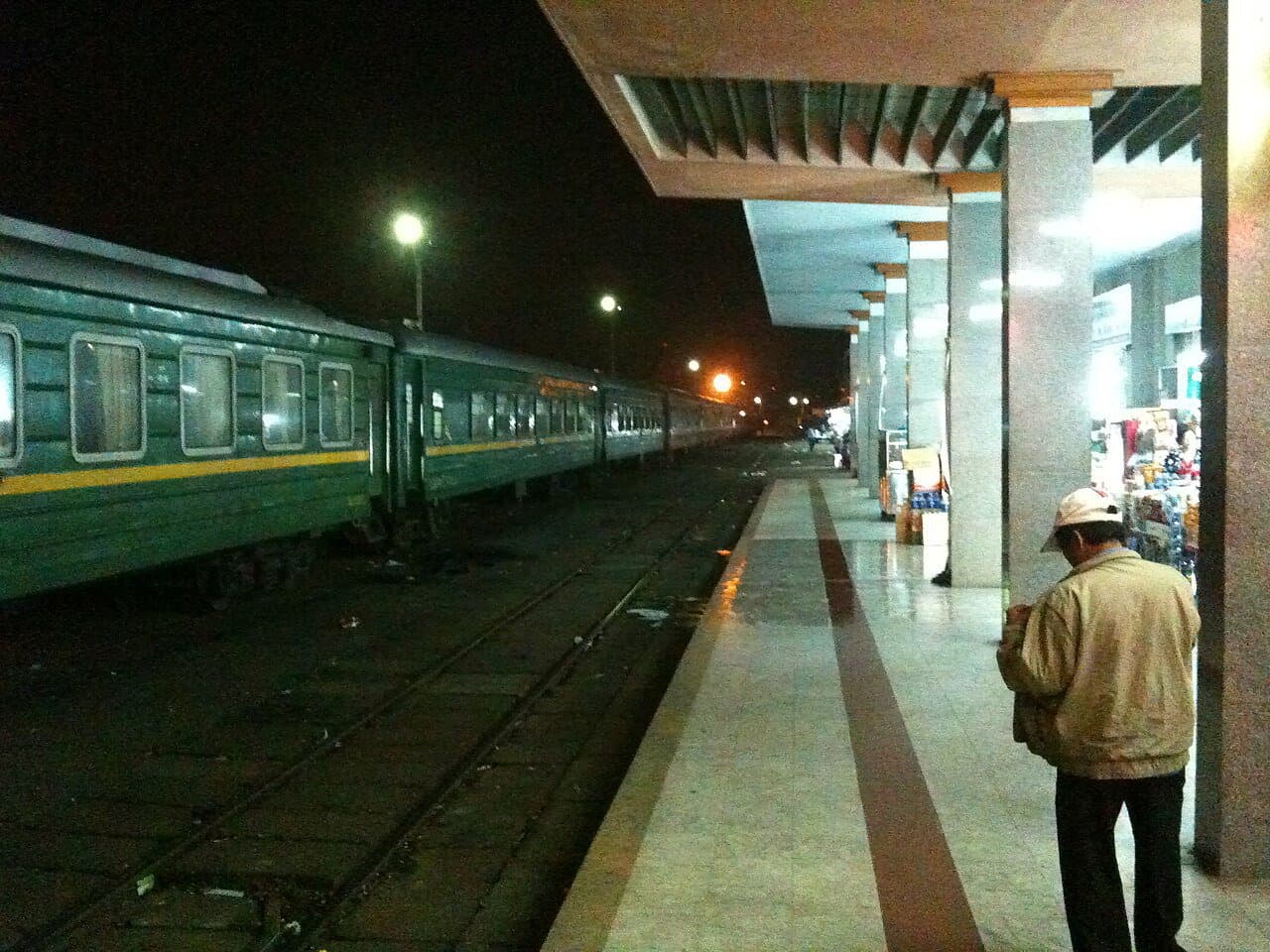
Vietnam Railways (Đường sắt Việt Nam) operates the single north–south line that connects Hanoi to Ho Chi Minh City via Hue, Da Nang, Nha Trang, and a dozen smaller stations. The network is old, the rolling stock mixed, and the schedules honest about their leisurely pace — but for specific segments, the train is the best way to travel.
What is the Reunification Express?
The Reunification Express (Tàu Thống Nhất) isn't a single train; it's the name given to the set of daily long-distance services running the full 1,726 km between Hanoi and Ho Chi Minh City. The headline services are:
- SE1 / SE2 — the flagship Hanoi ↔ HCMC, newer cabins
- SE3 / SE4 — evening departure, also well-maintained
- SE5 / SE6 — older rolling stock
- SE7 / SE8 — slowest of the set, more intermediate stops
Regional services (TN, SNT, LP) cover shorter segments such as Hanoi to Sapa's gateway station at Lao Cai.
Which train class should I book?
Four classes appear on most long-distance services:
| Class | Layout | Typical comfort | When to book it |
|---|---|---|---|
| Soft sleeper (AC) | 4-berth cabin | Best on the train | Any overnight leg |
| Hard sleeper (AC) | 6-berth cabin | Cramped but fine | Budget overnights |
| Soft seat (AC) | Reclining, 2+2 | Decent daytime | Sub-5-hour legs |
| Hard seat | Padded bench | Rough | Short, cheap hops |
Soft sleeper is the default recommendation. The 4-berth cabins are private enough, the bedding is clean, and the aircon works. Lower berths cost a little more than upper — worth it if you're tall.
How much do Vietnamese train tickets cost?
Fares vary by class, distance, and service. Rough ranges for 2026:
- Hanoi to Sapa (Lao Cai) soft sleeper: around 450,000–700,000 VND
- Hanoi to Hue soft sleeper: around 900,000–1,300,000 VND
- Hanoi to Da Nang soft sleeper: around 1,000,000–1,400,000 VND
- Hanoi to Ho Chi Minh City soft sleeper: around 1,500,000–2,300,000 VND
- Da Nang to Hue soft seat: around 95,000–150,000 VND
Private charter cabins on the Sapa route (Chapa Express, Violette, Sapaly) cost a 30–70% premium over standard Vietnam Railways soft sleeper.
Which segments are genuinely worth riding?
Ride the train for:
- Da Nang to Hue — the Hai Van Pass views over the coast are the single most photographed stretch of track in Vietnam. 3 hours, affordable, no reason to fly or bus it.
- Hanoi to Ninh Binh — 2 hours, flat, and drops you 10 minutes from your Tam Coc guesthouse. Far more civilised than the bus.
- Hanoi to Sapa — the overnight train remains the romantic way in. Private cabin operators have raised the bar on comfort.
- Hanoi to Hue / Da Nang overnight — you save a hotel night and arrive at a sensible hour.
Skip the train for:
- Hanoi to Ho Chi Minh City end-to-end — 33 hours versus a 2-hour flight is a lot of love for trains.
- Ho Chi Minh City to Nha Trang — the daytime train is fine but offers no obvious advantage over a short flight or bus.
How do I book?
Three reliable channels:
- Vietnam Railways official site (dsvn.vn) — cheapest, slightly clunky UX, accepts foreign cards.
- Baolau — clean interface, accepts foreign cards, modest booking fee.
- 12go Asia — good for combining train legs with buses and ferries.
Avoid the "train booking" shopfronts that cluster around Hanoi's Old Quarter (Ma May, Hang Bac). They mark up by a third and occasionally sell the wrong class.
What's the train experience like?
Clean enough on newer services, scruffier on older ones. Each carriage has a samovar with boiling water for Pot Noodles. Toilets are squat-style in hard classes, Western-style in soft sleeper. Bedding is issued sealed. Expect gentle swaying, frequent horn blasts at level crossings, and a 5am PA announcement if you're approaching a terminus.
Common gotchas
- Double-check which Hanoi station your train leaves from. Most long-distance services depart from Hanoi Main (Ga Hà Nội); some Sapa services use the smaller Gia Lam station across the river.
- Vietnam Railways cabin assignments can change. Your booked cabin may differ from the one printed on your e-ticket; the conductor resolves it on board.
- Trains run to their own clock. A 15–40 minute late arrival is normal, especially on end-to-end runs.
- Taxi queues at arrival stations in Hue and Da Nang are a soft-touch scam zone. Open Grab before you exit the platform.
Trains are one piece of getting around Vietnam; for the north–south backbone, they pair naturally with a domestic flight on the leg you don't want to sit through.
Limitations
Vietnam's main train route (Reunification Express on the Hanoi-HCMC corridor) has aging rolling stock on some services — soft-sleeper class on older trains is acceptable but not luxurious, and AC reliability varies. Workaround: book the newer SE3 or SE5 services specifically (better rolling stock), avoid the older SE7 and SE9 services where possible, and pay the extra $10-15 for 4-berth soft-sleeper class over 6-berth hard-sleeper. The Da Lat Plateau Rail (5-star tourist train) is the genuinely premium option for the limited routes it serves.
Train booking via the official Vietnam Railways website is functional but English-language support is limited — the easier paths for international travellers are aggregator sites (Baolau, 12Go Asia) which add a small markup. Workaround: for time-sensitive bookings (Tet week, weekend departures, scenic Hue-Da Nang stretch), pay the aggregator markup ($2-5) for the simpler booking flow; for routine bookings 1-2 weeks ahead, the direct Vietnam Railways site works fine.