
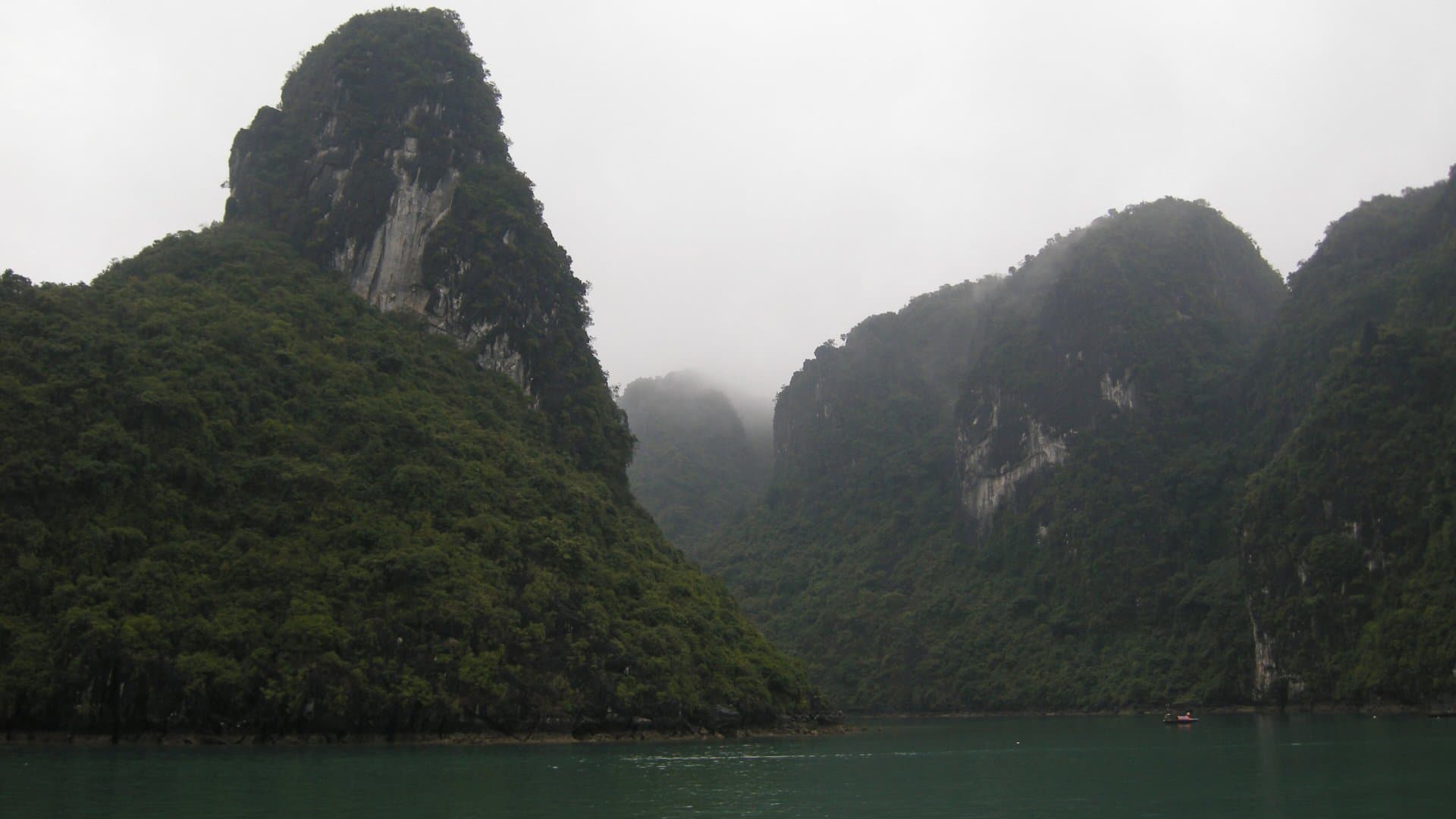
Ha Long Bay has one clear best season and three with trade-offs. October and November are the months to aim for: the summer storms have passed, rain drops to about 143 mm and then 39 mm, and the sky is at its clearest. December and January are dry but cool and often grey. February to April brings drizzle, haze and fog over the karsts. May to September is hot and wet, with about 430 mm of rain in August and typhoon risk from July to October, when storms can cancel cruises.
The weather matters more here than in most of Vietnam, because a Ha Long Bay trip is built around a boat, and the view is the point. Rain you can sit out on deck. Fog, which hides the karsts, and storms, which keep the boats in port, are what to plan around.
Ha Long Bay weather at a glance
The table gives official long-run normals for Bai Chay, on the bay itself, from the Vietnam Institute for Building Science and Technology as published in Wikipedia's climate table. Sea temperatures are for nearby Hai Phong, on the same gulf, from Climates to Travel.
| Month | High | Low | Rain | Rain days | Sunshine (h/month) | Sea |
|---|---|---|---|---|---|---|
| January | 19.3°C | 14°C | 28 mm | 8 | 81 | 21°C |
| February | 19.7°C | 15.2°C | 25 mm | 10 | 48 | 21°C |
| March | 22°C | 17.8°C | 43 mm | 14 | 43 | 22°C |
| April | 26.1°C | 21.5°C | 86 mm | 11 | 89 | 24°C |
| May | 30.1°C | 24.6°C | 183 mm | 12 | 178 | 27°C |
| June | 31.5°C | 26°C | 297 mm | 16 | 168 | 29°C |
| July | 31.7°C | 26.2°C | 364 mm | 17 | 187 | 30°C |
| August | 31.3°C | 25.4°C | 430 mm | 19 | 165 | 30°C |
| September | 30.7°C | 24.4°C | 276 mm | 14 | 177 | 30°C |
| October | 28.8°C | 22.2°C | 143 mm | 9 | 177 | 28°C |
| November | 25.5°C | 18.7°C | 39 mm | 6 | 156 | 26°C |
| December | 21.7°C | 15.3°C | 18 mm | 5 | 128 | 23°C |
The year totals about 1,923 mm of rain over some 140 days and about 1,596 hours of sunshine. Notice the mismatch in spring: March has as many rain days as September but only about a sixth of the rain. That is the drizzle season.
Autumn, October and November: the best cruising
This is the season to aim for. Rain falls from about 276 mm in September to 143 mm in October and 39 mm in November, over only nine and six days, and sunshine holds at about 155-177 hours a month. Humidity drops below 80 percent, the air clears, and the karsts stand out sharply against the sky. Days run about 26-29°C and the sea is still 26-28°C, warm enough for kayaking and a swim.
The typhoon window is closing but not shut: storms are still possible into October. The bigger catch is demand. Autumn is peak cruising season, and the best-reviewed boats fill up. Our Ha Long cruise cost guide covers prices by tier.
Winter, December and January: dry, cool and grey
Winter is the driest time of year, with only about 18-28 mm a month, and the seas are usually calm, so cruises run reliably. The trade-off is temperature and light: highs of about 19-22°C, lows of 14-15°C, and frequent overcast days. On deck in the wind it feels colder than the numbers, so pack a warm layer. The sea cools to about 21-23°C, too cold for most swimmers.
For a quiet, calm cruise at lower prices, December is a good choice. January is the month to watch for strong cold waves from the north, which bring grey, chilly days.
Spring, February to April: drizzle and fog
Spring is the foggy season. Fine drizzle and low cloud settle over northern Vietnam, and Ha Long records only about 48 hours of sunshine in February and 43 in March, the least of the year, with humidity of 84-87 percent. Rain totals are small, but it is damp on 10 to 14 days a month, and the karsts often fade into grey haze.
Some photographers seek out this light, and the misty karsts are beautiful in their own way. But if you are coming for the classic postcard view of green towers against blue sky, spring is the riskiest season. April improves steadily as the sun returns.
Summer, May to September: hot, wet and stormy
Summer is hot and humid, with highs of about 30-32°C and the warmest sea of the year at 27-30°C. About 1,550 mm of rain falls from May to September, peaking at about 430 mm over 19 days in August, often in heavy afternoon storms, with long sunny spells in between. It is peak season for Vietnamese families, so the bay is at its busiest.
It is also typhoon season. In northern Vietnam, typhoons generally occur from late May to mid-November, most often from July to October. When one approaches, the Quang Ninh authorities suspend sailings and operators cancel or reschedule. In September 2024, Super Typhoon Yagi made landfall in Quang Ninh province: operators cancelled cruises as it approached, boats were damaged at the ports, and Ha Long Bay reopened to visitors within about a week, as VnExpress reported. Summer cruises usually go ahead, but keep your date flexible.
What the weather means for your trip
Choosing the month. October to November is best, December to January is the calm, cool alternative, February to April risks fog, and May to September is hot and busy, with storm risk.
Cruise or day trip. In summer and autumn, an overnight cruise gives you two chances at good weather and a morning on the water. In winter and spring, a day trip is a lower-risk way to see the bay. Our Hanoi to Ha Long Bay guide covers getting there.
Choosing the bay. Lan Ha Bay, reached from Cat Ba, has the same scenery with fewer boats; our Ha Long vs Cat Ba vs Lan Ha comparison and Hanoi to Cat Ba guide explain the options. For the wider northern calendar, see our Hanoi weather guide.
Limitations
The air-temperature, rain and sunshine figures are official normals for Bai Chay, on the shore of the bay; conditions out among the islands can differ, especially for wind and fog. Sea temperatures are for Hai Phong, about 50 km away on the same gulf, and serve as a proxy. Other datasets for Ha Long give different monthly rainfall, particularly for October. Typhoon tracks can't be predicted more than a few days out, and single years vary widely.
Workaround: use this page to choose the season, check the marine forecast in the days before your cruise, book with an operator that states its weather-cancellation policy, and in the storm season keep a spare day in Hanoi.