
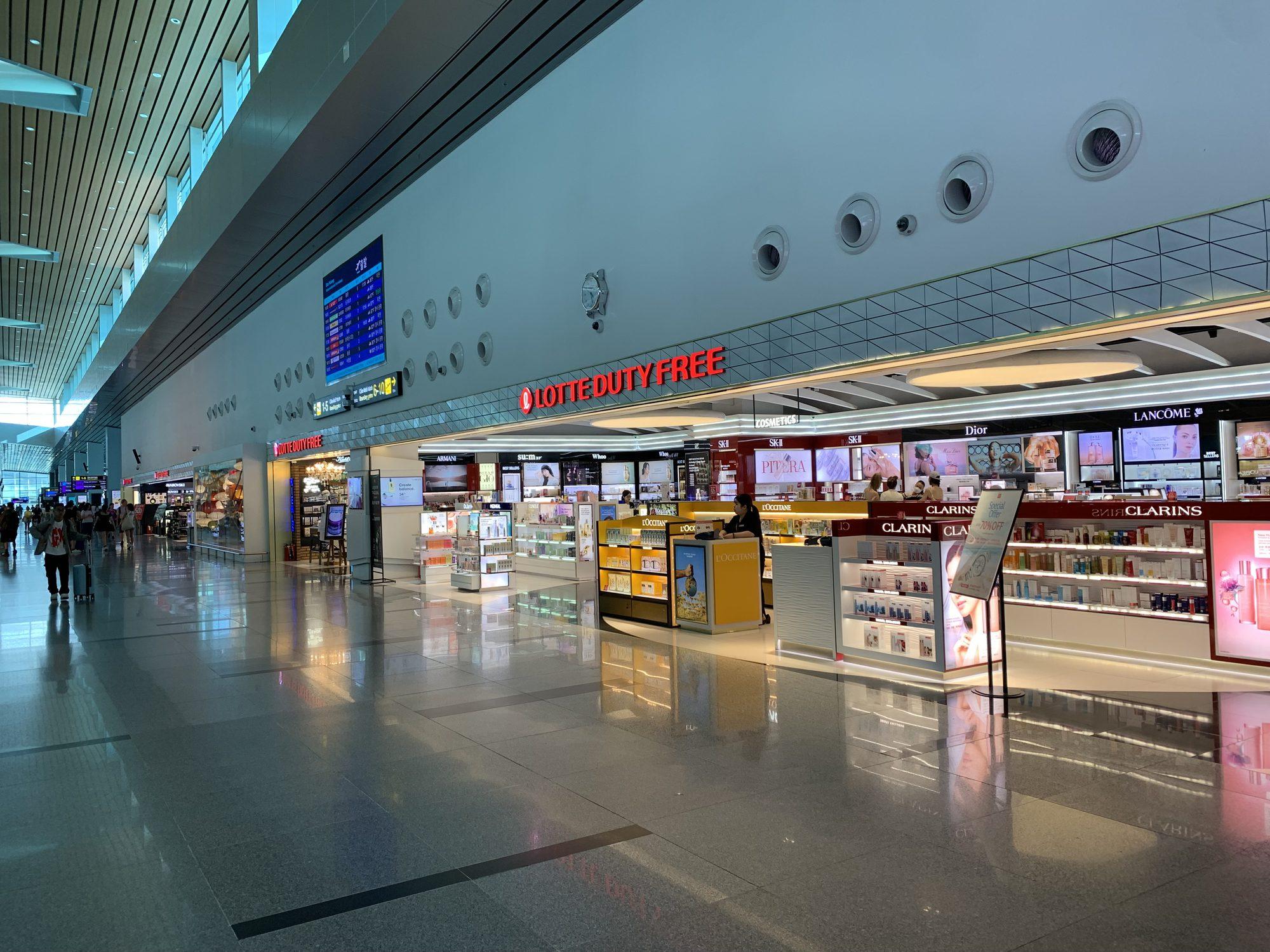
Each adult entering Vietnam can bring, duty-free on every entry, 1.5 litres of spirits (or 2 litres of drinks under 20% alcohol, or 3 litres of beer), 200 cigarettes (or 20 cigars, or 250 g of tobacco), personal effects that suit the trip, and other goods worth up to 10 million VND, about $390. The rule is Article 6 of Decree 134/2016/ND-CP, still in force when I checked in November 2026. You must go to the red channel and declare goods over that, more than $5,000 in foreign cash or 15 million VND, and 300 g or more of gold jewellery. Weapons, fireworks, sky lanterns, e-cigarettes, heated tobacco and illegal drugs are banned.
This page covers what customs looks at after immigration, on the way in and on the way out. For the passport desk, e-visas and the digital arrival card, see the Vietnam visa and immigration atlas; for the rest of arrival day, the first 24 hours in Vietnam. It summarises published rules and is not legal or medical advice. Dollar figures use about 25,600 VND to the dollar, the rate the cash guide used for 30 October 2026.
What can you bring into Vietnam duty-free?
The allowance is set per entry, for anyone arriving on a passport, and it covers both carry-on and checked bags.
| Category | Duty-free on each entry | How it works |
|---|---|---|
| Alcohol | 1.5 litres of spirits at 20% or stronger, or 2 litres under 20% (wine, for example), or 3 litres of beer or other alcoholic drinks | One of the three, not all three. Not for under-18s |
| Tobacco | 200 cigarettes, or 250 g of loose tobacco, or 20 cigars | One of the three. Not for under-18s |
| Personal effects | A quantity and type suited to the trip | Your clothes, phone, laptop and camera |
| Other goods | Total customs value up to 10,000,000 VND (about $390) | Goods that are not banned, suspended or licence-only |
Three details in the Vietnamese text of Decree 134/2016/ND-CP change how the table works in practice:
- The bottle rule. If one whole bottle takes you over the alcohol limit by no more than 1 litre, the whole bottle is duty-free. Beyond 1 litre over, you pay tax on the part above the allowance.
- You choose. If your other goods add up to more than 10 million VND and you carry several items, you choose which ones take the exemption and pay duty on the rest.
- Age. The alcohol and tobacco allowances do not apply to travellers under 18.
The 10 million VND allowance only covers goods that are free to import. Anything banned, or anything that needs a licence, such as medicines above the personal limits or a drone, follows its own rules below.
A new decree is in draft, with the same numbers
Decree 134/2016 is due to be replaced. In September 2026 the Ministry of Finance was finishing a draft decree to replace it, Tax and Customs Online reported, and the draft published for comment keeps the passenger allowance as it is: 1.5 litres of spirits, 200 cigarettes, 20 cigars and 10 million VND of other goods, as the Vietnam Bar Federation's newspaper summarised on 26 October 2026. I found no sign that the new decree had been issued by mid-November 2026.
When do you have to declare, and how do the channels work?
Vietnamese airports split arriving passengers after baggage claim. Under the customs procedure for passenger baggage, Decision 3280/QD-TCHQ of 2016, the green channel is for passengers whose baggage does not need declaring, and the red channel is for those who must declare or whom officers pick out. An officer can move someone from green to red for a check.
| You are carrying | Use the red channel if | Rule |
|---|---|---|
| Goods beyond the allowance above | Always | Decree 134/2016/ND-CP |
| Foreign currency in cash | More than $5,000, or the equivalent | State Bank Circular 15/2011/TT-NHNN |
| Vietnamese dong in cash | More than 15,000,000 VND (about $580) | State Bank Circular 15/2011/TT-NHNN |
| Gold jewellery or gold art objects | 300 g or more in total | State Bank Circular 11/2014/TT-NHNN |
| Medicines | Worth more than $100, per UK government advice | See the medicines section |
| Anything banned, restricted or needing a licence | Always | Decree 292/2026/ND-CP and others |
At the red channel you fill in the passenger customs declaration. Once customs has checked and certified it, it comes back to you, and you should keep it with your passport, because it is the document you show if you want to take declared cash out again. The UK Foreign Office's entry page for Vietnam sums up the principle: declare anything that may be prohibited or subject to tax or duty.
Most leisure travellers never need the red channel, as the airport fast-track guide notes. If you are unsure about one item, the red channel is the safer queue.
Cash and gold: the limits that catch people out
The cash thresholds are the same in both directions: more than $5,000 in foreign cash, or more than 15 million VND, must be declared, and the UK Foreign Office lists the same two figures. There is no upper limit on bringing cash in once it is declared. The dong line is the one that surprises people, because 15 million VND is only about $580. The cash guide covers the rule, the documents and how to split your money in detail.
Gold has its own rule. Under Circular 11/2014/TT-NHNN of the State Bank of Vietnam, travellers on a passport must declare gold jewellery and gold art objects weighing 300 grams or more in total, and may not carry gold bars or raw gold at all. A foreigner who arrives with gold bars must leave them in a customs warehouse until departure or take them back out. On 9 April 2026 the Customs Department issued guidance on the 300 g rule in Official Letter 15029/CHQ-GSQL, and said that jewellery over the duty-free allowance needs full customs procedures and proof of lawful origin, Thoi bao Tai chinh Viet Nam reported.
Since 1 July 2026, undeclared cash and gold are fined under Article 11 of Decree 169/2026/ND-CP, issued on 15 May 2026 to replace the 2020 customs penalties decree. The fine is set on the value above the free limit, not the whole sum, as the Ha Tinh provincial portal explains, and leaving is fined more heavily than arriving. The bands are in the penalties table below.
What is banned from bringing into Vietnam?
Since 5 September 2026 the list of goods that may not be imported at all sits in Appendix I of Decree 292/2026/ND-CP, which replaced Decree 69/2018/ND-CP, according to LuatVietnam's comparison of the two decrees. The import list has 23 groups, the banking magazine Thi truong Tai chinh Tien te listed. The ones a traveller could plausibly pack:
| Banned from import | Notes |
|---|---|
| Weapons, ammunition and explosives | Includes military equipment |
| Fireworks, sky lanterns and speed-camera jammers | Maritime signal flares are the only exception |
| E-cigarettes and heated tobacco products | Also banned from export |
| Used consumer goods | Clothing and footwear, electronics and appliances, furnishings, household goods, bicycles and motorbikes |
| Used medical equipment and used digital products | |
| Medicines on Vietnam's banned list | Separate from the personal-use rules below |
| Cultural products and publications banned in Vietnam | Can be confiscated and destroyed |
| Endangered wildlife products | Commercial imports of wild CITES Appendix I specimens; rhino and African elephant products |
As I read it, the used-goods line targets second-hand goods brought in to sell or hand out. The clothes, phone and laptop you travel with are personal effects under the allowance; a suitcase of used electronics for friends is the kind of thing that invites questions.
Illegal drugs are dealt with under criminal law, not customs rules. The UK Foreign Office's safety page warns of long jail sentences whatever the amount, and says the death penalty may be imposed depending on the severity of the crime.
Vapes and heated tobacco have been banned since 2025 under National Assembly Resolution 173/2024/QH15, with no tourist exception; the vape and e-cigarette guide covers the fines and transit. Drones are not banned as goods, but Decree 288/2025/ND-CP sets requirements for importing them, and in October 2026 Da Nang airport customs asked airlines to warn passengers about drones and other restricted goods. Flying one is the bigger hurdle, as the drone rules guide explains.
Can you bring your own medicines into Vietnam?
Yes, for your own treatment, and within limits you need no import licence. The rule is Article 60 of Decree 163/2025/ND-CP, in force since 1 July 2025, which I read in the Official Gazette edition of 14 July 2025; the text of Article 60 is also online. It covers medicines you carry, or send under your name as unaccompanied baggage, to treat your own illness.
| Your medicine | No import licence needed up to | Condition |
|---|---|---|
| Narcotic medicines (thuốc gây nghiện) | 7 days' use | At the dose on the prescription you carry |
| Psychotropic and precursor medicines | 10 days' use | At the dose on the prescription you carry |
| Any other medicine | $200 customs value per entry, at most 3 times a year | Or up to 30 days' use at the prescribed dose |
Above those amounts you need an import licence from the provincial People's Committee where you enter or where you stay, and the decree gives it 7 working days to decide. The decree does not list which brands fall into the narcotic or psychotropic groups; Vietnam's own classification decides that, and it can differ from your country's. Ask your prescriber or a Vietnamese embassy before you fly if you take strong painkillers, ADHD medicine or sedatives.
The UK Foreign Office's entry page adds two practical points: carry prescription medicine in your hand luggage with a copy of the prescription, and declare medication worth more than $100. That line answers a different question from the decree's $200 licence-free limit, declaring rather than licensing, so above $100 the red channel is the safe choice. For what you can buy over the counter once you arrive, see the Vietnam pharmacies guide.
Leaving Vietnam: cash, antiques and souvenirs
Leaving is simpler for most goods. Article 6 of Decree 134/2016/ND-CP lets you take out your baggage duty-free with no quantity limit, as long as nothing in it is banned, suspended or licence-only for export. Four things are worth checking before you pack.
- Cash. Above $5,000 in foreign cash or 15 million VND, declare it and show a confirmation from an authorised bank or written approval from the State Bank of Vietnam, the UK Foreign Office says. Taking out no more than you declared on arrival works with the certified arrival declaration, as the cash guide explains.
- Antiques. Decree 292/2026/ND-CP bans the export of relics, antiques and national treasures. Under Article 50 of the 2024 Law on Cultural Heritage, in force since 1 July 2025, they may leave only temporarily, for state diplomacy, joint exhibitions, joint research or conservation, with a decision from the Minister of Culture for antiques. Taking them abroad illegally is a prohibited act under Article 9. There is no route for a souvenir.
- Wildlife. Commercial exports of wild CITES Appendix I specimens, and of rhino and African elephant products, are on the export ban list too. The UK Foreign Office warns that buying or collecting protected wild animals or plants can bring a fine or a long prison sentence.
- Medicines bought in Vietnam. Under Article 46 of Decree 163/2025/ND-CP, you can take controlled medicines licensed for sale in Vietnam out without an export licence, for your own treatment, up to 7 days' use of narcotic medicines, 10 days of psychotropic ones and 30 days of combination products containing them, at the dose on the prescription.
Coffee, tea, silk, lacquerware and fish sauce are not on Vietnam's export ban list; the questions are your airline's liquid rules and your home country's import rules. The souvenirs guide covers both.
What are the penalties?
Most penalties are administrative fines under Decree 169/2026/ND-CP, plus the duty on anything over the allowance. Large or deliberate cases are prosecuted as crimes instead. For cash, the lowest band starts at an undeclared excess of 5 million VND, and the top band applies from 100 million VND.
| Breach | Penalty | Source |
|---|---|---|
| Undeclared cash over the limit, arriving | 1 to 20 million VND, by the amount over the limit | Decree 169/2026, Article 11 |
| Undeclared cash over the limit, leaving | 1 to 50 million VND | Decree 169/2026, Article 11 |
| Declaring more cash than you carry, arriving | 2 to 25 million VND | Decree 169/2026, Article 11 |
| Goods over the allowance, not declared | 500,000 to 40 million VND by value, plus the duty | Tax and Customs Online summary |
| Banned goods | Confiscation and a fine that rises with value | Decree 169/2026, Article 16 |
| Illegal drugs | Prison; the death penalty is possible | UK Foreign Office |
The fines for goods over the allowance come from the finance ministry's Tax and Customs Online summary of Decree 169/2026, published on 28 May 2026, which also says goods that may not be imported are confiscated. Article 16 of the decree passes drugs, weapons and fireworks to the public order penalties decree, Decree 282/2025/ND-CP, and leaves the worst cases to criminal law.
Limitations
I read most decrees through legal databases, ministry journals and provincial portals rather than the Official Gazette, and an English translation of Decree 134/2016 disagrees with the Vietnamese text on the under-18 rule; I followed the Vietnamese. I could not open the clause behind the 500,000 to 40 million VND figure, so that range is the ministry journal's summary. Workaround: if an item is close to a limit, declare it; the officers at the airport have the final word.
The replacement for Decree 134/2016 was still a draft in November 2026 and could change the allowance. Workaround: if you travel in 2027, check whether a new decree on export and import duties has been issued.
How officers treat a single vape, a drone or a bag of medicines varies, and no published rule sets that out. I did not check the narcotic and psychotropic lists drug by drug. Workaround: leave vapes at home, ask a Vietnamese embassy about drones and controlled medicines, and carry the prescription.
This page covers Vietnam's rules only; your home country decides what you can bring back. Workaround: check your own customs or biosecurity agency before you buy food, plants or animal products.