
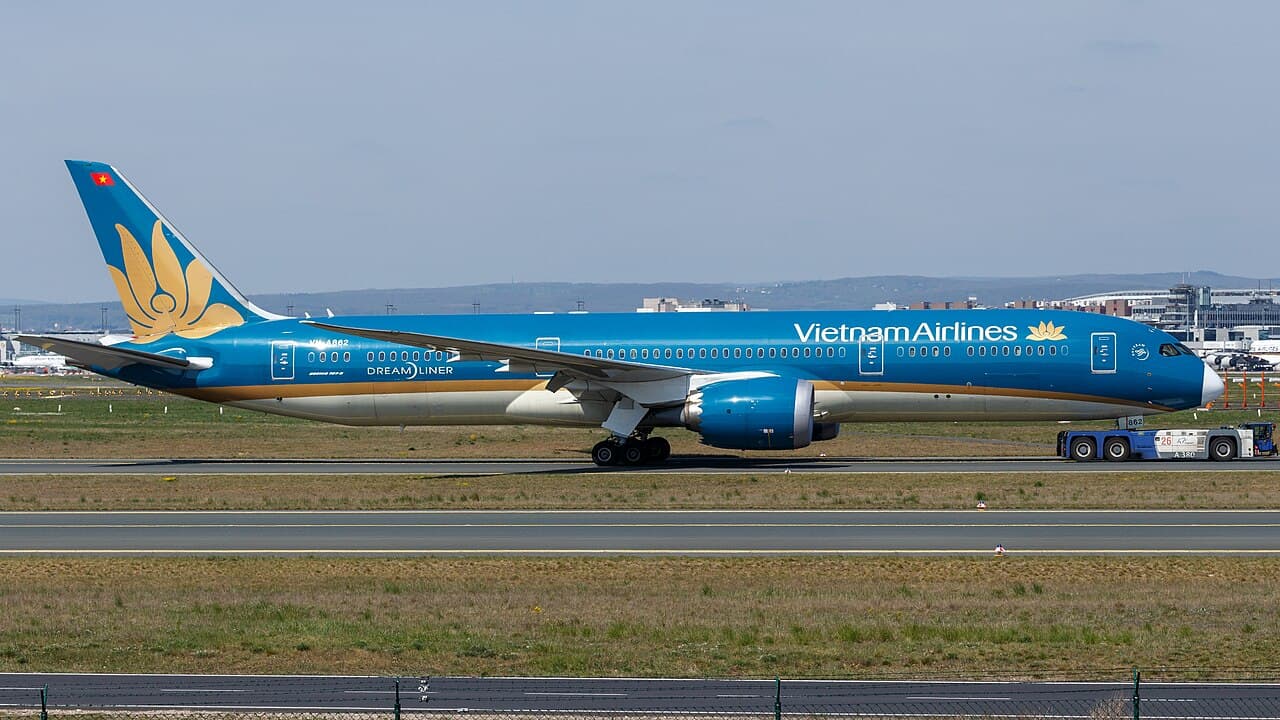
If you only want the headline: Vietnam's cheapest domestic flights are the short southern hops — HCMC to Nha Trang, Da Lat or Phu Quoc — which can start near 600,000–900,000 VND ($23–35) one-way on a VietJet base fare booked ahead. The priciest are Hanoi to Phu Quoc and the Con Dao routes, where peak fares reach 3,300,000–4,500,000 VND ($127–173). The one rule that saves the most money: book trunk routes about 30–45 days out and tourist routes 2–3 months out, because fares inside a week of departure sit at the top of every range below.
This page is the dedicated fare reference — a route-by-route table of one-way prices in VND and USD, which carriers fly each route, typical flight times, and booking windows. It does not re-explain how flying works, how it compares with buses and trains, or which months are cheapest. For those, see our domestic flights overview, the getting around Vietnam guide, and the cheapest month to fly guide.
One caveat before the table: Vietnamese carriers price dynamically and change fares by the hour. Every figure below is a hedged range as of mid-2026, converted at roughly 26,000 VND to the US dollar, and the live quote on the airline app is always the real price.
Route-by-route one-way fares
Carrier codes: VN = Vietnam Airlines, VJ = VietJet, VU = Vietravel Airlines. All fares are approximate one-way ranges, all-in of typical taxes and airport fees, for a single traveler with no checked bag added.
| Route | Carriers | Flight time | Low one-way | Typical one-way | Peak one-way |
|---|---|---|---|---|---|
| Hanoi–HCMC (HAN–SGN) | VN, VJ, QH, VU | ~2h 10m | 950,000–1,300,000 VND ($37–50) | 1,500,000–2,200,000 VND ($58–85) | 2,800,000–3,800,000 VND ($108–146) |
| Hanoi–Da Nang (HAN–DAD) | VN, VJ, QH, VU | ~1h 20m | 700,000–1,000,000 VND ($27–38) | 1,100,000–1,700,000 VND ($42–65) | 2,200,000–3,000,000 VND ($85–115) |
| HCMC–Da Nang (SGN–DAD) | VN, VJ, QH, VU | ~1h 20m | 700,000–1,000,000 VND ($27–38) | 1,100,000–1,700,000 VND ($42–65) | 2,200,000–3,000,000 VND ($85–115) |
| Hanoi–Phu Quoc (HAN–PQC) | VN, VJ | ~2h 5m | 1,300,000–1,800,000 VND ($50–69) | 2,000,000–2,800,000 VND ($77–108) | 3,200,000–4,000,000 VND ($123–154) |
| HCMC–Phu Quoc (SGN–PQC) | VN, VJ | ~1h 0m | 650,000–1,000,000 VND ($25–38) | 1,200,000–1,900,000 VND ($46–73) | 2,200,000–3,200,000 VND ($85–123) |
| Hanoi–Nha Trang (HAN–CXR) | VN, VJ, QH | ~1h 50m | 900,000–1,300,000 VND ($35–50) | 1,500,000–2,200,000 VND ($58–85) | 2,500,000–3,500,000 VND ($96–135) |
| HCMC–Nha Trang (SGN–CXR) | VN, VJ, QH | ~1h 5m | 600,000–900,000 VND ($23–35) | 1,000,000–1,600,000 VND ($38–62) | 1,800,000–2,600,000 VND ($69–100) |
| Hanoi–Da Lat (HAN–DLI) | VN, VJ, QH | ~1h 50m | 1,100,000–1,500,000 VND ($42–58) | 1,700,000–2,400,000 VND ($65–92) | 2,800,000–3,600,000 VND ($108–138) |
| HCMC–Da Lat (SGN–DLI) | VN, VJ | ~0h 55m | 550,000–900,000 VND ($21–35) | 1,000,000–1,500,000 VND ($38–58) | 1,800,000–2,400,000 VND ($69–92) |
| Hanoi–Hue (HAN–HUI) | VN, VJ, QH | ~1h 20m | 700,000–1,100,000 VND ($27–42) | 1,300,000–1,900,000 VND ($50–73) | 2,200,000–3,000,000 VND ($85–115) |
| HCMC–Con Dao (SGN–VCS) | VN/VASCO, VJ | ~1h 0m | 1,300,000–1,800,000 VND ($50–69) | 2,000,000–3,000,000 VND ($77–115) | 3,300,000–4,500,000 VND ($127–173) |
| HCMC–Can Tho (SGN–VCA) | none nonstop | road ~3–4h | Not a flown route | Not a flown route | Not a flown route |
Three practical readings of this table. First, distance and competition set the floor: the short, heavily flown southern hops (HCMC to Nha Trang, Da Lat, Phu Quoc) have the cheapest base fares, while long or thin routes (Hanoi–Phu Quoc, Con Dao) sit highest. Second, the peak column is not hypothetical — school holidays, summer beach season and the week around Tet routinely push fares into it, so a Phu Quoc seat that is 1,200,000 VND in October can be triple that in July. Third, the low column is almost always a VietJet base fare with no bag; read the carrier notes below before assuming it is your real price.
The HCMC–Can Tho line is deliberately blank. The two cities are only about 170km apart, roughly 3–4 hours by road, so there is no commercial nonstop flight worth taking — travelers go by bus or car. Can Tho's airport (VCA) does fly, but its routes connect to Hanoi, Da Nang, Phu Quoc, Nha Trang and Con Dao, not down the road to HCMC.
Which carriers fly what
Vietnam has four scheduled domestic airlines, and the split matters for price.
- Vietnam Airlines (VN) is the full-service flag carrier with the widest network, including every route above. Fares run highest but include a checked bag, seat selection on many fares, and a meal, and its schedule tends to recover best when weather disrupts operations. Its subsidiary VASCO flies the ATR-72 turboprops to Con Dao.
- VietJet (VJ) is the low-cost carrier and almost always shows the cheapest headline fare. That fare is cabin-baggage only, so the real cost depends on whether you add a bag. Coverage is broad, matching Vietnam Airlines on most trunk and tourist routes.
- Bamboo Airways (QH) is no longer an option. It stopped selling scheduled tickets on 1 August 2026 and flew its final scheduled service on 22 August 2026, leaving Vietnam Airlines, VietJet and Vietravel on the domestic network.
- Vietravel Airlines (VU) is the newest carrier, concentrated on high-demand tourist and trunk routes such as Hanoi–HCMC and the Da Nang corridor. Frequencies are limited, so it appears on fewer routes.
On the Phu Quoc and Con Dao routes the field is thinner. Phu Quoc from HCMC also sees Sun PhuQuoc Airways alongside VN and VJ; Con Dao is mostly VASCO turboprops with VietJet expanding jet service after the airport's runway upgrade. For a deeper carrier comparison, see our Vietnam Airlines, VietJet and Bamboo Airways pages.
How far ahead to book
Booking window is the single biggest lever on domestic airfare, more than the day of week or the specific airline.
- Trunk routes (Hanoi–HCMC, Hanoi or HCMC to Da Nang): about 30–45 days ahead hits the sweet spot. These routes have so many daily flights that fares rarely bottom out earlier, but they climb sharply inside two weeks.
- Tourist routes (Phu Quoc, Con Dao, Nha Trang, Da Lat) in high season: book 2–3 months ahead. Seats are fewer, demand spikes around holidays, and Con Dao in particular sells out. Vietnam Airlines itself recommends planning Con Dao about three months out.
- Any route inside a week of departure: expect the top of the range, sometimes above it. This is the most expensive way to buy.
Two smaller levers stack on top: mid-week departures (Tuesday and Wednesday) tend to be cheaper than Friday or Sunday, and avoiding the Tet period and the June–August beach peak avoids the sharpest surcharges. For the month-by-month view of when fares are lowest, see our cheapest month to fly guide, and for a backpacker's angle on stretching a flight budget, our cheap domestic flights guide.
Cheapest and priciest routes at a glance
The cheapest seats in Vietnam are the short southern connections. HCMC–Nha Trang, HCMC–Da Lat and HCMC–Phu Quoc all bottom out around 550,000–1,000,000 VND ($21–38) one-way when booked ahead on VietJet, because they are short, frequent and fiercely competitive.
The priciest are the long and the thin. Hanoi–Phu Quoc is the longest common domestic hop at just over two hours and peaks near 4,000,000 VND ($154). The Con Dao routes are structurally expensive — small turboprops, limited seats, strong seasonal demand — and peak fares reach 4,500,000 VND ($173). Everything else falls between those poles, tracking distance and how far ahead you commit.
Methodology
Fares are compiled from public aggregator listings (Google Flights, Skyscanner, KAYAK, momondo, Expedia, Trip.com) and airline booking pages sampled in mid-2026, cross-checked against a published Vietnam Airlines 2026 route price list. For each route the low figure reflects an advance-purchase base fare (usually VietJet, cabin bag only), the typical figure a mid-range fare booked a few weeks out, and the peak figure a high-season or short-notice fare. VND figures are the anchor; USD is converted at roughly 26,000 VND to the dollar, the mid-2026 rate. All-in figures assume standard taxes and airport fees of roughly 150,000–280,000 VND per leg and no checked bag added. Flight times are scheduled block times and vary with routing and weather.
Limitations
- Fares change constantly. Vietnamese carriers adjust prices by the hour with demand. These bands are a mid-2026 planning baseline, not a live quote — the airline app is the only real price.
- VietJet base fares exclude a checked bag. The low column is usually a bag-free fare. Adding 20kg typically raises the real cost by 200,000–400,000 VND and can erase the gap with a full-service ticket.
- Peak means peak. Tet, summer beach season and public holidays can push fares above the peak column, especially to Phu Quoc, Nha Trang and Con Dao.
- Thin routes shift fast. Con Dao and other limited routes change as airlines add or drop capacity; VietJet's Con Dao expansion may soften those fares over time.
- USD conversions are approximate and drift with the exchange rate.
Related reading
- Vietnam domestic flights overview — how flying works, airports, and booking mechanics
- Cheap domestic flights for backpackers — stretching a flight budget on the road
- Cheapest month to fly to Vietnam — the month-by-month fare calendar
- Vietnam travel cost index 2026 — where flights sit in a full trip budget
- Getting around Vietnam — flights versus buses and trains, route by route
- Skyscanner: Hanoi to HCMC fares — live aggregator pricing
- Vietnam Airlines and VietJet — book direct and compare all-in fares