
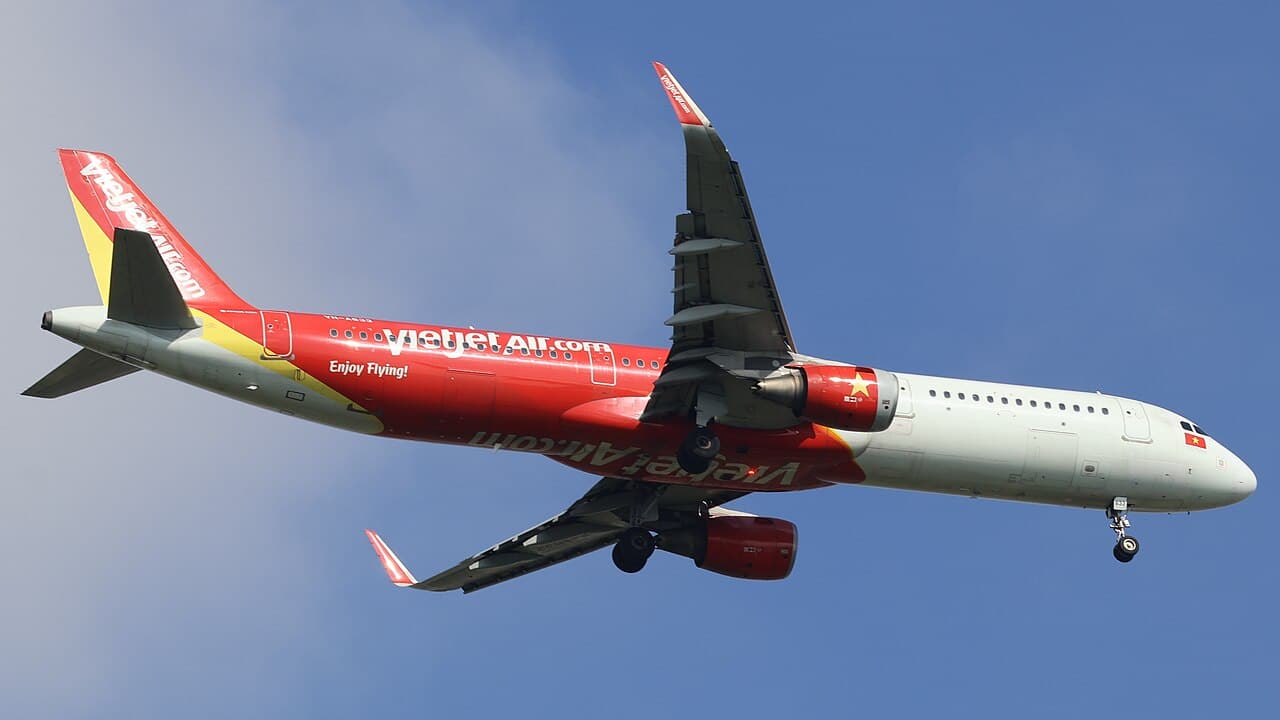
The Vietnam domestic flight pattern surprised me when I first started flying around Vietnam for work — the fares are consistently low ($30-70 for most major routes), the four carriers compete actively for the low-cost end of the market, and the time savings vs ground transport are meaningful enough that even budget backpackers reach for flights on the longer routes. The honest reality is that VietJet Air and Pacific Airlines have made domestic flying competitive with the sleeper-bus option on cost and far better on time — for the right backpacker, the right pattern is mostly flights with selective train segments for the experiential routes.
This guide is the practical version of how to fly cheaply between Vietnamese cities in 2026 — which airline for which route, booking tactics, baggage tricks, and the route-by-route comparison with train and bus alternatives. The Airline Reliability Atlas covers the deeper reliability data; the Land Transport Atlas covers the alternatives; this guide is the budget-flight synthesis.
Quick summary — what cheap flying actually looks like
| Route | Cheap flight | Train | Sleeper bus | Time saving (flight) |
|---|---|---|---|---|
| Hanoi → HCMC | $40-80 (VietJet) | $50-120/sleeper, 32-36 hr | $25-45, 28-30 hr | 30+ hours |
| Hanoi → Da Nang | $30-60 (VietJet) | $30-55/sleeper, 16 hr | $20-30, 16 hr | 14-15 hours |
| HCMC → Da Nang | $30-60 (VietJet) | $25-50/sleeper, 17 hr | $15-30, 17 hr | 15-16 hours |
| HCMC → Phu Quoc | $30-70 (VietJet) | (no train) | (no bus; island) | – |
| Hanoi → Phu Quoc | $50-100 | (no train) | (no bus; island) | – |
| HCMC → Nha Trang | $30-60 (Pacific) | $20-40/sleeper, 8 hr | $15-25, 9 hr | 7-8 hours |
The fast version: VietJet for the cheap-fare default; Vietnam Airlines for the time-critical and well-served flights; book direct with the airline 2-4 weeks ahead; pay for checked baggage at booking (not at the airport); use Grab for the airport transfers.
The four Vietnamese domestic carriers
VietJet Air is the largest low-cost carrier — Vietnam's equivalent to Ryanair or AirAsia. Bright yellow-and-red livery, lower fares ($25-50 typical), strict baggage rules, mid-tier on-time performance (~75%), and the most-frequent flights on the major routes. For backpackers: VietJet is the standard low-cost choice. Watch the baggage rules carefully.
Vietnam Airlines is the flag carrier and the premium-tier full-service option. Higher fares ($50-100 typical), better on-time performance (~85%), more lenient baggage (20kg checked included), Skyteam member with frequent-flyer integration. For backpackers: worth the premium for important schedule connections, end-of-trip flights with timing pressure, or routes where VietJet's reliability is more variable.
Bamboo Airways is the newer premium-economy carrier (founded 2017). Mid-range fares ($40-80 typical), positioned as service-better-than-VietJet but with patchy on-time performance and higher recent cancellation rates per our Airline Reliability Atlas. For backpackers: occasionally worth checking for specific routes; not the default choice.
Pacific Airlines is the low-cost subsidiary of Vietnam Airlines. Similar pricing to VietJet ($30-55 typical), slightly better service, slightly more lenient baggage rules. Smaller route network than VietJet. For backpackers: worth checking as an alternative to VietJet on routes where Pacific serves.
The full reliability comparison is in our Airline Reliability Atlas.
Where flying beats the alternatives
Hanoi → HCMC (or reverse): flight is the right choice for the time saving. The full 1,726 km Reunification Express is 32-36 hours; the sleeper bus is similar. The flight at $40-80 with the time saving is worth the modest premium. Caveat: if you're breaking the journey with multi-day stops in Hue, Hoi An, and Nha Trang, the train and bus segments connect those stops while flying requires more transfer logistics.
Hanoi → Phu Quoc or HCMC → Phu Quoc: flight is the only practical choice. Phu Quoc is an island; the train doesn't reach it; the bus doesn't reach it. Direct VietJet or Vietnam Airlines flights from HCMC (1 hour) or Hanoi (2 hours).
Hanoi → Da Nang or HCMC → Da Nang: flight saves 14-16 hours over the train. The flight at $30-60 vs train at $25-50 is similar cost; the time saving is significant. For backpackers with cultural priorities: the Hai Van Pass day-train from Hue to Da Nang is the experiential alternative worth the time premium; the overnight long train from Hanoi or HCMC is less experiential and the flight is the rational choice.
HCMC → Nha Trang or HCMC → Da Lat: flight is the time-efficient choice. The HCMC-Nha Trang flight is 1 hour; the equivalent overnight train is 8 hours; the flight at $30-60 wins on time even when the cost is similar.
Where the train wins over flying
Hue → Da Nang day train: the Hai Van Pass scenic stretch is the most-photographed Vietnam train view. The flight option (Hue → Da Nang) exists but doesn't make sense for the 4-hour train ride with the spectacular scenery. The flight is for time-pressure travelers only.
Hanoi → Sapa overnight train: Sapa has no commercial airport. The overnight train is the standard route at $30-50/berth.
Hanoi → Hue overnight train: the train is the more comfortable overnight option vs the sleeper bus; the flight is technically faster (1 hour vs 12 hours overnight) but the train doubles as accommodation, saving a hostel night.
Booking strategy
Direct with the airline website is consistently the cheapest. VietJet, Vietnam Airlines and Pacific Airlines all have functional English websites that accept international cards. Skyscanner and Google Flights are the best fare-comparison tools; use them to find the cheapest fare, then book directly with the airline rather than through the third-party booking sites that often add service fees.
Avoid: Gotogate, Bookigo, Trip.com, and similar third-party booking sites for Vietnam domestic flights — they often add $5-15 service fees that wipe out the small fare difference; their customer service for changes/cancellations is materially worse than direct-with-airline.
Booking timing:
- 2-4 weeks ahead for the cheapest fares
- 3-4 days ahead for last-minute booking, often 20-40% more expensive
- Day-of booking sometimes works for cheap last-minute deals but cycle through prices is unpredictable
Cheapest weekdays: Tuesday and Wednesday departures consistently cheaper than Friday-Sunday weekend departures.
Newsletter signups: VietJet and Pacific Airlines occasionally run flash-sale promotions ($15-25 for short routes); sign up for the airline emails if you have planning flexibility.
Baggage strategy
The single biggest cost trap on Vietnamese low-cost flights is the baggage rule:
VietJet Air cabin baggage: 7kg total including a personal item. Strictly enforced — they weigh your bag at check-in and again at the gate if it looks heavy. Overweight charges are punishing ($5-15 per kg over).
VietJet checked baggage: not included in the base fare. $10-25 add-on if booked at the time of ticket purchase; $25-60 if added later or at the airport.
Pacific Airlines: similar to VietJet but slightly more lenient at the check-in counter.
Vietnam Airlines: 20kg checked baggage included on most routes; carry-on 10kg. The most lenient.
For backpackers: weigh your bag at the hostel before going to the airport (most hostels have a luggage scale at reception). If you're over the limit, repack — putting a few items into a small daypack ('personal item') often gets you under the cabin-baggage limit. The $5-15/kg overweight charges at the airport are wallet-destroying.
Best approach: book the checked-baggage add-on at the time of booking ($10-25); pack smart so your checked bag is under 20kg; keep the cabin bag at the 7kg limit.
Airport-to-city transfers
Grab is the universal answer. Book via the Grab app on arrival; typical fares:
- Noi Bai Airport (Hanoi) → Old Quarter: $12-18, 40-45 minutes
- Tan Son Nhat Airport (HCMC) → District 1: $8-15, 25-35 minutes
- Da Nang International → city center: $6-10, 15-20 minutes
- Da Nang International → Hoi An: $18-25, 45-55 minutes
- Phu Quoc International → resorts: $15-25, 20-40 minutes depending on resort location
- Nha Trang Cam Ranh → city center: $10-20, 30-40 minutes
Avoid: airport taxi touts in arrivals halls (fake-meter scams); unmarked private cars approaching you with offers; any taxi without an obvious meter.
Airport buses are available for Hanoi (Bus 86 to Old Quarter, $1-2) and HCMC (Bus 49 to District 1, $1-2); slower and less convenient with luggage but functional for budget travelers.
When to pay the Vietnam Airlines premium
A few scenarios where the Vietnam Airlines premium ($10-30 over VietJet) is worth it:
Time-critical connections: end-of-trip flight to a connecting international flight where a 2-hour delay would be costly. Vietnam Airlines' better on-time performance (85% vs VietJet's 75%) is the relevant difference.
Holiday and Tet travel: VietJet's cancellation risk is higher during peak Vietnamese travel seasons (Tet, summer holidays). Vietnam Airlines is more predictable during peak.
Larger luggage: if you have 20-30kg of luggage, the Vietnam Airlines included baggage ($10-25 saved over VietJet add-on) offsets the higher base fare.
Flights on smaller routes: for less-trafficked routes (e.g., Vinh, Tuy Hoa, Quang Binh), Vietnam Airlines often has the only or best schedule.
What to skip
Third-party booking sites for Vietnamese domestic flights. Service fees and customer-service issues outweigh small fare advantages.
Airport taxi touts. Grab or pre-booked hotel transfer is the only safe option.
Overweight baggage charges at the airport. Repack at the check-in counter if needed; never pay $5-15/kg overweight at the airport.
Last-minute flight booking unless absolutely necessary. Fares spike materially in the final 3-5 days.
Flying when the train is cheaper and equal-time. For routes where the train and flight are similar time (Hanoi-Hue), the train is the better choice for experience and similar cost.
Booking complex multi-leg domestic itineraries through international booking sites. Book each leg directly with the airline.
Limitations
- Pricing is May-June 2026 USD at ~26,361 VND/USD. Hostel dorm rates, sleeper-bus tickets, and street-food prices fluctuate 5-15% seasonally; Tet (Feb 17 2026 in 2026) closes 50-70% of small restaurants for 3-7 days and inflates transport.
- Backpacker accommodation inventory turns over fast — hostels that were highly rated in 2024 may have changed hands or quality drifted by 2026. Always cross-check Hostelworld + Google reviews from the last 90 days.
- Sleeper-bus operator quality varies night-to-night — same operator can run a clean Futa coach one night and a worn Phuong Trang one the next. The "Tuesday-Wednesday off-peak booking" rule for fare savings is a pattern not a guarantee.
- The $40/day budget assumes street-food meals and dorm beds — substituting any mid-range hotel or restaurant breaks the math.
- Decree 168/2024 fines are evolving via enforcement guidance; the VND 2-8M figure is the gazette amount but enforcement intensity varies by city + officer.
The bigger picture
Vietnam's domestic flight ecosystem in 2026 is genuinely competitive for backpackers. VietJet Air provides the cheap-fare default at $25-50 for most major routes; Vietnam Airlines is worth the premium for time-critical flights; the mix-of-modes pattern (flights for long routes, trains for medium routes, buses only for routes the train doesn't serve) produces the optimal cost-and-time outcome for most backpacker trips.
For deeper context:
- Vietnam Airline Reliability Atlas — airline-by-airline reliability deep dive
- Vietnam Land Transport Atlas — full transport reference
- Vietnam Sleeper Bus Operator Atlas — sleeper-bus alternative
- Backpacking Vietnam on $40/day — budget context
- Backpacking by train and sleeper bus — surface-transport alternative
The cheap-flight backpacker pattern works because the market is competitive and the fares are genuinely low. Smart booking turns the four-carrier ecosystem into a routine cost-saving tool rather than a gamble.