
Here is the plain answer: March is the best month of the year to see all of Vietnam on one trip, and it is not especially close. It is the rare window when the north is climbing out of its winter grey, the central coast has properly dried out after the autumn floods, and the south is still in dry season before April's heat tops out. Vietnam's own tourism board puts it bluntly, noting that March to May offers the best weather countrywide. March is the front end of that window — and the cheapest part of it, because it sits after the December-to-February price peak and after Tet.
That combination is the whole argument: good weather everywhere plus shoulder-season pricing is a pairing Vietnam offers almost nowhere else on the calendar. March is not flawless — Hanoi can stay overcast and drizzly for days, Sapa needs a jacket, Ho Chi Minh City is already hot — but no other month asks you to write off an entire region. For the full-year comparison, see the month-by-month weather guide; for the opposite case, a month that forces you to pick a side, see the Vietnam in December guide.
March by region: the historical averages
These are historical averages from published climate references, not a forecast for March 2027. Sources differ by a few degrees and by a surprising margin on rainfall, so the ranges below are deliberately wide.
| Region | Historical March picture | Verdict |
|---|---|---|
| Hanoi | Around 18-26°C, roughly 35-60 mm, humid, drizzle on many days | Mild but often grey |
| Sapa | Around 11-24°C, roughly 70-155 mm, less fog than midwinter | Cool — pack a layer |
| Ha Long Bay | Days near 18-23°C, roughly 50 mm, morning mist common | Calm and atmospheric |
| Hue | Around 20-28°C, roughly 45 mm, sea near 24°C | Dry season underway |
| Da Nang / Hoi An | Around 22-28°C, roughly 20-95 mm over about five rainy days | Genuinely good |
| Nha Trang | Around 23-30°C, roughly 30-60 mm, sea near 27°C | Beach-ready |
| Da Lat | Around 13-25°C, roughly 50-70 mm | Cool, clear highland air |
| HCMC / Mekong | Around 24-35°C, very little rain (roughly 10-30 mm) | Dry and hot |
| Phu Quoc | Around 23-32°C, sea near 29°C, roughly 70-80 mm | Late dry season |
Why March works everywhere at once
Vietnam spans three climate zones, and for most of the year they are out of phase. October and November are superb in the north while the centre floods. December and January are the south's finest hour while Sapa flirts with frost. June through August bakes the country and puts typhoon risk on the central coast. March is the month the three zones briefly align.
The mechanism is simple. The northeast monsoon that keeps the north cool and damp through winter is weakening, so Hanoi warms and the drizzle thins as the month goes on. The central coast is months clear of its October-November flood season and entering its long dry stretch. And the south has not yet reached the peak of its hot season, which arrives in April. Nothing is at its individual best — December beats March in Phu Quoc, October beats it in Hanoi — but nothing is bad, which is a more useful property for a multi-region trip.
The north: warming up, not always sunny
Hanoi is mild and frequently grey. This is the caveat most March guides skate over. Rainfall totals are modest — historical figures land around 35-60 mm — but they arrive as mưa phùn, the fine persistent drizzle that defines the northern spring, spread across a large number of days. Humidity often sits near 80 percent and overcast skies are common, particularly in the first half of the month. Temperatures are pleasant at roughly 18-26°C, and conditions typically brighten through March. Plan Old Quarter and lakeside walking for whenever the sky cooperates rather than a fixed day, and see the Hanoi destination guide.
Sapa is mild by its own standards. After a genuinely cold January and February, March eases the highlands into spring: historically around 11-24°C with cool nights, and less of the thick valley fog that swallows midwinter views. Trekking is comfortable, the terraces are being flooded for planting, and the crowds have not arrived. Rainfall runs higher than Hanoi's — published figures range from roughly 70 to 155 mm — so waterproofs matter more than warm gear. The Sapa destination guide covers routes and timing.
Ha Long Bay is calm and quietly beautiful. March sits in the bay's settled season: daytime near 18-23°C, around 50 mm of rain, calm water and reliable cruise departures. The signature feature is morning mist wrapping the karsts — either the best photograph of your trip or a view of nothing much, depending on the day. Swimming is still bracing, so treat it as a scenery-and-kayaking month.
The centre: the month it finally settles
If one region makes the case for March, it is the middle of the country. Hue, Da Nang and Hoi An spend October and November under serious rain and periodic flooding, then dry out unevenly through December and January. By March they are properly into the dry season: historically near 20-28°C, only around five rainy days, and sea temperatures around 24°C — swimmable, if not tropical. Rainfall figures vary widely by source, from around 20 mm to nearly 100 mm.
Practically, this is the sweet spot for the central heritage circuit — Hue's citadel, Hoi An's Old Town, My Son, the Hai Van Pass — before summer heat makes midday sightseeing a chore. Beach days at An Bang and My Khe are realistic rather than aspirational. The Hoi An destination guide has the logistics.
The south: dry, hot, and heating up
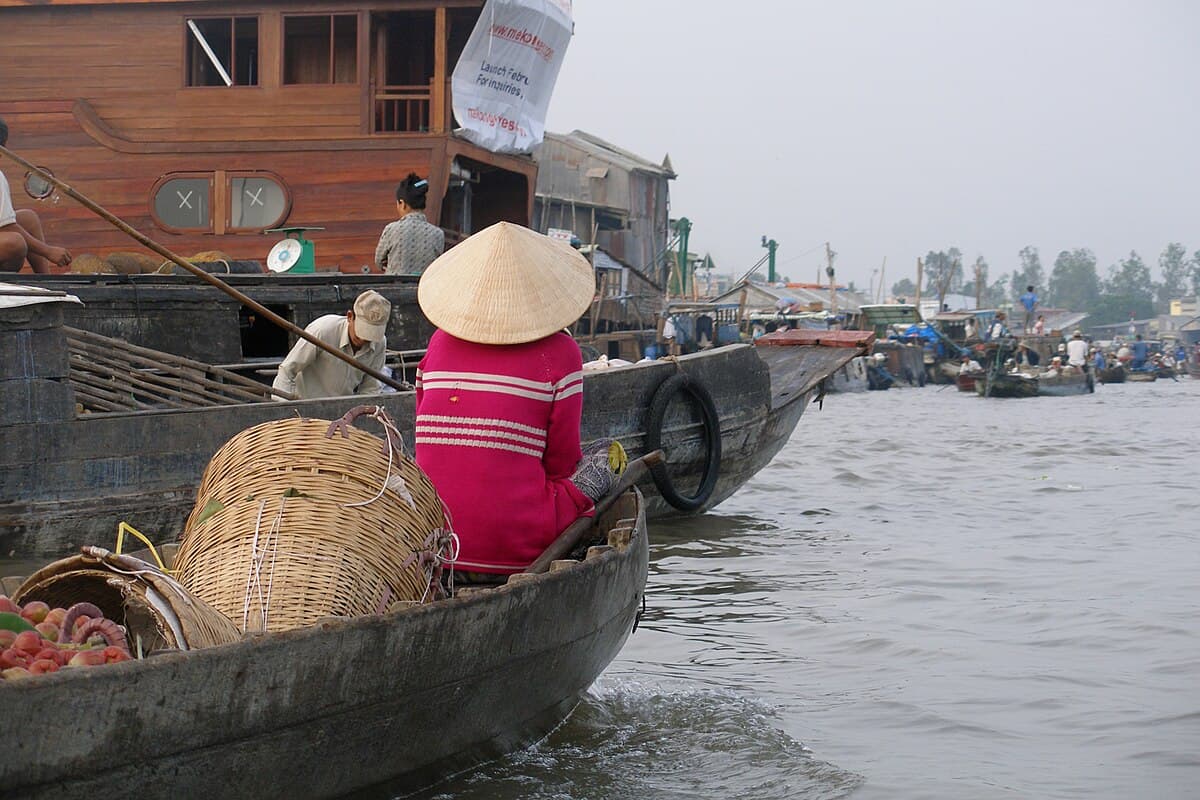
The south is at the tail of its dry season and it is warm work. Ho Chi Minh City historically averages highs near 34-35°C with very little rain, often under 30 mm for the entire month, and the Mekong Delta runs similar. The upside is reliability: dry mornings, no wet-season disruption, and easy river travel for floating markets and homestays. The Mekong Delta destination guide covers how to structure that.
One honest wrinkle: March and April are the peak of dry-season saltwater intrusion in the delta, when reduced upstream flow lets salinity push tens of kilometres inland. Vietnamese authorities monitor and manage it every dry season. It is an agricultural problem rather than a tourist one and does not affect boat trips or floating markets, but it is why the delta looks lower and browner in March than in high-water photographs.
Beaches hold up well. Nha Trang sits near 23-30°C with a sea around 27°C, and Phu Quoc is warm with sea temperatures near 29°C on the back end of its dry season. April is hotter across all of it, which is the practical argument for March if the south is your focus.
Crowds and prices: the shoulder-value case
March's second argument is money. Vietnam's international high season runs roughly December through February, and the domestic peak is Tet, which in 2027 falls on February 6 with the official holiday period running through the following week. By March both have passed. Domestic transport is back to normal, holiday surcharges are gone, and there are no Vietnamese public holidays in March at all — Vietnam's national holiday calendar jumps from Tet straight to Hung Kings Commemoration Day, which falls in mid-April in 2027.
On airfares, guides and operators consistently place March and April below the January-February peak, with commonly cited savings of 10 to 30 percent depending on route and booking lead time. Treat those figures as directional — they come from travel-industry summaries, not audited fare data. The direction is what is reliable: March is cheaper than the peak it follows. The cheapest month to fly guide has the fuller airfare picture, and the travel cost index covers on-the-ground spending.
Crowds are moderate rather than absent. Hoi An, Ha Long and Sapa still fill at weekends, and the good Ha Long boats sell out. Book those; most else can be arranged a few days ahead.
What's on in March 2027
- The spring pilgrimage season continues. Northern temple festivals that open in the first lunar month run for weeks. The best known is the Perfume Pagoda pilgrimage around 70 km from Hanoi, commonly listed as running from the sixth day of the first lunar month to the end of the third — which covers all of March 2027. Weekends draw heavy domestic crowds. Go midweek.
- Hoi An full-moon lantern night, March 21, 2027. The Old Town dims its electric lights for the evening before each full moon and lights silk lanterns instead. Published 2027 calendars list March 21 for the March edition; confirm locally, since the observance follows the lunar calendar and occasionally shifts.
- International Women's Day, March 8. Widely marked across Vietnam, with flower prices spiking and restaurants busy. It is not a public holiday, so nothing closes.
- Central Highlands spring festivals. Several Dak Lak and Gia Lai community festivals are tied to the third lunar month, which in 2027 begins in early April rather than March. If a specific one is the reason for your trip, verify the 2027 date locally before booking.
Who should pick a different month
March is not universally correct. For a purely southern beach holiday, December and January deliver cooler, equally dry conditions on Phu Quoc. For dependable blue skies over Hanoi and Ha Long, late October and November are the safer bet. For northern rice terraces green or gold, aim at June or late September — March catches them mid-preparation, flooded and mirror-like but not yet planted. And if the lowest prices matter more than weather, the wet months from May to September undercut March comfortably.
March's claim is about breadth: it is the best month if you are covering a lot of ground, and the best value among the months that manage it.
Limitations
Everything above is built on historical climate averages, and single years deviate. Published March figures for the same city differ meaningfully between sources — Hanoi's rainfall is variously given as roughly 35 mm or 61 mm, Da Nang's from around 20 mm to nearly 100 mm — reflecting different stations and reference periods rather than one source being wrong. Late cold surges can still reach the far north in early March, and the drizzle season does not end on a fixed date. Workaround: use the regional table as a prior, check each destination's 10-day forecast about a week out, and pack a light rain layer for the north whatever the averages say.
Dates and prices carry their own uncertainty. Lunar-calendar festivals are confirmed close to the date and can shift, and the airfare savings quoted here come from travel-industry summaries rather than audited fare data. Workaround: confirm any festival you plan around with a local operator or the venue directly, and price your own dates on a flexible-date search rather than trusting a percentage.