
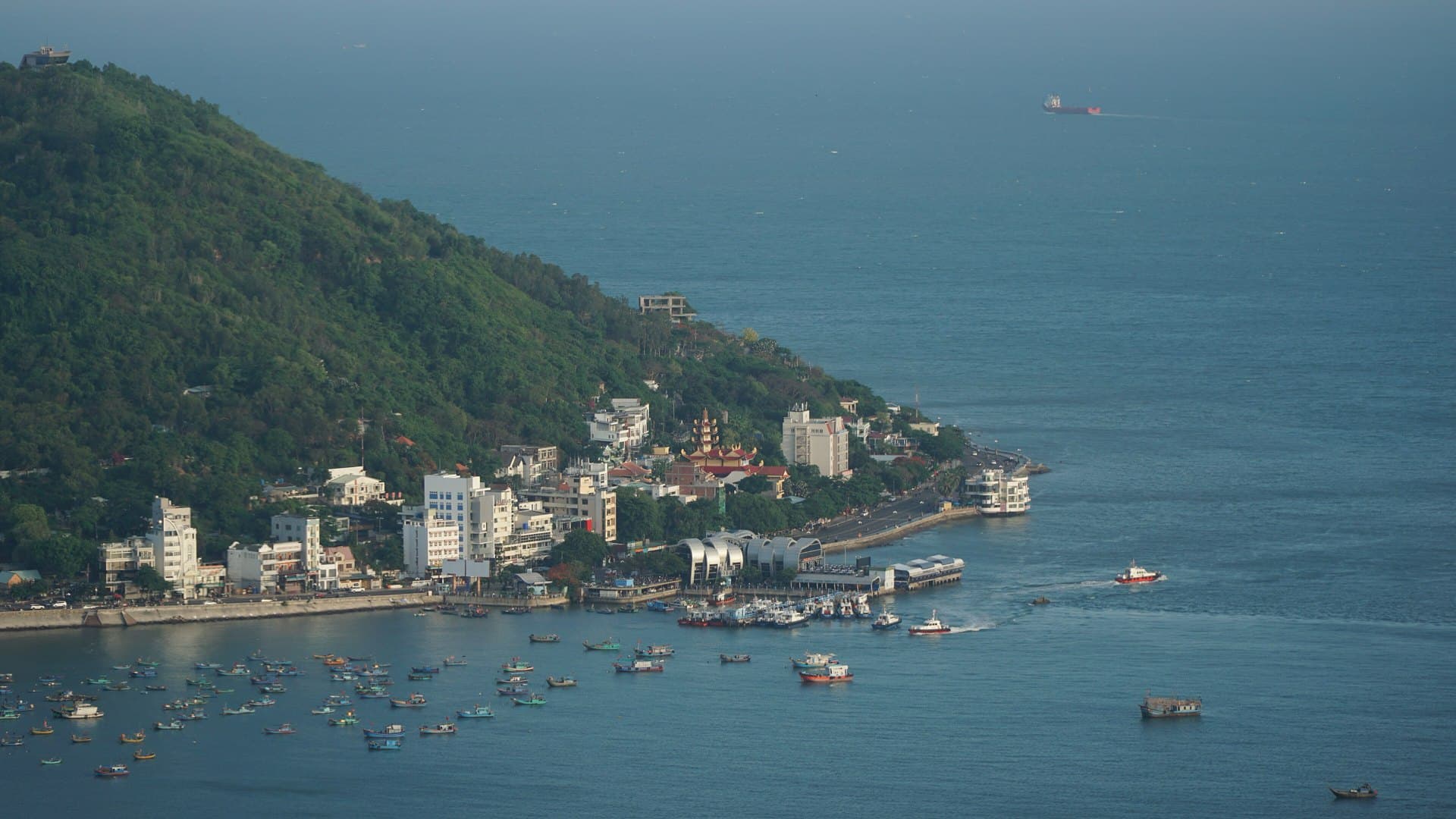
Vung Tau has two clear seasons. From December to April it is dry and sunny, with almost no rain from January to March and a sea of about 25-28°C. From May to October it is the rainy season, with 180 to 240 mm a month, usually in afternoon storms, and the warmest water of the year. November is the changeover. It is hot all year, at 29-32°C by day, and typhoons rarely reach this coast. For a beach day from Ho Chi Minh City, the dry season is best.
Vung Tau, the seaside town about 95 km south-east of central Ho Chi Minh City, has been part of the city since Ba Ria-Vung Tau province merged into it in 2025. Our Vung Tau day trip guide covers the hydrofoil, the Christ statue and the beaches.
Vung Tau weather at a glance
The table gives official long-run averages for Vung Tau from the Vietnam Institute for Building Science and Technology, as published in Wikipedia's climate table. Sea temperatures are satellite averages from Sea Temperature.
| Month | High | Low | Rain | Rain days | Sunshine (h/month) | Sea |
|---|---|---|---|---|---|---|
| January | 29.3°C | 23.1°C | 4 mm | 1 | 241 | 24.9°C |
| February | 29.6°C | 23.9°C | 1 mm | 0 | 251 | 25.4°C |
| March | 30.6°C | 25.5°C | 5 mm | 1 | 286 | 26.1°C |
| April | 32°C | 26.8°C | 34 mm | 4 | 272 | 27.8°C |
| May | 32.4°C | 26.6°C | 182 mm | 14 | 229 | 29.2°C |
| June | 31.8°C | 25.8°C | 224 mm | 19 | 192 | 29.3°C |
| July | 31.2°C | 25.3°C | 225 mm | 20 | 206 | 29.1°C |
| August | 31.1°C | 25.4°C | 206 mm | 19 | 196 | 28.7°C |
| September | 31°C | 25.2°C | 219 mm | 18 | 184 | 28.4°C |
| October | 30.7°C | 25°C | 240 mm | 17 | 189 | 28.4°C |
| November | 30.6°C | 24.7°C | 64 mm | 7 | 203 | 27.7°C |
| December | 29.8°C | 23.6°C | 16 mm | 4 | 205 | 26.3°C |
The year totals about 1,420 mm of rain and about 2,640 hours of sunshine. That makes Vung Tau drier than Ho Chi Minh City, which our Ho Chi Minh City weather guide covers, but with the same split between a dry winter and a wet summer.
Dry season, December to April: the best time
This is Vung Tau's beach season. From January to March, the three months together bring only about 10 mm of rain, and the sun shines for 240 to 290 hours a month. Days are 29-31°C, nights a pleasant 23-25°C, and the sea is at its coolest, about 25-26°C. December still sees a few showers as the rains end, and April is the hottest, sunniest month before the wet season, with highs of 32°C and the sea warming to about 28°C.
It is also Vung Tau's busiest period, especially at weekends and around Tet, when day-trippers and families from Ho Chi Minh City fill the beaches and seafood restaurants. Go on a weekday if you can.
Rainy season, May to October: afternoon storms
About 90% of the year's rain falls from May to October, at 180 to 240 mm a month over 14 to 20 rain days, with October the wettest. The typical pattern is a bright morning and a heavy storm in the afternoon or evening, although some days are grey and wet throughout. The sea is at its warmest, about 28-29°C, and calmer between storms.
It is a perfectly good season for a day trip: do the climb to the Christ statue, the lighthouse and the beach in the morning, and keep the afternoon for seafood or a café. Rooms and the weekday hydrofoil are cheaper than in the dry season.
November: the changeover
November brings about 64 mm of rain over seven days as the wet season ends, with the sea still warm at about 28°C. It is a good-value month, and quieter than December. It is also the month when southern Vietnam's rare typhoons are most likely, so check the forecast.
Typhoons: rare, but not unknown
In southern Vietnam, typhoons generally come between mid-October and late December, peaking in early November, and most weaken over the sea before reaching the coast. Vung Tau has been hit a few times. Tropical Storm Usagi made its final landfall at Vung Tau on 25 November 2018 as a weakening storm, bringing 300-400 mm of rain to Ho Chi Minh City, and Typhoon Durian brought gusts of 126 km/h to a Vung Tau weather station in December 2006, blowing the roofs off about 500 houses in the province. Neither is a reason to avoid November, but it is worth watching the forecast.
What the weather means for your trip
Choosing the month. December to April is best for a beach day; May to October works for a morning-focused trip; November is quiet and good value.
Getting there. The GreenlinesDP hydrofoil and the roads to Vung Tau both run in the rainy season, although the hydrofoil can be suspended in rough seas. Our Vung Tau day trip guide has the details, and our best day trips from Ho Chi Minh City guide compares the other escapes.
Going further. Vung Tau is a departure point for the ferry to Con Dao; our Con Dao guide and ferry prices guide cover the crossing. For another dry-season beach, see our Mui Ne weather guide.
Limitations
The table uses official long-run averages for Vung Tau's weather station as reproduced on Wikipedia; the source does not state the averaging period or rain-day threshold. Sea temperatures are satellite averages for the nearby coast. Single years vary, and a single storm can bring several days of rain in the dry season.
Workaround: use this page to choose the season, check the forecast before you travel, and plan beach time and viewpoints for the morning in the rainy season.