
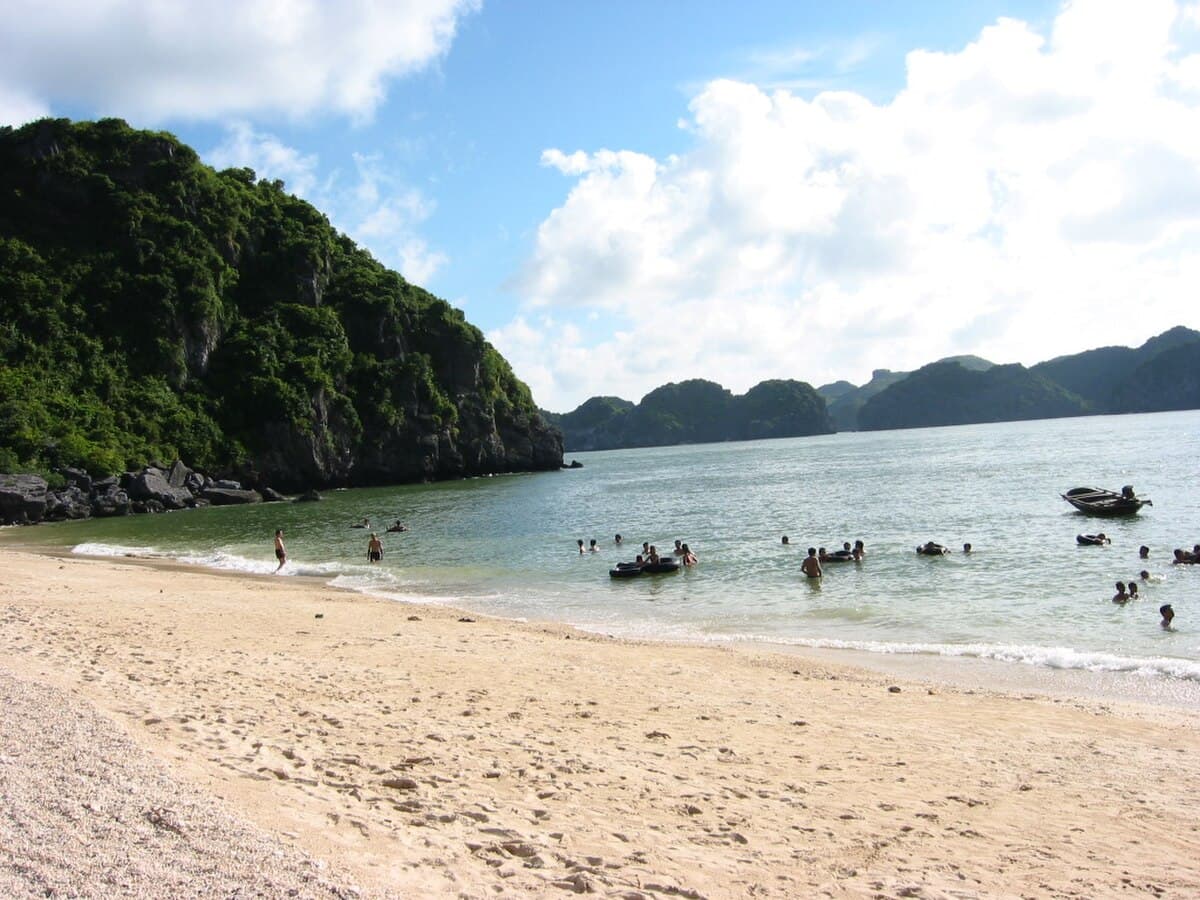
In 2012, Pham Hong Long published "Tourism Impacts and Support for Tourism Development in Ha Long Bay, Vietnam: An Examination of Residents' Perceptions" in Asian Social Science (Vol. 8, No. 8). It remains the most widely cited quantitative study of how Ha Long Bay residents themselves view the tourism economy, and the findings are more useful than the study's age might suggest — because they frame every sustainability conversation about the bay that has followed.
The findings in one sentence: residents overwhelmingly support tourism, with one specific reservation. That reservation is where every modern overtourism discussion about Ha Long starts.
What the study did
Sample and method
- Size: 417 Ha Long Bay residents surveyed.
- Approach: Structured questionnaire with Likert-scale items on perceived tourism impacts (economic, socio-cultural, environmental) and on support for tourism development.
- Demographics of the sample: majority young, majority Kinh ethnicity (i.e., the dominant Vietnamese ethnic group rather than ethnic minorities), mostly married, most with 20+ years of residence in the area. In other words, the sample captures long-term local residents rather than seasonal tourism workers or recent migrants.
- Context: Ha Long Bay was Vietnam's first UNESCO World Heritage Site (1994), a status that shapes both tourism investment and the local debate about how to grow responsibly.
Key findings
| Dimension | Resident view |
|---|---|
| Overall tourism | Positive |
| Support for further tourism development | Clear majority support |
| Economic impacts of tourism | Positive |
| Socio-cultural impacts of tourism | Positive |
| Environmental impacts of tourism | "Slightly ambivalent" |
The ambivalence on environmental impacts is the most important finding in the paper. It's not "residents oppose tourism's environmental damage" — it's "residents are uncertain / mixed." That's the finding pattern of a community that benefits economically and socially from tourism, is still committed to it, but knows something is not quite right about how it's managed.
Why the positive overall finding is meaningful
Tourism-research literature globally has documented two recurrent resident-attitude patterns:
- Early-stage (tourism is new): residents are enthusiastic about economic benefits, haven't yet faced downsides.
- Late-stage (mass tourism is dominant): residents become hostile, especially in high-density destinations (think Venice, Barcelona, Dubrovnik).
Ha Long residents in 2012 — when the bay was already receiving substantial tourism — still sat firmly in the "positive but environmentally concerned" space. That's a meaningful vote of confidence in the economic model, not a tacit admission that tourism is a net negative.
What this means for your trip
1. You're not doing anything wrong by visiting
Overtourism narratives in the global travel press sometimes imply visitors should avoid pressured destinations altogether. The Pham (2012) data and its successors explicitly don't support that inference for Ha Long Bay. The affected community wants tourism to continue. They want it better managed, particularly environmentally — which is a very different request.
Visiting isn't the problem. Visiting badly is.
2. The environmental-concern finding translates into specific operator choices
The ambivalence on environmental impacts is the exact category that responsible-visitor choices can address. At the booking stage:
- Choose smaller cruise vessels over mega-boats. Smaller boats have less aggregate wastewater output, fewer guests per meal, and typically better crew-to-guest ratios.
- Ask about waste handling. Operators with written waste-management policies (greywater treatment, no-discharge commitments, on-land disposal) are investing in the environmental dimension the community flagged.
- Prefer newer vessels. Post-2018 boats have materially better engine emissions and waste systems than older ones. Many older boats have been retired under Quang Ninh province rule changes — but not all.
- Avoid single-use plastics onboard. A small signal, but aggregates — and operators that have eliminated them tend to be investing in the broader environmental story.
3. Spread your footprint away from pressure points
The 2012 data on environmental ambivalence is essentially a request to reduce marginal environmental load per visitor. Practical ways:
- Base in Cat Ba and cruise Lan Ha Bay — same karst scenery, meaningfully lower boat density than the main Ha Long route.
- Take a daytime cruise instead of overnight if your flexibility allows — overnight boats have ~3× the environmental footprint per visitor of day cruises due to accommodation load.
- Visit in genuine off-peak (late April–May, mid-September to late October). Fewer boats per day = less per-site pressure.
4. The community-side evidence should change how you read "overtourism" stories
If you've seen international press about Ha Long Bay overtourism, it's often framed as "locals push back against tourism." The resident-perception data doesn't support that framing. Locals in 2012 said clearly they wanted tourism; the 2025 overtourism study from Hoa Binh University doesn't change that — it extends the environmental-concern portion with more granular recommendations for governance and operator behaviour.
Treat "overtourism" as a governance and operator-management problem, not a visitor-welcome problem. That distinction matters when you're deciding whether to visit at all.
Limitations & caveats
- The study is from 2012 and fieldwork predates that — tourism volume to Ha Long in 2025 is several multiples of 2011 levels. Resident sentiment may have shifted. That said, the direction of the findings (positive-overall, environmentally-concerned) has been reinforced by subsequent work.
- The sample is Kinh-majority and long-term residents. Ethnic-minority fishing communities (especially the floating villages) and newer migrants are under-represented. Their views may differ.
- "Slightly ambivalent" is the authors' phrasing, not a precise statistical characterisation. The abstract doesn't publish the specific Likert means, so we're taking the authors' summary at face value.
- Resident perceptions are not a substitute for environmental measurement. A community can feel fine about water quality while the water is declining; a 2024 economic valuation study added direct environmental-impact measurement that complements the perception data.
- Our traveller-facing recommendations go beyond the paper. Pham's study described perceptions; our translation into operator-choice advice is our own synthesis.
Sources & further reading
- Primary source: Pham, H. L. (2012). Tourism Impacts and Support for Tourism Development in Ha Long Bay, Vietnam. Asian Social Science, 8(8). The paper is open-access.
- Companion qualitative study: The Perceived Impacts of Tourism: The Case of Ha Long Bay, Vietnam — Pham's earlier 11-resident in-depth-interview study (International Journal of Tourism Sciences, 2014).
- Recent extension: Ha Long Bay overtourism research (2025) — Do Gia Hung's overtourism framework.
- Environmental measurement companion: Economic Valuation of Tourism's Environmental Impacts at Ha Long Bay (2024).
Related on this site:
- Ha Long Bay destination guide — operator selection, timing, alternatives
- Cat Ba Island — the better base for Lan Ha Bay
- Hoi An community-based tourism research — a parallel resident-perception study from a different UNESCO site