
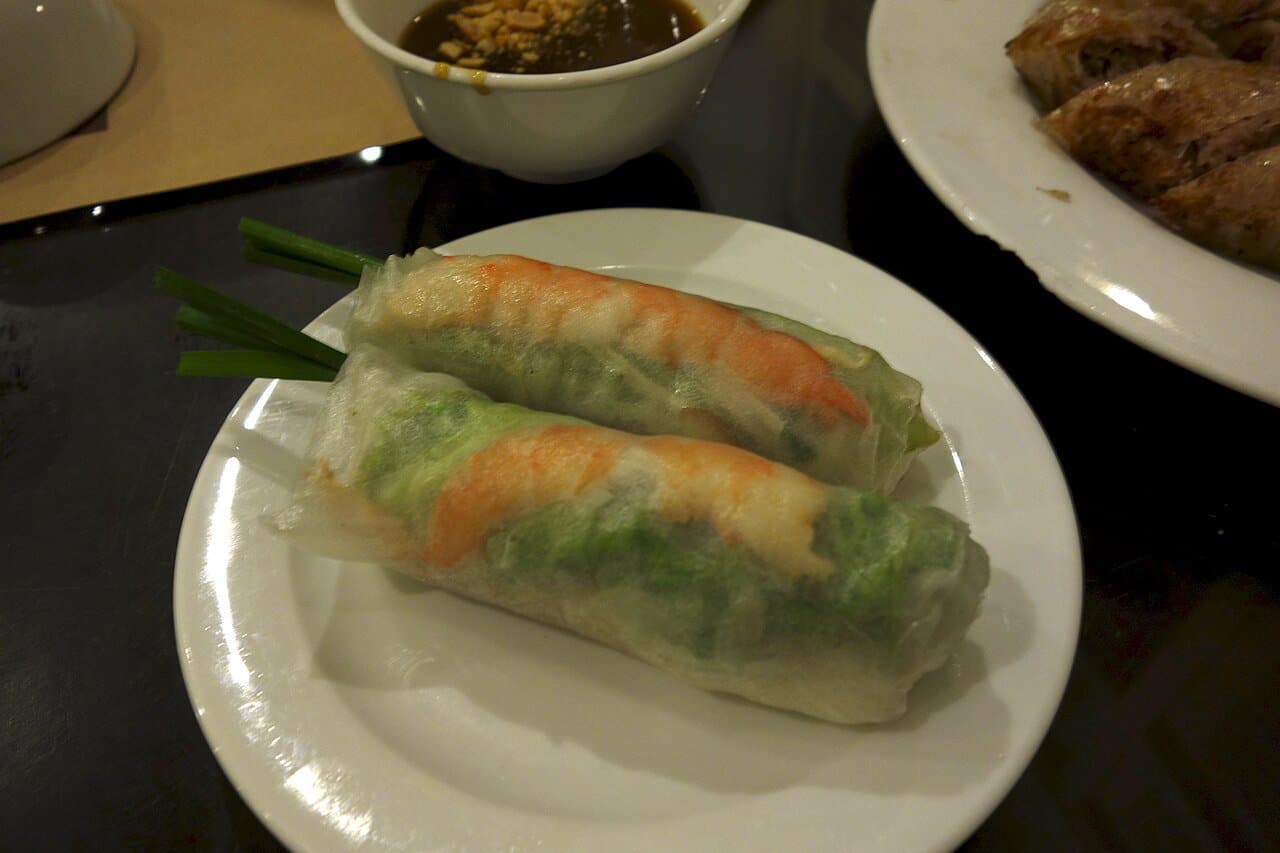
In early 2026, IMARC Group published its Vietnam Culinary Tourism Market report, sizing the segment at $6.24 billion in 2025 with a forecast of $20.17 billion by 2034 — a 13.92% compound annual growth rate. That's the most rigorous public estimate we've seen of the food-tourism economy specifically (as distinct from broader tourism), and it adds quantitative weight to a story that's been visible on the ground for years.
Vietnam's food-tourism scene is real, growing fast, and structurally well-positioned for sustained expansion. Here's the data, and what it means for travellers planning trips that lean toward eating-and-cooking experiences.
What the IMARC report covers
The report segments the Vietnam culinary tourism market across five dimensions:
| Dimension | Categories |
|---|---|
| Activity type | Culinary trails · Cooking classes · Restaurants · Food festivals & events · Others |
| Tour type | Domestic · International |
| Age group | Baby Boomers · Gen X · Gen Y (Millennials) · Gen Z |
| Booking channel | Online Travel Agents (dominant) · Traditional agents · Direct bookings |
| Region | North · Central · South |
The headline numbers:
- 2025 market size: USD 6.24 billion
- 2034 forecast: USD 20.17 billion
- CAGR (2026–2034): 13.92%
- Forecast period: 2026–2034
That CAGR is roughly triple Vietnam's broader tourism growth — culinary tourism is pulling above its weight inside the wider $33B-and-growing tourism economy.
What the report identifies as growth drivers
-
Michelin recognition. Seven Vietnamese restaurants earned at least one Michelin star in 2024. Nén Da Nang became the country's first Michelin Green Star recipient — Michelin's separate recognition for sustainability commitment (waste reduction, ethical sourcing, environmental practice). The Michelin entry into Vietnam in 2023 was the country's biggest step into international fine-dining recognition.
-
Experiential-demand acceleration. Klook (the Asia-focused activities marketplace) reported a 70% year-on-year revenue increase in culinary services in 2024. That's not market-research methodology — it's a single-platform booking-volume reading — but it's directionally consistent with IMARC's broader sizing.
-
Digital-channel dominance. Over 70% of international tourists now book through online platforms, with online-travel-agent (OTA) searches up 30–35% in 2024. Cooking classes, food tours, and restaurant reservations have all migrated to the OTA channel faster than other experience categories.
-
AI-assisted planning. The Vietnamese government's "Visit Vietnam" platform launched AI-powered personalised itinerary planning in 2024–2025. Food-experience itineraries are among the most common AI-recommended outputs, which feeds back into demand.
What the report identifies as challenges
- Inconsistent quality standards — especially in cooking-class operators, where the regulatory floor is light and execution varies wildly.
- Skilled-staff shortages — chefs and instructors with both culinary expertise and English-language teaching ability are scarce relative to demand.
- Infrastructure deficiencies in less-developed destinations — limit the geographic spread of culinary tourism beyond Hanoi, Hoi An, and HCMC.
What this means for your trip
1. Cooking classes and food tours have more options than ever — but pick deliberately
The 14% CAGR through 2034 means the market is absorbing new operators faster than reputation systems can sort them. Practical implications:
- For first-timers, stick to operators that have been in business 5+ years with consistent reviews. Mass-produced quality is dependable; experimental newcomers vary widely.
- For repeat visitors or food enthusiasts, the new-operator landscape is where the most interesting experiences emerge. Smaller cohort sizes, specialised cuisines (Cham food, central-Vietnam imperial cuisine, ethnic-minority cooking), and chef-led tasting menus are appearing across all three regions.
- Look for instructor stability. A class taught by the same person who started it 8 years ago is a different proposition than a class taught by rotating staff at a high-volume operator.
2. The Central Vietnam corridor is where the growth concentrates
Hoi An has been the Vietnamese culinary tourism epicentre for two decades. Da Nang's Michelin entry has extended the corridor north. Hue (with its imperial-cuisine heritage) closes the trio. Practical itinerary suggestion: 5–7 days in the central corridor (Hue → Da Nang → Hoi An) is the deepest culinary tourism experience Vietnam offers.
For something less saturated, the Mekong Delta and the Central Highlands have meaningful food traditions that haven't yet been absorbed into the international culinary-tourism circuit. They're harder logistically (more cars, more language friction) but the quality-to-saturation ratio is excellent.
3. Klook's 70% YoY growth means premium-pricing pressure is real
The fastest-growing booking channel is also where the steepest price increases are happening. Klook-listed cooking classes and food tours have crept up 10–25% over 2023–2024 baselines. Direct booking with operators (where their websites support it) often saves 5–15% versus the OTA-channel price.
Practical: cross-check OTA listings against the operator's direct site before booking. Many small operators list on OTAs primarily for visibility but offer direct-channel discounts.
4. The Booking.com Vietnamese-traveller data and IMARC growth data fit together
The Booking.com 2025 Vietnamese-traveller survey found 83% of Vietnamese consumers prioritising experience-optimised spending. IMARC's 14% culinary tourism CAGR is partly that demand finding its outlet. Domestic Vietnamese culinary tourism (Vietnamese tourists eating their way around their own country) is meaningfully larger than the international-visitor share of the same market.
The implication for international visitors: the operators serving Vietnamese domestic tourists are the lower-friction recommendation engines for cooking classes and food experiences than those marketed primarily to international visitors. They're often cheaper, more authentic to the regional cuisine, and more dependable. The cost is that English-language friction is higher.
5. Michelin's Green Star matters more than the regular stars
The seven 2024 Michelin star awards are individually significant, but as a category they slot Vietnam alongside Bangkok, Singapore, and KL in international fine-dining recognition — useful but not transformational. The Green Star at Nén Da Nang is more interesting because it links culinary excellence to sustainability practice. That's a frame that travellers increasingly care about, and one that Vietnamese operators are positioned to lead on (small-scale, locally-sourced, low-supply-chain-overhead operations are advantaged).
For travellers prioritising sustainability alongside food quality, the Green Star is the clearer signal than the regular star. Expect more Green Star recognitions in Vietnam through 2026–2027.
Limitations & caveats
- IMARC is a paid market-research firm. Its sizing methodology (combining survey data, operator reports, and macro-tourism statistics) is industry-standard but not independently audited. The $6.24B figure has roughly ±15% confidence range typical of this research category.
- The 13.92% CAGR is a forecast, not a measured rate. Forecasts assume policy continuity, no major external shocks, and consistent demand recovery. The actual CAGR will diverge from the forecast.
- The Klook 70% YoY figure is a single-platform metric, not a market-wide one. Klook is large in Asia but doesn't represent the full booking ecosystem (especially direct-to-operator bookings).
- The full IMARC report is paywalled. Public summaries (including ours) are based on the marketing-page content. The full methodology and sub-segment tables aren't publicly available without purchase.
- Domestic and international-tourism splits aren't published in the public summary. Our claims about domestic vs international culinary tourism are inferred from Booking.com survey data, not from the IMARC report directly.
Sources & further reading
- Primary source: IMARC Group — Vietnam Culinary Tourism Market Size, Share, Trends and Forecast 2026–2034 — public summary; full report paywalled.
- Klook industry context: Travel and Tour World — Vietnam Focuses on Culinary Tourism Growth.
- Local-economy companion: Hanoi Street Food Spending Research (IJRISS, October 2025) — micro-economic data on consumer behaviour.
- Cultural-academic companion: Hoi An Food Tourism Transformation (Food, Culture & Society, October 2023) — qualitative ethnography of how the food landscape has changed.
Related on this site:
- Hoi An destination guide — Vietnam's culinary tourism heart
- Hoi An cooking class day tour — practical food-experience option
- Booking.com 2025 Vietnamese-traveller survey — the consumer-side data complement