
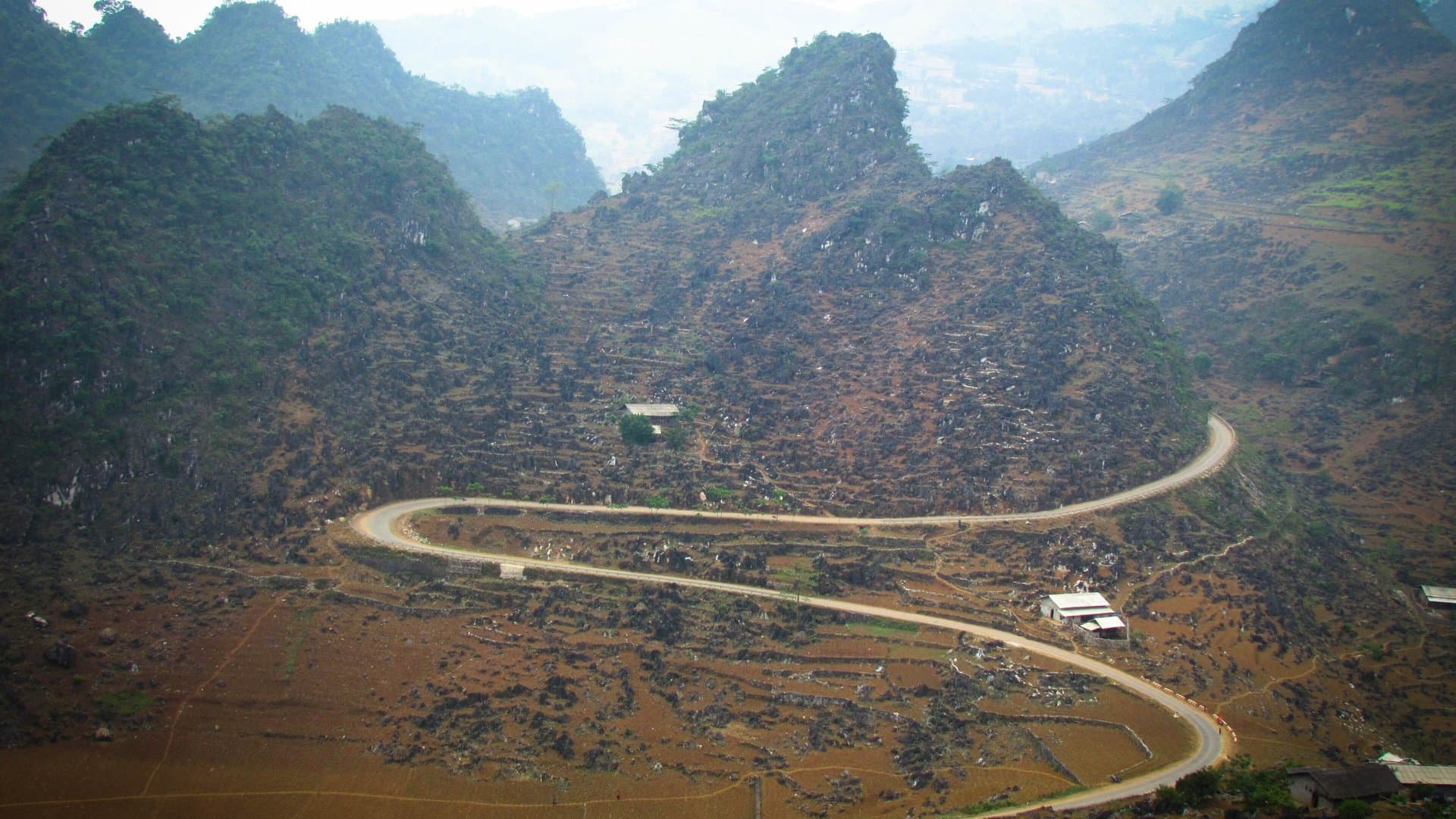
You do not need to go back through Hanoi to get from Sapa to Ha Giang. Direct buses and limousine vans cross the mountains between the two in about 5.5 to 7 hours, for roughly 16 to 30 US dollars as of 2026. A private car takes about 5 to 6.5 hours and costs roughly 120 to 180 dollars per car. The road is about 230-250 km, and the alternative, back to Hanoi and out again, adds most of a day.
This is one of the most useful links in northern Vietnam, because Sapa and Ha Giang are the region's two big mountain trips and many travellers want both. Our Sapa vs Ha Giang comparison helps if you are still deciding whether to do one or both.
Comparison at a glance
| Option | Time | Price (2026) | Best for |
|---|---|---|---|
| Direct bus | ~6-7 hours | ~$16-20 | Budget travellers |
| Limousine van | ~5.5-6 hours | from ~$20 | Most travellers |
| VIP cabin bus | ~6-7 hours | from ~$22 | Privacy, evening departures |
| Private car | ~5-6.5 hours | ~$120-180 per car | Groups of 2-4, flexible timing |
| Via Hanoi (two buses) | 12+ hours | ~$25-40 | Only if you must pass through Hanoi |
These are road-transport times on mountain roads, not expressway times. Buses make pickups and a rest stop, and the steep, winding sections limit speed whatever you ride.
The direct bus and limousine van
The direct services are the default. Most collect you from your hotel in Sapa town, drop down to Lao Cai, then cross east through Bao Yen and Bac Quang before turning north on Highway 2 to Ha Giang city, with a rest stop partway. Operators and booking sites list the trip at about 5.5 to 7 hours.
There are three broad classes. Standard buses are the cheapest, at around 16 to 20 dollars. Limousine vans, with fewer, larger seats, start at about 20 dollars and are usually the fastest at 5.5 to 6 hours. VIP cabin buses, with private pods, start at around 22 dollars. Morning departures leave around 7 am and arrive in the early afternoon. Evening sleepers also run, but they arrive in the small hours, so check that your Ha Giang guesthouse will let you in.
Book through your Sapa hotel or homestay, or on platforms such as Vexere or 12Go. Our sleeper bus fares guide explains how the classes and prices compare across Vietnam.
By private car
A private car is the best choice for two to four people, or for anyone who wants to reach Ha Giang with the afternoon free. The drive takes about 5 to 6.5 hours, and operators quote roughly 120 to 180 dollars per vehicle as of 2026, depending on the car. You choose the departure time, stop for photos and meals where you like, and arrive at your door rather than at a bus office. Confirm tolls and the driver's meals are included when you book.
Why not go back through Hanoi
Routing through Hanoi means about six hours from Sapa to the capital, a change of bus, then roughly six to seven hours north to Ha Giang: 12 hours or more on the road, and usually an overnight in between. That is how many itineraries used to work before the direct services became common. Today it only makes sense if you need to be in Hanoi anyway. Our Hanoi to Ha Giang and Hanoi to Sapa guides cover those two legs.
On the road
The first hour, down from Sapa to Lao Cai, and the last stretch into Ha Giang are the steepest and most winding parts of the trip. If you get motion sickness, take something before you leave and ask for a seat near the front. Larger bags go under the bus or in the back of the van, so keep water, snacks, a warm layer and your charger with you. Buses stop once or twice for a toilet break and a quick rice-and-soup lunch, usually cash only, so carry some small Vietnamese dong notes.
Drivers speak little English, so save your Ha Giang guesthouse's address in Vietnamese and share your live location with your host. Mobile signal can drop in the mountain sections, which is another reason to download offline maps before you set off.
Which should you pick?
- Solo or on a budget: a morning direct bus, booked a day ahead.
- Most travellers: a limousine van, the fastest shared option.
- Two to four people, or starting the loop the next day: a private car, leaving mid-morning.
- Arriving late is fine: an evening VIP cabin bus, with a guesthouse that accepts early-hours arrivals.
Gotchas
- Landslides. The mountain roads between the two provinces are vulnerable in heavy rain, especially from June to August. Delays of hours are possible, so don't plan a tight onward connection. Our Ha Giang weather guide and Sapa weather guide show when the rain peaks.
- Holidays. Tet and Vietnamese long weekends fill the vans quickly and push prices up.
- The loop starts in Ha Giang city. Arriving in the afternoon gives you time to meet your driver or rental shop and set off the next morning. Since an April 2026 provincial directive, motorbike tours must use licensed operators; our Ha Giang loop routes guide and loop cost guide cover the options.
Limitations
Prices, departure times and journey times come from 2026 operator and booking-site listings, and they change with the season, fuel prices and demand. Road times vary with weather and roadworks, and the distance depends on the exact route the driver takes. We have not found an official timetable for this route, as it is served by private operators.
Workaround: book through a named operator that confirms the pickup point and arrival time, allow a buffer on arrival day, and in the rainy season check road conditions with your driver or guesthouse before setting off.