
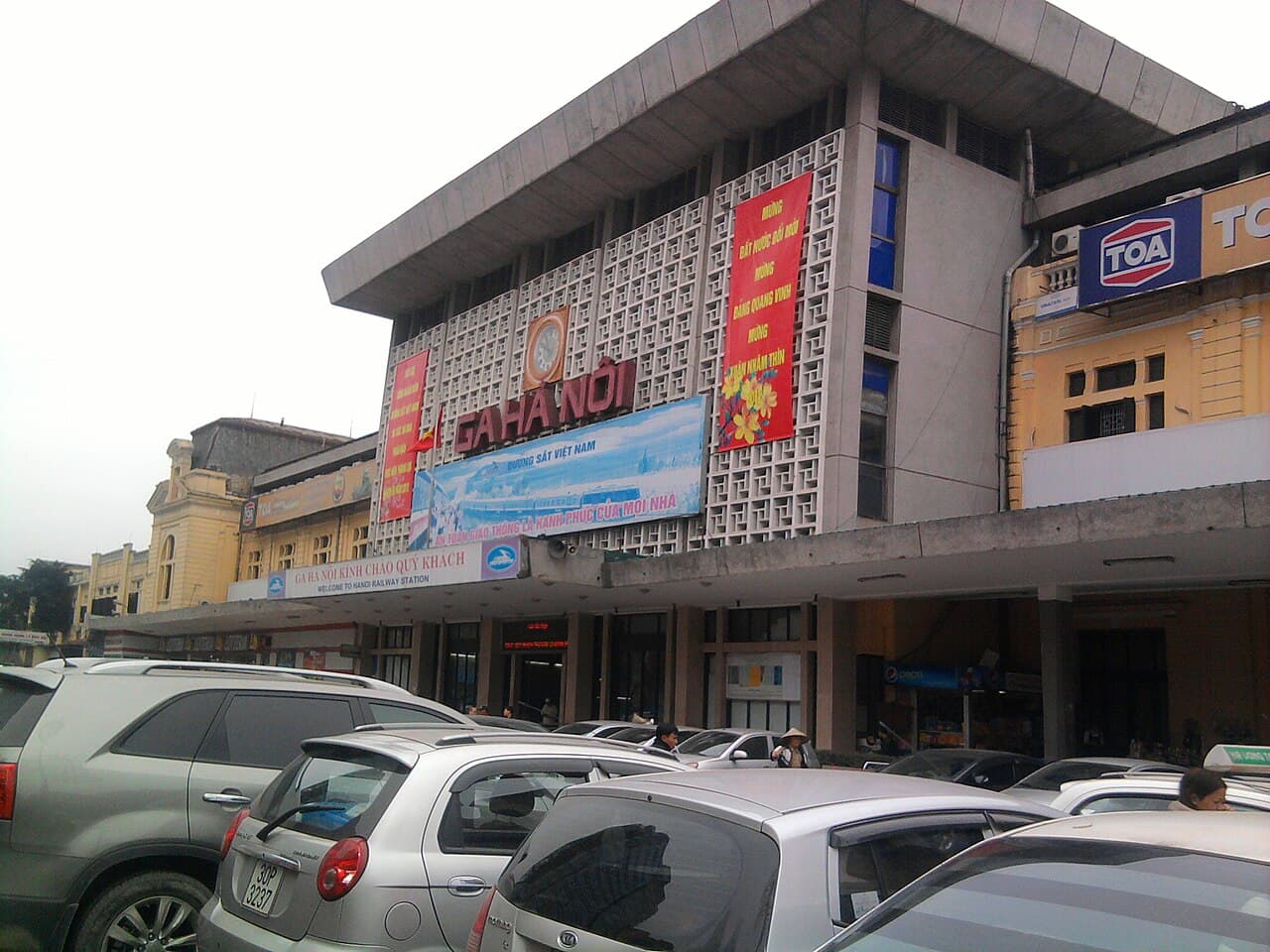
Vietnam Railways — Tổng công ty Đường sắt Việt Nam, or VNR — is the state-owned railway operator. It runs all passenger trains in the country: the Reunification Express mainline between Hanoi and Saigon, the northern branches to Hai Phong and Lao Cai (for Sapa), and a couple of short regional lines. It is not a premium brand. It is the operator. Every train you've seen called "Violette," "Lotus," or "Livitrans" is a private cabin attached to a VNR-run service.
Understanding this distinction is the single most useful thing when booking Vietnamese trains.
What does Vietnam Railways actually run?
The mainline is the Reunification Express, running ~1,726 km from Hanoi to Ho Chi Minh City. It uses French-era meter-gauge track, which caps top speed around 80-100 km/h and average speed around 50 km/h. No bullet trains; no tilting rolling stock. Just diesel locomotives, refurbished carriages, and one of the most scenic rail corridors in Asia.
The services you'll encounter:
- SE1 / SE2 — the flagship Hanoi-Saigon express (odd = southbound, even = northbound).
- SE3 / SE4, SE5 / SE6, SE7 / SE8 — additional daily Reunification services. SE7/SE8 is slowest.
- SE19 / SE20 — dedicated Hanoi to Da Nang overnight. Very popular.
- SP1-SP4 — Hanoi to Lao Cai overnight for Sapa. Private brands dominate this route.
- Branch services — Hanoi-Hai Phong, Saigon-Phan Thiet, etc.
For a full route-level breakdown, see our Vietnam trains guide.
The VNR vs private-cabin model, explained
Every carriage on a VNR train belongs to one of two categories:
- VNR standard carriages — the state-operated stock. Hard seat, soft seat, hard sleeper (6-berth open), soft sleeper (4-berth lockable). Older but serviceable. Cheap.
- Private franchisee carriages — refurbished stock attached to the same train, usually toward the front or rear. Violette, Lotus Train, Livitrans, Laman, King Express, SSC/Chapa (on Hanoi-Sapa). Better bedding, cleaner finishes, sometimes 2-berth instead of 4-berth, 30-80% more expensive.
The train engine, the tracks, the driver, the schedule, the stops, the total journey time — all identical. You pick which carriage you ride in.
Typical carriage options
| Class | Who runs it | Notes |
|---|---|---|
| Hard seat | VNR | Wooden benches, locals only |
| Soft seat | VNR | Reclining, daytime use |
| 6-berth hard sleeper | VNR | Open compartment, cheapest sleeper |
| 4-berth soft sleeper (VNR) | VNR | Standard overnight option |
| 4-berth soft sleeper (private) | Violette / Livitrans / Lotus | Refurbished, nicer bedding |
| 2-berth cabin (private) | Violette / similar | Premium, pricier, honeymoon-friendly |
How to actually book Vietnam Railways
Three routes to get a ticket:
- dsvn.vn (official VNR). Cheapest. Vietnamese-first interface. International cards sometimes fail. Works if you have patience.
- Baolau or 12Go Asia. English interface, clear seat-map selection, small markup ($2-5 per ticket). What most foreign travelers use.
- Private-brand websites (violetteexpress.com, livitrans.com, etc.). Use these only if you specifically want a private cabin on a specific route; they're not a full booking tool for the VNR network.
Book 2-4 weeks out for overnight sleepers in high season. Sapa trains and the Hue-Da Nang daytime coastal run sell out on weekends.
Routes where Vietnam Railways genuinely beats the alternatives
- Hanoi to Sapa overnight — the limousine bus is faster but the train with a private soft sleeper is more comfortable and doesn't carsickness you through mountain switchbacks.
- Hanoi to Hue overnight — SE-class sleeper replaces a hotel night, delivers you to central Hue at breakfast.
- Da Nang to Hue — 2.5 hour daytime ride over the Hai Van Pass. One of Southeast Asia's most underrated train journeys.
For the bigger transport picture, see getting around Vietnam.
The honest limitations
Vietnamese trains are not fast. A Hanoi-Saigon full run is 30-35 hours, two nights on board, versus two hours by air. The appeal is the experience — the country rolling past your window, the arrival into a city center instead of an airport outskirts, the romance of a sleeper. If you treat it as efficient transport you will be disappointed. If you treat it as one leg of the trip's itinerary — say, Hue to Da Nang in daylight, or Hanoi to Sapa overnight — it is a highlight.
Bathrooms are squat or Western, always worse by morning, always worst in the VNR-standard 6-berth. Air-conditioning works, heating in winter usually does not — pack layers December-February. Petty theft from unattended bags does happen; cable-lock your suitcase to the berth frame when you sleep.
The verdict
Vietnam Railways is a creaking, charming, surprisingly comfortable rail operator sitting on top of one of the world's great rail corridors. Book the right class on the right segment, and you'll have one of the best experiences of your trip. Book the wrong one — a 30-hour Hanoi-Saigon marathon in hard sleeper during August — and you will understand why the airlines exist.
Limitations
Vietnam Railways' bookable inventory online sometimes lags behind actual station-counter availability — for sold-out online dates, last-minute station-counter purchases occasionally surface remaining berths that the online system shows unavailable. Workaround: for tight-timing bookings, try the official Vietnam Railways website first; if shown sold out, check Baolau or 12Go Asia (aggregators that sometimes have different inventory); if still no luck, the station counter on the morning of departure occasionally produces last-minute returns or unlocked-inventory berths.
The Da Lat scenic rail and the smaller branch lines have intermittent service patterns — the Da Lat-Trai Mat tourist train runs only when minimum-passenger thresholds are met, which means published schedules don't always reflect actual departures. Workaround: confirm actual departure with the Da Lat station or a local tour operator the day before; or treat the Da Lat-Trai Mat trip as an experience-when-it-runs rather than a guaranteed activity in your itinerary.