
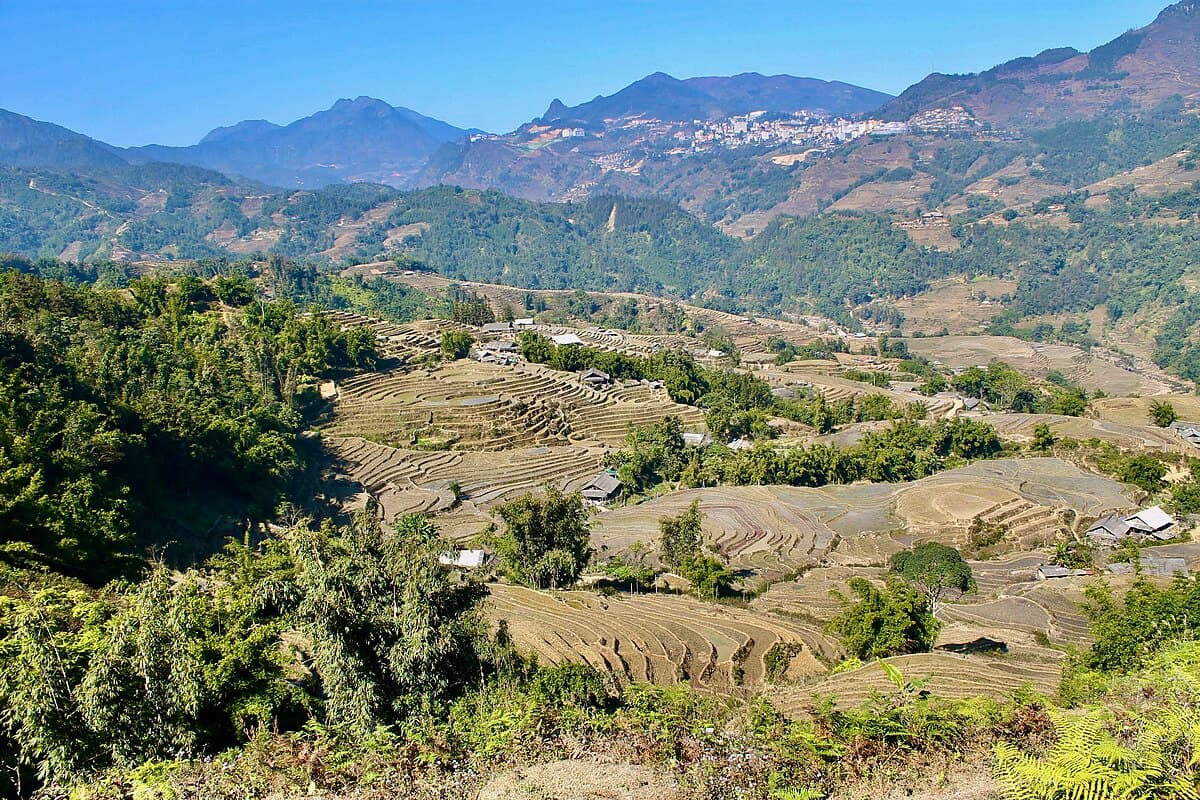
The single best move for enjoying Sapa without the crowds is to sleep in a Muong Hoa valley village — Ta Van, Lao Chai or Ban Ho — rather than in Sapa town, and to time your trip for a midweek stretch outside the big Vietnamese holidays. Almost everything that makes people call Sapa overrated is concentrated in the town centre and at the Fansipan cable-car station: the construction, the coach convoys, the hard-selling vendors, the queues. Drop 7-12 km down into the valley and most of it falls away. This guide is about escaping that scene. For where exactly to sleep, see our where to stay in Sapa guide; for whether Sapa or Ha Giang suits you better, the Sapa versus Ha Giang comparison weighs them side by side. Here we focus on the how of the quiet version.
Why Sapa town disappoints many visitors
Sapa was a French hill station, then for decades a sleepy trekking base. That is not the town most people arrive in now. Since the Fansipan cable car opened in 2016 — billed as a record-breaker and marketed hard ever since — the centre has been rebuilt around mass domestic tourism, with the Sun Plaza complex, a remodelled central square, and near-permanent construction of hotels and guesthouses on the ridgelines. Lao Cai province, which contains Sapa, expects north of 11 million visitors in 2026, several times the figure of a decade ago, and a large share of them pass through the town on packaged weekend trips.
The result is a place that many first-time visitors find jarring. Common complaints are consistent: cranes and half-finished concrete blocking the mountain views, coach groups filling the square, and a persistent stream of street vendors and minority women selling textiles who can be difficult to refuse politely. Fog compounds it — Sapa sits high and can stay socked in for days, so an unlucky weekend can mean crowds and no view at once. None of this means the region is spoiled. It means the town is the weakest part of it, and the fix is to spend as little time there as possible.
The fix: base in the valley, not the town
The valley immediately below Sapa, the Muong Hoa, is where the landscape people picture actually is: terraced rice fields dropping in steps toward a river, ethnic-minority villages, and trailheads at your doorstep. Basing here rather than in town changes the whole trip. You trade lift access, a wide choice of restaurants and a warm hotel room for waking up inside the scenery, walking straight onto the trails, and being clear of the coach traffic by the time it arrives mid-morning.
The trade-offs are real and worth naming. Valley homestays are simpler — often shared bathrooms, thin walls, wood heat rather than reliable hot water in winter — and you are further from a pharmacy or a good coffee. Many visitors split the difference: one soft night in a town hotel to arrive, warm up and eat well, then two nights down in the valley for the actual trekking. That pattern, and which villages suit which travellers, is the whole subject of our where to stay in Sapa guide, so we keep it short here. The headline is simple: the valley is the destination, the town is transit.
Timing: midweek, off-holiday, and the weather windows
Timing does more to control crowds than any other single choice, and the key insight is that the problem is rarely the month — it is the day of the week and the holiday calendar. Sapa is a domestic-tourism magnet, so weekends and Vietnamese public holidays are when the town and the cable car are busiest. The ones to avoid if you can are Tet, the lunar new year in late January or February; the Reunification Day and Labour Day run around April 30 to May 1; and National Day on September 2, along with the school-summer weekends of June to August. Arrive on a Tuesday and leave on a Friday and you will see a different Sapa from the weekend one.
On season, two windows give the best scenery. Late September into October brings the golden rice harvest, the classic Sapa photograph, with cool, clearer air. April and May are green and mild, with the flooded "water mirror" terraces before planting. Both are popular, which is exactly why the midweek rule matters. The months to think twice about are the wet season from roughly June to August, when heavy afternoon storms and occasional landslides hit the trails, and the December-to-February cold, which can drop near freezing with long fog and even rare snow at altitude. For the country-wide picture, the best time to visit Vietnam guide sets the regional context.
Quieter villages and where they sit
Not all of the Muong Hoa valley is quiet. The standard day trek runs from the town edge down through Lao Chai, about 7 km out with the biggest open sweep of terraces, to Ta Van, roughly 10 km down and the hub of the homestay network. Both are lovely and both are busy, because every coach itinerary uses the same trail. For fewer people, keep going.
- Ban Ho sits lower and further down the valley, warmer and noticeably more secluded, with only a trickle of organised tourism.
- Y Linh Ho and Giang Ta Chai are smaller hamlets on the trekking routes that most groups pass through rather than linger in.
- Ta Phin, the Red Dao village famous for herbal bath houses, is in its own valley northeast of town — a separate half-day trip, and quieter than the main circuit for exactly that reason.
The pattern holds across the north: the further you walk from the trailhead nearest town, the thinner the crowds. For how Sapa fits among Vietnam's other quiet corners, see our off-the-beaten-path atlas.
Lesser-walked trekking routes
The busiest route is the valley-floor loop from Sapa through Lao Chai to Ta Van and back — flat-ish, scenic, and heavily walked, with the most vendors. To escape it, ask your guide for the alternatives rather than the default. Routes toward Y Linh Ho and Giang Ta Chai involve more up-and-down and stream crossings and see a fraction of the foot traffic. Heading down toward Ban Ho and Su Pan reaches lower, warmer country that few day-trippers bother with. The Red Dao paths around Ta Phin are a different landscape again.
The real advantage of a local guide is footpath knowledge: minor trails linking hamlets that no coach itinerary uses, where you can walk an hour without meeting another foreigner. Weather and fitness should shape the choice, and a good guide will read both. Our Vietnam trekking guide covers gear and grading, and the Sapa trekking day trip page lays out the standard walking options in detail.
The private-guide versus tour-group choice
How you book shapes how crowded your day feels. A large coach tour is the cheapest and easiest option, but it moves as a block, stops where every other coach stops, and keeps you on the busiest trails on the busiest schedule. A private or small-group guide costs more but buys the thing you came for: an earlier start, the quieter paths, and the flexibility to change plans when the fog rolls in.
There is a second reason to book carefully. Guides picked up cheaply at the bus station or in the square often come tied to a textile-shop stop, which is where the "join your trek" sales pattern leads. Booking through your homestay, or through an established local social enterprise such as Sapa O'Chau, avoids that and puts money into the local ethnic-minority economy more directly. Handspan's village overview is a useful independent reference for planning which hamlets to link.
Honest logistics
Getting there is straightforward and covered fully in our Hanoi to Sapa transport guide: an overnight sleeper bus of around 5-6 hours now that the freeway is complete, or the slower Hanoi-Lao Cai train plus a minivan up to Sapa. Either way you arrive at the town, then transfer down into the valley — most valley homestays arrange a pickup, or a short taxi or motorbike-taxi ride covers it.
A few honest cautions. Winter valley homestays can be genuinely cold, so check for heating before booking off-season. Cash matters once you leave the town — bring enough, as valley villages run on it. And the cable car and its station can close for maintenance windows, so if summiting Fansipan is a priority, confirm operating dates before you build a day around it. The point of the quiet version of Sapa is not to see less; it is to see the part that made the place famous, without the scrum that grew up around it. The official record of the Fansipan cable-car opening is a reminder of how recent that change is.
Limitations
- Crowd levels are patterns, not guarantees. Midweek and off-holiday timing reliably thins the crowds, but a clear-weather window or a big domestic promotion can still fill the valley; treat this as odds-shifting, not a certainty.
- Village character changes. The quiet hamlet of one season becomes the next season's homestay cluster; Ta Van was once the escape and is now the hub. Confirm the current feel of a village close to your trip.
- We do not recommend specific homestays here. Named properties date quickly and this is the crowd-avoidance guide, not the accommodation one — that lives in where to stay in Sapa.
- Prices, transport times and holiday dates shift. The bus and train timings and the Vietnamese holiday windows are close guides for 2026, not a live feed; confirm dates when you book.
- Weather is the wild card. Fog and rain can undo the best timing. Building a spare day into the plan matters more in Sapa than in most of Vietnam.