
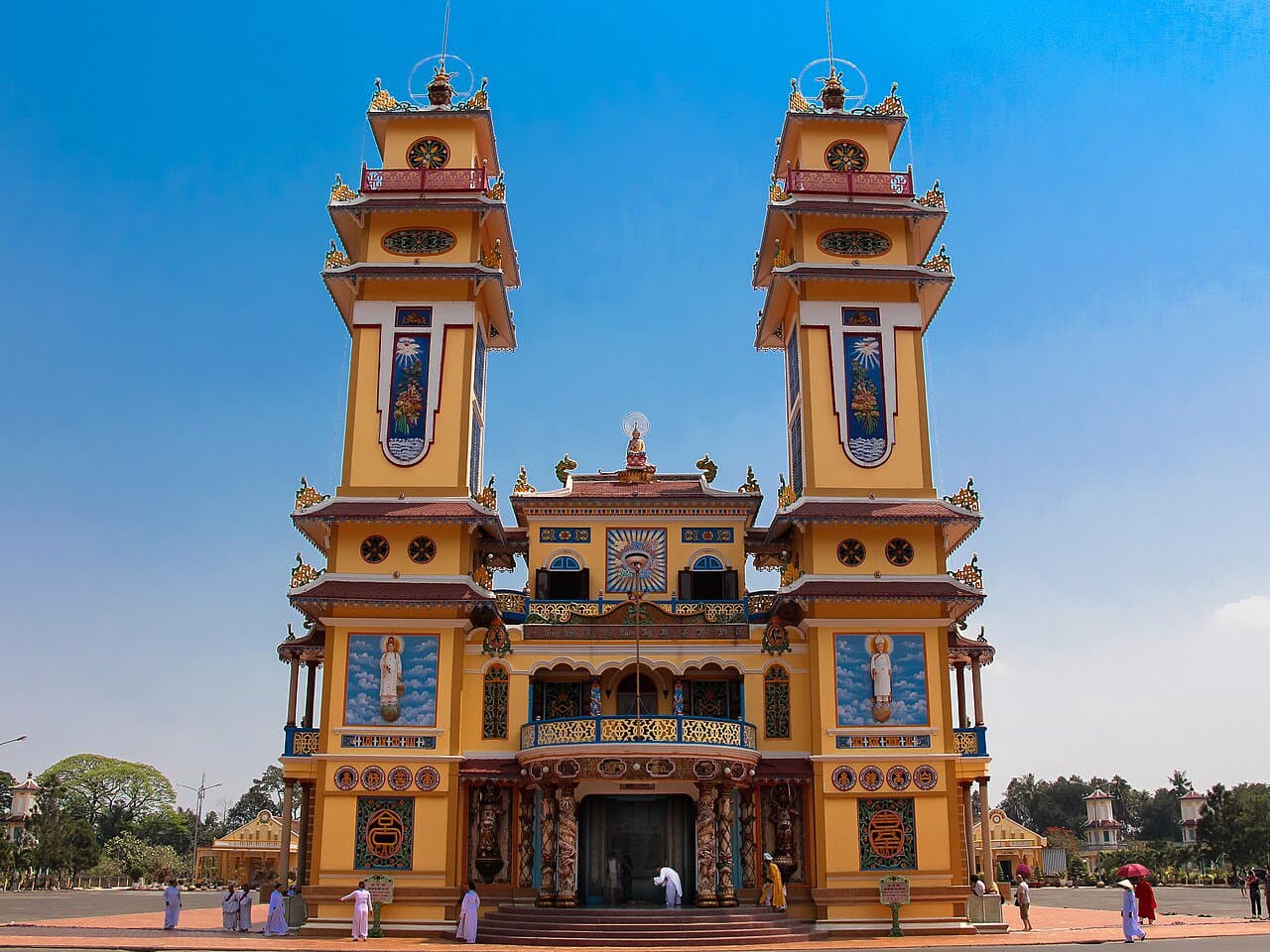
Central Vietnam's two UNESCO World Heritage Sites sit just 120 km apart, separated by the scenic Hai Van Pass and joined by some of Vietnam's most photogenic coastline. Hoi An (UNESCO 1999) is a perfectly preserved 15th–19th-century trading port — lantern-lit lanes, tailor shops, beach access. Hue (UNESCO 1993, Vietnam's first inscription) is the imperial seat of the Nguyễn Dynasty — palaces, royal tombs, Buddhist pagodas on the Perfume River.
For most travellers with 4+ days in central Vietnam, the answer is "do both." For tighter itineraries, the choice depends on what you want — atmosphere or history.
The 90-second answer
- Pick Hoi An if you want atmosphere, food, beach access, and a gentle pace for 3–4 days. It's the easier first-timer experience.
- Pick Hue if you want substantive cultural-history depth and you're prepared to do real museum-and-monument touring. Best as a 1–2 day stop before Hoi An.
- Do both if you have 4+ days in central Vietnam. They're 120 km apart with the Hai Van Pass scenic drive between them.
Side-by-side basics
| Hoi An | Hue | |
|---|---|---|
| UNESCO listing | 1999 (Old Town); 1999 (My Son Sanctuary nearby) | 1993 (Complex of Monuments — Vietnam's first) |
| Historical period | Trading port, 15th–19th centuries | Imperial capital, 1802–1945 (Nguyễn Dynasty) |
| Old/inner-town size | ~1,300 preserved historic buildings | Imperial City + 7 royal tombs spread across the area |
| River | Thu Bon River (small) | Perfume River (Hương Giang, larger) |
| Beach access | An Bang / Cua Dai, ~15–20 min by bicycle | Thuan An / Lang Co, 12–25 km from city |
| Walking-friendly old town | Yes — entire core is pedestrian-friendly | Partial — Imperial City is walkable; tombs require transport |
| Tourist density | High; very high in evening lantern hours | Moderate; rarely feels overrun |
| Recommended stay | 3–4 nights | 1–2 nights |
| Cost level | Slightly higher than Hue | Slightly lower than Hoi An |
Hue: imperial heritage and substance
Hue was the seat of the Nguyễn Dynasty — Vietnam's last imperial dynasty — for 143 years, from 1802 until 1945. The city's UNESCO inscription in 1993 was Vietnam's first, recognising the integrated complex of citadel, palaces, royal tombs, and pagodas as one of the country's most significant historical sites.
Major sights in Hue:
- Imperial City (Đại Nội) — the walled inner citadel containing the Forbidden Purple City, Thai Hoa Palace, the Halls of the Mandarins, and the Nine Dynastic Urns. About 2–3 hours of unhurried walking.
- Royal tombs — seven imperial tombs scattered south and west of the city. The three most-visited are:
- Tomb of Khai Dinh — small, ornate, French-Vietnamese hybrid architecture. The most photogenic.
- Tomb of Minh Mang — large, elegant, classical Confucian design. The most peaceful.
- Tomb of Tu Duc — sprawling, garden-like, with surviving structures used by the emperor in life.
- Thien Mu Pagoda — seven-tiered pagoda on the Perfume River, often combined with a dragon-boat river cruise.
- Perfume River cruise — gentle 1–2 hour boat trip; pleasant but not essential.
- Bun Bo Hue — Hue's namesake noodle soup, served properly only here.
What Hue isn't:
- Not a beach destination (the beaches are far and underdeveloped for tourism).
- Not a shopping destination (no equivalent of Hoi An's tailor scene).
- Not a nightlife destination (sleepy after 9pm).
- Not a food-tour destination (great food, but the format isn't well-developed).
Who Hue suits: travellers with genuine interest in Vietnamese history, architecture, and Buddhist art. Less ideal for travellers prioritising atmosphere and amenity.
Hoi An: atmosphere, food, beach, the rest
Hoi An's UNESCO inscription in 1999 recognised the Old Town as a uniquely preserved Southeast Asian trading port — a city that, between the 15th and 19th centuries, brought together Vietnamese, Chinese, Japanese, Indian, and European merchants. The architectural mix is the result. Over 1,300 historic buildings remain.
Major sights in Hoi An:
- Old Town walking — the entire historic core is the attraction. Single ticket admits to 5 of ~22 historic houses, museums, and assembly halls (around 120,000 VND for foreigners).
- Japanese Covered Bridge — Hoi An's iconic 16th-century arched bridge.
- Tan Ky Old House, Phung Hung Old House — well-preserved merchant houses.
- Fukian Assembly Hall — Chinese clan house with elaborate ceramics.
- Night market and lanterns — the lantern-lit streets after sunset are the experience that gets photographed most.
- My Son Sanctuary — Cham ruins ~1 hour by car; UNESCO inscribed 1999.
- An Bang and Cua Dai beaches — 15–20 minutes by bicycle from Old Town.
- Tra Que vegetable village, Thanh Ha pottery village, Kim Bong carpentry village — community-based tourism options. See our Hoi An CBT research.
- Cooking classes — many options, from family-home formats to restaurant-run programs. See Hoi An cooking class day tour.
What Hoi An isn't:
- Not "untouched." It's been heavily shaped by tourism for two decades — see our Hoi An food transformation research.
- Not quiet in peak hours. The Old Town from 5–9pm is genuinely crowded.
- Not for travellers seeking serious imperial-history depth (that's Hue).
Who Hoi An suits: almost everyone, especially first-time visitors, food-focused travellers, photography enthusiasts, beach-and-culture combiners, and anyone making clothes (the tailor scene is genuinely good).
Travel between them — the Hai Van Pass
The 120 km between Hue and Hoi An is one of Vietnam's most scenic drives. Several options:
| Option | Time | Cost (approx.) | Notes |
|---|---|---|---|
| Private car (4-seater) | ~3 hrs direct, 5–6 hrs with stops | 1.45–1.55M VND ($58–62) | Best for the Hai Van Pass scenic experience |
| Sleeper bus | ~3–4 hrs | 200,000–480,000 VND ($8–19) | Cheapest, no stops |
| Train | 2.5–3 hrs Da Nang↔Hue + 30–45 min Da Nang transfer | 77,000–201,000 VND for the train portion | Hoi An has no station — train is less convenient than the route map suggests |
| Motorbike | 4–6 hrs | Bike rental ~$15–25/day | Adventurous travellers; not recommended for first Vietnam motorbike experience |
Recommended approach for most travellers: Private car with 2–3 stops — Marble Mountains in Da Nang, lunch at Lap An Lagoon, viewpoint stops on the Hai Van Pass. The full-day 6 hr version is one of central Vietnam's best-rated experiences. Private cars can be booked through your hotel or Klook for the 1.45–1.55M VND range.
How to fit them into a Vietnam itinerary
The most-recommended pattern (north-to-south flow):
- Hue: 1–2 nights (arrive afternoon day 1, full day 2, leave morning day 3)
- Driving day Hue → Hoi An via Hai Van Pass: 1 day with stops
- Hoi An: 3–4 nights
This works either direction. A common variant is to fly into Da Nang from Hanoi, base in Hoi An for the central Vietnam stretch, and day-trip up to Hue (long day, but feasible).
Tighter itinerary (3 days central Vietnam): pick Hoi An, do a day trip to Hue. You'll get a sense of Hue but won't see all the royal tombs.
Even tighter (1 day central Vietnam): Hoi An only.
Cost comparison
Both cities are inexpensive by international standards. Hoi An runs slightly higher than Hue across most categories:
| Category | Hoi An | Hue |
|---|---|---|
| Mid-range hotel (3–4 star) | $60–110/night | $40–80/night |
| Boutique hotel | $90–160/night | $70–130/night |
| Cooking class | $25–50 | $20–40 |
| Restaurant meal (mid-range) | $8–15 | $6–12 |
| Old Town entry ticket | 120,000 VND for foreigners | 200,000 VND Imperial City + extra per tomb |
| Private car day tour | $50–80 | $40–70 |
The premium for Hoi An reflects tourism volume. Both remain excellent value compared to Bangkok or Singapore.
Final recommendation
For most first-time central Vietnam travellers: Hue for 1–2 nights, then Hoi An for 3–4 nights, with the Hai Van Pass drive between. This is the experience the region is built to deliver, and it consistently rates as one of the best multi-day experiences in Southeast Asia.
If forced to choose one: Hoi An for atmosphere, food, beach, and gentle pace; Hue for serious imperial history. Hoi An suits more travellers; Hue rewards travellers with specific historical interest.
Limitations
Hoi An's Old Town pass + dynamic pricing on Cua Dai shoreline access can shift mid-year as the management board responds to visitor volume. The figures here are as of April 2026. Workaround: the Hoi An community-based tourism research tracks management decisions in finer detail; check it before assuming current-year fees.
Hue's "quieter" reputation rests on international-arrival data, but domestic Vietnamese tourism to Hue spikes during the central-coast festival weeks (May, September). Workaround: if you're visiting in those months, treat our crowd estimates as conservative — Hue can feel mid-Hoi-An-busy during those festival peaks.
Related on this site
- Hoi An destination guide — Old Town, day trips, where to stay
- Hue destination guide — Imperial City, royal tombs, food
- 14 days in Vietnam — full itinerary doing both
- Hoi An food transformation research — how tourism has shaped the food landscape
- Hoi An community-based tourism research — the case for rural CBT options