
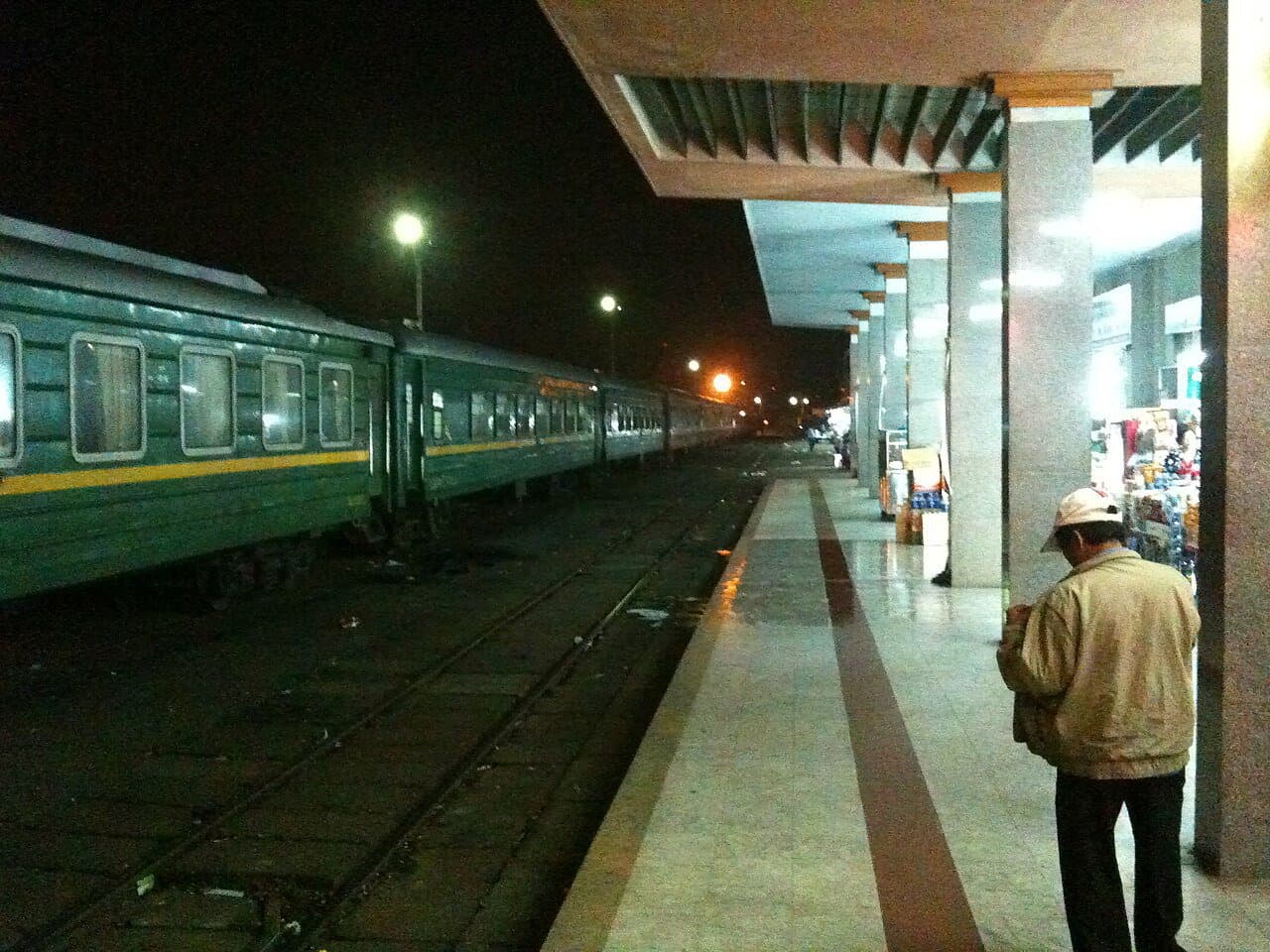
Vietnam's two budget long-distance options work differently and excel at different things. Sleeper buses are cheap, fast, and reach destinations the train doesn't. The Reunification Express train is more comfortable, much safer, and often the more memorable experience. For travellers stitching multiple Vietnam destinations together over 2+ weeks, knowing which to pick on which leg saves real money and improves the trip.
This compare gives you the actual numbers, the route-by-route recommendation, and the honest tradeoffs.
The 90-second answer
- Take the train if the route exists (north-south corridor), you have time for the longer journey, and you value comfort. The train is the more memorable Vietnam experience for most travellers.
- Take the sleeper bus if the route doesn't have a train (Hoi An, Sapa, Ha Giang, Cat Ba, Da Lat, Phu Quoc), you're on a tight budget, or you specifically want the faster overnight option.
- Fly if the distance is Hanoi↔HCMC end-to-end or you're crossing 1,000+ km. The flight is $40–80 booked 3–4 weeks ahead, takes 2 hours, and is meaningfully cheaper per hour than ground transit.
Side-by-side basics
| Sleeper bus | Train (Reunification Express) | |
|---|---|---|
| Typical overnight ticket | $15–30 | $30–60 (soft sleeper) |
| Speed (overnight medium-distance) | Faster | Slower |
| Hanoi to HCMC time | ~30–35 hrs | ~30–41 hrs |
| Comfort | Pod seat, narrow, bumpy | Berth, wider, smooth |
| Safety | Higher accident risk | Very low accident risk |
| Lockable space | Limited | Yes (cabin door) |
| Toilets | Basic, on-board | Functional, on-board |
| WiFi | Sometimes | Rarely |
| Power outlets | Usually | Yes |
| Reaches Hoi An directly | Yes | No (Da Nang is nearest, transfer required) |
| Reaches Sapa directly | Yes | No (Lao Cai is nearest, +1 hr minibus) |
| Reaches Ha Giang | Yes (direct) | No |
| Reaches Phu Quoc | No (island) | No (island) |
| Reaches Cat Ba | Yes (bus + ferry combo) | No |
| Departure flexibility | Many daily | 1–4 daily by route |
What Vietnam sleeper buses are actually like
Modern Vietnamese sleeper buses (called "giường nằm") are pod-style. Three rows of fully-reclining bunk seats stack two high — so a typical bus has roughly 30–40 sleeping pods. You take your shoes off at the door (provided in plastic bags) and climb into your assigned pod.
The good:
- Affordable — $15–30 covers most overnight routes.
- Fast — direct routing, no transfers, often saves 1–3 hours over equivalent train + transfer.
- Reaches everywhere — Hoi An, Sapa, Ha Giang, Cat Ba, Da Lat, Phu Quoc (via ferry), Mui Ne, all served by sleeper bus where the train isn't.
- Frequent departures — major routes have hourly or near-hourly schedules.
- Onboard amenities are improving — newer "VIP" or "limousine" buses have phone-charging, better seats, sometimes WiFi.
The bad:
- Pods feel narrow. If you're over ~180cm (5'11"), expect to sleep with knees bent. The standard pod isn't designed for tall travellers.
- The ride is bumpy. Vietnamese highways are improving but still patchwork. Drivers tend to drive aggressively. Sleeping through a 6–10 hour overnight bus can be challenging.
- Driver schedules can be erratic. Buses sometimes depart late, stop at long meal breaks, or arrive 1–2 hours off the scheduled time.
- Safety concerns are real. Bus accidents are statistically rarer than equivalent road travel by car or motorbike but more frequent than rail.
- Theft on overnight buses has been reported, especially on long routes. Keep valuables in a locked daypack with you, not in the under-bus luggage hold.
Reputable operators internationally:
- The Sinh Tourist (originally Sinh Café) — long-running, English-friendly, reliable.
- FUTA Bus Lines (Phương Trang) — large modern fleet, particularly strong on southern routes.
- Hoang Long — north-Vietnam routes including Cat Ba.
- Sapa Express, Cat Ba Express — destination-specific specialists.
- VIP / limousine bus operators — newer 9-passenger luxury vans on shorter routes (Hanoi–Sapa, HCMC–Da Lat) charge more ($25–40) for substantially better experience.
What the Reunification Express is actually like
The North-South Railway — branded the Reunification Express for tourist consumption — runs 1,700+ km from Hanoi's Ga Hà Nội station to Ho Chi Minh City's Ga Sài Gòn station, passing through Hue, Da Nang, Nha Trang, and other coastal cities. Most travellers ride segments rather than end-to-end.
Ticket classes (most common):
- Soft sleeper, air-conditioned, 4-berth cabin — the standard tourist class. ~$30–60 for typical overnight segments. Wide bunks, pillow + sheet + thin blanket included, lockable cabin door, on-cabin power outlets.
- Soft sleeper, 6-berth cabin — slightly cheaper, narrower bunks, more crowded.
- Hard sleeper, 6-berth cabin — substantially cheaper, wood/vinyl bunks, less padding. Backpacker classic, less comfortable.
- Soft seat / hard seat — for daytime short-segment travel only. Avoid for overnight.
- VIP / private cabin operators (Violette Express, Lotus Train, Livitrans, Chapa Express) — branded train-cars on the Hanoi–Lao Cai (Sapa) and Hanoi–Hue routes. $50–100, much fancier, sometimes worth it.
The good:
- Comfort. Wider berths, smoother ride, much quieter than buses. Most travellers actually sleep.
- Safety. Train accidents in Vietnam are very rare. Cabin doors lock.
- Memorable. The train experience itself — particularly the Hai Van Pass section between Hue and Da Nang — is one of the country's photographic experiences.
- Predictable. Trains run mostly on time (within ~30 minutes of schedule).
- Comes with food. Breakfast box and snacks are typically included on the soft-sleeper tier.
The bad:
- Slower. Vietnam's rail infrastructure dates to French colonial construction; speeds rarely exceed 60 km/h. The full Hanoi–HCMC trip takes ~30 hours on the fastest service.
- Limited routes. Major destinations (Hoi An, Sapa town itself, Ha Giang, Cat Ba, Phu Quoc, Da Lat) don't have train stations.
- More expensive than bus. Roughly 1.5–2x the comparable sleeper-bus fare.
- Booking can be tricky during peak season. Vietnamese New Year (Tet) and the April 30 holiday week have months-out booking windows.
- The carriages can feel dated. Vietnam's rolling stock is mostly older equipment. Functional but not modern.
Where to book:
- dsvn.vn — Vietnam Railways' official site. Cheapest. Sometimes finicky in English.
- 12go.asia — adds a small markup, much friendlier UX, supports international cards.
- Baolau — similar to 12go, popular alternative.
- Hotel desks — often book at retail with a small commission added.
Route-by-route: which to take
Hanoi → Sapa
- Train (recommended): Hanoi to Lao Cai overnight, ~8 hours. $30–50 soft sleeper. Lao Cai to Sapa town: ~1 hour minibus, $5.
- Sleeper bus: Hanoi to Sapa direct, ~6 hours. $20–30. Newer luxury sleeper-vans available for $25–40.
- Verdict: Train for the iconic experience and arrival timing (you arrive Lao Cai ~6am, in Sapa by 7am, full day available). Bus for cost or odd-hour flexibility.
Hanoi → Ha Giang
- Sleeper bus only: ~6–7 hours direct from Hanoi. $20–35. There's no train.
- Verdict: Bus, no decision required.
Hanoi → Cat Ba (for Lan Ha Bay)
- Bus + ferry combo: ~4–5 hours total. $15–25.
- Train: Hanoi → Hai Phong fast train + ferry. ~3.5 hours, slightly more expensive.
- Verdict: Either works. Train is faster but adds the Hai Phong transfer; bus is direct via Got/Cai Rong ferry.
Hanoi → Hue
- Train: Overnight, ~12–14 hours. $30–50 soft sleeper. The Hai Van Pass section (entering Hue from the south) is dramatically scenic.
- Sleeper bus: ~12–14 hours overnight. $15–25. Direct routing.
- Verdict: Train. The Hai Van Pass scenery is one of the train's signature experiences.
Hue → Hoi An
- Train: Hue → Da Nang, ~2.5–3 hours, $5–15. Then taxi or bus Da Nang to Hoi An (~30 min, $5–15).
- Sleeper bus / coach: ~3–4 hours direct. $10–20.
- Verdict: Sleeper bus or private car for the Hai Van Pass scenic drive. Train requires the Hoi An transfer leg.
Hanoi → Ho Chi Minh City (end-to-end)
- Flight: 2 hours, $40–80. The right answer for almost everyone.
- Train: 30–41 hours total. $80–200 depending on service tier.
- Sleeper bus: 30–35 hours total. $30–60.
- Verdict: Fly. The flight cost difference doesn't justify 30+ hours of ground travel for most travellers.
HCMC → Da Lat
- Sleeper bus: ~7–8 hours. $20–30. The most common route.
- Flight: ~50 minutes from HCMC, $30–60. Faster but you miss the climb scenery.
- Verdict: Sleeper bus for budget, flight for time.
HCMC → Phu Quoc
- Flight: ~1 hour, $30–60.
- Bus + ferry: 12+ hours via Rach Gia or Ha Tien. Possible but inefficient.
- Verdict: Fly.
HCMC → Nha Trang
- Train: ~8 hours overnight. $25–45 soft sleeper.
- Sleeper bus: ~8–10 hours overnight. $15–25.
- Verdict: Train. Comfort upgrade is worth the price difference.
When to fly instead
For three trips, the answer is "neither bus nor train":
- Hanoi ↔ HCMC end-to-end. Always fly. 15+ daily flights, $40–80 booked early, 2 hours.
- Anywhere ↔ Phu Quoc. Always fly. The island has no rail and the ferry options are slow.
- Hanoi or HCMC ↔ Da Nang. Usually fly. ~1 hour, $30–60. The train scenic value drops on these specific segments.
For everything else, the bus-vs-train question is real.
Final recommendation
For most travellers' Vietnam itinerary, the practical pattern:
- Domestic flight for the long Hanoi↔HCMC segment.
- Train for the Hanoi↔Hue or Hanoi↔Da Nang segment when overnight (Hai Van Pass is genuinely scenic).
- Sleeper bus or private car for the Hue↔Hoi An segment (the Hai Van Pass scenic drive is the highlight).
- Train for Hanoi↔Sapa specifically (the arrival timing is excellent).
- Sleeper bus for any destination the train doesn't reach (Ha Giang, Cat Ba via combo, Da Lat, smaller central-coast towns).
The train is generally worth the modest premium where it's available; the sleeper bus is the right answer for speed and routing flexibility.
Limitations
Operator schedules and equipment quality shift season to season — VIP sleeper bus fleets get upgrades, train carriages get refurbished, new routes appear. The recommendations here are based on April 2026 conditions. Workaround: Vietnam Railways' official site and the published FUTA / Sinh Tourist booking platforms always carry current-year specifics — check before booking, especially for the multi-day routes.
Comfort calls are subjective. Two travellers on identical itineraries can have wildly different opinions on whether a soft-sleeper berth or VIP limousine bus is "better". Workaround: read recent TripAdvisor + Reddit r/VietnamTravel threads for the specific city-pair you're booking — they're often more current than published reviews.
Related on this site
- Vietnam transport hub — comprehensive transport overview
- Vietnam trains — Reunification Express in detail
- Sleeper bus — practical operator-by-operator guide
- Vietnam railways — operator and booking info
- 14 days in Vietnam — itinerary stitching transport modes together