
Vietnam itineraries fail on allocation, not on length. Two weeks is plenty for an excellent first trip; the same two weeks split across seven bases becomes a series of checkouts. Decide how many nights each place actually earns before you decide the route. What follows is a minimum, an ideal and a maximum for every destination a first or second trip is likely to include, plus the thing most planners skip — the point at which the next night stops buying anything.
One convention first. Everything here counts nights, not days, because nights are what you book and what transfers eat into. A "three-day trip to Hue" that arrives at 4pm and leaves at 9am is two nights and one usable day. Count that way and most over-packed itineraries fall apart on paper before they fall apart in person.
The master table
| Destination | Minimum | Ideal | Maximum worth it | What the extra night buys |
|---|---|---|---|---|
| Hanoi | 2 | 3 | 4 | A food crawl and a museum instead of a checklist morning |
| Ha Long / Lan Ha, afloat | 1 | 2 | 2 | Quieter water, a kayak morning, one unscheduled sunrise |
| Cat Ba | 1 | 2 | 3 | The national park trek and Viet Hai village |
| Ninh Binh | 1 | 2 | 3 | Tam Coc and Hoa Lu by bicycle rather than a single boat ride |
| Sapa | 2 | 3 | 4 | A second valley day and a night in a village homestay |
| Ha Giang | 4 | 5 | 6 | Du Gia, the Nho Que boat, and no forced long day |
| Phong Nha | 2 | 3 | 4 | An overnight cave expedition rather than two show caves |
| Hue | 1 | 2 | 2 | The royal tombs by boat or bike, plus Thuy Bieu |
| Da Nang | 1 | 2 | 3 | Son Tra, the Marble Mountains, a real beach day |
| Hoi An | 3 | 4 | 5 | My Son at dawn, a cooking class, a tailor's second fitting |
| Da Lat | 2 | 3 | 4 | A coffee-farm circuit or canyoning without dropping the market |
| Nha Trang | 1 | 1 | 2 | Diving at Hon Mun — nothing else justifies it |
| Mui Ne | 1 | 2 | 3 | Kitesurfing rather than a dawn dune photo stop |
| Ho Chi Minh City | 2 | 3 | 4 | Cu Chi or Cholon, and one evening that is not District 1 |
| Mekong Delta | 1 | 2 | 3 | Cai Rang at first light, then Ben Tre or Chau Doc |
| Phu Quoc | 3 | 4 | 6 | A second full beach day after the flights are absorbed |
| Con Dao | 3 | 4 | 5 | The prison museum properly, plus a quiet-beach day |
How to read the three numbers
The minimum is the point below which the stop stops being a visit and becomes a transfer with a bed attached. The ideal is where cost per unit of enjoyment bottoms out. The maximum is where the next night starts competing with somewhere else on your route rather than with an empty afternoon.
They behave differently by type of place. Cities plateau fast — Hanoi, Hue and Ho Chi Minh City give up most of their value in two days. Landscapes keep paying out, because weather, light and routes all vary. Islands are dominated by transport overhead, which is why Phu Quoc and Con Dao need more nights than their sightseeing lists suggest.
The north
Hanoi is a three-night city. The Old Quarter, Hoan Kiem and one major museum fill a day. The second day is food, coffee and a slower neighbourhood — Ba Dinh or Tay Ho. A fourth night only earns its keep as a base for Bat Trang or Duong Lam.
Ha Long and Lan Ha are the most misallocated pair in Vietnam, and the mistake is structural rather than numerical: people book three nights in a Bai Chay hotel and take a day boat. Almost nothing about the bay rewards a land base — put the nights on the water. As of mid-2026, a two-day one-night Lan Ha cruise commonly runs about 135 to 400 US dollars per person and a three-day two-night about 280 to 600, so the second night is roughly a 100 to 200 US dollar upgrade. It is the best-value extra night in Vietnam.
Cat Ba is the budget alternative. Hanoi to Cat Ba is about three to three and a half hours door to door including the ferry, so two nights genuinely delivers two days.
Ninh Binh needs two nights, not the day trip almost everyone does. Hanoi to Tam Coc is 1h 25m to 1h 45m by private car as of mid-2026, so the day trip is easy — and it buys one boat ride and a hot scramble up Mua Cave. Two nights gets you Trang An, Tam Coc, Bich Dong and Hoa Lu by bicycle, plus Mua Cave at dawn when the steps are empty.
Sapa is three nights, at least one of them in a valley homestay rather than in town. Two nights leaves room for exactly one trekking day.
Ha Giang is the other big under-allocation. The loop is a four-riding-day route sold as three, and the three-day version compresses Dong Van to Meo Vac and the Ma Pi Leng pass into one long day — the part you came for, ridden tired. Block five or six nights including a night in Ha Giang city at each end. Guided easy-rider packages run roughly 170 to 250 US dollars for three days as of mid-2026, including the border-area permit at around 10 US dollars.
The centre
Phong Nha deserves three nights and gets skipped on most two-week trips. Two nights covers Paradise Cave, where entry is 250,000 VND as of mid-2026, and Phong Nha Cave at 150,000 VND plus a 55,000 VND boat seat. The third night is what unlocks the overnight expeditions — the Hang En trip with Oxalis, the only licensed operator, is a two-day one-night format at 8,800,000 VND per person as of mid-2026.
Hue is a two-night city and a firm one. The Citadel is a half-day, the royal tombs another by boat or bike, and Thuy Bieu fills the rest. A third night has nothing left to do.
Da Nang is a two-night stop or a transport node, depending on whether you want beach time. It sits 45 to 50 minutes from Hoi An, so treating it as a day trip from there is often the better structure.
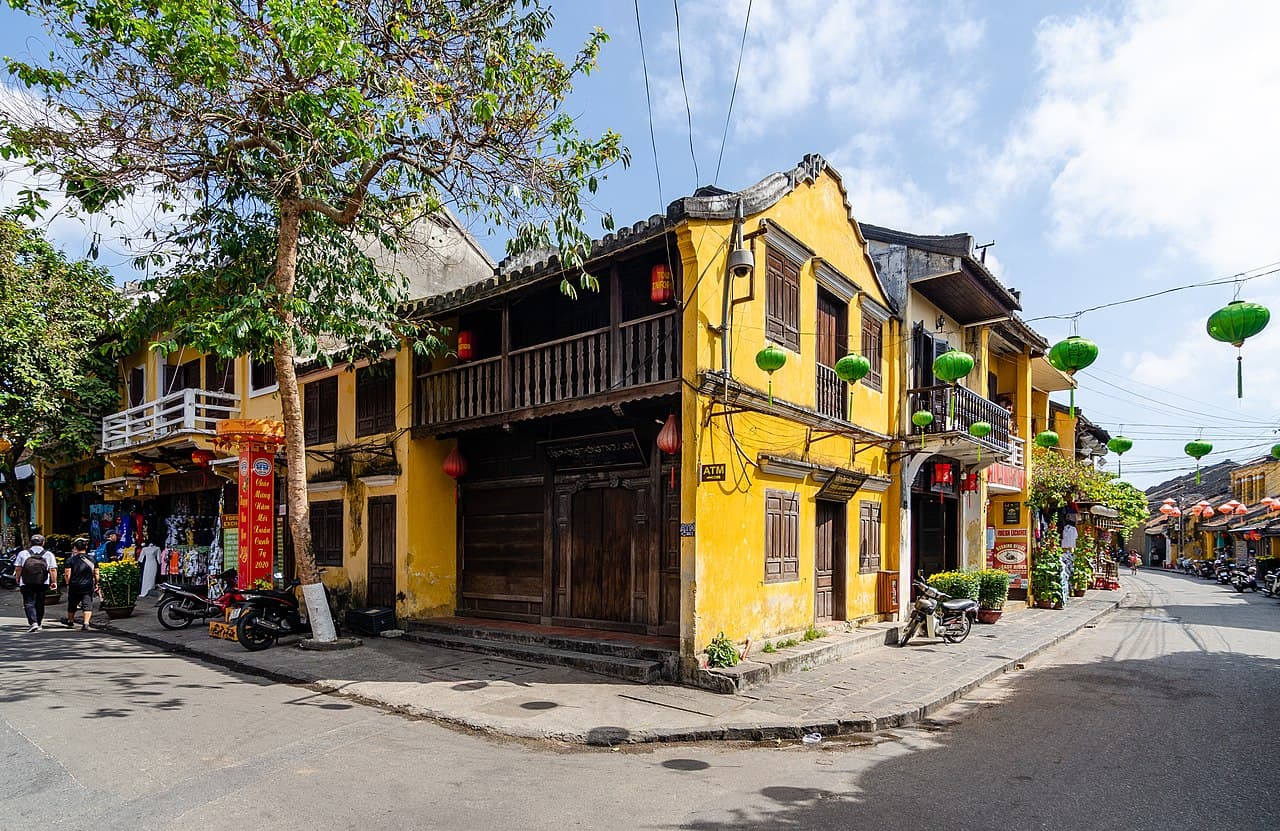
Hoi An is the destination travellers under-book most reliably. Three nights is the floor and four is right. One evening and one morning for the Ancient Town, one full day at An Bang, one morning for Tra Que or a cooking class, and My Son as a dawn half-day before the coaches. Tailoring alone needs 48 hours for a fitting and a correction. If you need to fund it, cut Da Nang and Nha Trang.
The south and the highlands
Da Lat is three nights. Night market and Xuan Huong Lake on the first evening, canyoning or waterfalls on day one, and a coffee-farm circuit on day two — the Da Lat coffee farm tours run at 1,400 to 1,600 metres. Lien Khuong Airport reopened on 19 August 2026 after a five-month runway rebuild, with Vietjet back on five domestic routes, so flying in is realistic again. See also day trips from Da Lat.
Nha Trang is where over-allocation is most expensive. One night, only with a reason: diving at Hon Mun, the mud baths, or breaking a long drive. Otherwise the nights belong to Hoi An.
Mui Ne is one night for the dunes at dawn and the Fairy Stream, two if you kitesurf — the wind season runs roughly November to April. Ho Chi Minh City to Mui Ne is 2h 30m to 3h by private car as of mid-2026, but 4 to 5 hours by sleeper bus — a distinction that ruins schedules.
Ho Chi Minh City is a three-night city: the War Remnants Museum, the Reunification Palace and District 1 on day one, Cu Chi or Cholon on day two. The third night buys an evening somewhere other than the backpacker strip.
The Mekong Delta does not fit in a day trip, whatever the tour desks say. Cai Rang floating market near Can Tho is best at first light, which is only possible if you sleep down there. One night minimum, two for Ben Tre or Chau Doc.
Phu Quoc needs three nights minimum and four to be unhurried, because both flight days are half-days. Con Dao needs four: as of mid-2026 Vietnam Airlines is the only carrier serving it, from Ho Chi Minh City and Can Tho, and the Vung Tau high-speed ferry runs on set days with a crossing of about three and a half hours.
How the allocations assemble
| Trip length | Bases that work | Shape |
|---|---|---|
| 7 nights | Hanoi 3, Ninh Binh 1, cruise 2 — or Hoi An 4 and Hue 2 | One region only, no domestic flights |
| 10 nights | Hanoi 3, Ninh Binh 1, cruise 1, Hoi An 4 | One flight, four bases, one full rest day |
| 14 nights | Hanoi 3, Ninh Binh 1, cruise 1, Hue 2, Hoi An 4, HCMC 3 | Two flights; Mekong folded into the HCMC block |
| 21 nights | Add Ha Giang 5 and Phong Nha 3 to the 14-night frame | Three flights; still no Phu Quoc |
Note what falls out. Seven nights cannot cross the country. Ten can, but only by cutting Hue. Fourteen still has no room for Sapa, Ha Giang, Phong Nha or an island. Twenty-one buys the far north and the caves, and leaves the beaches for another trip. For the route-level version of this arithmetic see Vietnam itinerary routes compared, the 10-day breakdown, the 14-day itinerary and two weeks versus three.
Limitations
- These are allocations for a first or second trip, not a rule. A photographer in Ha Giang or a diver in Con Dao will rightly ignore the maximums.
- Prices are mid-2026 estimates and move with season, fuel and demand. Cruise and tour rates commonly shift 10 to 20 percent, and Tet inflates almost everything for a fortnight.
- Travel times assume private car unless stated. Sleeper-bus times on the same roads run 30 to 60 percent longer, which changes whether a "one-night" stop is really a stop at all. The Vietnam travel time atlas has the mode-matched figures.
- Weather overrides allocation. Central Vietnam floods between September and November, and Sapa fogs in from December to February. The trip planning checklist covers the seasonal checks, and the Vietnam budget guide covers what the nights cost.