
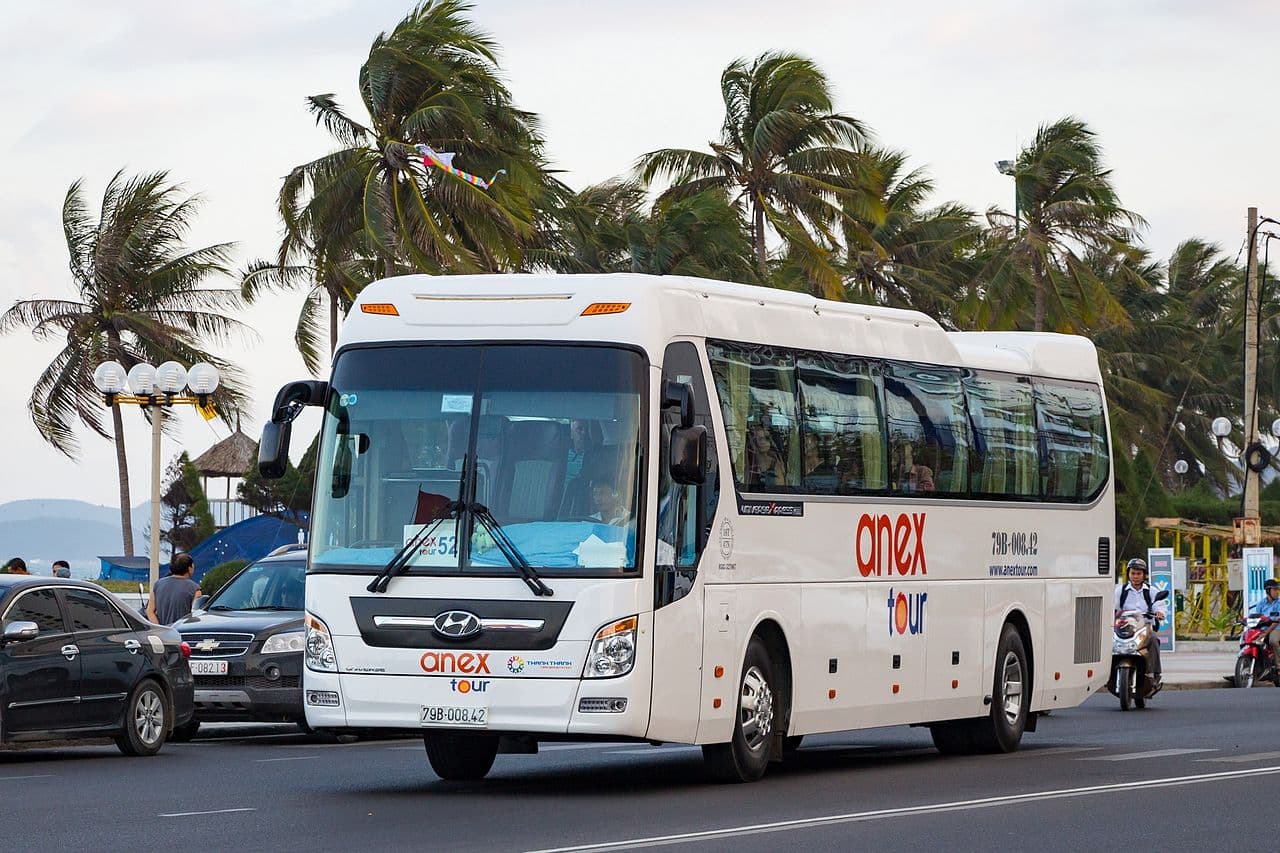
The open-tour bus pass is one of the older patterns in Vietnamese backpacker transport — Hanh Cafe, The Sinh Tourist, and a few other operators have been selling bundled multi-leg passes for over two decades, and the model still works for the specific backpacker scenario it's designed for. But it isn't universally the right choice. The cheap-and-easy marketing pitch hides a flexibility trade-off that matters for some backpackers, and the bus-pass-only approach misses the standout Hai Van Pass day train that's worth the route's biggest single transport-experience moment.
This guide is the honest comparison of open-tour pass vs individual leg booking — the cost difference, the flexibility trade-off, when each makes sense, and the hybrid pattern that produces the best total outcome for most backpackers. The Vietnam Sleeper Bus Operator Atlas and Backpacking by train and sleeper bus cover the deeper transport references; this guide is the booking-pattern synthesis.
Quick summary — open-tour pass vs individual
| Dimension | Open-tour pass | Individual leg booking |
|---|---|---|
| Cost (Hanoi-HCMC spine route) | $55-85 (5 legs bundled) | $80-130 (5 legs separate) |
| Cost saving | 10-20% on bundled legs | 0 (paying full per-leg) |
| Flexibility | Lower — locked to operator's schedule | Higher — mix operators and modes |
| Booking effort | One purchase upfront | Each leg booked separately |
| Best for | Standard route, committed plans | Flexible plans, mixing modes |
| Operators | Hanh Cafe, The Sinh Tourist, Phuong Trang | Any operator per leg |
| Trip mode | Bus-only | Bus + train + flight mix |
The fast version: open-tour pass for backpackers committed to the full spine route via 4-5 stops; individual booking for backpackers wanting flexibility or mode-mixing. The smart hybrid uses the open-tour pass for the central bus legs plus separate booking for the Hai Van Pass train and end-of-trip flights.
How the open-tour pass actually works
The standard open-tour pass covers the Hanoi-HCMC backpacker spine route via 4-5 stops:
Hanoi → Hue (overnight bus, 12 hours) → Hoi An / Da Nang (day shuttle, 4 hours) → Nha Trang (overnight bus, 11 hours) → Da Lat (day bus, 4 hours) → HCMC (overnight bus, 7 hours).
You buy the pass upfront in Hanoi for $55-85 (depending on operator and route options); the pass includes all 5 legs. You then book each specific bus date 24-48 hours in advance using the operator's app or office. Date changes are usually free if requested in advance; route changes (swapping one of the included stops for a different destination) are limited and may forfeit some value.
What's included: the 5 sleeper-bus legs along the standard route; pickup-and-dropoff at the operator's hostel network (or at the official bus stations); on-board water and snacks (operator-specific).
What's not included: meals (occasionally one meal is included on the longest legs); city-to-city transfers within a destination (e.g., Hoi An to An Bang Beach hostel); side trips off the standard route (e.g., Phong Nha caves, Mui Ne sand dunes); the Hanoi-Sapa overnight train (separate booking).
When the open-tour pass wins
Backpackers committed to the full standard route. If you're definitely doing Hanoi → Hue → Hoi An → Nha Trang → Da Lat → HCMC across 2 weeks, the pass saves $30-65 vs booking individually.
First-time Vietnam backpackers. The pass is one decision upfront rather than 5 separate booking decisions across the trip; lower friction for travelers new to the country.
Backpackers wanting consistent operator experience. All legs use the same operator (Hanh Cafe, The Sinh Tourist) with similar bus quality, similar service patterns, similar luggage protocols. Less variance per leg than mixing operators.
Backpackers wanting hostel-pickup convenience. Most pass operators do hostel-pickup-and-dropoff at the major backpacker hostels in each city; less Grab-or-taxi logistics for boarding.
Backpackers with budget-discipline priorities. The 10-20% cost saving is real money over 5 legs.
When individual booking wins
Flexible itineraries. If your plans might change — staying longer in Hoi An, skipping Nha Trang, adding Mui Ne — the open-tour pass becomes constraining. Individual booking adapts as you go.
Mixing bus operators based on route strength. Phuong Trang is the standout for some routes (Da Lat-HCMC, Mekong region); Hanh Cafe for others (Hue-Hoi An shuttle); The Sinh Tourist for the longer-established multi-leg routes. The open-tour pass locks you to one operator across all legs.
Mixing modes (bus + train + flight). The open-tour pass is bus-only. The optimal multi-modal Hanoi-HCMC route uses:
- Train Hanoi → Hue overnight (safer, more comfortable than the bus)
- Train Hue → Da Nang day (the Hai Van Pass scenic standout)
- Bus Hoi An → Nha Trang (no train available)
- Bus Nha Trang → Da Lat (no train)
- Bus Da Lat → HCMC (no train)
- Flight HCMC → Phu Quoc (no train, no bus)
The hybrid approach with individual booking achieves this; the open-tour pass forces you onto buses for all 5 legs even where trains or flights would be the better choice.
Skipping some stops of the standard route. If you're going Hanoi → Hoi An → HCMC without Nha Trang and Da Lat, the pass's value is forfeited on the skipped legs.
Last-minute trip planning. Booking individually as you go is easy through 12Go, Phuong Trang's app, or hostel desks. The open-tour pass requires the upfront commitment.
Operator comparison for open-tour passes
Hanh Cafe is the backpacker-favorite. English-speaking staff, hostel-pickup-and-dropoff at major backpacker hostels, multi-leg packages with English website, integration with the wider backpacker ecosystem. Pass cost: $55-75 for the 4-stop spine route. Strengths: backpacker-focus, English service, fleet quality. Weaknesses: smaller network than Phuong Trang for some routes.
The Sinh Tourist is the longer-established alternative. Vietnamese tourism operator since 2003 with sleeper-bus operations integrated; offices in all major cities; multi-leg packages similar to Hanh Cafe. Pass cost: $60-80 for the spine route. Strengths: consistent quality, long-standing reputation. Weaknesses: slightly older fleet on some routes.
Phuong Trang (Futa Bus) is Vietnam's largest sleeper-bus network. The individual-bus quality is excellent (modern fleet, professional staff, comprehensive route coverage), but the multi-leg open-tour pass option is less developed than Hanh Cafe or The Sinh Tourist. For backpackers: use Phuong Trang for individual leg bookings (especially Da Lat-HCMC, Nha Trang segments where Phuong Trang dominates); use Hanh Cafe or The Sinh Tourist for the open-tour multi-leg pass approach.
Smaller operators (regional or budget brands): not recommended for open-tour passes. The cost saving is small; the safety and quality variance is large. Stick to the three reputable operators above.
Booking timing and flexibility
Buying the pass: most backpackers buy after arriving in Hanoi (typically Days 1-2 of the trip) after they've confirmed the route. Direct-with-operator is cheapest; hostel-mediated adds $2-5; 12Go is the online alternative.
Booking specific buses on the pass: 24-48 hours before departure typically. Use the operator's app or contact the office; date changes are usually free if requested in advance.
Cancellation: rare for full pass refunds; partial refunds on unused legs are sometimes available with fees. Practical reality: most backpackers use all 5 legs; the unused-leg case is uncommon.
Schedule fitting: each leg's bus typically has 2-3 daily departures; you pick the one that fits your timing. The pass doesn't typically constrain you to a specific bus time per leg.
The cost math, worked
For the standard 2-week Hanoi-HCMC backpacker trip:
Option A: Hanh Cafe open-tour pass ($65) covering Hanoi → Hue → Hoi An → Nha Trang → Da Lat → HCMC. Plus: $35-50 Hanoi-Sapa overnight train, $30-50 Da Nang-Phu Quoc flight (or equivalent). Total transport: $130-165.
Option B: Individual booking with hybrid modes:
- Hanoi → Hue overnight train (soft sleeper): $40
- Hue → Da Nang day train (Hai Van Pass): $18
- Hoi An → Nha Trang sleeper bus (Phuong Trang or Hanh Cafe): $25
- Nha Trang → Da Lat day bus: $15
- Da Lat → HCMC sleeper bus: $22
- HCMC → Phu Quoc flight: $50
- Hanoi-Sapa-Hanoi overnight trains: $80
- Total transport: $250
Difference: $85-120 more with the individual booking hybrid. But: the hybrid includes the Hai Van Pass day train (the standout experience), a more comfortable Hanoi-Hue overnight train (vs the bus alternative), and a flight from HCMC to Phu Quoc (which the bus pass doesn't cover at all). The cost premium buys the experiential upgrade.
For budget-discipline backpackers: the open-tour pass is the cheaper option and the standard recommendation. For experience-prioritizing backpackers: the hybrid is worth the $85-120 premium.
What to skip
A few patterns regrettable on the bus-pass / individual-booking decision:
Buying the open-tour pass before arriving in Vietnam. The flexibility to adjust your route in Vietnam matters; booking the pass within 1-2 days of arrival is enough.
Using the open-tour pass when your itinerary is flexible. If you might skip 1-2 stops, the pass's value is partially forfeited.
Going for the cheapest open-tour pass option ($35-50 from unbranded budget operators). The cost saving is small; the quality variance is large; the safety is worse. Stick to Hanh Cafe, The Sinh Tourist, or Phuong Trang's individual legs.
Booking the pass through hostel desks that add $5-10 markup. Direct-with-operator at the Hanh Cafe or Sinh Tourist office is cheapest; takes 30 minutes; you have the pass in hand.
Trying to use one bus operator for all routes when the operator-by-route strengths differ. Hanh Cafe is the open-tour-pass standard; Phuong Trang has the strongest individual-leg routes for some segments; The Sinh Tourist sits between. The hybrid is the right answer.
Limitations
- Pricing is May-June 2026 USD at ~26,361 VND/USD. Hostel dorm rates, sleeper-bus tickets, and street-food prices fluctuate 5-15% seasonally; Tet (Feb 17 2026 in 2026) closes 50-70% of small restaurants for 3-7 days and inflates transport.
- Backpacker accommodation inventory turns over fast — hostels that were highly rated in 2024 may have changed hands or quality drifted by 2026. Always cross-check Hostelworld + Google reviews from the last 90 days.
- Sleeper-bus operator quality varies night-to-night — same operator can run a clean Futa coach one night and a worn Phuong Trang one the next. The "Tuesday-Wednesday off-peak booking" rule for fare savings is a pattern not a guarantee.
- The $40/day budget assumes street-food meals and dorm beds — substituting any mid-range hotel or restaurant breaks the math.
- Decree 168/2024 fines are evolving via enforcement guidance; the VND 2-8M figure is the gazette amount but enforcement intensity varies by city + officer.
The bigger picture
The open-tour bus pass is the right answer for the specific backpacker scenario it's designed for — committed-route, budget-priority, low-flexibility-needed travelers doing the standard Hanoi-HCMC spine. The individual-booking-hybrid is the right answer for everyone else. Most backpackers actually land somewhere in the middle, and the hybrid pattern (bus pass for the central section + trains for the scenic stretches + flights for the long legs) produces the best total transport experience for the budget.
For deeper context:
- Vietnam Sleeper Bus Operator Atlas — operator-by-operator reviews
- Vietnam Land Transport Atlas — full multi-mode reference
- Backpacking by train and sleeper bus — route-specific overlay
- Backpacking Vietnam on $40/day — budget context
- Cheap domestic flights backpacker guide — flight alternative
The open-tour bus pass is one tool. Use it where it fits the trip; mix in trains and flights where they fit better.