
Here is the plain answer: November earns its reputation as Vietnam's best all-round month only if you weight the trip north. In Hanoi, Sapa, Ha Giang and Ha Long Bay the claim holds without qualification — historically the driest, clearest, most comfortable weeks of the year. In the south it holds with a caveat, because the dry season is starting rather than established. On the central coast it fails until the last ten days: Hue and Da Nang are in their wettest month, Hoi An's Old Town floods most years, and the centre's typhoon window is still open.
This page tests that claim region by region with historical figures, then follows the money into high season. The 2026 edition is at Vietnam in November 2026; what changes for 2027 is the dates — the lantern night, the bloom windows, and a December peak that sits closer to Tet. For the full-year picture see the month-by-month weather guide.
November by region: the historical averages
Historical climate averages from published station data, not forecasts. Sources disagree by a useful margin — Hoi An is quoted 50 to 100 mm apart depending on the dataset — so treat the table as a prior.
| Region | Historical November picture | Verdict |
|---|---|---|
| Hanoi | 19-26°C, roughly 60 mm over 8 days, 4.5 hours of sun | Cool, dry autumn — go |
| Sapa | 10-16°C, roughly 110 mm over 14 days, clear spells between | Cold, mostly clear — prime trekking |
| Ha Giang | Days near 15-19°C, nights toward 10°C, dry passes | Peak loop season |
| Ha Long Bay | 18.7-25.5°C, roughly 35 mm over 6 days, sea 25.5°C | One of the best cruise months |
| Hue | 21-27°C, roughly 620 mm over 22 days, 3 hours of sun | Wettest month — avoid or stay flexible |
| Da Nang / Hoi An | 22-28°C, roughly 430 mm over 20 days, sea 27°C | Flood season, easing late |
| Nha Trang | 24-29°C, roughly 330 mm over 18 days, sea 27°C | Its wettest month — soft beach odds |
| Da Lat | 14-22°C, roughly 85 mm over 8 days, 6 hours of sun | Drying fast, wild sunflowers in bloom |
| Ho Chi Minh City / Mekong | 23-32°C, roughly 115 mm over 12 days, 7 hours of sun | Dry season beginning — good |
| Phu Quoc | 25-31°C, roughly 170 mm over 13 days, 7 hours of sun, sea 28.5°C | Opening up, not yet dry |
The north: where the claim holds
Hanoi's November is the version of the city its residents wait for. Historical averages put it at 19-26°C with roughly 60 mm of rain across about eight days — down from around 155 mm in October — and the humidity that makes summer heavy has gone. Sunshine is modest at about four and a half hours a day, so expect soft light rather than blue skies, but the rain is light and the walking is easy. The Hanoi guide is at its most usable this month.
Ha Long Bay is close to its annual best. Rainfall drops to roughly 35 mm over about six days, days run 18.7-25.5°C, and the sea is still 25.5°C — cool for swimming, fine for kayaking. The northern typhoon window, which published climatologies put at late May to early November, has effectively closed by the second week, so the cancellations that dog summer sailings become rare. Everyone knows it, which is why the better boats in the Ha Long Bay guide book out weeks ahead.
The mountains are cold and mostly clear. Sapa averages 10-16°C with around 110 mm of rain — more than Hanoi, but falling as mist and brief showers between long clear spells. Nights already dip toward 5°C on the higher ground above town, so the packing list starts here; the Sapa guide has the treks. In Ha Giang, daytime highs sit around 15-19°C, the passes are dry, and the buckwheat that colours the Dong Van plateau pink and white peaks from late October into mid-November. In the first ten days of November 2027 you should still catch it; by the third week most fields have gone to seed.
The central coast: where the claim fails, then improves
This is the region that breaks the best-month claim, and the numbers are not subtle. Hue has historically averaged around 620 mm in November over 22 rainy days with three hours of daily sunshine — the wettest month in Vietnam's wettest city. Da Nang runs around 430 mm over 20 days, and Hoi An, half an hour south, sits in the same band. This is the northeast monsoon meeting the mountains, and it produces multi-day rain rather than the south's afternoon bursts. When it coincides with a high tide, the Thu Bon river puts the low streets of Hoi An's Old Town underwater — briefly most years, dramatically in some, as the record flooding of late 2025 showed.
The typhoon exposure has not closed either. Published climatologies give the central coast a second storm window from the beginning of September to around 10 December, so early November still carries a tail risk. For scale, the National Center for Hydro-Meteorological Forecasting's long-term average for September to February is 7.3 storms and tropical depressions in the East Sea, with 3.1 making landfall, most of them on this coast. Tracks firm up only about five days out.
The month is not uniform, and that is what the headline figures hide. The heaviest rain sits in the first half; by the final ten days conditions usually ease toward the roughly 200 mm December picture, and a dry, mild week in late November is a realistic outcome rather than a lucky one. If the centre is non-negotiable, put it last, base in Da Nang or on higher ground in Hoi An rather than a riverside Old Town hotel, keep rooms refundable, and carry the playbook from the rainy season guide. Nha Trang, further south, has its own wettest month now at roughly 330 mm, so it is not the escape hatch it looks like on a map.
The south: the dry season opening
The south passes the test with a footnote: it is good, and it gets better every week. Ho Chi Minh City's rain historically drops to around 115 mm over 12 days — less than half of October — with seven hours of daily sunshine and highs around 32°C. What remains falls as shorter afternoon bursts with dry mornings. The Ho Chi Minh City guide and the Mekong Delta, where the high-water season is receding and the floating markets are busy, both work on a mornings-first schedule.
Phu Quoc is opening up rather than open. November's roughly 170 mm over about 13 rainy days is a big improvement on the monsoon months, the sea is a bath-warm 28.5°C and there are seven hours of daily sun, but the island's dry season proper runs from December, and the west-facing beaches catch the last of the southwest swell early in the month. The reward for going now is price: rooms are a month away from their peak-season rates. The Phu Quoc guide covers which coast to base on.
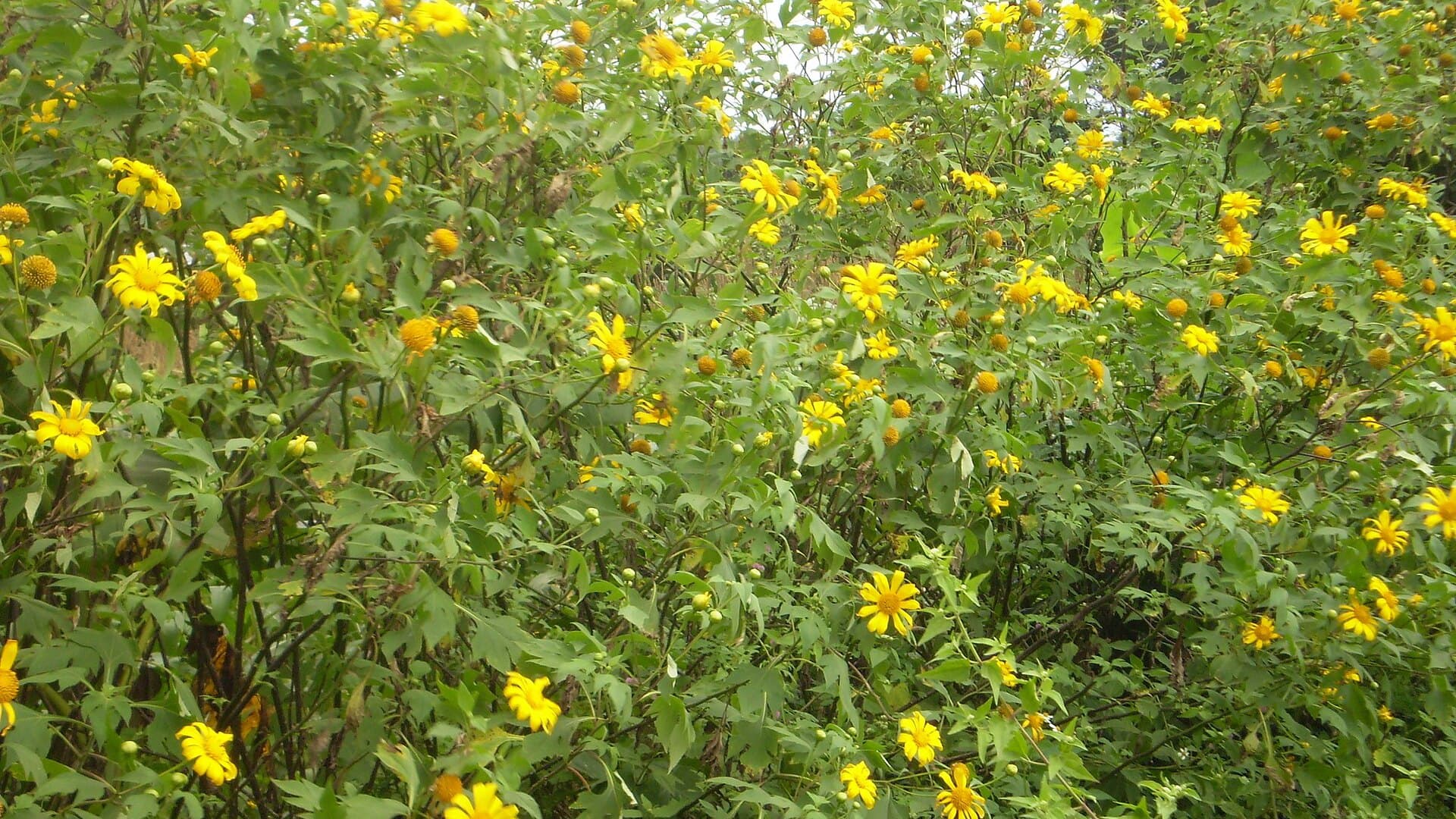
Da Lat is the south's November headline. At around 1,500 metres the highlands run 14-22°C with about 85 mm of rain and six hours of sun, the last rainy-season showers fading through the month. This is when the wild sunflowers — dã quỳ, a two-to-three-metre shrub rather than a field crop — turn the roadsides yellow. Local reporting puts the season from the end of October to the end of November, with the densest stands along the Lien Khuong to Prenn expressway and through Hiep An and Hiep Thanh communes in Duc Trong, ten to twenty minutes out of town. Go before 10am or after 3pm for the light. The Da Lat guide and our day trips from Da Lat cover the routes.
Sea temperature is not a constraint anywhere: Phu Quoc 28.5°C, the southern coast near 28°C, Da Nang, Hue and Nha Trang around 27°C, Ha Long coolest at 25.5°C. Sea state is. The northeast monsoon pushes brown, churned water onto the central beaches for days at a time, so Phu Quoc's west coast is the most reliable swim in the country this month once the early swell fades.
Prices: the climb toward high season
November opens the November-to-April international high season, and the price curve tilts upward through the month. The north feels it first because the north is where the weather is: Sapa and Ha Long are in their own regional peak, and the best-known hotels and boats fill early and discount least. As of mid-2026 the hotel prices guide puts a Sapa 4-star at $75-150 a night (roughly 1.9 to 3.9 million VND), a central Hanoi 3-star at $55-100 (1.4 to 2.6 million VND), and a 4-star overnight Ha Long cruise at around $120-180 per person (3.1 to 4.7 million VND), with a seasonal swing of about 30 percent either side — and November sits at the firm end of that swing in the north.
The centre and south run the other way. The same guide calls October-November the value shoulder for the centre and south: a Hoi An 4-star listed at $80-170 (2.1 to 4.4 million VND) discounts hardest while the river is high, and a Phu Quoc 4-star at $130-260 (3.4 to 6.8 million VND) has not yet taken on the 25 to 40 percent Christmas premium that arrives from around 20 December. If you want the south at high-season weather for shoulder-season money, the last two weeks of November are the window. The monthly price calendar shows how November lands against the rest of the year.
Demand is real, not theoretical: Vietnam's General Statistics Office reported about 2 million international arrivals in December 2025, up 15.7 percent on the previous year, on the way to a record 21.2 million for 2025. November 2027 sits on the up-ramp into that peak, so book the north first.
What's on in November 2027
- Hoi An full-moon lantern night — Thursday 11 November 2027. The 14th day of the tenth lunar month, when the Old Town dims its electric lights and candle floats fill the river. Lovely in a dry spell and curtailed in high water — a bonus, not an anchor.
- Ha Giang buckwheat season. Peaks late October to mid-November across the Dong Van plateau, with a locally organised festival usually held around Dong Van. Confirm dates locally; a warm autumn brings the bloom forward.
- Da Lat wild sunflower (dã quỳ) season. End of October to end of November on the roads around Duc Trong and Don Duong. No ticket, no festival, no schedule — drive the Lien Khuong to Prenn road in the early morning.
- Vietnamese Teachers' Day — Saturday 20 November. A domestic observance rather than a travel event; it falls on a weekend in 2027.
There are no statutory public holidays in November. The festival calendar atlas has the full-year view if your dates can flex.
Where to go, and where to think twice
Go: Hanoi, Ha Long Bay, Sapa and Ha Giang, without buffer days; Da Lat for the wild sunflowers and cool, drying air; Ho Chi Minh City and the Mekong on a mornings-first schedule; Phu Quoc in the second half of the month for the pre-peak prices.
Think twice: Hue at any point in the month; Hoi An and Da Nang before about 20 November, or on any non-refundable riverside booking; Nha Trang, in its wettest month; Phu Quoc in the first week if dependable sunshine is the point of the trip.
The verdict: the best all-round month claim is about 70 percent true. It is completely true for the north, true with a footnote for the south, and false for the central coast until the final ten days. November 2027 suits travellers who will build a north-and-south trip and treat the centre as optional, and it suits them better than almost any other month. It does not suit a beach-first trip to the central coast, or anyone who wants the whole country in one go without a single wet week. For the month that follows, see Vietnam in December 2027.
Limitations
Everything above rests on historical climate averages, and published datasets disagree — Hoi An's November total is quoted anywhere from about 350 to 500 mm depending on the station and period, and a single November can run far wetter or drier than any mean. Late 2025 produced record central-coast flooding well beyond the typical range, while other Novembers pass with a few days of street water. Typhoon tracks are unforecastable at planning distance. Workaround: treat the table as a prior, check ten-day forecasts a week out, and never lock in non-refundable central-coast bookings for the first half of November.
The calendar claims carry their own caveats. Bloom timing drifts: a warm autumn can finish the Ha Giang buckwheat before November opens, and the Da Lat sunflowers can peak a week either side of the dates here. The lantern-night date is a lunar conversion, and Hoi An suspends the event in high water. Prices are mid-2026 planning bands rather than quotes, and the arrivals data describes 2025 rather than the year you are booking. Workaround: confirm bloom conditions with a local operator the week before you commit to a detour, and check live rates before assuming the shoulder-season discount still applies.