
Here is the plain answer: October 2027 is the best single month of the year for northern Vietnam and one of the worst for the central coast, and nothing in the 2027 calendar changes that split. Hanoi hits its short autumn — historically around 29.8°C by day, 22.2°C at night and roughly 155 mm of rain, the driest, most comfortable air since spring. Sapa and Ha Giang dry into trekking and riding weather, and the first buckwheat opens on the Dong Van plateau in the last week. Meanwhile Hue records its wettest month of the year at about 755 mm, Da Nang and Hoi An theirs at roughly 650 mm, and typhoon exposure peaks. The south is winding down, the Mekong at high water.
This is the 2027 edition of a page we rewrite each year; this year's October guide has the 2026 dates and the same regional shape. The 2027 specifics are a Wednesday Women's Day on 20 October, a Hoi An lantern night on Wednesday 13 October, and a Mid-Autumn Festival that fell on 15 September and so misses the month entirely. If your dates can slide, September has the harvest gold and November has the buckwheat at its peak. The month-by-month weather guide has the full year, and the rainy season guide explains how to travel through rain wherever you meet it.
October by region: the historical averages
Long-run normals from Climates to Travel, with Ha Giang from climate-data.org. These are averages, not forecasts, and other datasets differ.
| Region | Historical October picture | Verdict |
|---|---|---|
| Hanoi | 29.8°C days, 22.2°C nights, roughly 155 mm over 11 days, 76 percent humidity | Autumn peak: go |
| Ha Long Bay / Hai Phong | 29°C days, roughly 155 mm, sea 28°C | Calm season begins; book ahead |
| Sapa | 19°C days, 13.5°C nights, roughly 215 mm over 18 days | Drying; prime trekking |
| Ha Giang | 26 to 28°C days, about 16°C nights, roughly 70 to 125 mm | Loop season; buckwheat from late month |
| Hue | 29.5°C days, 22.6°C nights, roughly 755 mm over 21 days, sea 28.2°C | Wettest month of the year: think twice |
| Da Nang / Hoi An | 29.6°C days, 23.2°C nights, roughly 650 mm over 20 days, sea 28°C | Flood season: flexible bookings only |
| Nha Trang | 30°C days, 24.4°C nights, roughly 300 mm over 18 days, sea 28.3°C | Poor beach odds |
| Da Lat | 22.5°C days, 15.1°C nights, roughly 240 mm over 19 days | Cool, easing late month |
| Ho Chi Minh City | 32°C days, 23.8°C nights, roughly 265 mm over 21 days | Monsoon tailing off |
| Phu Quoc | 30.6°C days, 25°C nights, roughly 385 mm over 22 days, sea 29°C | Wet; improving in November |
Why October is the north's month
Hanoi's autumn is short, and this is it. After months of 30-plus-degree humidity the air lifts: highs near 30°C early in the month falling towards the mid-twenties by its end, nights around 22°C, humidity down to about 76 percent and rainfall at roughly 155 mm over 11 days, a third of the summer peak. This is the month for the Old Quarter at noon, lakeside coffee in a cool morning and the Long Bien bridge at dusk. Locals call autumn Hanoi's best season, and the numbers agree.
The harvest's last act. Mu Cang Chai's terraces are mostly stubble by the second week of October, but Hoang Su Phi, the latest of the northern valleys, is often still cutting into mid-month, so a first-week arrival can catch gold without September's crowds. The September guide has the valley-by-valley timing.
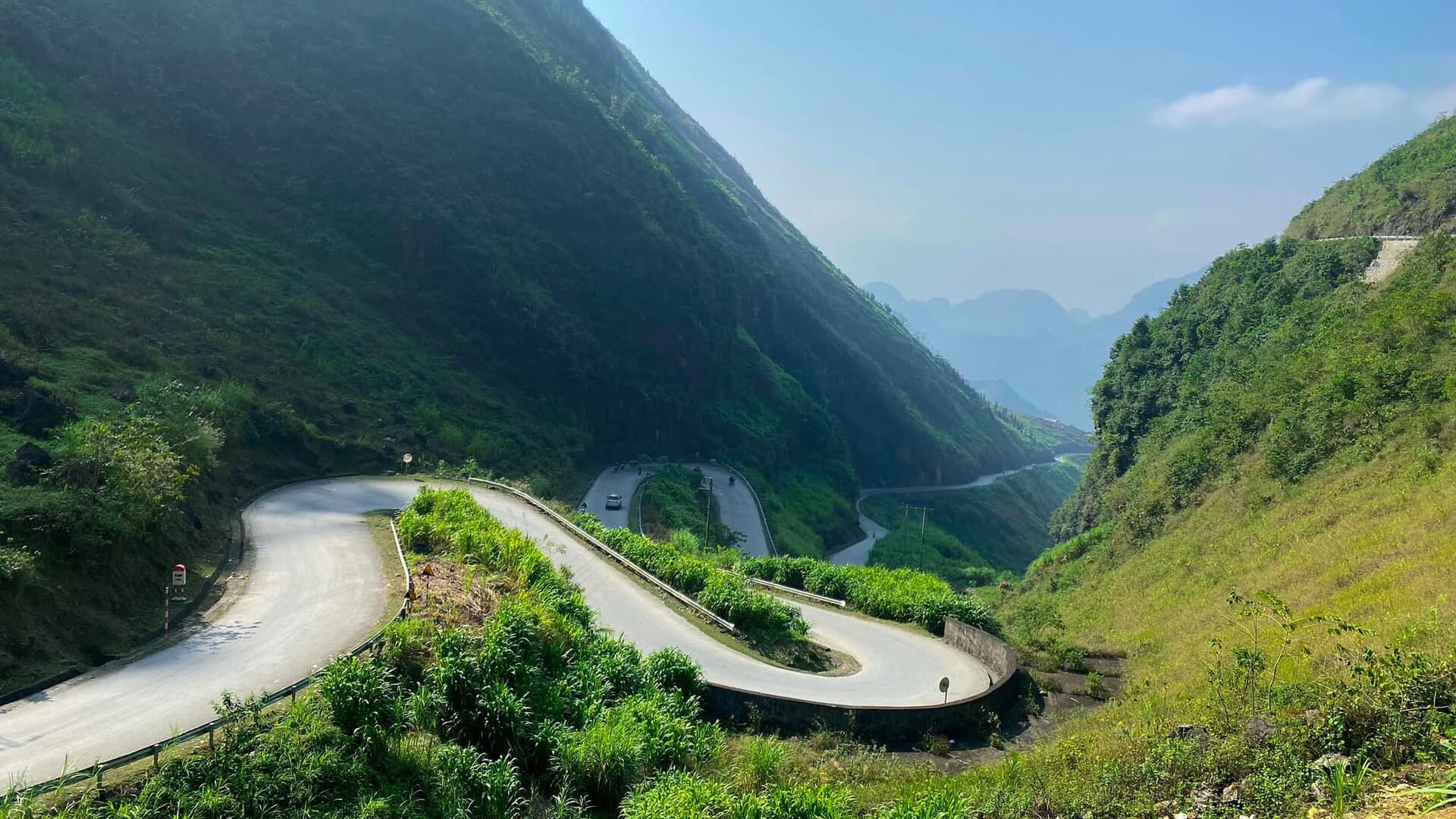
Ha Giang, and when the buckwheat actually blooms. October is the loop's prime window: daytime highs around 26 to 28°C in Ha Giang city and cooler on the plateau, roughly 70 to 125 mm of rain depending on the dataset, dry roads and long views from Ma Pi Leng once the landslide season fades. The buckwheat, tam giac mach, is sown after the maize and opens white in the last ten days of October, deepens to pink through November and is red by early December; the district festival in Dong Van has run in late November in recent years. So an October trip sees the season opening at Sung La, Pho Cao and Lung Cu rather than the full pink carpet. If the flowers are the point, the November guide is your month. The loop routes guide has the day counts and bike logistics, and Sapa, at 19°C by day with roughly 215 mm, is drying into its clearest trekking weeks.
Ha Long Bay goes calm. Hai Phong's October normal is about 155 mm, a third of August's, with the sea at 28°C, and the storm cancellations that dog summer sailings become rare as the northern typhoon maximum ends. The catch is demand: October is a prime cruising month on Ha Long Bay, and the better boats sell out.
The central coast: peak flood and typhoon risk
October is when the northeast monsoon starts driving sustained rain into the centre, and the numbers are not subtle. Hue's long-run October normal is roughly 755 mm over 21 days — the wettest month of the Hue year and more than a quarter of its 2,800 mm annual total — and Da Nang's is about 650 mm over 20 days, its rainiest month, according to Climates to Travel. Sunshine drops to about four and a half hours a day. This is not the south's brief afternoon rain; it is multi-day, flood-producing rain.
The floods are real, and recent. Hue sits on the Perfume River's floodplain and Hoi An's Old Town on the low ground beside the Thu Bon; when a week of monsoon rain meets high tides, both go under — most years briefly, some years badly. Late October 2025 was the bad case: record rainfall across Thua Thien Hue, with a station on Bach Ma peak recording more than 3,000 mm in five days according to the AHA Centre, and the Thu Bon above its 1964 record in Hoi An. Most Octobers are far milder, and the flooding is localised to the riverside blocks while Hue and Hoi An otherwise function, but this is the month it is most likely.
Typhoon exposure peaks. The central window runs from early September to about 10 December, and the national forecaster's long-term average is 11 to 13 storms and tropical depressions in the East Sea a year with five or six landfalls, concentrated on this coast in autumn. Tracks firm up only three to five days out, so check the NCHMF forecast the week you travel any central leg. Nha Trang, at roughly 300 mm over 18 days with the sea at 28.3°C, is entering its two wettest months and is a poor-odds beach.
If the centre is non-negotiable: refundable rooms, no non-refundable flights into Da Nang, a buffer day in the leg, a base on higher ground rather than a riverside Old Town hotel, and insurance that covers weather disruption. Plenty of travellers pass through in October without incident; the point is to structure the leg so a wet week bends the itinerary rather than breaking it.
The south: the wet season tailing off
Ho Chi Minh City is still in its rainy season — roughly 265 mm over 21 days — but the trend is what matters: November's normal is about 115 mm, and by the last ten days of October the afternoon downpours space out noticeably. The rhythm holds until then: highs near 32°C, dry mornings, a hard 30-to-90-minute burst in the afternoon. Mornings out, afternoons flexible, and the city works.
The Mekong Delta is at annual high water, which historically peaks in the first half of October. For most visitors that is a feature: the floating markets are busiest and the flooded forests navigable by sampan. The trade-off is that some low-lying lanes and homestays become boat-access-only for a while.
Phu Quoc is still wet at roughly 385 mm over 22 days and improves sharply in November, though the south's own short typhoon window opens around 15 October. Da Lat, at 22.5°C by day with roughly 240 mm over 19 days, is working through its last wet month and clears towards the end of it.
Sea temperatures by coast
Every coast is still warm enough to swim; the question is whether the sea is calm and the beach open. October normals put Ha Long and Hai Phong at about 28°C, Hue at 28.2°C, Da Nang and Hoi An at 28°C, Nha Trang at 28.3°C and Phu Quoc at 29°C. The northeast monsoon brings surf and red flags to the central beaches, Ha Long is calm, and Phu Quoc's west coast begins to settle as the southwest monsoon dies.
Crowds and prices: where hotels are cheap and where they are full
October is the value shoulder for most of the country, and as of mid-2026 the pattern looked like this. Accommodation sat around baseline nationally, roughly 15 to 30 percent below the November-to-April international peak in most cities, with the centre discounting hardest for obvious reasons: a well-reviewed three-star in Hoi An ran roughly 35 to 70 USD a night, about 900,000 to 1.8 million VND, against 55 to 100 USD in Hanoi, according to our hotel prices guide. Long-haul fares from the United States and Europe sat in a 700 to 900 USD autumn shoulder, above September's dip.
The exceptions run the other way. Sapa and Ha Long enter their own regional peaks in October, clear-air trekking and calm-sea cruising respectively, so the best-known hotels and boats there fill early and discount least, and Ha Giang's homestays fill from the last week as the buckwheat opens. The monthly price calendar flagged 10 to 31 October as one of the year's two best weather-to-price windows. Book the north early; leave the rest flexible.
What's on in October 2027
October 2027 has no public holidays and, because the Mid-Autumn Festival fell on 15 September, no major festival. Three dates are worth knowing.
- Hoi An full-moon lantern night, Wednesday 13 October. The 14th day of the ninth lunar month by our Vietnamese lunar conversion. The Old Town switches off its electric lights and candle floats fill the river, in a dry spell. In October it is curtailed or cancelled in high water more often than in any other month, so treat it as a bonus rather than an anchor.
- Vietnamese Women's Day, Wednesday 20 October. Not a day off, but the whole country marks it: flower stalls multiply on every corner from the weekend before, rose prices double or triple for the day, offices hand out gifts, and restaurants in Hanoi and Ho Chi Minh City are fully booked that evening. For travellers it is a photogenic day and a reason to reserve dinner ahead.
- The buckwheat opening in Ha Giang. First blooms across the Dong Van plateau from the last ten days of the month, building to the November peak.
The festival calendar atlas has the wider year.
Where to go, and where to think twice
Go: Hanoi and Ninh Binh at any point in the month; Sapa and the Ha Giang loop, with the last week for the first buckwheat; Ha Long Bay on a booking made early; Hoang Su Phi in the first week for the last of the gold; Ho Chi Minh City and the Mekong, especially in the second half; Da Lat late in the month.
Think twice: Hue, Hoi An and Da Nang unless every booking is refundable and the Old Town is a flexible visit rather than an anchor; Nha Trang and Phu Quoc for a beach week; any itinerary that needs Hoi An's lantern night dry.
The verdict: October 2027 suits travellers who aim the trip north and accept that the north is where prices are firmest. Pay the Sapa and Ha Long premium, take the Hanoi autumn, and save the buckwheat's full pink for November if flowers are the point. It suits the south as a strong second act. It does not suit anyone who needs the central coast dry.
Limitations
Everything above rests on long-run climate normals, and datasets disagree: Ha Long's October rainfall appears as anywhere from about 50 mm to 155 mm depending on the station and source, Hue's as roughly 400 mm to 755 mm, and Ha Giang's as about 70 mm to 125 mm. Single years deviate hard in both directions — late 2025 produced record central flooding, while other Octobers pass with minor street water — and typhoon tracks are unreliable beyond about five days. Workaround: treat the table as a prior, check each destination's ten-day forecast a week out, and never lock in non-refundable central-coast bookings for October.
Bloom and harvest timing drift a week or two with each year's weather: the buckwheat can open in mid-October in an early year or slip into November in a late one, and the last gold can be gone from Hoang Su Phi by the first week. Prices are mid-2026 observations that move with exchange rates and demand, and the Hoi An lantern date is a lunar conversion. Workaround: confirm conditions with a local operator the week before a detour, and check live rates before you book.