
Vietnam's nightlife question has a clear answer. Ho Chi Minh City is the only city in the country with real depth after dark — rooftops from casual to dressy, clubs past 2:00 a.m., a serious craft beer scene, and kitchens that serve at 3:00 a.m. Hanoi is the atmospheric one: the beer-corner ritual at Tạ Hiện is arguably Vietnam's single best night out, but the Old Quarter still lives with the shape of a midnight curfew that has loosened without ever fully leaving. Da Nang and Nha Trang are beach-bar towns. Hoi An is lantern-lit, lovely, and mostly silent by 10:00 p.m.
This guide covers what each city's night actually looks like, plus the two institutions most visitors misread — bia hơi and the private karaoke room. One framing note: Vietnamese drinking culture is social and paced, built around food and low-alcohol beer, and the best nights here are long and slow rather than fast and heavy.
How the cities compare after dark
| City | The scene | Realistic closing time | Best for |
|---|---|---|---|
| Ho Chi Minh City | Rooftops, clubs, cocktail speakeasies, craft beer, late kitchens | Past 2:00 a.m. in District 1 | A full night, at any budget |
| Hanoi | Bia hơi corners, Tạ Hiện crossroads, West Lake lounges | Around midnight; 2:00 a.m. weekend exceptions in the Old Quarter | Atmosphere over stamina |
| Da Nang | Beach bars, the An Thuong quarter, riverside terraces | Midnight to 1:00 a.m. | A relaxed beer after the beach |
| Nha Trang | Beach clubs and the Tran Phu beachfront strip | The latest outside Saigon | Beach parties |
| Hoi An | Riverside bars under the lanterns, An Bang beach bars | Ancient Town around 10:00 p.m.; a few spots later outside it | A quiet drink with a view |
Hanoi — Tạ Hiện, bia hơi, and the midnight reality
Hanoi's night is front-loaded — the city does its best work between 5:00 p.m. and 11:00 p.m., centered on the Tạ Hiện crossroads, the Old Quarter intersection known simply as beer corner. Plastic stools spill across the junction, bia hơi flows, grilled snacks circulate, and the crowd is a genuine mix of locals and travelers. It is the natural final stop of our Hanoi street food crawl.
The structural fact shaping everything else is the closing time. Hanoi long enforced a midnight shutdown on Old Quarter venues; in September 2016 the Hoàn Kiếm district authorities began allowing bars to stay open until 2:00 a.m. on Friday, Saturday, and Sunday nights, and the city has kept extending night-economy pilots since. Enforcement comes and goes — weekday shutters still roll down near midnight, and the 2:00 a.m. window is venue-by-venue. Treat midnight as the default and anything later as a bonus.
For a different register, ride up to West Lake (Tây Hồ): the expat-heavy lakeside has cocktail lounges and taprooms with water views and none of the Old Quarter's crush.
Saigon — Vietnam's deepest night
Ho Chi Minh City is where Vietnam's nightlife has layers, and almost all of them stack inside District 1.
Bui Vien, honestly. The backpacker strip is a spectacle — competing sound systems, fire dancers, buckets, touts — and worth walking once. It is also the most hustle-dense street in the country: inflated tabs, pushy promoters, and laughing-gas balloons that are openly sold despite recurring bans and best skipped entirely. Go for an hour of people-watching, keep your phone zipped away, and move on. Do not book a room on the strip; our where to stay in HCMC guide covers the bass-through-the-walls problem.
The rooftop tier. Chill Skybar on the AB Tower and Blank Lounge up Landmark 81 sit at the polished end, with prices and dress codes to match; Broma on Nguyễn Huệ and the Social Club rooftop at Hôtel des Arts are a notch more relaxed. A cocktail can cost more than a full street-food day, but the views over the Saigon River earn it once.
Cocktails and craft beer. District 1 has a proper speakeasy wave hidden in the walk-up buildings around Tôn Thất Đạm and Pasteur — unmarked doors, serious bartenders, phở spices and salted plum in the glasses. The craft beer scene that started around 2015 is now mature: Pasteur Street Brewing, Heart of Darkness, and East West Brewing all run taprooms in or near District 1.
The late kitchen. Saigon's quiet superpower — the night ends with food, not another drink. Bánh mì counters, cháo (rice porridge) pots, and 24-hour phở keep District 1 fed well past 2:00 a.m.; the map is in our Saigon street food guide.
Da Nang — beach bars and An Thuong
Da Nang's night is smaller and more relaxed than its size suggests — this is a city that wakes up early for the beach. The action concentrates in the An Thuong quarter, a walkable grid behind My Khe beach of backpacker bars, craft-beer spots, and small clubs that get loud on weekends and fade between midnight and 1:00 a.m. The Han riverside makes a good first stop — on Friday, Saturday and Sunday nights at 9:00 p.m., the Dragon Bridge breathes actual fire and water over the crowd, still the best free show in central Vietnam.
Nha Trang — the beach-party town
Nha Trang is the closest thing Vietnam has to a party resort. The scene runs along the Tran Phu beachfront: beach clubs with day-to-night pool parties, open-air venues on the sand, and tourist bars in the blocks behind, with Sailing Club anchoring the late end for two decades. It is the one Vietnamese scene built primarily for tourists, which cuts both ways — the parties are easy to join solo, and the same zone concentrates the drink hustles and inflated tabs that barely exist elsewhere. Watch your drink, run a tab you can see, and Grab back rather than walking the beach road late.
Hoi An — lanterns, then quiet
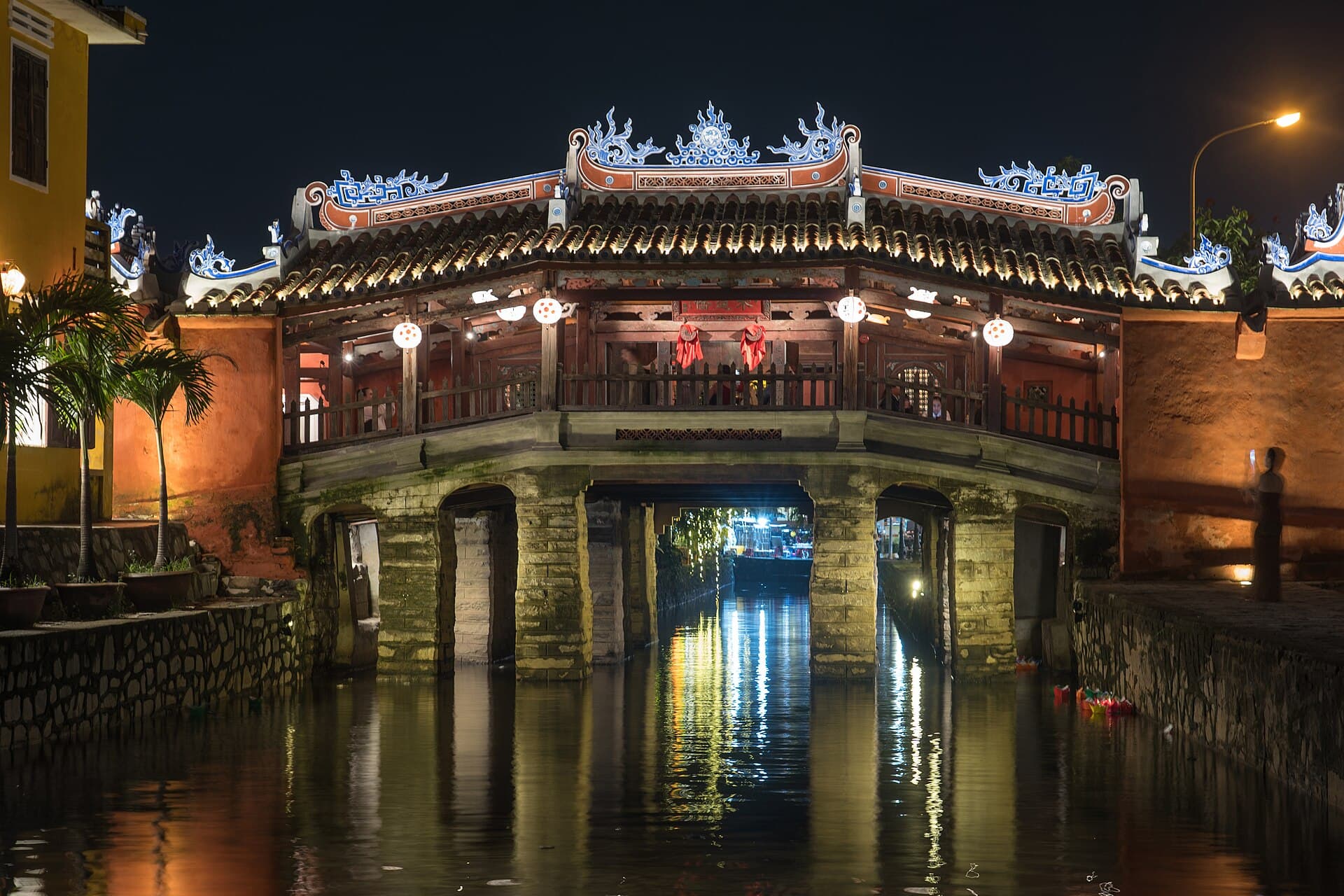
Hoi An redefines what nightlife means. The Ancient Town's evening is the show: lanterns on the Thu Bồn river, the night market on An Hội islet, a riverside bar seat with a glass of something slow. By around 10:00 p.m. the old town is closing down — it is a heritage zone with residents, and it sleeps. What late scene exists sits outside it: a few backpacker bars across the river, and the An Bang beach bars with bonfires on summer weekends. For a big night, Da Nang is 45 minutes away. For the most beautiful early evening in Vietnam, Hoi An already won.
Bia hơi, explained
Bia hơi ("fresh beer") is Vietnam's daily draft — a light, unpasteurized lager brewed each morning, delivered to street corners in steel kegs, and poured until it runs out. It carries no preservatives and does not keep; each corner sells that day's delivery and closes when the keg blows. It is routinely cited as the cheapest commercially brewed beer in the world, typically around 10,000-15,000 VND a glass in Hanoi, and deliberately weak — usually near 3-4 percent, made for hours of slow drinking with food.
The etiquette is simple. Sit on the low stool, hold up fingers for glasses, and order something to eat — peanuts, grilled meat, morning glory — because drinking without food reads as odd here. Toast when the table toasts: một, hai, ba, dô. Your bill is often just the count of empty glasses on the table, so let them accumulate. Nobody is racing; that is the point.
Karaoke is the real Vietnamese night out
If you want to go out the way Vietnamese people actually go out, it is not a club — it is a private karaoke room. Karaoke here is a group ritual: families after a wedding, colleagues after work, friends on a Tuesday, renting a room by the hour with a touchscreen songbook, a fruit tray, and rounds of beer. Nobody performs; everybody sings. Split across the group, the room usually costs less per person than one rooftop cocktail.
Joining is easy. The best way is an invitation — if colleagues, a tour group, or hostel staff suggest karaoke, say yes. Otherwise, big-city chains (iCool in Ho Chi Minh City is a common, family-friendly one) rent rooms to walk-ins with English songbooks. The etiquette: everyone sings at least once, applaud everything, pass the microphone. The one caution is the inverse — a stranger you just met insisting on their karaoke spot is a known setup for a five-million-dong bill, covered in our scams guide.
Staying safe on a night out
Vietnam's nightlife risks are mostly financial, not physical, and three habits remove nearly all of them. First, watch your drink and your tab in the tourist party zones — Bui Vien, Nha Trang's beachfront, parts of the Old Quarter. Drink spiking is not rampant, but it exists where drunk tourists concentrate; keep your glass in hand and order where you can see the pour. Check the bill line by line — the inflated tab and the friendly-stranger karaoke invitation are the two classic night hustles, both detailed in the Vietnam scams guide. Second, get home by Grab, not a flagged taxi — the app runs all night, the price is fixed upfront, and a late ride across District 1 costs pocket change (current fares). Third, keep your phone off the curb side while you wait; motorbike bag-snatching is the one street crime worth planning around, and it peaks late.
Practical notes for going out in Vietnam
- Dress codes are real at the top tier. Rooftop lounges and clubs refuse flip-flops, singlets, and sports shorts — footwear is the most common refusal. Closed shoes and a shirt with sleeves clear every door; beach bars and bia hơi corners have no code at all.
- Carry a passport copy, not the passport. The drinking age is 18 and checks are rare, but bigger clubs occasionally ask. A copy or phone photo satisfies almost everyone; the passport stays in the hotel safe.
- Cash for the street, cards for the rooftops. Bia hơi corners and Bui Vien bars run on cash; upmarket lounges and taprooms take cards.
- Closing times. Hoi An around 10:00 p.m., Hanoi around midnight, Da Nang around 1:00 a.m., Nha Trang later, Saigon latest of all.
- Tet empties the calendar. For several days around Lunar New Year — mid-February in 2026, early February in 2027 — bars, bia hơi corners, and karaoke blocks close as staff go home. Saigon keeps a partial scene; Hanoi goes quiet. If nightlife matters, avoid that week.
Limitations
Nightlife is the fastest-churning subject in travel writing. Bars rename, rooftops close for renovation, and the named venues here — Chill Skybar, Sailing Club, the District 1 taprooms — are anchors for the right area and price tier, not promises they will still be the best room in the building when you land. Workaround: confirm hours on a venue's own social pages the same week, and ask hostel or hotel staff where they went out last weekend — that answer beats any guide.
Two figures deserve extra hedging. Hanoi's closing-time regime is a district-level policy, piloted, extended, and unevenly enforced since 2016; treat midnight as the planning default and check locally for the current weekend window. And bia hơi prices drift with inflation and neighborhood — the 10,000-15,000 VND glass is a mid-2026 Hanoi range, not a promise. For the money side of a night out, see the Grab prices guide and the scams guide.