
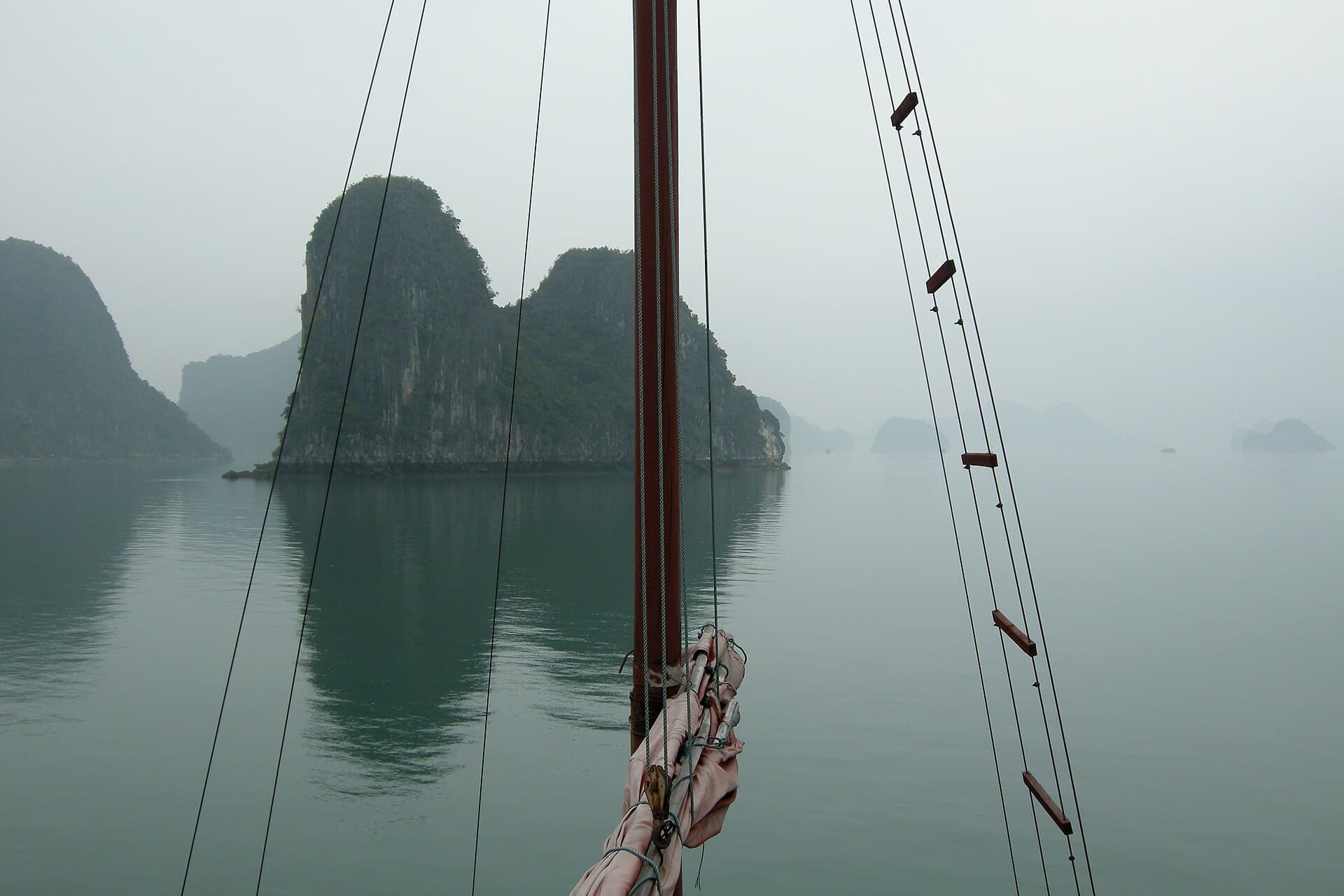
Vietnam is one of the world's easiest countries to travel alone. Three of the four English-language government advisories rate it at their lowest risk tier, costs are among the lowest in Southeast Asia, and — the part that matters most day-to-day — the social infrastructure for solo travelers is everywhere: dense hostel scenes, per-seat group tours, cooking classes, and a street-food culture where a table for one is the default, not the exception. This guide covers the solo experience itself: eating alone, meeting people, what going solo really costs, and how to route the trip. For per-city safety scores and the sourced risk data, our Solo Traveller Safety Atlas is the reference — this guide doesn't rebuild it.
Why Vietnam works so well solo
Most destinations tolerate solo travelers. Vietnam is built for them, in three ways.
The food culture is single-diner-native. The com binh dan — the point-and-choose rice canteen found on nearly every urban block — serves one person, on one stool, in fifteen minutes. Pho stalls, banh mi carts, bun cha shops: all engineered around the solo diner. Vietnamese office workers, students, and drivers eat alone at street stalls every day, so a foreigner doing the same is invisible in the best way. There is no "table for one?" moment in Vietnam because there is no expectation you'd arrive as anything else.
The coffee culture runs on parties of one. A Vietnamese cafe expects you to order one ca phe sua da and occupy a chair for an hour or three. Nobody hovers, nobody turns the table. For a solo traveler, this converts every city block into a legitimate place to simply be alone in public — the thing many solo destinations quietly lack.
The tour economy is priced per seat. Group day trips — Ha Long Bay from Hanoi, Cu Chi Tunnels and the Mekong Delta from Ho Chi Minh City, My Son from Hoi An — sell individual seats, so a solo traveler pays what each member of a couple pays and spends the day embedded in an instant temporary group. Layer on hostel density along the route and 45-day visa-free entry for most Western passports (see our visa guide), and solo logistics reduce to almost nothing.
The one structural risk that ignores your group size: traffic. Vietnam records 17.7 road deaths per 100,000 people, over 90% involving motorcycles (WHO 2023, per the safety atlas) — and a solo traveler on a rented motorbike has nobody to notice when something goes wrong. Skip self-rental; use Grab, trains, and guided options instead.
How solo travelers actually meet people
You don't need to be extroverted; you need to show up where the meeting is already organised.
- Hostel events. The established backpacker hostels in Hanoi, Hoi An, and Ho Chi Minh City run family dinners, walking tours, and pub crawls precisely because solo travelers are their core market. One social hostel night typically produces dinner company for the next three. Our hostel guide names the current picks — the female-dorm framing aside, the social mechanics are identical for everyone.
- Free walking tours. Hanoi and Ho Chi Minh City both have student-led free tours where the guides want English practice and the guests are disproportionately solo. Two hours, low commitment, and you leave with lunch companions.
- Group day tours. A shared Ha Long Bay boat, a Cu Chi Tunnels van, a My Son sunrise bus — each is six hours of proximity with 10-25 people, several of them alone too. If the overnight-cruise single supplement stings (more below), the Ha Long Bay day trip delivers the same social effect at per-seat pricing.
- Cooking classes. Hoi An and Hanoi classes run at 6-10 people, hands busy, conversation unavoidable — the highest company-per-dollar activity in the country.
- The Ha Giang Loop. Guided loop tours put 8-10 travelers on bikes (with easy-rider drivers) for three or four days of shared meals and homestays. Groups routinely finish the loop and re-book the rest of their route together.
- Coworking cafes. For longer stays, the laptop-cafe scenes in Da Nang and Ho Chi Minh City are where solo travelers on slower timelines find each other.
The multiplier under all of this is repetition. Because nearly everyone travels the same north-south spine in the same direction at a similar pace, the Australians from your Hanoi dorm resurface at a Hoi An cooking class a week later, and again on a Saigon rooftop after that. The route keeps re-introducing you.
The solo cost reality
Vietnam is cheap, but solo travel carries a predictable premium. Knowing where it lives is how you beat it.
Where the penalty bites:
- Private rooms. A room costs the same for one occupant as for two, so a couple's per-person accommodation cost is automatically half yours. This is the largest line item in the solo premium everywhere on earth; Vietnam just makes the absolute numbers small.
- Overnight cruise cabins. Ha Long and Lan Ha cruises price per twin-share cabin. Solo occupancy typically triggers a single supplement that can approach the full second-person fare — effectively paying for the empty bed.
- Private tours and car hire. A fixed price divided by however many of you there are. Divided by one, it stings.
Where there is no penalty at all: dorm beds, train berths, bus seats, per-seat group tours, and every bowl of street food — which is to say, most of a normal Vietnam trip.
How to beat the rest of it: take the dorm (roughly $7-12 a night) or a private hostel room (commonly $20-30); join group day tours instead of booking private; for cruises, ask operators about solo-cabin rates or low-season supplement reductions — some negotiate when boats aren't full — or substitute the day-trip version. A solo traveler on the standard backpacker pattern still lands around $35-45 a day, in line with our Vietnam Travel Cost Index; the solo premium mostly appears once you climb into mid-range hotels and private touring, where budgeting toward the upper end of each cost band is the honest adjustment.
Route logic for solo travelers
Vietnam's geography does solo travelers a favor: the route is a line. Hanoi in the north, Ho Chi Minh City in the south, the Hue-Hoi An coast in between — nearly everyone runs the spine in one direction or the other.
For a solo traveler this produces three compounding advantages. Social continuity: the same-direction flow means the people you meet keep re-appearing, turning strangers into a loose traveling cohort without any planning. Decision simplicity: the next stop is simply the next city down the line, and every hostel reception can book the leg. Flexibility without penalty: because trains, sleeper buses, and cheap flights serve the spine in parallel, you can slow down in Hoi An with people you like or skip ahead to Saigon without unraveling anything.
If you have only a week, pick one region rather than sprinting the line — our 7-day route guide lays out the three sane versions. For the full two-to-three-week spine with budgets and hostel picks, the first-time backpacker guide is the day-by-day plan.
A note for solo men
Most solo-travel content is written for women, which leaves some men assuming the cautions don't apply to them. The data says otherwise.
Petty crime and scams in Vietnam are gender-neutral. The motorbike bag-snatch in Ho Chi Minh City's District 1 takes phones from whoever holds them near the curb; the fake-Grab intercept and airport taxi scams target whoever looks freshly landed.
Nightlife is where the solo-male profile carries specific risk. Drink spiking happens to men too — usually as a prelude to theft — and methanol-adulterated spirits, flagged by the UK FCDO, show up precisely in the cheap late-night venues where solo men are statistically the heaviest drinkers. Bar-strip bill-padding and inflated "special menu" pricing concentrate in the same zones. The safety atlas documents the sharpest solo-male pattern of all: over-representation in alcohol-related motorbike incidents. The mitigations are undramatic — sealed drinks, itemised bills, never riding after drinking.
Women-specific safety depth — harassment patterns, per-city comfort signal, dorm and transport strategies — lives in the atlas and our solo female safety guide; we keep it there rather than diluting it here.
The eating-alone playbook
If eating alone abroad makes you self-conscious, Vietnam is the cure, and the com binh dan is lesson one. Walk up to the glass counter, point at three or four trays — a protein, two vegetables, maybe a fried egg — receive a plate of rice under all of it, sit wherever there's a stool, and pay when you finish. Total cost: usually under $2. Nobody in the room registers that you're alone, because half the room is too.
The wider playbook:
- Shared tables are normal. At busy stalls you'll be waved onto a table with strangers. Sit, nod, eat. Conversation is optional and occasionally excellent.
- Order the solo-native genres. Noodle soups (pho, bun bo Hue, bun cha), rice plates, banh mi — all portioned for one. Hot pot and group barbecue are the genres that punish solo diners; save those for the friends you make at the hostel.
- Basic etiquette carries you. Don't plant chopsticks upright in a rice bowl; rest them across the top. Pay street vendors at the end unless they gesture otherwise. Tipping isn't expected at stalls or canteens.
- Use cafes as your solo living room. One coffee buys an unhurried hour — a public place to be alone that requires no performance.
- Evening strategy. If solo dinner feels exposed at night, do what locals do: eat the big meal at lunch, when canteens are packed and cheap, and keep dinner casual at a stall where solo is the norm.
Limitations
- This guide covers the solo experience, not per-city risk. Safety scores, scam typology, healthcare access, and advisory detail live in the Solo Traveller Safety Atlas, updated annually. Read it before booking rather than treating this page's brief safety notes as complete.
- Cost figures are hedged ranges, not quotes. Dorm, room, and daily-budget numbers reflect mid-2026 patterns from our Travel Cost Index; they move 5-15% seasonally, and Tet inflates transport and closes small eateries for days. Cruise single-supplement policies vary by operator and season — always ask directly.
- Social infrastructure is opt-in and rotates. The hostel scene turns over every couple of years, and the repeat-encounter effect only works on the main spine at backpacker pace. Travelers in private hotels off-route will meet far fewer people — by design or not.
- Solo experience varies by temperament. This guide describes the median solo trip; introverts may prefer the cafe-and-day-tour version, which works equally well but produces fewer travel companions.
Cross-references
- Vietnam Solo Traveller Safety Atlas 2026 — sourced per-city safety reference
- Backpacking Vietnam: First-Time Solo Traveler's Guide — the budget route, day by day
- Is Vietnam Safe for Solo Female Travelers — women-specific depth
- Best Hostels in Vietnam — current social-hostel picks
- Vietnam Travel Cost Index 2026 — full cost data by city
- 7 Days in Vietnam: Three Routes — short-trip route logic