
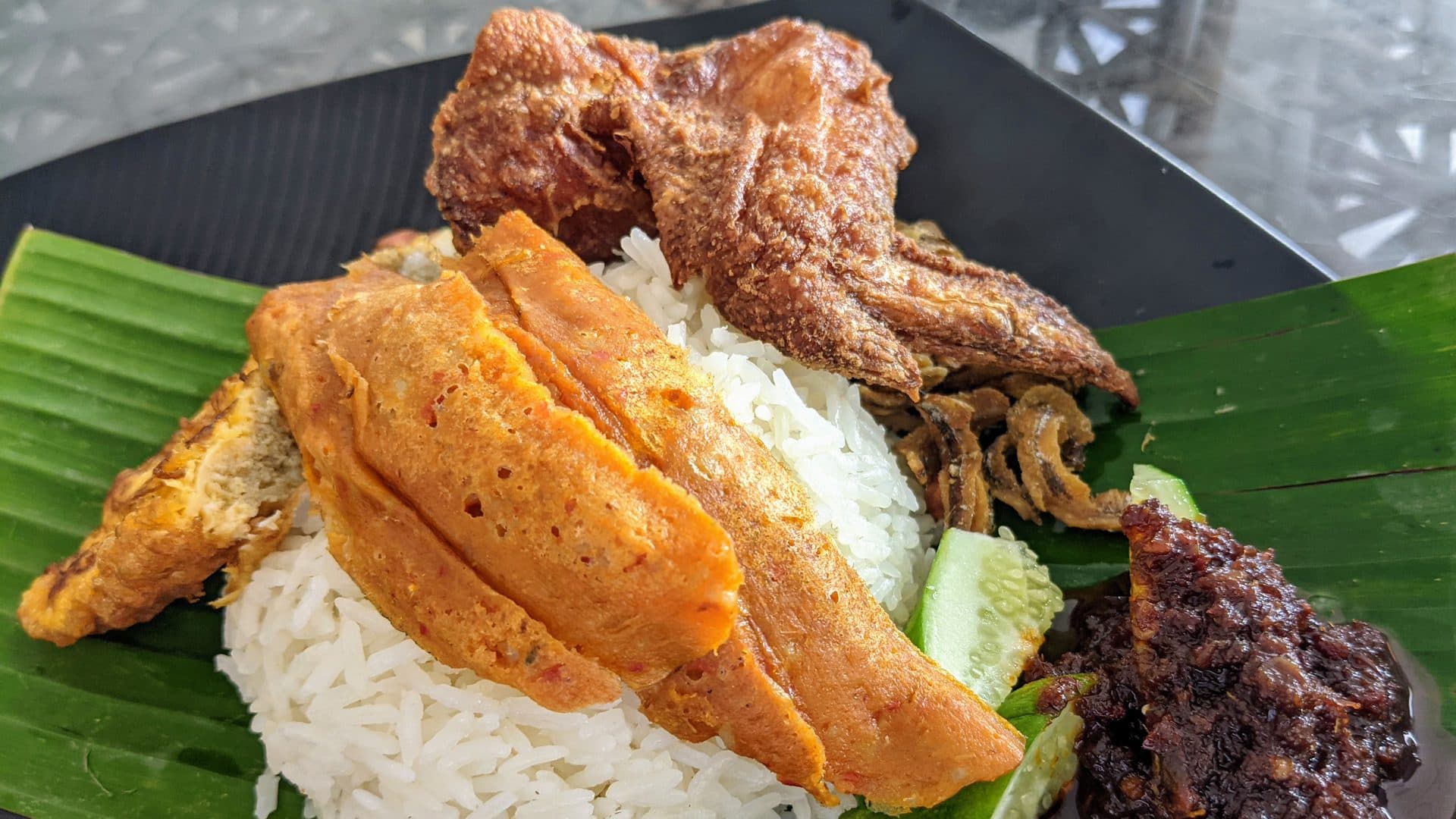
Vietnam is the cheaper country to travel in: for the same style of trip, Malaysia's biggest city costs roughly 30% more than Vietnam's. On Numbeo's crowd-sourced comparison, updated on 28 and 30 October 2026, everyday costs excluding rent were 32% higher in Kuala Lumpur than in Hanoi, and restaurant prices 63% higher. The gap is not spread evenly. A hawker breakfast of nasi lemak costs less in Malaysia than a bowl of pho does in Vietnam. What costs more is almost everything after breakfast: sit-down meals, taxis, the airport train and, by a wide margin, alcohol.
This page goes head to head on prices collected in October 2026, then on what decides the trip beyond money: food, beaches, transport, visas and the monsoons, which reach the two countries' coasts at different times. For how both sit against Thailand, Indonesia, Cambodia and Singapore, see the Southeast Asia cost comparison. Its May 2026 table, built from travel-budget surveys, put Malaysia's backpacker range slightly below Vietnam's; the October 2026 line-item prices here point the other way, so for a straight Vietnam-or-Malaysia decision I would go by this page.
The short answer
- Pick Vietnam if your budget is firm, you want to cross a whole country overland in two to four weeks, or you like eating at plastic tables for very little.
- Pick Malaysia if you want English almost everywhere, fast and comfortable trains, a short trip from Singapore, or a visa-free stay of up to 90 days on a US passport.
If you cannot decide, let the calendar settle it: in October and November Vietnam's north is at its best while most of peninsular Malaysia takes its main rain peak, and in June and July both countries have a coast in beach season.
What things cost: Vietnam vs Malaysia, October 2026
The table pairs the site's own Vietnam price guides with Malaysian official statistics, operators and crowd-sourced data. Where Numbeo is the source, it is the only like-for-like basket for both countries, so I use it for both sides.
| Item | Vietnam | Malaysia | Source |
|---|---|---|---|
| Simple restaurant meal | 52,500 VND ($2.02), Hanoi | RM20 ($4.94), Kuala Lumpur; RM14 ($3.46), George Town | Numbeo, Oct 2026 |
| Street breakfast | Pho, 30,000-50,000 VND ($1.15-1.92) | Nasi lemak RM3.70 ($0.91); roti canai RM1.54 ($0.38) | Pho Index; DOSM |
| Coffee | Local phin or iced coffee 15,000-30,000 VND ($0.58-1.15); cappuccino 48,900 VND ($1.88) | Cappuccino RM12.62 ($3.12), Kuala Lumpur | Coffee prices guide; Numbeo |
| Mid-range dinner for two | 600,000 VND ($23.08), Hanoi | RM120 ($29.63), Kuala Lumpur; RM62 ($15.31), George Town | Numbeo, Oct 2026 |
| City bus or metro ticket | 10,000 VND ($0.38), Hanoi | RM3 ($0.74), Kuala Lumpur | Numbeo, Oct 2026 |
| Taxi, per km | 15,000 VND ($0.58), Hanoi | RM5 ($1.23), Kuala Lumpur | Numbeo, Oct 2026 |
| Airport to the centre | Minibus 86, about 45,000 VND ($1.73) | KLIA Ekspres RM55 ($13.58), RM65 from 1 Jan 2027 | Noi Bai guide; Malay Mail |
| Medium train trip | Hanoi to Lao Cai soft seat, 200,000 VND ($7.69), about 8 hours | KL to Butterworth by ETS, RM63-94 ($15.56-23.21), about 4 hours | Train fares guide; Seat61 |
| Cheapest dorm bed, median | About $7, Hanoi | About $10, Kuala Lumpur and Penang | Hostelworld listings, 31 Oct 2026 |
Dollar figures use 26,000 VND and RM4.05 to the US dollar, close to Vietcombank's selling rate and Bank Negara Malaysia's middle rate on 30 October 2026. The Vietnam rows come from the Pho Index, the coffee prices guide, the Noi Bai airport guide and the train fares guide. The Malaysian food prices are national averages from the Department of Statistics Malaysia: RM3.70 for nasi lemak in 2025, as The Star reported in October 2026, and RM1.54 for roti canai in 2024, as Bernama reported in the New Straits Times. The airport fare rise was reported by Malay Mail on 30 September 2026, and the ETS fares come from Seat61's Malaysia page, updated on 1 October 2026. The dorm row is the median "dorms from" price across hostels listed on Hostelworld's city pages on 31 October 2026, converted from euros.
Where the gap comes from
Sit-down food is the biggest everyday difference. Numbeo's restaurant index for Kuala Lumpur sits 63% above Hanoi and 64% above Ho Chi Minh City, and a simple restaurant meal costs more than twice as much. Penang is closer: in George Town, restaurant prices run about 17% above Hanoi, although only 11 people contributed George Town prices in the past year, against 91 for Hanoi and 158 for Kuala Lumpur.
Getting around costs more in Malaysia, but buys speed. A taxi kilometre in Kuala Lumpur costs about twice Hanoi's rate, and the airport train costs nearly eight times Hanoi's airport bus. Between cities, the ETS fares in the table are two to three times Vietnam's soft-seat fare, for a ride of about four hours against eight. Ride-hailing works in both; the Grab prices guide has Vietnam's fares, with GrabBike hops from about 15,000-30,000 VND.
Alcohol is the widest gap of all. On Numbeo's figures, a half-litre of local draught beer costs about RM18 ($4.44) in a Kuala Lumpur restaurant against about 27,900 VND ($1.07) in Hanoi. If you do not drink, this line disappears from your budget and the two countries move closer.
Beds are close. At hostel level, a dorm bed is a few dollars dearer in Malaysia, not a multiple. I could not find an official or audited source for Malaysian hotel prices by tier, so I have not compared mid-range rooms.
What that means per day. The Vietnam budget guide puts a backpacker day at $30-50 and a mid-range day at $80-150. Apply Numbeo's 29-32% city gap and the same style of travel in Kuala Lumpur comes to roughly $40-65 a day for a backpacker and $105-200 mid-range. That is my estimate, not a measured budget; Penang and smaller towns are probably closer to Vietnam, but the data there is thin.
Food: hawker stalls vs street kitchens
Both countries eat out cheaply and often, in different ways. Malaysia's cheapest food comes from hawker stalls, coffee shops and food courts that mix Malay, Chinese and Indian cooking under one roof. The statistics department's averages show how low the floor is: RM3.70 for nasi lemak, RM1.54 for roti canai and RM1.09 for a stick of chicken satay in 2024. Those prices are climbing, though: nasi lemak averaged RM2.81 in 2019, so it rose about 32% in six years.
Vietnam's street food goes deeper on soups, noodles and fresh herbs, and it changes every few hundred kilometres, from Hanoi's bun cha to Hue's bun bo and the south's broken rice. A local bowl of pho runs 30,000-50,000 VND in mid-2026, and tourist zones charge 1.5-3 times that, as the Pho Index shows city by city. The street food atlas maps the regional dishes. On price alone, Malaysia wins breakfast and Vietnam wins lunch and dinner. On variety, it is a matter of taste: Malaysia gives you three cuisines in one food court, Vietnam one cuisine that changes from region to region.
Beaches and islands
Neither country is the obvious beach winner, so the useful question is which coast is dry in your month. Vietnam's beaches sit along one long coast: Phu Quoc is dry from December to March, Nha Trang from January to August, and Da Nang and Hoi An from February to August. For diving and snorkelling, the Vietnam diving guide covers Con Dao, Phu Quoc and Nha Trang and their honest limits.
Malaysia splits into two coasts with opposite seasons. The east coast of the peninsula, home to the Perhentian, Redang and Tioman islands, faces the northeast monsoon. The Malaysian Meteorological Department says that coast gets heavy rain spells in the monsoon, with rainfall peaking from November to January, and that June and July are its driest months. On most of the rest of the peninsula, including Penang, rain peaks in October and November and again in April and May. So Malaysia's east-coast islands and Vietnam's central coast are both in season in June and July, and both are wet in November.
Getting around
Malaysia is the easier country to move through. The electric ETS trains run from Kuala Lumpur to Butterworth, the stop for Penang, in about four hours, and since electrification of the southern line was completed in December 2025, several direct trains a day link Kuala Lumpur with Johor Bahru, on the border with Singapore, according to Seat61. English helps too: on the 2025 EF English Proficiency Index, Malaysia ranked 24th with a score of 581, against Vietnam's 64th place and 500.
Vietnam is one long line, 1,726 km by rail from Hanoi to Ho Chi Minh City, which the Reunification Express covers in about 33 hours. Most people mix trains, sleeper buses and one or two short flights. Sleeper buses are cheap, at roughly 500-800 VND per kilometre for a standard berth, according to the sleeper bus fares guide, and main domestic routes run about $25-60 one way when booked a week or two ahead, according to the domestic flights guide. It takes more planning than Malaysia and costs less.
Visas and entry in 2026
| Passport | Vietnam | Malaysia |
|---|---|---|
| United Kingdom | 45 days visa-free | Normally 90 days visa-free on arrival |
| United States | E-visa, $25 single or $50 multiple entry, up to 90 days | Visa-free for tourist trips under 90 days |
| Germany, France, Italy, Spain, Netherlands | 45 days visa-free | Visa-free; not on Malaysia's visa-required list |
The UK rules come from the government's travel advice for Vietnam and Malaysia, and the US rule from the US Embassy in Kuala Lumpur. The full list of Vietnam's 45-day countries and the e-visa fees are in the visa and immigration atlas. Both countries want at least six months left on your passport.
Malaysia adds one step. Every foreign visitor must file the free Malaysia Digital Arrival Card online, and the US Embassy says it must be submitted within three days before arrival. The MDAC portal lists visitors from the US, the UK, Australia, New Zealand, Germany and a few other countries as eligible for the automatic immigration gates at Kuala Lumpur's airport terminals. Vietnam's online pre-arrival card started at Tan Son Nhat airport on 15 April 2026; the UK government describes it as encouraged rather than mandatory, so fill it in if your airport offers it.
When to go: the monsoons do not line up
| Months | Vietnam at its best | Malaysia |
|---|---|---|
| December to March | The south, including Phu Quoc; the north is cool and often grey | East coast in the northeast monsoon; the west coast is between its two rain peaks |
| April to May | The centre, with the sea warming | Secondary rain peak across most of the peninsula |
| June to August | Central beaches, Da Nang to Nha Trang | East-coast islands at their driest in June and July |
| September to November | The north, best in October and November; the centre is at its wettest | Main rain peak in October and November; east-coast monsoon from November |
The Vietnam column follows the best time to visit Vietnam verdict table and the city weather guides; the Malaysia column follows the Malaysian Meteorological Department. If your only free weeks are in October or November, northern Vietnam is the stronger choice. For a beach trip in June or July, both work. Around Tet, which falls on 6 February 2027, Vietnam gets busier and pricier.
How busy each country is
Malaysia counted 42,196,892 international visitors in 2025, a record, but 21,076,783 of them came from Singapore, many on short trips across the border, according to the tourism minister's figures reported by The Vibes in March 2026. Vietnam recorded 21.2 million international arrivals in 2025, up 20.4%, as the 2025 arrivals summary explains. So Malaysia's bigger headline number says more about Singaporean weekenders than about crowds at the sights you will visit.
Who should pick which
| If you... | Pick | Why |
|---|---|---|
| Want the lowest total for two to four weeks | Vietnam | Cheaper meals, transport and drinks; Kuala Lumpur costs about 30% more |
| Are on your first trip to Asia and want English everywhere | Malaysia | 24th on the EF index against Vietnam's 64th |
| Have only a few days, or are starting in Singapore | Malaysia | Direct trains from Johor Bahru, short distances |
| Want mountains, bays and a long overland route | Vietnam | Ha Giang to the Mekong Delta on one line |
| Are free only in October or November | Vietnam | Its north is at its best while Malaysia takes its main rain |
| Hold a US passport and want to stay two to three months | Either | Malaysia is visa-free under 90 days; Vietnam's e-visa covers 90 days for $25 |
Limitations
Numbeo's prices are crowd-sourced, from 91 contributors in Hanoi, 158 in Kuala Lumpur and only 11 in George Town over the past year, so treat them as a guide to the gap, not exact prices. The Malaysian food prices are national averages from 2024 and 2025, and stall prices in Kuala Lumpur can be higher. The dorm figures are a one-day snapshot of advertised "from" prices. I found no audited source for Malaysian hotel prices by tier, I did not confirm which east-coast island resorts close during the monsoon, and I checked visa rules only for British, US and the listed European passports. ETS fares vary by train and date, and exchange rates move.
Workaround: use the table for the size of the gap, then check live prices for your dates on the operators' own sites, confirm entry rules with your government's travel advice before booking, and ask your island resort directly whether it is open in your month.